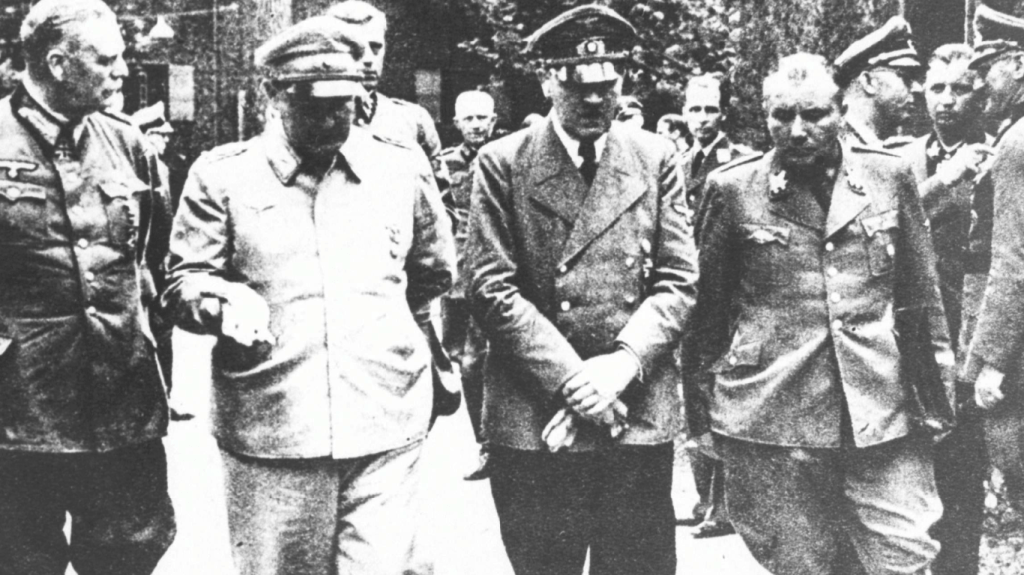
(Trying out a new lay out, feedback is appreciated)
Executive Summary
On 20 July 1944, German Colonel Claus Schenk Graf von Stauffenberg placed a bomb in Hitler’s Eastern Front headquarters (Wolfsschanze / Wolf’s Lair) in East Prussia. The explosion injured but did not kill Hitler. The conspirators—an underground network of senior officers, diplomats, clergy, and civilians—intended to trigger Operation Valkyrie, seize control of Berlin, neutralize the SS, negotiate peace with the Western Allies, and save Germany from total destruction. Due to a mixture of chance (the bomb’s position), procedural hesitations, communication failures, and swift Nazi counter-measures, the coup unraveled within hours. Hundreds were executed in the aftermath; many more were imprisoned. The plot remains a potent symbol of internal German resistance to Nazism.
Contents
- Origins of the Conspiracy
- Who Were the Conspirators?
- Moral, Political, and Strategic Motivations
- Designing a Coup: From Valkyrie’s Original Purpose to Its Subversion
- Timeline: 20 July 1944 – A Pivotal Day Hour by Hour
- Why the Bomb Failed to Kill Hitler
- Collapse of the Berlin Phase
- Immediate Reprisals and the “Court” of Roland Freisler
- Wider Web of Resistance (Military, Civilian, Religious)
- Myths, Misconceptions, and Pop Culture
- Ethical Debates: “Too Late” or Courageous Stand?
- Legacy in Post-War Germany and International Memory
- Key Takeaways for Leadership, Ethics, and Organizational Culture
- Suggested Further Reading & Sources (for a blog, cite reputable works)
- FAQ
1. Origins of the Conspiracy
Opposition to Hitler inside Germany began earlier than many realize—some military men and diplomats were alarmed by reckless expansionism as early as 1938 (e.g., the Oster Conspiracy surrounding the Sudeten crisis). Initial plots either fizzled due to Hitler’s rapid diplomatic victories or were judged too risky. By 1942–43, catastrophic losses (Stalingrad, North Africa, the escalating Allied bombing campaign) convinced a growing circle of officers that Hitler was leading Germany to ruin. Simultaneously, knowledge of war crimes on the Eastern Front and the Holocaust filtered to segments of the Wehrmacht, creating moral outrage among some (though not all) conspirators.
2. Who Were the Conspirators?
A diverse coalition, though heavily Prussian-aristocratic and military:
| Role | Key Figures | Notes |
|---|---|---|
| Military (General Staff / Reserve Army) | Henning von Tresckow, Friedrich Olbricht, Erich Hoepner, Ludwig Beck (former Chief of General Staff) | Provided planning, legitimacy, coordination. |
| Operational Catalyst | Claus von Stauffenberg | Wounded North Africa veteran; combined access to Hitler with unwavering urgency. |
| Political Visionaries | Carl Goerdeler (ex-Leipzig mayor), Julius Leber, Wilhelm Leuschner | Drafted post-coup governmental frameworks. |
| Diplomats / Intelligence | Ulrich von Hassell, Hans Bernd Gisevius | Potential channels to Allies. |
| Religious / Moral Support | Some Protestant and Catholic figures (e.g., Dietrich Bonhoeffer had earlier links via Abwehr resistance circles) | Provided ethical impetus, limited operational role by July 1944. |
| Field Command Sympathy | Varied; pockets of tacit support but widespread fear / ambivalence | Lack of decisive regional alignment hurt the coup. |
Not a mass movement; rather, an elite, conspiratorial network with limited capacity to mobilize popular uprising under a totalitarian surveillance state.
3. Motivations: Moral, Political, Strategic
- Moral Horror: Reports of mass shootings and extermination camps galvanized individuals like Tresckow.
- Patriotic Responsibility: Many believed removing Hitler could salvage Germany’s honor and future.
- Strategic Realism: With the Eastern Front collapsing and Allied landings in Normandy (June 1944), a negotiated peace—especially with Britain/USA—seemed urgent to avoid Soviet occupation and total devastation.
- Restoration Vision: Draft constitutional ideas ranged from conservative-monarchist to moderately democratic. Unity around removing Hitler first; debate governance later.
4. Designing a Coup: Subverting Operation Valkyrie
Operation Valkyrie was an existing Reserve Army contingency plan intended to maintain order inside Germany if Allied paratroopers, forced labor uprisings, or internal unrest threatened critical infrastructure. Conspirators rewrote annexes so that, upon activation, Reserve Army units in Berlin and regional hubs would seize key ministries, communications centers, and arrest SS/Gestapo leaders, under the pretext of quelling an “SS coup.” This legalistic veneer aimed to leverage obedience to written orders in a militarized bureaucracy.
Critical dependency: Hitler had to be dead (or unquestionably incapacitated). Without that, loyalty to him would override the altered orders.
5. Timeline: 20 July 1944 (Approximate, Central European Time)
| Time | Event |
|---|---|
| Morning | Stauffenberg flies from Berlin/Rangsdorf to Wolf’s Lair for conference. Carries briefcase with two British-made plastic explosives (only one armed due to time constraints). |
| ~12:40 | Conference moved from an underground bunker (ideal for blast) to a lighter timber hut (windows open for summer heat) — a crucial change reducing overpressure. |
| ~12:42–12:45 | Stauffenberg arms one charge (lack of time to arm second) using pliers + acid pencil detonator; places case under the heavy map table near Hitler, then excuses himself. |
| 12:48–12:50 | Bomb detonates. Four die (later) from injuries; Hitler survives with burst eardrums, minor wounds. |
| 13:00+ | Stauffenberg, seeing smoke and assuming success, departs, cutting telephone lines en route. |
| 15:00 | Reaches Berlin; Valkyrie orders begin partial dissemination, but delay and confusion emerge as confirmation of Hitler’s death is uncertain. |
| 16:00–17:00 | Goebbels and others broadcast Hitler’s survival; loyalists regain initiative. |
| Evening (~20:00+) | Conspirators at Bendlerblock (Reserve Army HQ) arrested after tense standoff; General Fromm (self-preservation) orders summary execution of Stauffenberg, Olbricht, Beck (who is allowed suicide), and others shortly after midnight. |
| Following Days | Massive wave of arrests; Gestapo unravels networks via documents and coerced testimony. |
6. Why the Bomb Failed to Kill Hitler
- Location Shift: Meeting in a ventilated wooden hut dissipated blast energy.
- Partial Charge: Only one of two explosives armed; the second would likely have been lethal.
- Briefcase Repositioned: An officer inadvertently moved the case behind a thick table leg, shielding Hitler.
- Time Pressure: Stauffenberg shortened the fuse interval to secure an alibi window; reduced options.
- Physical Constraints: His injuries (lost hand, fingers, eye) slowed preparation, limiting fine adjustments.
- Chance: Small spatial differences drastically changed lethality.
7. Collapse in Berlin
- Communication Gaps: Radio and phone lines not decisively seized early; contradictory messages circulated.
- Leadership Ambiguity: Some officers waited for unambiguous confirmation; others feared a trap.
- Propaganda Counterstrike: Quick exploitation of Hitler’s survival—he personally spoke on radio next day—undermined the “SS coup” narrative.
- Insufficient Regional Buy-In: Outside Berlin, many commanders hesitated or reversed arrests once truth emerged.
8. Reprisals and “Justice”
The Nazi regime orchestrated show trials at the Volksgerichtshof under Judge Roland Freisler, marked by humiliation and verbal abuse. Over subsequent months, roughly 5,000 people were arrested; several hundred (estimates vary—often cited ~200) were executed by hanging (often with piano wire), firing squad, or other means. Families faced Sippenhaft (kin liability): confiscations, imprisonment, name erasure.
9. Wider Resistance Ecosystem
The 20 July plot intersected with:
- Abwehr (Military Intelligence) Resistance Cells: Admiral Canaris’s circle covertly undermined Hitler until absorbed by the RSHA.
- Students (White Rose): Earlier (1942–43) moral protest via leaflets; already executed by 1944.
- Church Figures: Catholic bishops’ occasional protests, Protestant Confessing Church segments; limited capacity for direct coup involvement.
- Communist / Socialist Underground: Separate cells with minimal operational integration with Valkyrie conspirators due to ideological divides and surveillance.
10. Myths & Misconceptions
| Myth | Reality |
|---|---|
| “Most Germans actively supported the plot.” | It was a small elite conspiracy; broad public support is not evidenced. |
| “Success would have instantly ended the war.” | Even if Hitler died, SS, Nazi Party apparatus, and committed loyalists could have mounted fierce resistance; Allies demanded unconditional surrender (since Casablanca 1943). |
| “All conspirators were pure democrats.” | Political views ranged widely; some were conservative nationalists, others more liberal. |
| “They acted only when Germany was losing.” | Some individuals (e.g., Beck, Tresckow) opposed Hitler’s course earlier; but broader momentum indeed rose as defeat loomed. |
11. Ethical Debates
Critics argue the attempt came “too late” to stop mass atrocities already well underway. Defenders emphasize the risk and courage required under totalitarian surveillance, posit that any internal resistance matters morally, and note that earlier success might have saved millions—though exact counterfactuals are unknowable.
12. Legacy
- Post-War West Germany (FRG): July 20 conspirators honored as symbols of moral courage; memorial ceremonies at the Bendlerblock (now a museum / memorial site).
- Education & Military Ethics: Bundeswehr officer training highlights their duty-bound resistance—emphasizing Innere Führung (internal leadership / moral compass).
- Global Culture: Numerous films (e.g., dramatizations titled Valkyrie), biographies, documentaries, and academic studies amplify the story, sometimes simplifying complexities for narrative impact.
- Memory Politics: In East Germany (GDR) early portrayals minimized aristocratic-military resistance, highlighting communist partisans instead; after reunification, more integrated narrative emerged.
13. Leadership & Organizational Lessons
- Moral Courage vs. Obedience: Formal hierarchies can perpetuate harm unless individuals embrace ethical responsibility above blind loyalty.
- Timing & Preparation: Strategic plans require robust redundancy; single points of failure (one bomb, one messenger) are vulnerabilities.
- Narrative Control: Immediate communication after a decisive act can determine legitimacy perception.
- Alliance Building: Broad, cross-ideological coalitions improve resilience; narrow networks limit contingency responses.
- Documentation Risk: Conspiratorial paperwork facilitated Gestapo roll-ups once discovered—illustrating operational security tradeoffs.
14. Suggested Further Reading
(For a public-facing blog, select accessible, reputable works):
- Peter Hoffmann, The History of the German Resistance 1933–1945.
- Ian Kershaw, Hitler (Volumes 1 & 2) – context on regime dynamics.
- Joachim Fest, Plotting Hitler’s Death.
- Hans Mommsen, essays on the German resistance’s social composition.
- Ulrich von Hassell, The Von Hassell Diaries (primary source).
- Letters/Statements of Stauffenberg & Tresckow (quoted in scholarly compilations).
15. FAQ
Q: Was Stauffenberg the mastermind?
A: He was the operational catalyst in 1944, but networks pre-dated him; Tresckow, Beck, and others laid groundwork.
Q: Could killing Hitler have produced a democratic Germany immediately?
A: Uncertain. A provisional conservative-military government likely would have sought ceasefire; democratization may have been a longer process.
Q: Did Allied “unconditional surrender” demands affect conspirators?
A: Yes; they feared it reduced chances for negotiated settlement, yet hoped a post-Hitler regime might at least better terms or limit Soviet advance.
Q: Why use a bomb instead of a firearm?
A: Bomb allowed plausible exit, overcame physical limitations of Stauffenberg’s injuries, and offered chance to eliminate other top Nazis.
Q: How is the plot commemorated today?
A: Annual ceremonies in Berlin (Bendlerblock courtyard) and educational programs; regarded as a cornerstone of German democratic civic memory.
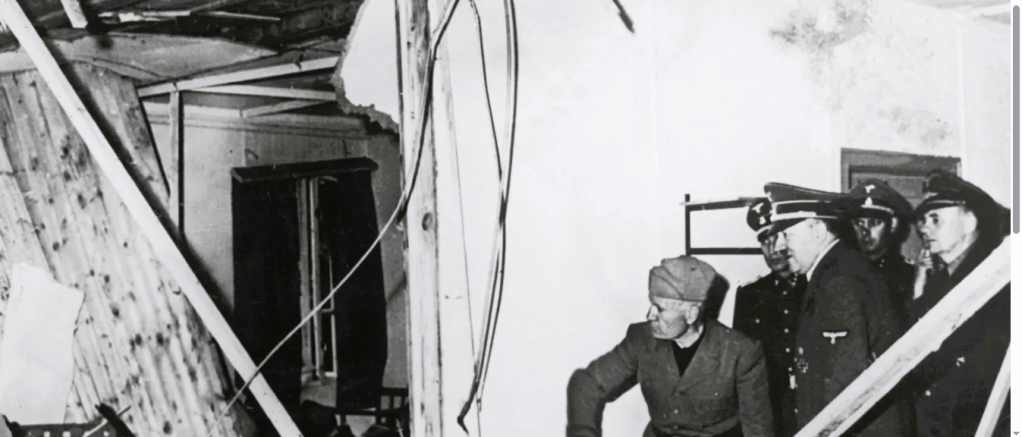
The 20 July Plot, also known as Operation Valkyrie, was a failed attempt by German military officers to assassinate Adolf Hitler and overthrow the Nazi regime during World War II. The plot took place on July 20, 1944, and was led by Colonel Claus von Stauffenberg, who had become increasingly disillusioned with Hitler’s leadership and the atrocities committed by the regime.
Stauffenberg and his co-conspirators planned to kill Hitler with a briefcase bomb during a meeting at the Wolf’s Lair, Hitler’s military headquarters in East Prussia. The bomb detonated, but Hitler survived with minor injuries, largely because the briefcase was moved behind a table leg, which absorbed much of the blast.
The plotters had intended to use the chaos following Hitler’s death to seize control of the government through Operation Valkyrie, a contingency plan originally designed to maintain order in the event of internal unrest. However, once it became clear that Hitler had survived, the coup quickly unraveled. Many conspirators were arrested and executed, including Stauffenberg, who was shot the same night.
The 20 July Plot was the most serious internal challenge to Hitler’s rule and demonstrated that resistance to the Nazi regime existed, even within the military. Although it failed, the plot is remembered as a courageous stand against tyranny and has become a symbol of moral resistance in modern German history.
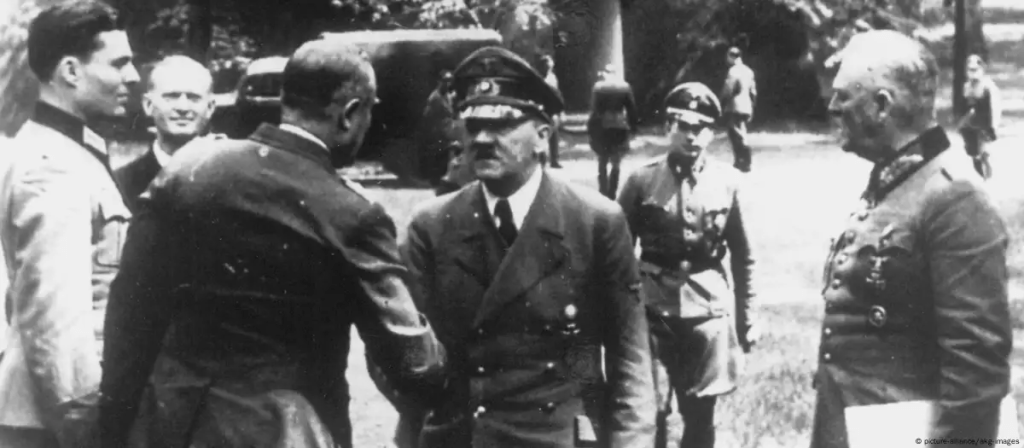
Military Conspirators:
- Colonel Claus von Stauffenberg – Chief plotter; planted the bomb.
- General Friedrich Olbricht – Helped organize Operation Valkyrie.
- Colonel Albrecht Mertz von Quirnheim – Assisted in implementing the coup in Berlin.
- Lieutenant Werner von Haeften – Stauffenberg’s adjutant; helped carry out the assassination attempt.
- General Ludwig Beck – Former Chief of the General Staff; designated to become head of state.
- Field Marshal Erwin von Witzleben – Intended to take command of the armed forces after the coup.
- General Erich Hoepner – Former panzer commander; key conspirator.
- General Carl-Heinrich von Stülpnagel – Military commander in Paris; tried to arrest SS officers after hearing of Hitler’s “death.”
- General Helmuth Stieff – Had access to Hitler and earlier considered assassinating him.
- Major General Henning von Tresckow – A driving force behind the resistance movement; had attempted earlier plots against Hitler.
Civilian and Political Conspirators:
- Dr. Carl Goerdeler – Former Leipzig mayor; planned to become Chancellor after the coup.
- Ulrich von Hassell – Former ambassador to Italy; involved in post-coup political planning.
- Julius Leber – Social Democrat and former Reichstag member; involved in civilian opposition.
- Helmuth James Graf von Moltke – Founder of the Kreisau Circle, an intellectual resistance group.
- Adam von Trott zu Solz – Diplomat and liaison to foreign governments for the resistance.
Notable Supporters or Sympathizers:
- Hans Oster – Abwehr (military intelligence) officer; key resistance figure.
- Admiral Wilhelm Canaris – Head of the Abwehr; sympathetic to the resistance, though not directly involved in the plot.
There were more, but these were the main players.
sources
https://www.britannica.com/event/July-Plot
https://www.dw.com/en/operation-valkyrie-81st-anniversary-of-plot-to-kill-hitler/a-66282598
https://encyclopedia.ushmm.org/content/en/article/the-july-20-1944-plot-to-assassinate-adolf-hitler
http://news.bbc.co.uk/onthisday/hi/dates/stories/july/20/newsid_3505000/3505014.stm
https://simple.wikipedia.org/wiki/20_July_Plot
Donation
Your readership is what makes my site a success, and I am truly passionate about providing you with valuable content. I have been doing this at no cost and will continue to do so. Your voluntary donation of $2 or more, if you are able, would be a significant contribution to the continuation of my work. However, I fully understand if you’re not in a position to do so. Your support, in any form, is greatly appreciated. Thank you. To donate, click on the credit/debit card icon of the card you will use. If you want to donate more than $2, just add a higher number in the box left from the PayPal link. Your generosity is greatly appreciated. Many thanks.
$2.00
 History of Sorts
Leave a comment