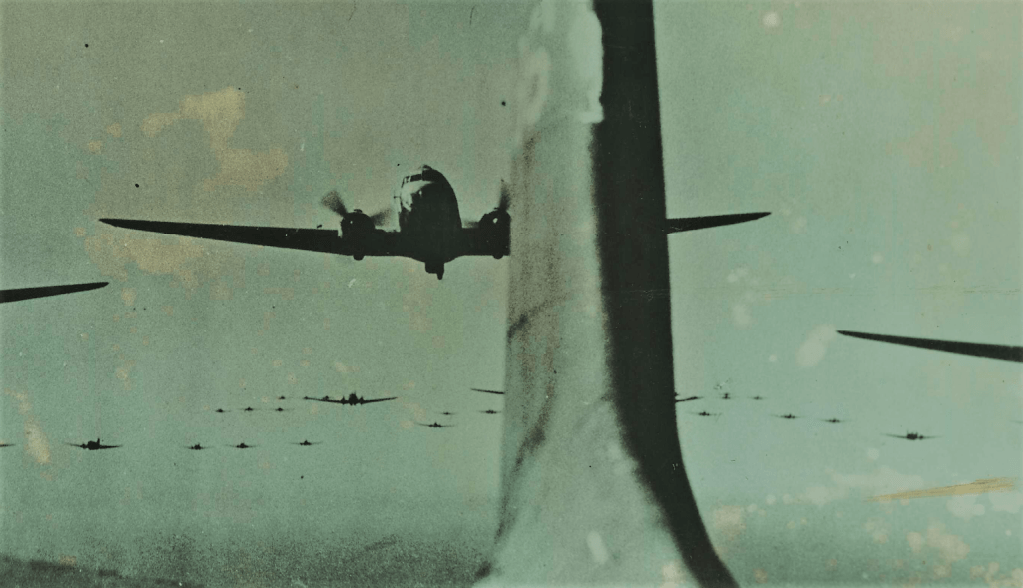
Operation Market Garden was a failed operation by the Allied forces, which would have dire consequences for the Netherlands in the following winter.
Irish journalist and author Cornelius Ryan wrote the book A Bridge Too Far about the operation.
Market Garden was divided into two parts.
Market: Airborne forces (of Lieutenant General Lewis H. Brereton’s First Allied Airborne Army ) were to seize bridges and other terrain under tactical command of I Airborne Corps under Lieutenant-General Frederick Browning.
Garden: Ground forces of the Second Army to move North spearheaded by XXX Corps under Lieutenant-General Brian Horrocks.
Field Marshal Sir Bernard Montgomery persuaded the Supreme Allied Commander, General Dwight D. Eisenhower, to approve a two-part airborne armour assault and to divert supplies to support it. Operation Market landed three airborne divisions at separate locations to seize road bridges along a route through the Dutch towns of Eindhoven, Nijmegen, and Arnhem behind German lines. These bridges were to be held open for the British Second Army advance led by XXX Corps (Operation Garden).
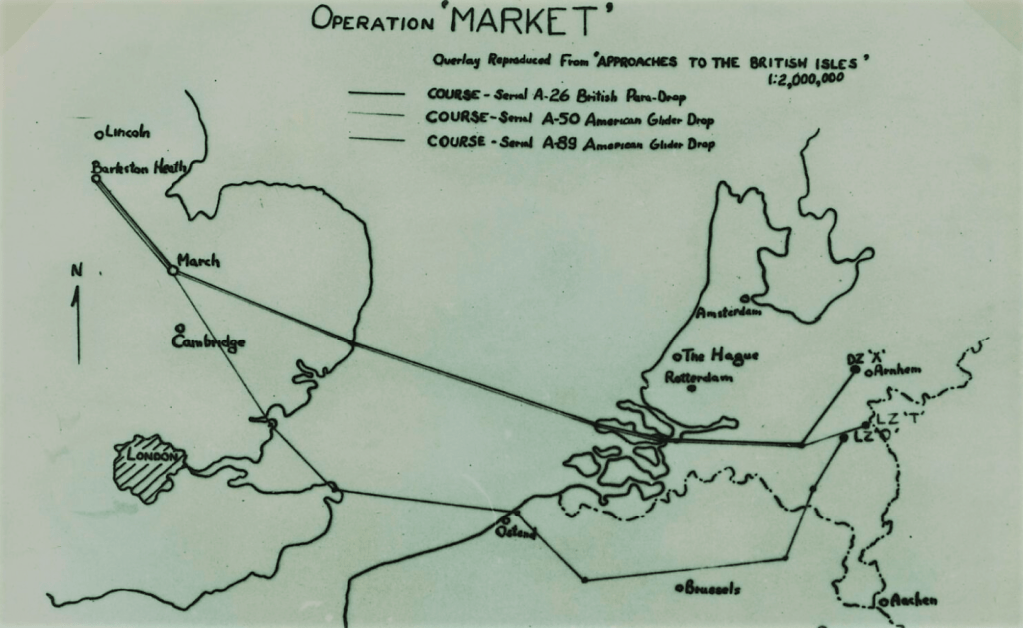
Operation Market was the largest airborne operation in the history of warfare. If successful, the plan would liberate the Netherlands. However, the primary objective was to outflank Germany’s formidable frontier defences, the Siegfried Line, and make possible an armoured drive into the Ruhr, Germany’s industrial heartland, and thus end the war sooner.
The airborne divisions landed on the 17th of September. Eventually, all the bridges were captured.
The plan largely failed because of the 30 Corps’ inability to reach the furthest bridge at Arnhem before German forces overwhelmed the British defenders. Allied intelligence had failed to detect the presence of German tanks, including elements of two SS Panzer divisions.

“We have had a very heavy shelling this morning, September 23rd, and now the situation is serious. The shelling is hellish. We have been holding out for a week now. The men are tired and weary and food is becoming scarce, and to make matters worse, we are having heavy rain. If we are not relieved soon, then the men will just drop from sheer exhaustion.”
—Sergeant Dennis Smith, Army Film and Photographic Unit, 23 September 1944.

The plan proved overly ambitious, which accounts for the title (of the book and movie), A Bridge Too Far. From the start, things went wrong for the Allies. Although the paratroopers seized one side of the bridge, they were pinned down by the Germans, who reacted (with swiftness) to the Allied assault. To make matters worse, XXX Corps, far to the South, was making slow progress and unable to reach the beleaguered British forces in and around Arnhem. Running out of food, water, and ammunition, they were heavily outnumbered., Frost’s paratroopers held the bridge for four days but were eventually forced to surrender.
The battle was a severe defeat for the Allies. However, the valiant British defence of Arnhem won the respect of friend and foe alike. Dutch civilians did much to aid the Allies during and after the battle, helping many men to reach their own lines.
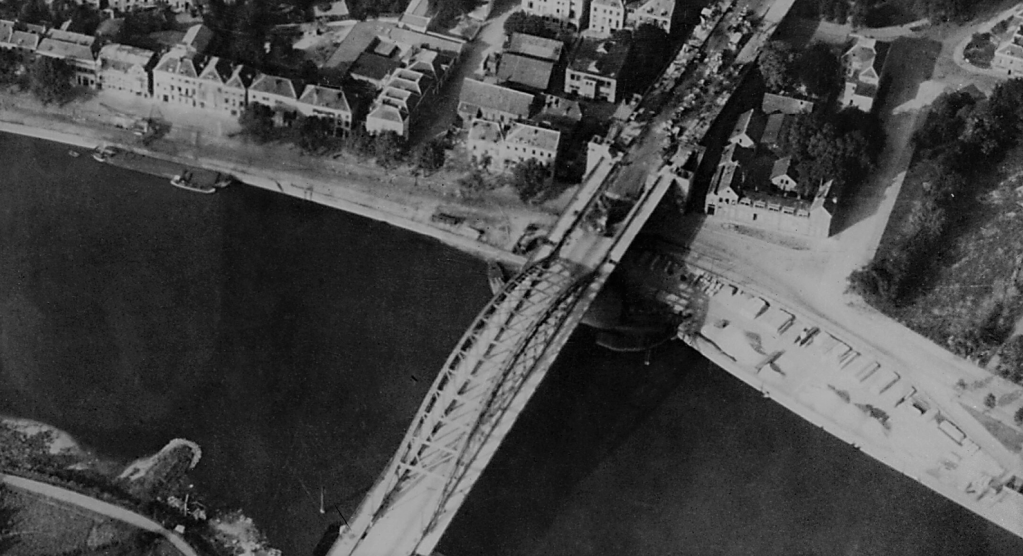
On 24-25 September, about 2,100 troops from the 1st Airborne Division were ferried back across the Rhine. Another 7,500 were either dead or made prisoners of war.
The crossing of the Rhine and the capture of Germany’s industrial heartland were delayed for six months. Now, the Allies would have to fight their way into the Reich on a broad front. There would be no quick victory.
A costly failure, Operation Market Garden remains a remarkable feat of arms. This is not because of its strategic ambition but because of the determination and courage shown by Allied airborne troops and the units that tried to reach them.
Although it led to the liberation of a large part of the South of the Netherlands, the Northern part would not be liberated until May 1945. During the winter of 1944-45, approximately 20,000 Dutch died in the famine, called the Hungerwinter.

The consequences of that famine were still felt decades later. In 2013, according to research by L.H. Lumey, an epidemiologist at Columbia University, he and his colleagues reviewed the death records of hundreds of thousands of Dutch people born in the mid-1940s.
They found that the people who had been in utero during the famine—known as the Dutch Hunger Winter cohort—died at a higher rate than people born before or afterwards. “We found a 10 per cent increase in mortality after 68 years,” said Dr Lumey.
The patterns Dr. Lumey and his colleagues documented are not disputed—but the scientists still struggle to understand how they come about.
“How on Earth can your body remember the environment it was exposed to in the womb—and remember that decades later?,” wondered Bas Heijmans, a geneticist at Leiden University Medical Center in the Netherlands.
Dr. Heijmans, Dr. Lumey and their colleagues published a possible answer, or part of one, on Wednesday in the journal Science Advances. Their study suggests that the Dutch Hunger Winter silenced specific genes in unborn children—and that they’ve stayed quiet ever since.
Hollywood actress Audrey Hepburn barely survived the famine. She developed acute anæmia, respiratory problems and œdema due to malnutrition. This would affect her for the remainder of her life.
Aside from the famine, the failure of Market Garden prolonged the war by six months, according to some estimates. If the concentration camps could have been liberated 6 months earlier, imagine the lives that could have been saved.
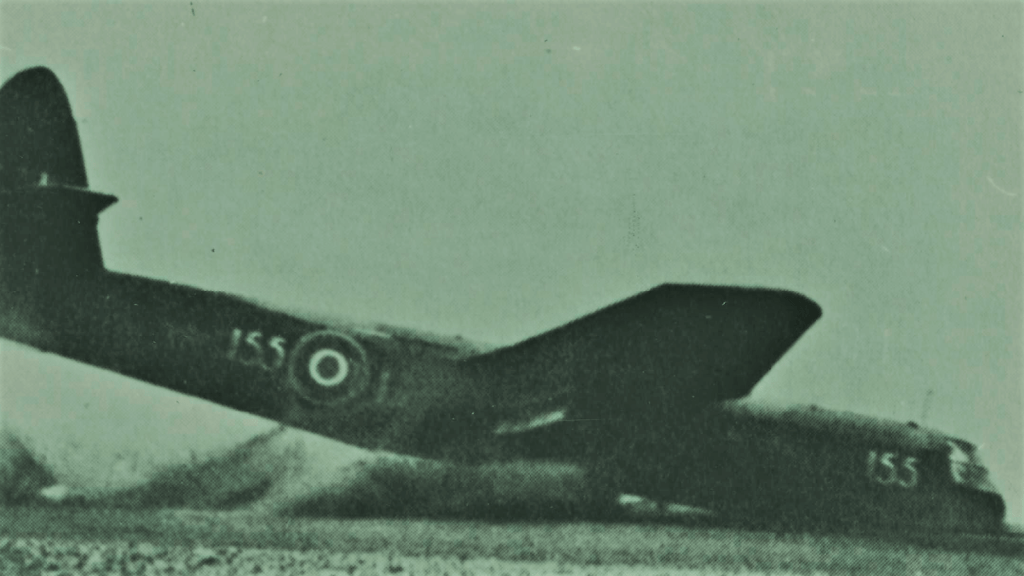
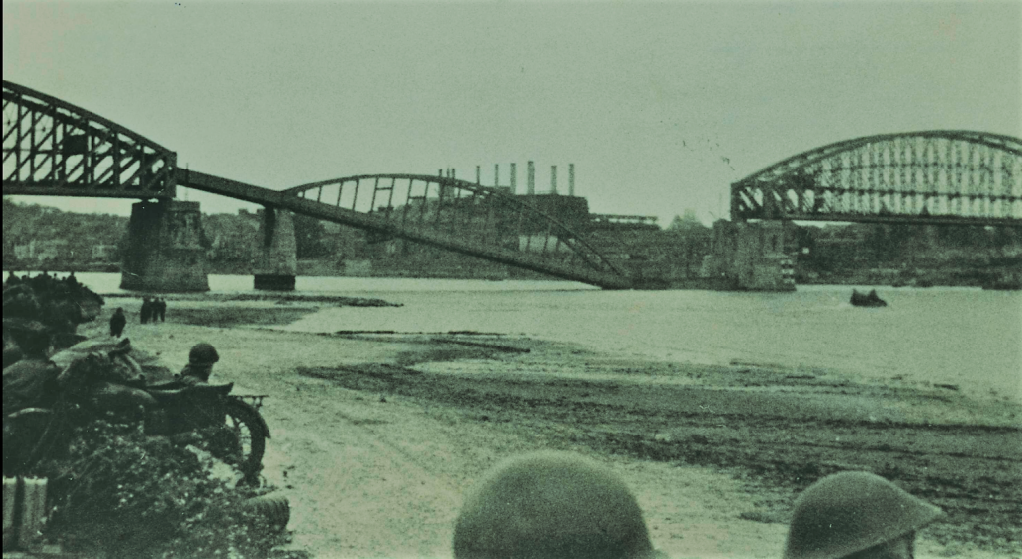
Finishing up with some impressions of Operation Market Garden.


Sources
https://www.liberationroute.com/stories/184/operation-market-garden
https://www.nam.ac.uk/explore/market-garden
https://www.britannica.com/event/Operation-Market-Garden

Donation
Your readership is what makes my site a success, and I am truly passionate about providing you with valuable content. I have been doing this at no cost and will continue to do so. Your voluntary donation of $2 or more, if you are able, would be a significant contribution to the continuation of my work. However, I fully understand if you’re not in a position to do so. Your support, in any form, is greatly appreciated. Thank you. To donate, click on the credit/debit card icon of the card you will use. If you want to donate more than $2, just add a higher number in the box left from the PayPal link. Your generosity is greatly appreciated. Many thanks.
$2.00
 History of Sorts
Leave a comment