
Since we are on the eve of The Olympic Games of 2024, it’s the perfect time to have a look at some slightly odd Olympic events.
Art competitions were part of the 1924 Summer Olympics in Paris, France. Medals were awarded in five categories (architecture, literature, music, painting, and sculpture) for works inspired by sport-related themes.
The Irish artist Jack Butler Yeats(brother of W.B Yeats) won the silver medal for his painting “Liffey Swim.”

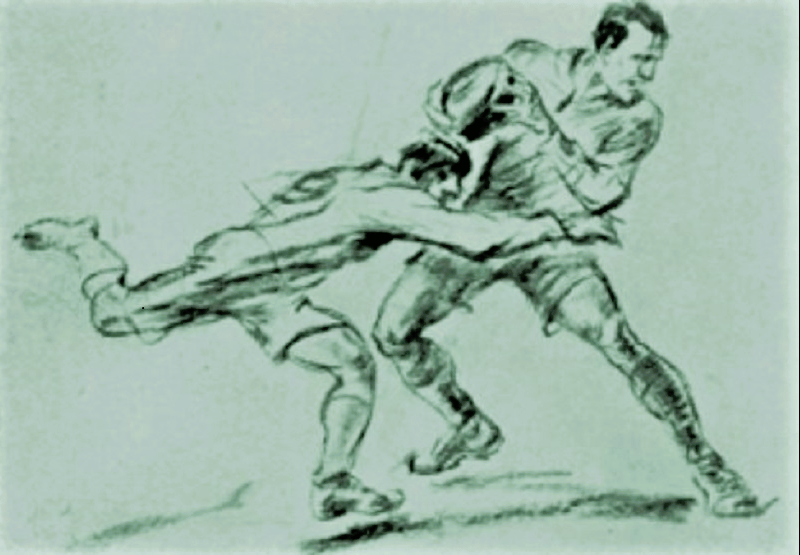
The gold medal was awarded to Luxembourg artist Jean Jacoby for his paintings “Corner,” “Départ,” and “Rugby.” He repeated this in 1928 and won a second gold medal, making him the only artist who won two medals at the Olympic games.
Hot Air Balloon Racing During the 1900 Olympics
The 1900 Paris Olympics, officially known as the Games of the II Olympiad, were a unique and eclectic event, integrating a variety of sports and activities, some of which have since become obsolete in the Olympic context. Among these was hot air balloon racing, a fascinating and pioneering endeavor that showcased both the spirit of innovation and the thrill of aerial competition. This essay explores the significance, events, and legacy of hot air balloon racing in the 1900 Olympics.
The inclusion of hot air ballooning in the 1900 Olympics reflected the period’s enthusiasm for aviation and technological advancements. The late 19th and early 20th centuries were a time of significant experimentation and progress in aeronautics. Ballooning, having evolved since the Montgolfier brothers’ first flight in 1783, had become a symbol of human ingenuity and a practical means of exploring the skies. By the time of the Paris Olympics, ballooning had garnered a dedicated following and was considered a serious sport.
Hot air ballooning in the 1900 Olympics included a series of competitive events that tested various aspects of ballooning skills. The Olympics categorized each event as a competition based on distance, duration, and specific targets. Each category required different strategies and highlighted different skills:
- Distance Competitions: Pilots aimed to travel the farthest distance from the starting point. This event tested the balloonists’ ability to navigate using wind currents and weather patterns, showcasing their strategic planning and adaptability.
- Duration Competitions: The goal was to stay aloft for the longest period. This required careful fuel management and a deep understanding of meteorological conditions to maintain stable flight over extended periods.
- Target-Based Competitions: Participants were assigned the task of reaching specific targets or dropping markers as close to designated points as possible. Precision and control were critical, emphasizing the pilot’s skill in maneuvering the balloon accurately.
The 1900 Olympics attracted some of the era’s most skilled aeronauts, including professional pilots and enthusiastic amateurs. The competition was fierce, and the achievements were remarkable, with pilots demonstrating incredible prowess and daring. One of the notable participants was Henri de La Vaulx, a celebrated French balloonist who set several records during his career. The performances of these aeronauts captivated the public and added a sense of adventure and spectacle to the Olympics.
Balloon racing during the 1900 Olympics had its challenges. The pilots had to contend with unpredictable weather, limited navigational tools, and the inherent risks of early aviation. These challenges, however, spurred innovation. Balloonists experimented with different designs, materials, and techniques to improve their performance and safety. The competitive environment encouraged advancements that contributed to the broader field of aeronautics.
Although hot air ballooning did not become a permanent fixture in the Olympic Games, its inclusion in 1900 left a lasting impact. It highlighted the spirit of exploration and the human desire to push the boundaries of what was possible. The event also demonstrated the potential of aviation as a competitive sport and as a means of scientific inquiry.
The 1900 hot air balloon competitions are a testament to the era’s spirit of adventure and technological curiosity. They provided a platform for aeronauts to showcase their skills and for the public to engage with the possibilities of flight. The legacy of these events lives on in the continued fascination with ballooning and its role in the history of aviation.

Pistol Dueling During the 1906 and 1908 Olympics
Pistol dueling, a sport that evokes images of historical duels of honor, was an unusual and short-lived event in the Olympic Games. It made appearances in the Intercalated Games of 1906 in Athens and the 1908 London Olympics. These events are notable not only for their unique nature but also for reflecting the historical fascination with marksmanship and the evolving nature of competitive sports during the early 20th century.
The early 1900s were a time of experimentation and exploration in the realm of sports. The modern Olympic Games revived in 1896, expanded their range of events to include various traditional and contemporary activities. Pistol dueling, inspired by the aristocratic practice of settling disputes through formal duels, was adapted into a competitive sport that emphasized precision and skill rather than personal conflict.
The 1906 Intercalated Games
The 1906 Intercalated Games, held in Athens, were organized as a supplementary set of games between the main Olympic events. While the games are not officially recognized by the International Olympic Committee today, they were significant at the time. They included a variety of sports, one of which was pistol dueling.
In these games, competitors used wax bullets and protective equipment, which distinguished the sport from actual dueling practices. The event tested the participants’ accuracy and speed, with targets often set at a distance of 20 to 30 meters. The wax bullets ensured safety while still providing a realistic challenge for the marksmen.
The 1908 London Olympics
The 1908 London Olympics further developed pistol dueling, incorporating it as a demonstration event rather than a medal competition. This decision highlighted the sport’s experimental nature and its role in showcasing diverse athletic skills.
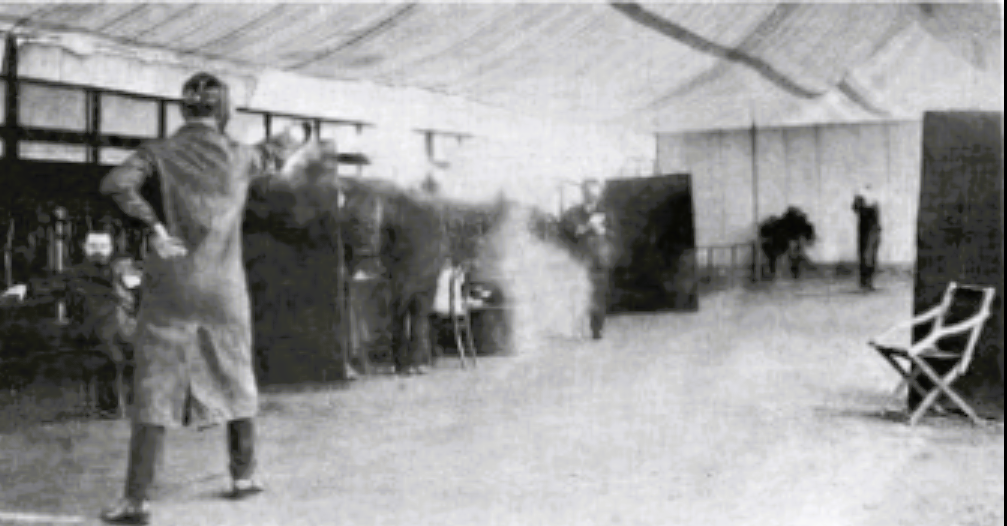
In London, the format involved competitors firing at mannequins dressed in frock coats, which added a dramatic and somewhat theatrical element to the event. Points were awarded by positioning the targets at varying distances and based on accuracy and hitting the vital areas on the mannequins. The purpose of this setup was to replicate the conditions of an actual duel while prioritizing safety and sportsmanship.
The competitors in pistol dueling events were often skilled marksmen from various backgrounds, including military officers and sports shooters. Their participation reflected the broader cultural interest in marksmanship and the historical practice of dueling as a test of honor and skill.
One notable figure in the history of Olympic shooting sports was Leon de Lunden, a Belgian shooter who participated in multiple shooting events across different Olympic Games. While specific records of individual performances in the pistol dueling events of 1906 and 1908 are scarce, the presence of skilled marksmen like de Lunden highlighted the high level of competition.
Pistol dueling as an Olympic event faced several challenges. The primary concern was safety, given the inherent risks associated with firearms. The use of wax bullets and protective gear was a crucial innovation that allowed the sport to be controlled and safe. Additionally, the events required careful organization and supervision to ensure fairness and accuracy in scoring.
The introduction of mannequins as targets in 1908 was another innovation that added a layer of realism and complexity to the sport. This setup tested the competitors’ ability to aim accurately under simulated duel conditions, providing a unique challenge compared to standard target shooting.
The short-lived presence of pistol dueling in the Olympics also reflected the changing attitudes towards firearms and competitive sports in the early 20th century. As the Olympics continued to grow and modernize, events like pistol dueling gave way to more standardized and universally recognized shooting sports.
Running Deer Shooting During the 1908 Olympics
Running Deer Shooting, an event in the 1908 London Olympics, highlighted the early 20th-century enthusiasm for marksmanship and hunting sports. This unique and challenging competition tested shooters’ accuracy and timing, simulating the conditions of hunting a moving target.
The inclusion of running deer shooting in the 1908 Olympics reflects the period’s fascination with shooting sports and the cultural significance of hunting. At the turn of the century, marksmanship was a respected skill, often associated with military training and hunting traditions. The Olympics, seeking to showcase a wide range of athletic abilities, included various shooting events that attracted skilled marksmen from around the world.
The Running Deer Shooting involved shooting at a moving target designed to simulate a deer running across a forest clearing. The event was conducted using rifles, and the target moved along a distance track of about 110 meters from the shooter. The target, usually a life-sized deer silhouette, would appear briefly in the shooter’s line of sight, adding a layer of difficulty to the competition.
The event had two main formats:
- Single Shot: Competitors had one opportunity to hit the target as it moved across the designated area.
- Double Shot: Competitors had two chances to hit the target within the same run, requiring quick reloading and precision.
The scoring system awarded points based on the accuracy of the shots, with specific areas of the deer silhouette providing different point values. This system aimed to replicate the precision required in actual hunting scenarios, where hitting vital areas would be more critical.
The 1908 Olympics attracted top marksmen from various countries, many of whom had backgrounds in military or sport shooting. Notable competitors included:
- Oscar Swahn: A Swedish shooter renowned for his skill and longevity in the sport, Swahn was a significant figure in the running deer shooting event. He won multiple medals in shooting events across different Olympic Games and became a symbol of marksmanship excellence.
- Alfred Swahn: Oscar’s son, who also competed and succeeded in shooting events, including the running deer shooting. The Swahns were notable for their achievements and contributions to the sport.

The 1904 Olympic marathon in St. Louis is one of the most bizarre events in Olympic history, marked by a series of strange and controversial incidents:
- Unorthodox Winner:
- Thomas Hicks was declared the winner after being assisted by his trainers with a mixture of strychnine (a rat poison) and brandy to keep him going during the race. Hicks was in such a bad state at the finish that he had to be carried across the line by his trainers, though his feet touched the ground, which technically counted as finishing the race.
- Disqualified “Winner”:
- Fred Lorz initially crossed the finish line first, but later, the Olympics revealed that he had ridden in a car for 11 miles of the race. Upon being discovered, Lorz claimed that it was a practical joke and was promptly disqualified.
The race took place on dusty roads with temperatures reaching nearly 90°F (32°C). The course was full of hills, and there was only one water station, leading to severe dehydration among the runners.
Felix Carbajal, a Cuban postman, competed in the marathon. Despite stopping to chat with spectators and take a nap after eating rotten apples that caused stomach cramps, he managed to finish fourth.
The race included the first two African competitors in Olympic history, Len Taunyane and Jan Mashiani, both of whom were South African Tswana tribesmen. They ran barefoot and finished ninth and twelfth, respectively. Taunyane was chased nearly a mile off-course by aggressive dogs.
The 1904 marathon’s chaotic nature exposed the need for better organization, more precise rules, and more stringent safety measures in future Olympic events. It also showcased the extreme lengths to which athletes and their supporters might go to win, foreshadowing modern issues with doping and cheating in sports.

During the 1964 Tokyo Olympic Games, Zambia became the first country ever to change its name and flag between the opening and closing ceremonies of an Olympic Games. The country entered the 1964 Tokyo Summer Olympics as Northern Rhodesia and left in the closing ceremony as Zambia on 24 October, the day independence was formally declared.
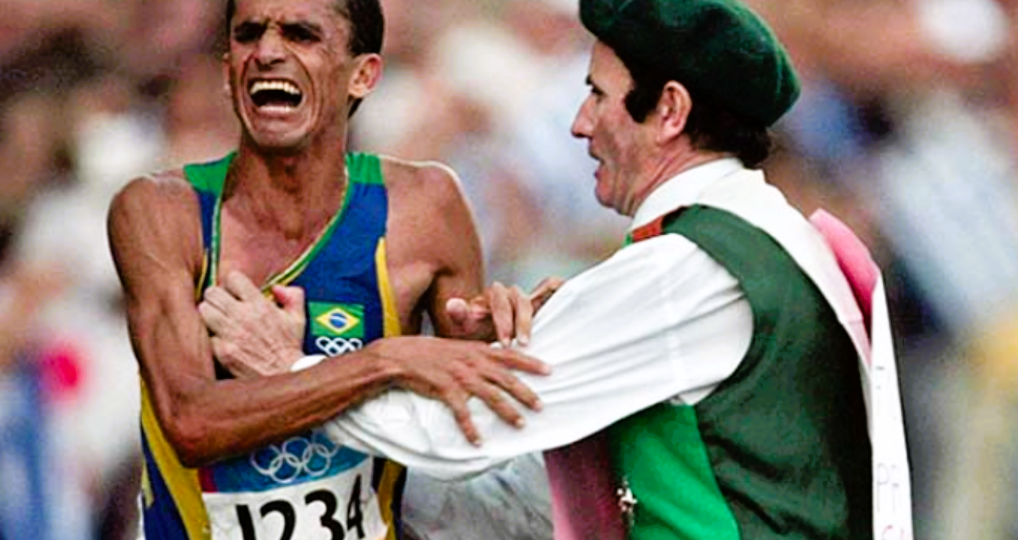
Vanderlei de Lima’s experience in the 2004 Olympic marathon is one of the most memorable and dramatic moments in Olympic history.
Vanderlei de Lima, a Brazilian long-distance runner, was leading the marathon race at the 2004 Athens Olympics with about four miles to go. He had a significant lead and was on track to win the gold medal.
Around the 23-mile mark, a spectator, the former Irish priest Cornelius Horan, attacked de Lima. Horan pushed de Lima off the course and disrupted his rhythm. The crowd and security swiftly removed the assailant, but the incident caused de Lima to lose valuable time and momentum.
Despite the attack, de Lima showed remarkable composure and sportsmanship. He continued the race, though he lost his leading position. Ultimately, he finished third, earning the bronze medal. His positive attitude and sportsmanlike behavior won him widespread admiration.
De Lima’s perseverance and grace under pressure were recognized globally. He received the Pierre de Coubertin Medal for Sportsmanship by the International Olympic Committee (IOC). This honor is given to athletes who demonstrate exceptional sportsmanship and Olympism.
Now, I don’t know what you might think, but I think the old Olympic events sound a lot more interesting than the more recent ones.
Sources
https://www.history.com/news/olympic-events-discontinued
https://www.thecoolist.com/strange-olympics-sports/
https://www.britannica.com/list/5-unusual-olympic-sports
https://olympics.com/en/news/swahn-s-way-leads-to-double-shooting-gold
Donation
I am passionate about my site and I know you all like reading my blogs. I have been doing this at no cost and will continue to do so. All I ask is for a voluntary donation of $2, however if you are not in a position to do so I can fully understand, maybe next time then. Thank you. To donate click on the credit/debit card icon of the card you will use. If you want to donate more then $2 just add a higher number in the box left from the PayPal link. Many thanks.
$2.00
 History of Sorts
Leave a comment