
Vere Thomas St. Leger Goold was born in 1853 in Clonmel, County Tipperary, Ireland, into an aristocratic family with a strong military background. The Goolds were part of the Anglo-Irish upper class, and young Vere was afforded all the advantages of a privileged upbringing: access to elite education, exposure to genteel society, and the leisure to pursue activities such as lawn tennis, which was rapidly gaining popularity among the British upper classes in the late 19th century.
Goold would rise to prominence in the world of sports, becoming one of the early stars of lawn tennis, a game that was then in its infancy but already a fashionable pastime in Britain and Ireland. He reached the pinnacle of his tennis career in 1879 when he won the inaugural Irish Lawn Tennis Championships. This victory established him as one of the best players of his time and earned him a spot at the prestigious Wimbledon Championships. Although he did not win Wimbledon—he lost in the first round—his status as a national sporting hero was secure.
However, Goold’s life after tennis followed a far darker trajectory. This essay explores the arc of Vere Goold’s life, from his athletic achievements and social connections to the scandalous murder case that brought about his ruin and made him the first person ever convicted of murder in the Principality of Monaco.
The Rise: A Sportsman of Promise
Vere Goold’s early tennis success reflected not only his athletic ability but also the spirit of the age. Lawn tennis was becoming a key symbol of Victorian ideals: it emphasized discipline, grace, and sportsmanship, particularly among the upper classes. Goold’s victory in the Irish Championships, which predated even Wimbledon, positioned him as a pioneer in the sport. At a time when international athletic competition was still in its infancy, Goold’s prominence brought considerable prestige.

Despite his early promise, Goold’s career in tennis was short-lived. He competed at Wimbledon in 1879 and 1880 but failed to replicate his earlier success. He soon disappeared from the sporting world altogether. Though records from this period are scant, it is generally believed that his exit from tennis stemmed from a mix of declining performance and personal issues, including health problems and a growing dependence on drugs and alcohol.
Goold was renowned for his elegant backhand and widely expected to win the Wimbledon Championships just weeks later. In what would be both his first and only appearance at The Championship, he advanced to the final with commanding victories over F. Durant (6–1, 6–2, 6–3), J. D. Vans Agnew (6–2, 6–3, 6–1), A. J. Mulholland (6–4, 2–6, 6–1, 6–4), and G. E. Tabor (6–2, 6–5, 5–6, 6–3). However, in the final, he appeared to be suffering from a severe hangover and was soundly defeated by the Reverend John Thorneycroft Hartley, 6–4, 6–2, 6–2.
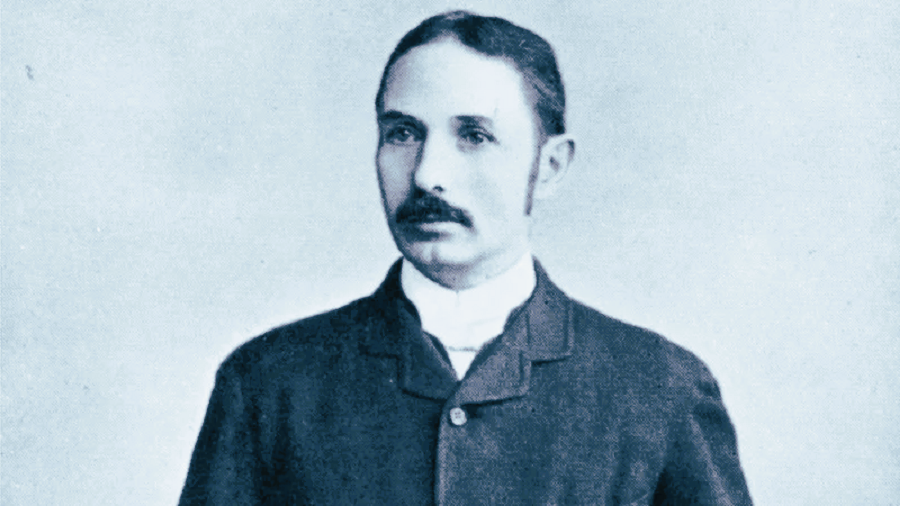
Hartley later reflected on his opponent, describing him as “a cheery wild Irishman, Irish champion, and a very pretty player.” He noted that Goold volleyed more than most players that year but hinted at flaws in his game, adding, “There were some weaknesses I suppose in his play, as being fit and well after a night’s rest I won three sets straight off” (50 Years of Wimbledon, 15).
The Fall: Decline and a Troubled Marriage
After his departure from the tennis world, Goold’s life entered a phase of steady decline. The turning point came in 1891 when he married a Frenchwoman named Marie Violet Giraudin. A divorcee of reportedly dubious repute, Violet had lived in various parts of Europe and claimed to be a dressmaker to high society, although there was little evidence to support her claims.
The couple settled in various places in Britain and on the continent, living beyond their means and increasingly resorting to deception and fraud to sustain their lifestyle. Violet in particular was seen as a domineering figure who encouraged and perhaps manipulated Vere into increasingly desperate schemes. Both of them developed a taste for gambling, which eventually drew them to Monte Carlo, the glittering resort in the tiny Principality of Monaco.
In the early 1900s, Monte Carlo was synonymous with high-stakes gambling and opulence. It was here, in 1907, that their fates would intertwine with that of a wealthy Swedish widow named Emma Levin.
The Crime: Murder in Monte Carlo
Emma Levin was known to frequent the Monte Carlo Casino and, like the Goolds, enjoyed gambling. At some point, she befriended the couple. What began as a superficial social relationship soon turned transactional. Violet Goold reportedly promised to introduce Levin to high society and help her recover debts—possibly gambling-related—in exchange for financial assistance.
When Levin came to collect on the promises, things went terribly wrong. On August 4, 1907, Emma Levin was murdered in the Goolds’ hotel suite in Monte Carlo. The body was dismembered and stuffed into a trunk. The Goolds then attempted to ship the trunk to Marseilles, but their suspicious behavior—along with the stench of the decomposing body—led railway workers to discover the grisly contents.
Both Vere and Violet were arrested. Initially, each tried to blame the other, but eventually, Vere confessed to the murder, claiming he had acted alone to protect his wife. This confession, likely made in an attempt to shield Violet from punishment, did little to alter the course of justice.
The Trial and Aftermath: From Scandal to Tragedy
The trial was an international sensation, attracting lurid headlines in Britain, France, and beyond. The case combined the elements of high society scandal, gambling addiction, and brutal murder. It shocked polite society not only because of the crime’s gruesomeness but because it involved a former sports hero and his wife, who had moved in aristocratic circles.
Both Vere and Violet were found guilty. Violet was sentenced to death, but her sentence was commuted to life imprisonment. Vere Goold, despite his confession, received a life sentence of hard labor on Devil’s Island, the infamous French penal colony off the coast of French Guiana.
The once-proud sportsman, now disgraced and physically broken, did not survive long in such brutal conditions. Within a year of his arrival on Devil’s Island, Vere Goold died—possibly by suicide, although the exact cause remains unclear.
Legacy: A Tale of Ruin
Vere St. Leger Goold’s story remains one of the most tragic in the history of sports. His early success in tennis is largely overshadowed by the macabre events of his later life. His tale serves as a cautionary narrative: of how privilege, talent, and opportunity can be squandered through addiction, poor choices, and moral compromise.
Though he is remembered in tennis history for his contributions to the sport’s early competitive framework, his name is more often associated with one of the most notorious murder cases of the Edwardian era. In this sense, Goold is a historical paradox—an athlete whose potential was crushed under the weight of personal and moral failure.
His life and fall from grace have inspired various literary treatments and journalistic explorations, but they remain as much a psychological case study as a historical curiosity. Goold’s story is not just about crime; it is about identity, pressure, and the dangerous illusions of grandeur and entitlement that can accompany early success and social expectation.
Vere St. Leger Goold’s descent from celebrated tennis champion to convicted murderer encapsulates one of the most shocking personal declines in modern sporting history. It is a tale of a man whose early brilliance could not withstand the moral and emotional challenges of life outside the limelight. His case reminds us that even those who start life with all the apparent advantages are not immune to ruin, and that fame, especially when not rooted in personal integrity, can sometimes be the prelude to tragedy.
sources
https://www.bbc.com/news/world-europe-62072294
https://www.dib.ie/biography/goold-vere-thomas-st-leger-a9297
Donation
Your readership is what makes my site a success, and I am truly passionate about providing you with valuable content. I have been doing this at no cost and will continue to do so. Your voluntary donation of $2 or more, if you are able, would be a significant contribution to the continuation of my work. However, I fully understand if you’re not in a position to do so. Your support, in any form, is greatly appreciated. Thank you. To donate, click on the credit/debit card icon of the card you will use. If you want to donate more than $2, just add a higher number in the box left from the PayPal link. Your generosity is greatly appreciated. Many thanks.
$2.00
 History of Sorts
Leave a comment