
On August 6, 1945, the world witnessed the devastating power of nuclear warfare for the first time when the United States dropped an atomic bomb, code-named “Little Boy,” on the Japanese city of Hiroshima. This event marked a significant turning point in World War II and had profound implications for international relations, warfare, and ethics. The bombing of Hiroshima and the subsequent bombing of Nagasaki led to Japan’s surrender and the end of World War II. However, the use of atomic bombs has been a subject of intense moral and ethical debate ever since.
By mid-1945, World War II had ravaged much of Europe and Asia. Despite significant losses, Japan continued to resist Allied forces. The Allies sought a way to end the war swiftly to prevent further casualties. The Manhattan Project, a top-secret endeavor, had been underway since 1942 to develop an atomic bomb. Under the leadership of General Leslie Groves and scientist J. Robert Oppenheimer, the project culminated in the creation of two bombs: “Little Boy,” a uranium-based bomb, and “Fat Man,” a plutonium-based bomb.
President Harry S. Truman faced a monumental decision: to use the atomic bomb or continue conventional warfare. Several factors influenced his decision. First, there was the desire to end the war quickly and save lives, both American and Japanese. Conventional warfare, including a potential invasion of Japan, was expected to result in a high number of casualties on both sides. Second, there was a strategic consideration to demonstrate the power of the new weapon to the world, particularly the Soviet Union, which was emerging as a post-war superpower rival.
On the morning of August 6, 1945, a B-29 bomber named Enola Gay, piloted by Colonel Paul Tibbets, took off from Tinian Island carrying “Little Boy.” At 8:15 AM, the bomb was dropped over Hiroshima, a city of industrial and military significance. It detonated approximately 600 meters above the ground with an explosive yield equivalent to approximately 15,000 tons of TNT.

The immediate effects were catastrophic. The explosion obliterated buildings within a one-mile radius and ignited fires across the city. An estimated 70,000 to 80,000 people died instantly, and many more succumbed to injuries and radiation sickness in the following days, weeks, and years. By the end of 1945, the death toll was estimated to be around 140,000.
The devastation of Hiroshima was followed by the bombing of Nagasaki on August 9, 1945. Faced with such unprecedented destruction, Emperor Hirohito announced Japan’s surrender on August 15, 1945, bringing World War II to an end.
The bombings of Hiroshima and Nagasaki had profound implications. They demonstrated the destructive power of nuclear weapons and ushered in the nuclear age. The ethical implications of using such a weapon against civilian populations have been debated extensively. Critics argue that the bombings were unnecessary and inhumane, while proponents contend that they were justified to bring a swift end to the war and save lives in the long run.
Hiroshima today is a city dedicated to peace and nuclear disarmament. The Hiroshima Peace Memorial Park and the Atomic Bomb Dome stand as reminders of the horrors of nuclear warfare and the importance of working towards a world without nuclear weapons. The bombings also led to the establishment of international protocols and treaties aimed at controlling the proliferation of nuclear weapons and ensuring that such weapons are never used again.

The Jesuit priests Hugo Lassalle, Hubert Schiffer, Wilhelm Kleinsorge, and Hubert Cieslik were survivors of the atomic bombing of Hiroshima on August 6, 1945. Their experiences have been notable, particularly because of the circumstances surrounding their survival and the discussions that followed regarding their faith and the nature of the event.
1. Hugo Lassalle
Father Hugo Lassalle, a German Jesuit priest, was stationed in Hiroshima at the time of the bombing. He was within 1,400 meters of the hypocenter but survived the blast. Lassalle suffered injuries but later recovered. He was deeply involved in the aftermath, providing spiritual and material support to the victims. Lassalle continued to live in Japan and became a naturalized Japanese citizen, adopting the name “Makibi Enomiya.”
2. Hubert Schiffer
Father Hubert Schiffer, also a German Jesuit, was at the Jesuit residence in Hiroshima when the bomb exploded. Like his fellow priests, he was within a close range of the epicenter but survived with minor injuries. Schiffer later claimed that his survival and that of his companions was a miraculous event, attributing it to their dedication to their faith and the Rosary. This claim sparked much debate and interest in the years following the bombing.
3. Wilhelm Kleinsorge (later Makoto Takakura)
Father Wilhelm Kleinsorge was another German Jesuit priest in Hiroshima. He was significantly injured by the blast but survived. Kleinsorge was known for his compassion and dedication to helping the bomb victims, despite his injuries. He eventually became a Japanese citizen and took the name “Makoto Takakura.” John Hersey’s famous article, later published as the book “Hiroshima,” includes Kleinsorge’s account, detailing his experiences and those of other survivors.
4. Hubert Cieslik
Father Hubert Cieslik, a Polish Jesuit, was also present in Hiroshima during the bombing. Like his colleagues, he survived despite being in close proximity to the epicenter. Cieslik continued to work in Japan after the war, contributing to the local Catholic community.
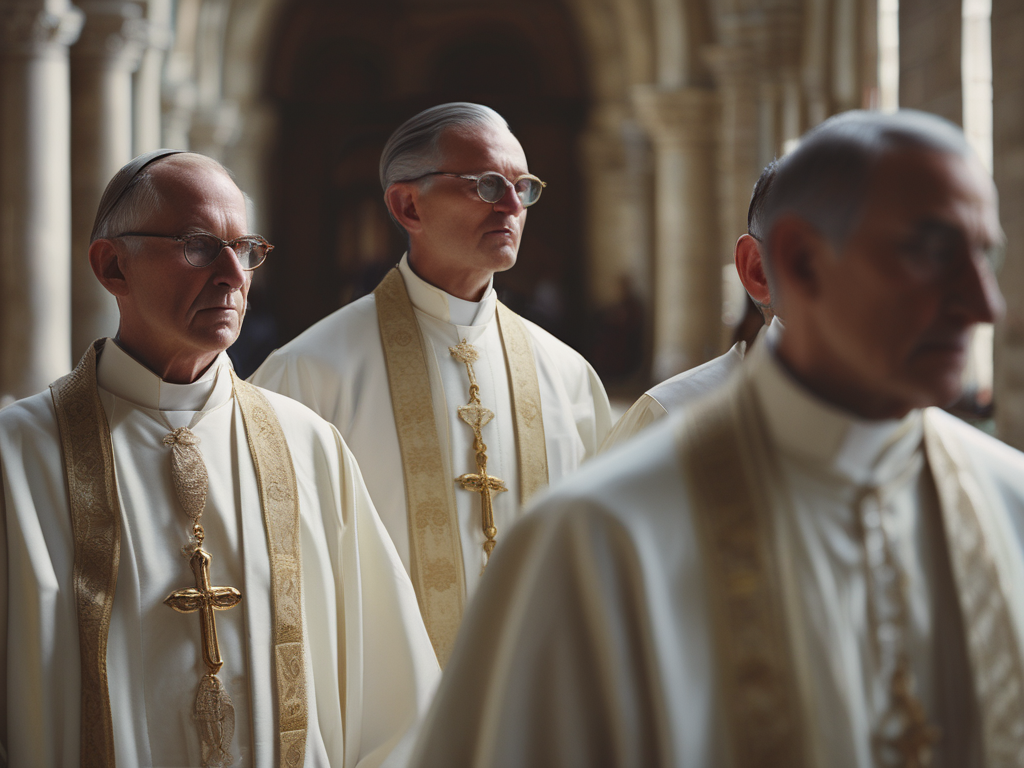
The Miracle of Hiroshima
The survival of these priests led to much speculation and discussion, particularly regarding the concept of a “miracle.” Despite being close to the blast’s epicenter, the Jesuits survived relatively unscathed, which some interpreted as divine intervention. The priests themselves attributed their survival to their devotion to the Blessed Virgin Mary and the recitation of the Rosary, a view shared by many in the Catholic community. However, some have also pointed to the structural integrity of their building and other physical factors as reasons for their survival.
The story of these Jesuits became a symbol of hope and faith for many and has been recounted in various accounts of the Hiroshima bombing, highlighting not only the devastating effects of nuclear weapons but also the remarkable stories of survival and resilience.
Sources
https://www.history.com/topics/world-war-ii/bombing-of-hiroshima-and-nagasaki
https://www.icanw.org/hiroshima_and_nagasaki_bombings
https://hpmmuseum.jp/?lang=eng
https://www.iwm.org.uk/history/the-atomic-bombs-that-ended-the-second-world-war
Donation
Your readership is what makes my site a success, and I am truly passionate about providing you with valuable content. I have been doing this at no cost and will continue to do so. Your voluntary donation of $2 or more, if you are able, would be a significant contribution to the continuation of my work. However, I fully understand if you’re not in a position to do so. Your support, in any form, is greatly appreciated. Thank you. To donate, click on the credit/debit card icon of the card you will use. If you want to donate more than $2, just add a higher number in the box left from the PayPal link. Your generosity is greatly appreciated. Many thanks.
$2.00
 History of Sorts
Leave a comment