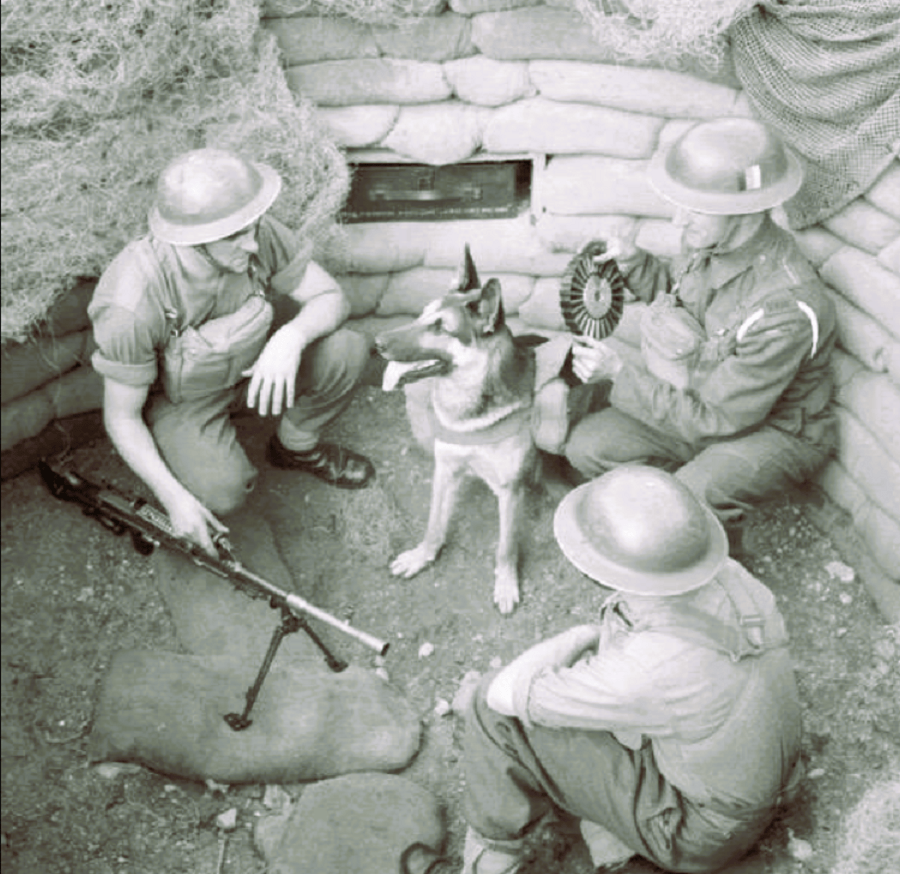
World War II was a global conflict that tested the limits of human resilience, innovation, and ingenuity. In addition to the millions of soldiers, civilians, and military machinery involved, a vast array of animals played indispensable roles throughout the war. From dogs and horses to pigeons and even reindeer, animals were employed for various purposes, often in ways that profoundly impacted the outcome of battles and campaigns. The use of animals during World War II exemplified not only their adaptability and importance in human history but also their crucial role in a war where modern technology alone was insufficient.
Dogs: Man’s Best Friend on the Battlefield
Dogs were arguably the most versatile and widely used animals during World War II. Various dog breeds, including German Shepherds, Dobermans, and Collies, were trained for multiple roles, making them invaluable assets in different theatres of war. One of their primary roles was as messengers, carrying critical information across dangerous and rugged terrains. Unlike humans, dogs could traverse battlefields more swiftly and evade enemy detection quickly, making them reliable in the heat of combat. Their contribution as messenger dogs saved countless lives by ensuring communication between units, especially when radio equipment was either unavailable or compromised.

In addition to communication, dogs served as sentries and patrol dogs, helping soldiers detect enemy movements or guarding military installations. Their keen sense of smell and heightened instincts made them ideal for sniffing out hidden enemies or alerting their handlers to potential dangers, such as ambushes or infiltration attempts. Specialized dogs were also trained to perform search and rescue operations, finding wounded soldiers trapped under debris or hidden in dense forests. These rescue dogs provided essential help to medics and contributed to higher survival rates among injured soldiers. Mine detection dogs were another critical asset, as they could detect landmines and explosives before soldiers stepped into dangerous areas. This role was vital in preserving lives, particularly as retreating forces often laid mines to slow down advancing troops.
Horses and Mules: The Backbone of Logistics
Despite the mechanization of war, animals like horses and mules remained essential, especially in regions where modern vehicles were impractical. Horses and mules were indispensable in mountainous regions, dense forests, and even in snowy landscapes where trucks or tanks could not operate effectively. These pack animals were used to carry ammunition, food supplies, weapons, and medical equipment to frontline troops, particularly in places like the Alps, the jungles of Burma, and the Soviet Union’s rugged terrain.
While much of the world’s armies were increasingly mechanized by World War II, cavalry units were still employed in some cases. Mounted troops provided reconnaissance and quick mobility, particularly in the early stages of the war, before motorized vehicles became more widely available. In many rural or less-developed areas, animals like horses were critical for maintaining supply lines. Even though their role diminished as tanks and other vehicles took over, horses remained crucial in areas where the mechanized army could not go.

Carrier Pigeons: Winged Warriors of Communication
The use of carrier pigeons in warfare dates back centuries, but they reached new heights of importance during World War II. In situations where traditional forms of communication, such as radio or telephone lines, were disrupted by enemy action or geographic challenges, pigeons were a simple but highly effective solution. These birds were trained to carry small capsules containing vital messages across vast distances, often traveling behind enemy lines.

One of the most notable operations involving pigeons was Operation Columba, conducted by British intelligence. In this operation, pigeons were dropped into occupied Europe, where local resistance fighters and civilians could place intelligence reports in small containers attached to the birds. The pigeons would then fly back to Britain, carrying crucial information about German troop movements, resistance efforts, and military installations. Pigeons were also used to send messages during active combat when soldiers were cut off from other forms of communication.
Cher Ami, a famous pigeon from World War I, inspired the continued use of pigeons in World War II. Cher Ami had saved nearly 200 soldiers by delivering a message despite being injured, a testament to the courage and loyalty these birds displayed. Many pigeons, though lesser-known, performed similarly heroic feats during World War II, often saving entire units by ensuring vital information reached commanders in time.

Elephants, Reindeer, and Camels: Regional Specificity and Strength
In certain regions, less traditional animals also played key roles during World War II. For example, in the jungles of Burma, elephants were employed by both Allied and Axis forces. They transported heavy artillery, supplies, and construction materials through dense jungle where vehicles could not pass. Their ability to carry large loads and navigate treacherous terrain made them indispensable in the harsh conditions of the Burma Campaign.
In the Arctic regions of the Soviet Union and Finland, reindeer were used to transport supplies and soldiers across snow-covered landscapes. Finnish forces, in particular, relied on reindeer for their ability to move swiftly in extreme cold, making them essential for survival and mobility in remote areas. Similarly, in the North African desert, camels were used by the British and German forces to transport supplies across the harsh, arid landscape, where fuel and water were scarce. Camels, adapted to the desert environment, played a critical role in the North African Campaign.
Cats, Glowworms, and the Role of Unconventional Animals
While dogs, horses, pigeons, and large animals took on highly visible roles, other animals contributed in less obvious but equally important ways. Cats were primarily used on ships and in barracks to control rodent populations, which posed a significant threat to food supplies and the health of soldiers. These cats, often unofficial mascots, helped maintain hygiene by keeping rats at bay and providing a sense of companionship to soldiers and sailors alike.
Glowworms were also used in innovative ways during World War II. In some cases, soldiers used glowworms to provide light for reading maps or messages at night without giving away their positions to the enemy. This creative use of natural bioluminescence offered a tactical advantage by preserving the element of surprise during nighttime operations.
The use of animals during World War II demonstrated both their practical value and the deep bond between humans and animals in times of crisis. Whether they were carrying messages across enemy lines, transporting heavy loads through impassable terrain, or providing emotional support to soldiers, animals were vital to the success of military operations. In many cases, animals performed tasks that technology simply could not accomplish, illustrating that even in the most mechanized war in human history, the contributions of animals were irreplaceable. Their courage, loyalty, and versatility played a significant role in the eventual Allied victory and left a lasting legacy in both the military and the broader human-animal relationship.
Sources
https://allthatsinteresting.com/military-animals#1
https://allthatsinteresting.com/army-mascots#1
Donation
Your readership is what makes my site a success, and I am truly passionate about providing you with valuable content. I have been doing this at no cost and will continue to do so. Your voluntary donation of $2 or more, if you are able, would be a significant contribution to the continuation of my work. However, I fully understand if you’re not in a position to do so. Your support, in any form, is greatly appreciated. Thank you. To donate, click on the credit/debit card icon of the card you will use. If you want to donate more than $2, just add a higher number in the box left from the PayPal link. Your generosity is greatly appreciated. Many thanks.
$2.00
 History of Sorts
Leave a comment