Many people view Halloween as a festival centered on the eerie and frightening, where people dress up in scary costumes to give others a good scare. What I find even more curious is the tradition of “trick-or-treating.” On any other day, we warn our children not to take candy from strangers, but on October 31, we flip the script entirely. Suddenly, we encourage them to head out confidently, knock on strangers’ doors, and ask for treats.

On the other hand, some people think of Halloween as the night when Jamie Lee Curtis’s character is chased by the masked, knife-wielding Michael Myers. However, Halloween’s true origins couldn’t be further from this modern portrayal. The holiday dates back nearly 2,000 years.
To uncover Halloween’s roots, we have to look to the ancient Celtic festival of Samhain, which was celebrated in Ireland long before today’s traditions took shape.
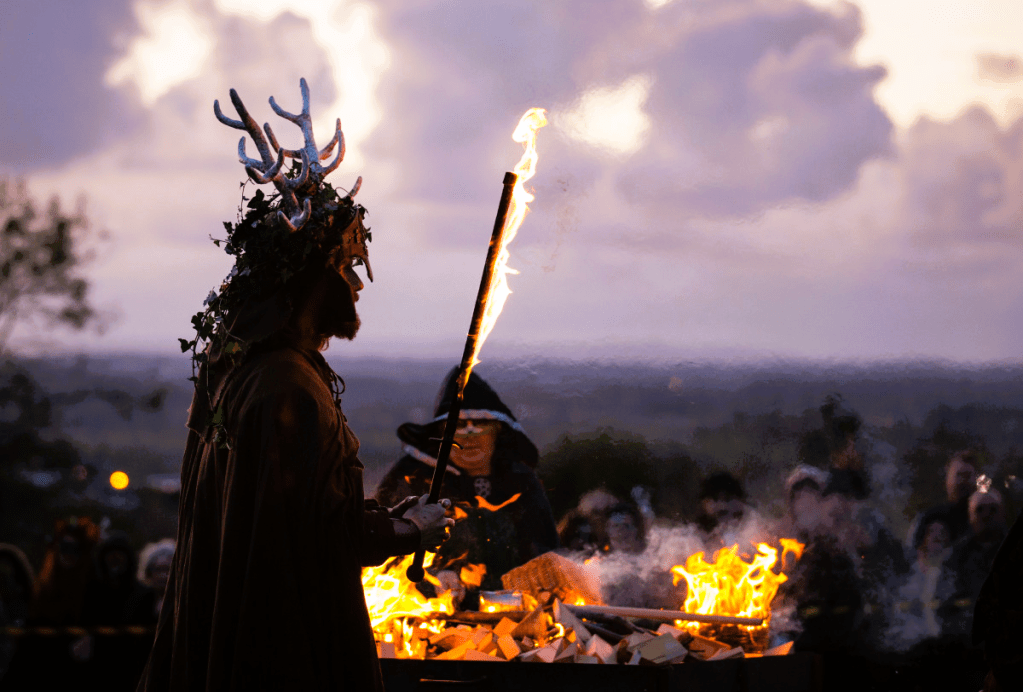
Samhain, (/ˈsɑːwɪn/ SAH-win, /ˈsaʊɪn/ SOW-in, Irish: [ˈsˠəunʲ], an ancient Celtic festival celebrated on October 31, marks a fascinating and complex tradition rooted in the beliefs and customs of early Ireland, Scotland, and other Celtic regions. For the Celts, who lived over 2,000 years ago, Samhain was not only a celebration of the end of the harvest but also a time to recognize and honor the thin veil between the world of the living and the spirit world. It was a night marked by reverence, superstition, and rituals designed to ensure prosperity and protection for the coming year.
The Celtic calendar was split into two halves: the lighter half, or summer, and the darker half, or winter. Samhain signaled the end of the light and the arrival of the dark, the season when days grew shorter and the harvest season closed. This annual cycle had profound significance in Celtic life, as winter was a time of both harsh survival and rest for the community. As such, Samhain was a critical celebration marking the transition between seasons, a moment to reflect on both the past year’s successes and the uncertain survival ahead during the cold winter.
Samhain was also deeply spiritual, as the Celts believed that on this night, the boundary between the living and the dead grew thin, allowing spirits to cross over to the world of the living.

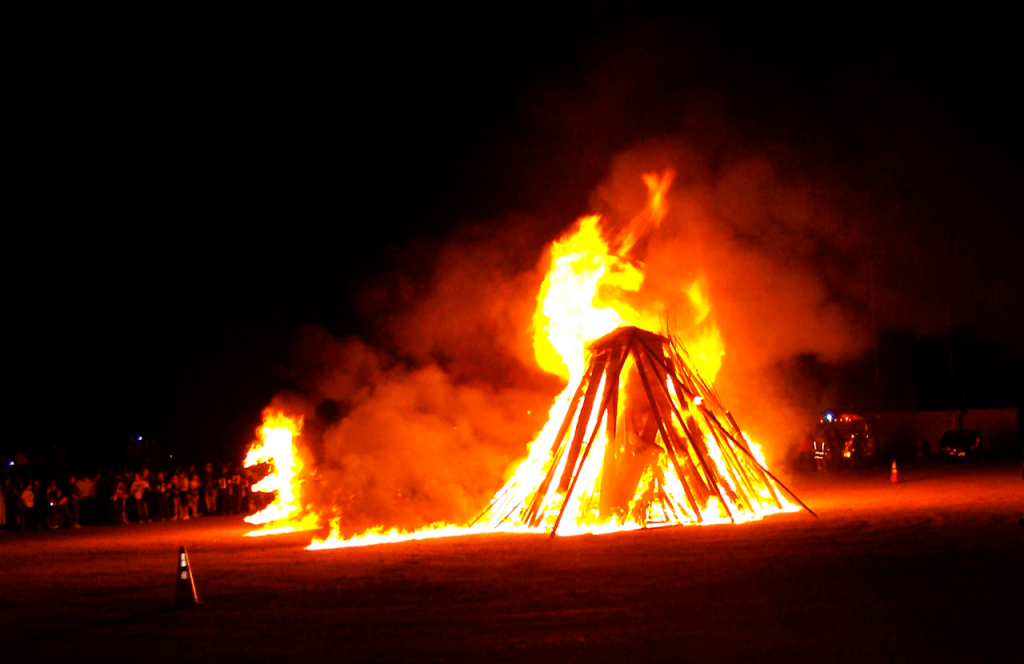
The dead were thought to return to visit loved ones, while fairies and other supernatural beings roamed freely. This time of “crossing” was thought to hold both benevolent and potentially dangerous powers. Therefore, people took measures to ensure their safety and appease the spirits. Bonfires were a core part of Samhain ceremonies, and extensive community bonfires were lit on hilltops, both to honor the gods and to keep away unwelcome spirits. Celts would burn offerings, sometimes including crops or animals, as sacrifices to ensure the community’s safety and prosperity through the winter.
Another protective practice was the tradition of wearing disguises. Many Celts wore costumes made from animal skins and masks to blend in with or confuse the spirits, believing that they could avoid being recognized by wandering souls or spirits with harmful intentions. This practice of dressing in costume as a form of protection is thought to have laid the foundation for modern Halloween costume traditions.
Samhain was not only about the supernatural; it was also a communal time when family and friends gathered to prepare for the winter months. Food played a crucial role, both as a means of sustenance and as offerings to appease spirits or welcome the dead. Many households would prepare a place at the table for deceased loved ones, leaving out food and drink as a way of honoring their memory and inviting them to visit.

In the Christian era, Samhain’s traditions and themes were incorporated into the church calendar. As Christianity spread, the church sought to Christianize Samhain by transforming its customs into celebrations more aligned with Christian beliefs. By the 8th century, the Catholic Church established All Saints’ Day on November 1, a day to honor saints, and later, All Souls’ Day on November 2, a day to honor all souls of the departed. The evening before All Saints’ Day became known as All Hallows’ Eve and eventually Halloween. Despite these efforts to Christianize it, the core themes of Samhain—honoring the dead, the blurring of worlds, and communal celebration—endured through Halloween, a modern holiday with clear roots in this ancient festival.
Today, Samhain continues to be observed by Neopagan and Wiccan communities as a spiritual holiday that honors its original meanings. For many, it remains a night to remember ancestors and reflect on mortality while also celebrating the natural cycle of death and rebirth in a more symbolic or meditative way. In rural Ireland and Scotland, some of the traditional Samhain customs are still practiced, and the festival’s influence can be seen globally in the ways that people celebrate the cycle of life and death.
Samhain, with its mix of reverence and celebration, of honoring the past and preparing for the future, remains a powerful expression of human connection to nature, the cycles of life, and the mysteries of existence. Though it originated long ago, Samhain endures in various forms as a reminder of humanity’s enduring curiosity about the supernatural and our shared desire to honor those who came before us.
Sources
https://heritageireland.ie/2023/09/samhain-the-roots-of-halloween/
https://www.britannica.com/topic/Samhain
https://www.history.com/topics/holidays/samhain
Donation
Your readership is what makes my site a success, and I am truly passionate about providing you with valuable content. I have been doing this at no cost and will continue to do so. Your voluntary donation of $2 or more, if you are able, would be a significant contribution to the continuation of my work. However, I fully understand if you’re not in a position to do so. Your support, in any form, is greatly appreciated. Thank you. To donate, click on the credit/debit card icon of the card you will use. If you want to donate more than $2, just add a higher number in the box left from the PayPal link. Your generosity is greatly appreciated. Many thanks.
$2.00
 History of Sorts
Leave a comment