
The phrase “our man in New York” most commonly refers to William Stephenson, the Canadian-born MI6 officer who led a covert British intelligence operation in the United States aimed at shaping public opinion and encouraging American entry into the Second World War. His remarkable work is the focus of Henry Hemming’s critically acclaimed 2019 non-fiction book, Our Man in New York: The British Plot to Bring America into the Second World War.
About William Stephenson’s Operation
The Mission:
In June 1940, with Britain on the brink of defeat, Stephenson was tasked by the head of MI6 to “organise” American public opinion, which at the time was predominantly isolationist.
The Methods:
From New York, he built an extensive intelligence and influence network—later described by The Washington Post as “arguably the most effective in history.” The operation employed tactics such as spreading disinformation, manipulating opinion polls, and covertly influencing U.S. politics to counter pro-Nazi sentiment and isolationist figures like Charles Lindbergh.
The Outcome:
Stephenson’s intelligence and influence campaign, combining private and classified information, is credited with helping shift American public opinion and laying the groundwork for U.S. entry into the war, ultimately altering the course of history.
Camp X: The Secret Canadian Spy School That Helped Shape Modern Intelligence
Tucked quietly along the northern shore of Lake Ontario—between Whitby and Oshawa, Canada—once stood one of the most influential espionage schools the world had never heard of. Known simply as Camp X, this covert installation played a pivotal role in World War II intelligence operations. From its opening in 1941 to its dismantling after the war, Camp X trained a generation of Allied spies, supported global communications, and helped lay the groundwork for what would eventually become the CIA.
Though little remains at the site today, its impact on international intelligence work still echoes through history.
Origins: Stephenson’s Secret Vision
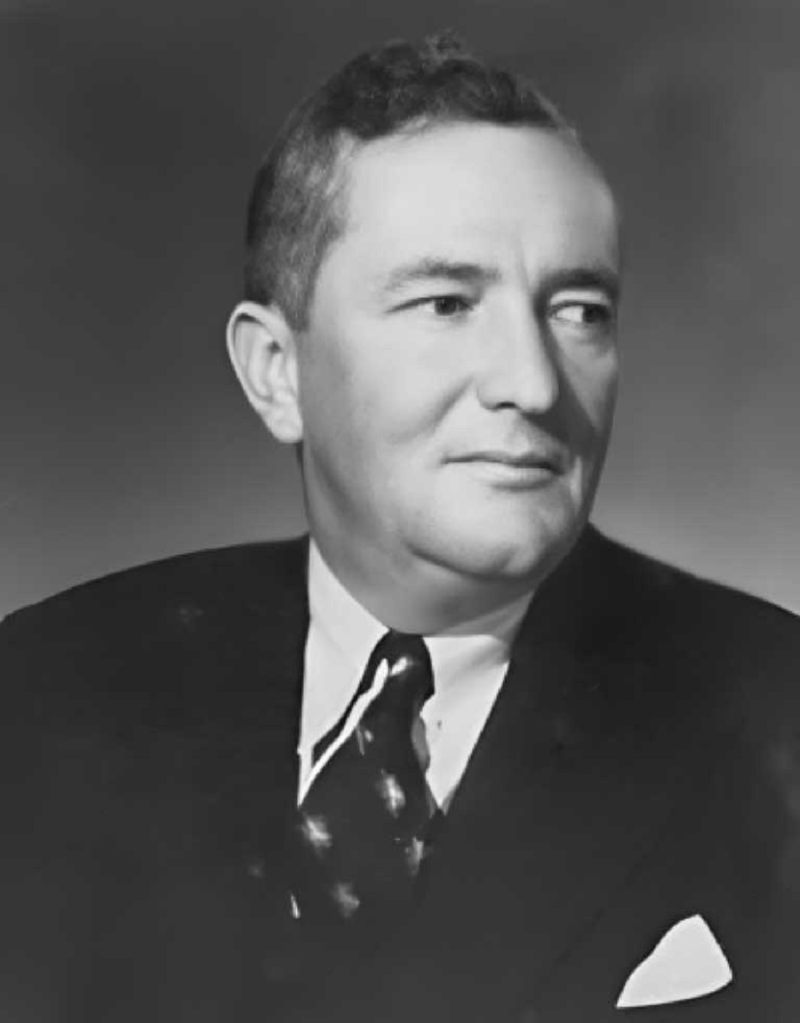
The story of Camp X begins with Sir William Stephenson, the Winnipeg-born businessman turned master spy better known by his codename, “Intrepid.” As head of British Security Co-ordination (BSC) in New York, Stephenson was responsible for coordinating covert Allied activities in the Western Hemisphere.
Recognizing the need for a North American base where espionage agents could train safely away from prying eyes, Stephenson helped establish a secret facility just across the U.S. border. Officially designated Special Training School No. 103, it soon earned a reputation for producing some of the most capable operatives in the war.
Stephenson’s influence on the camp—and, by extension, on Allied intelligence—cannot be overstated. He was a driving force behind integrating British and American espionage efforts and nurturing the early development of the Office of Strategic Services (OSS), the precursor to the CIA.
Training Methods: The Making of a Spy
Agents who passed through Camp X received a form of instruction that was, at the time, unmatched in sophistication and realism. Many techniques remain in use in modern intelligence training.
- Sabotage and Demolitions
Operatives learned how to disable railroads, bridges, communication lines, and infrastructure using both improvised and military-grade explosives. This wasn’t theoretical training—trainees practiced real demolitions in isolated sections of the camp’s grounds.
- Silent Killing and Unarmed Combat
Instructors taught the notorious “silent killing” methods developed for the British SOE. These techniques focused on quick, effective, and discreet incapacitation, emphasizing surprise and efficiency.
- Covert Movement and Urban Espionage
Agents trained in surveillance, counter-surveillance, tailing, and avoiding detection in both urban and rural environments. The curriculum simulated real-world scenarios, complete with role-playing informants and enemies.
- Interrogation and Counterintelligence
Camp X prepared operatives to resist interrogations, detect deception, handle captured enemy personnel, and evaluate human sources.
- Cryptography and Morse Code
Communication was the lifeblood of covert operations. Trainees learned encryption, decryption, high-speed Morse code, and clandestine radio operation—skills essential for agents working behind enemy lines.
These programs were tailored to each operative’s mission, whether they were destined for France, the Balkans, or Asia.
HYDRA: The Communication Nerve Center of the Allies
Beyond its role as a training school, Camp X housed one of the most advanced communications hubs in the Western Hemisphere: HYDRA.
HYDRA’s purpose was threefold:
Secure transmission of encrypted messages between Allied leadership in North America and Britain
Reception and decoding of intercepted Axis communications
Support for codebreakers, including collaboration with teams associated with Bletchley Park
Equipped with cutting-edge transmitters, receivers, and encryption equipment, HYDRA ensured reliable communication at a time when interception, jamming, and disruption were constant threats.
Because of its strategic location and powerful systems, HYDRA became a vital link in the Allied intelligence chain.
Camp X and the Birth of the CIA
Camp X was established on December 6, 1941, by Sir William Stephenson, the head of British Security Co-ordination (BSC). Stephenson—a Winnipeg-born Canadian and close confidant of both Winston Churchill and Franklin D. Roosevelt—created the facility to serve as a vital link between Britain and the United States at a time when the U.S., constrained by the Neutrality Act, was prohibited from directly entering the Second World War.
One of the lesser-known—but most significant—legacies of Camp X is its influence on the early American intelligence community.
Before World War II, the United States had no centralized intelligence agency. When the OSS was formed, many of its first officers lacked experience in espionage. Camp X became a training ground for these Americans, providing them with critical instruction in fieldcraft and covert operations.
There are credible claims (though some remain unconfirmed due to destroyed records) that future CIA Director William Casey trained at Camp X.
More broadly, the doctrines, methods, and philosophies developed at Camp X were embedded in the DNA of the emerging American intelligence apparatus. When the CIA was formally established in 1947, the agency inherited techniques pioneered at Camp X—from sabotage tactics to communications protocols.
After the War: Decline, Demolition, and Memory
Camp X was decommissioned in 1946, and in the decades that followed, most of its buildings were demolished, partly to preserve secrecy and partly due to disuse.
Today, the site is home to Intrepid Park, named in honor of William Stephenson. While little of the original camp remains, the park features:
A commemorative plaque
A monument describing the camp’s wartime purpose
Occasional historical events and guided talks
Archaeological digs and historical research continue to uncover new details, giving modern Canadians a deeper appreciation of the camp’s role in global history.
A Legacy Hidden in Plain Sight
Camp X is one of Canada’s most fascinating contributions to the Allied victory in World War II and the evolution of 20th-century espionage. Although the physical structures have vanished, the techniques developed there, the operatives trained, and the communications innovations pioneered through HYDRA helped shape modern intelligence agencies—most notably the CIA.
Like many secrets of wartime espionage, Camp X existed quietly, operated effectively, and disappeared almost without a trace. Yet its legacy continues to influence the craft of intelligence work to this day.
sources
https://en.wikipedia.org/wiki/William_Stephenson
https://en.wikipedia.org/wiki/Camp_X
https://www.cia.gov/stories/story/the-intrepid-life-of-sir-william-stephenson/
https://www.latimes.com/archives/la-xpm-1989-02-03-mn-1806-story.html
https://www.quercusbooks.co.uk/titles/henry-hemming/our-man-in-new-york/9781787478671
Donation
Your readership is what makes my site a success, and I am truly passionate about providing you with valuable content. I have been doing this at no cost and will continue to do so. Your voluntary donation of $2 or more, if you are able, would be a significant contribution to the continuation of my work. However, I fully understand if you’re not in a position to do so. Your support, in any form, is greatly appreciated. Thank you. To donate, click on the credit/debit card icon of the card you will use. If you want to donate more than $2, just add a higher number in the box left from the PayPal link. Your generosity is greatly appreciated. Many thanks.
$2.00
 History of Sorts
Leave a comment