The comparison between the MAGA movement and religious cults has become a significant subject of study for sociologists, psychologists, and cult experts. While critics of this comparison argue that MAGA is simply a robust political movement, proponents point to specific psychological and structural parallels.Below is a breakdown of the primary comparisons and the frameworks experts use to analyze them.
The BITE Model Analysis
Dr. Steven Hassan, a mental health professional and former member of the Unification Church, is one of the most prominent voices applying cult theory to MAGA. He uses the BITE Model to describe how authoritarian control is exerted:Behavior Control: Encouraging isolation from “non-believers,” even within families, and emphasizing rituals like rally attendance as a sign of purity.Information Control: The dismissal of all mainstream media as “fake news,” creating an insular information bubble where only the leader’s “Truth” is valid.Thought Control: The use of “loaded language” (e.g., “Deep State,” “RINO,” “Woke”) to simplify complex issues into a binary of good versus evil.Emotional Control: The cultivation of “existential fear”—the idea that the country is on the brink of destruction and only one leader can save it.
Shared Characteristics with Religious Cults
Sociologists have noted that the MAGA movement often mirrors the trajectory of apocalyptic or messianic cults:
2. Shared Characteristics with Religious Cults
Sociologists have noted that the MAGA movement often mirrors the trajectory of apocalyptic or messianic cults:
| Characteristic | Religious Cult Parallel | MAGA Movement Application |
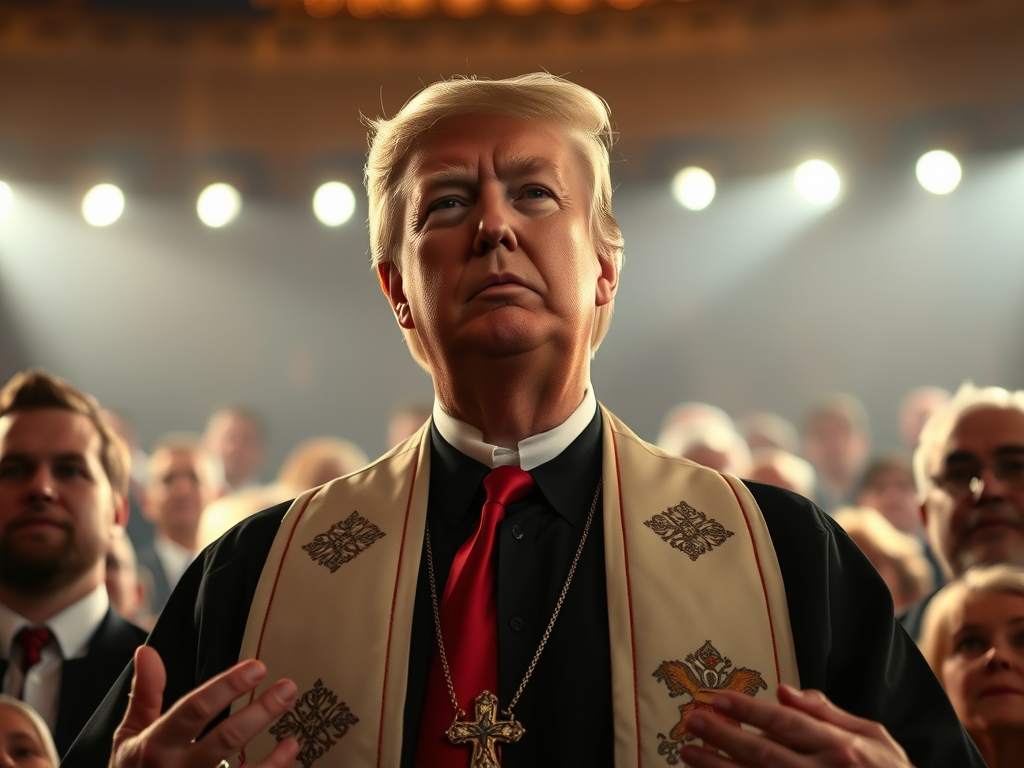
| Messianic Figure | The leader is chosen by a higher power to save the group. | Frequent depictions of Trump as “sent by God” or a “chosen” protector of Christianity. |
| Infallibility | The leader can do no wrong; mistakes are “tests” or “attacks.” | Legal challenges and setbacks are reinterpreted as “persecution” or “martyrdom.” |
| Us vs. Them | Society is split between the “saved” and the “evil outsiders.” | Rhetoric labeling political opponents as “vermin” or “enemies of the people.” |
| Utopian Vision | A promise to return to a “Golden Age” after a final battle. | The promise to “Make America Great Again” by dismantling current institutions. |
Psychological Profiles
Recent studies (2024–2025) have explored the personality traits of the most loyal “always-Trump” supporters. Researchers have found:High Conscientiousness: Specifically in the “self-discipline” facet, which manifests as unwavering, disciplined loyalty to a cause or leader.Low Openness: A lower tendency to entertain contradictory thoughts or curiosity about “outside” perspectives, which mirrors the cognitive style often found in cult members.Identity Fusion: A psychological state where an individual’s personal identity becomes inseparable from the group or leader, making any criticism of the leader feel like a personal attack.
Counter-Arguments
Not all scholars agree with the “cult” label. The main arguments against this classification include:Lack of Insularity: Traditional cults usually require members to live in communes or separate physically from society. MAGA supporters remain integrated into their local communities and workplaces.Political Opportunism: Some analysts argue that Trump functions more like a populist politician who adapts his message to his base’s existing grievances, rather than a cult leader who indoctrinates followers from scratch.Pejorative Use: Critics argue that the word “cult” is often used as a political slur to delegitimize a massive segment of the electorate rather than as a neutral clinical diagnosis.Note: The distinction often rests on whether one views the movement as a personality cult (focused on the leader’s perceived divinity and infallibility) versus a political coalition (focused on shared policy goals like immigration or economics).
Sources
 History of Sorts
Leave a comment