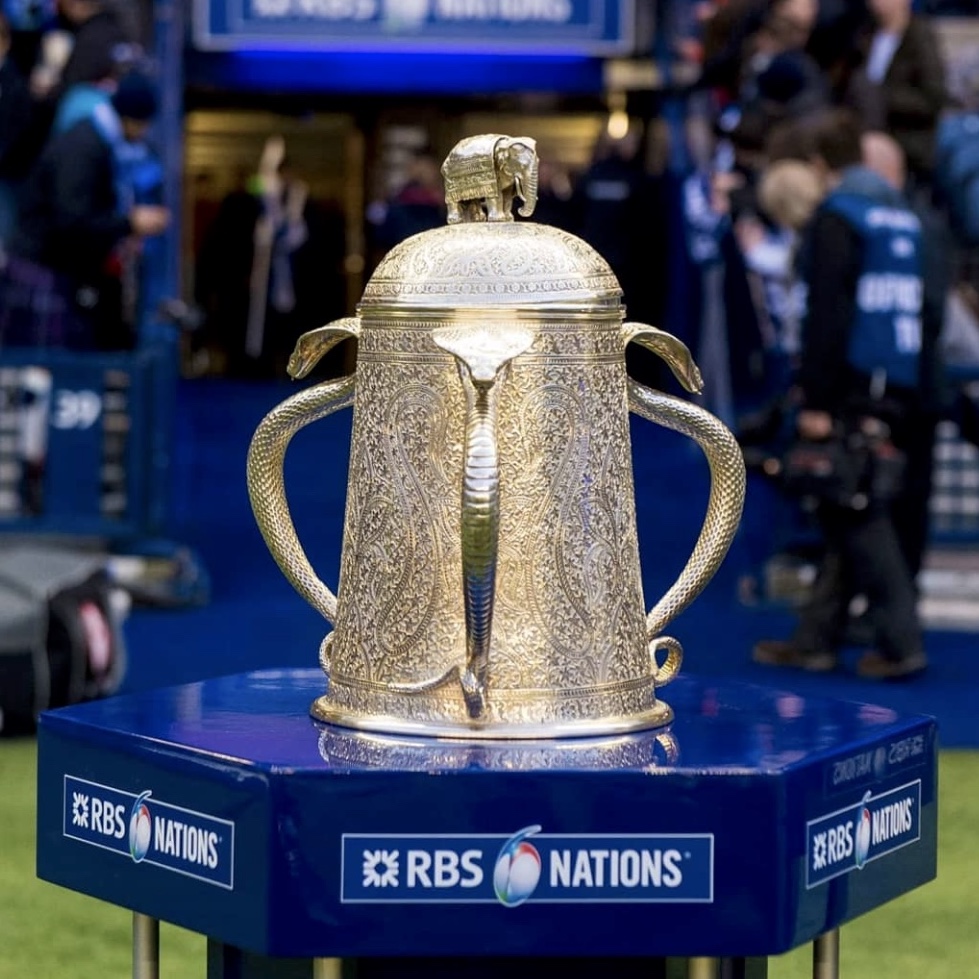
Now that we are in the closing stages of the Six Nations Rugby Championship, it is a good time to turn our attention to one of the tournament’s often overlooked trophies: the Calcutta Cup.
The Calcutta Cup is awarded to the winner of the rugby union match between England and Scotland, contested during the annual Six Nations Championship—currently known as the Guinness Six Nations—which features England, Scotland, Wales, Ireland, France, and Italy.
The Six Nations Championship traces its origins to 1883, when it began as the Home Nations Championship, contested only by England, Ireland, Scotland, and Wales. In more recent years, several individual trophies have been introduced within the Six Nations, including the Millennium Trophy (England vs. Ireland), the Giuseppe Garibaldi Trophy (France vs. Italy), and the Centenary Quaich (Scotland vs. Ireland). A “Quaich” is a shallow, two-handled Scottish Gaelic drinking cup or bowl.
Remarkably, the Calcutta Cup predates all of these trophies—and indeed the Six Nations competition itself—making it the oldest and most historic trophy contested in the tournament.
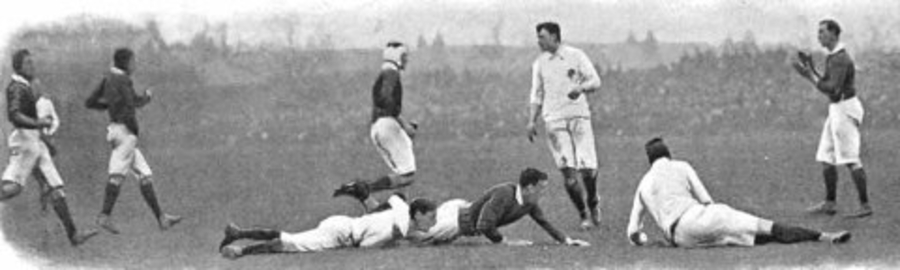
On Christmas Day in 1872, a game of rugby union was played in Calcutta, British India, by forty participants (twenty per side), with one team representing England and the other Scotland. Following this match, and the growing popularity of British sports in India, the Calcutta Rugby Football Club was formally established in January 1873 by British immigrants, former students of Rugby School, and soldiers from the Royal East Kent Regiment.
In 1874, the club became affiliated with the Rugby Football Union (RFU). By 1878, declining membership led the club to withdraw its remaining funds—totaling ₹270(Indian Rupi)—which were melted down to create a trophy. This trophy was then presented to the RFU as “the best means of doing some lasting good for the cause of Rugby Football,” eventually becoming the famous Calcutta Cup.
Although the Calcutta Rugby Football Club was disbanded in 1878, its members sought to preserve the memory of the club. They had the remaining 270 silver rupees in the club’s account melted down and crafted into a trophy, which was then presented to the Rugby Football Union (RFU) as “the best means of doing some lasting good for the cause of Rugby Football.”
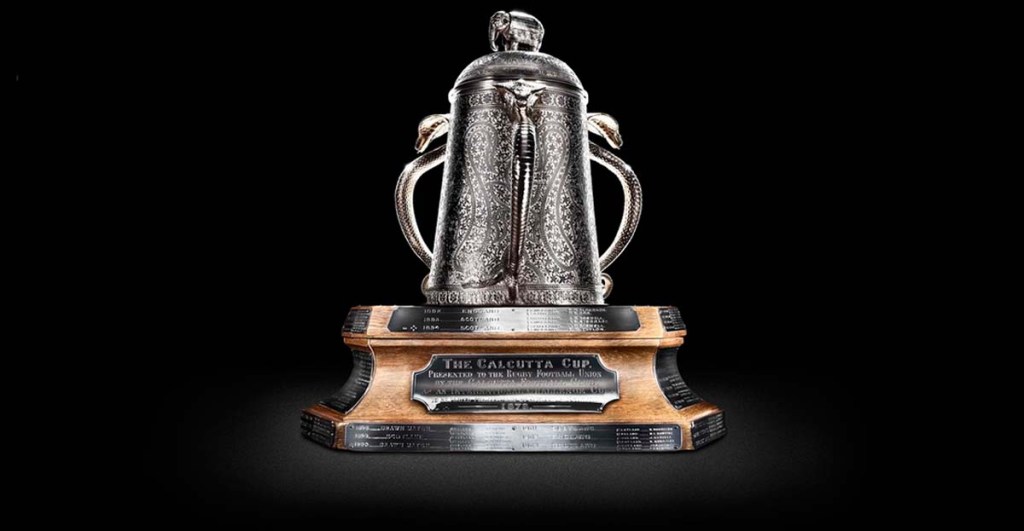
The resulting trophy, standing approximately 18 inches (45 cm) tall, rests on a wooden base whose plates record the date of each match, the winning country, and the names of both team captains. The silver cup itself is intricately etched and features three king cobras forming the handles, while an Indian elephant sits atop the circular lid, symbolizing its origin in India.
In 1988, the Calcutta Cup was damaged when some drunken players, including England number eight Dean Richards and Scotland flanker John Jeffrey, kicked it around like a football along Princes Street in Edinburgh. As a result, Jeffrey received a six-month ban from the Scottish Rugby Union (SRU), while Richards was suspended for one match by England.
As Wales did not yet have a national team and Ireland’s side lagged behind England and Scotland, the Calcutta Cup became the trophy awarded to the winner of the annual England versus Scotland match after its arrival in the UK in 1878. The first contest in 1879 ended in a draw. Since then, of the 133 matches played, England has won 72, Scotland 45, and the remainder have ended in draws. Annual fixtures have continued uninterrupted except during the World War years of 1915–1919 and 1940–1946. The match is traditionally held at Murrayfield Stadium in Scotland during even-numbered years (since 1925) and at Twickenham Stadium in England during odd-numbered years (since 1911).
The Calcutta Cup has been contested annually with only three interruptions: during the World Wars (March 1914–March 1920 and March 1939–March 1946) and during the Great Dispute of the 1880s, which ultimately led to the formation of the International Rugby Board (IRB), now known as World Rugby.
In 2026, during the 133rd meeting between the two nations, Scotland dominated the match at Murrayfield Stadium, defeating England 31–20. England struggled throughout the game, and the final score arguably flattered them.

sources
https://www.historic-uk.com/HistoryUK/HistoryofBritain/The-Calcutta-Cup/
https://www.sixnationsrugby.com/en/m6n/news/scotland-v-england-six-nations-rugby-fixture-2026
 History of Sorts
Leave a comment