While Executive Order 9066 often occupies the center of the historical stage as the legal catalyst for the internment of Japanese Americans, Executive Order 9102 was the engine that powered the logistics of that displacement. Issued by President Franklin D. Roosevelt on March 18, 1942, this order transitioned the internment process from a purely military operation to a massive, civilian-managed social engineering project. It established the War Relocation Authority (WRA) and, in doing so, codified the systematic uprooting of over 120,000 individuals based on their ancestry.
The Administrative Birth of Injustice
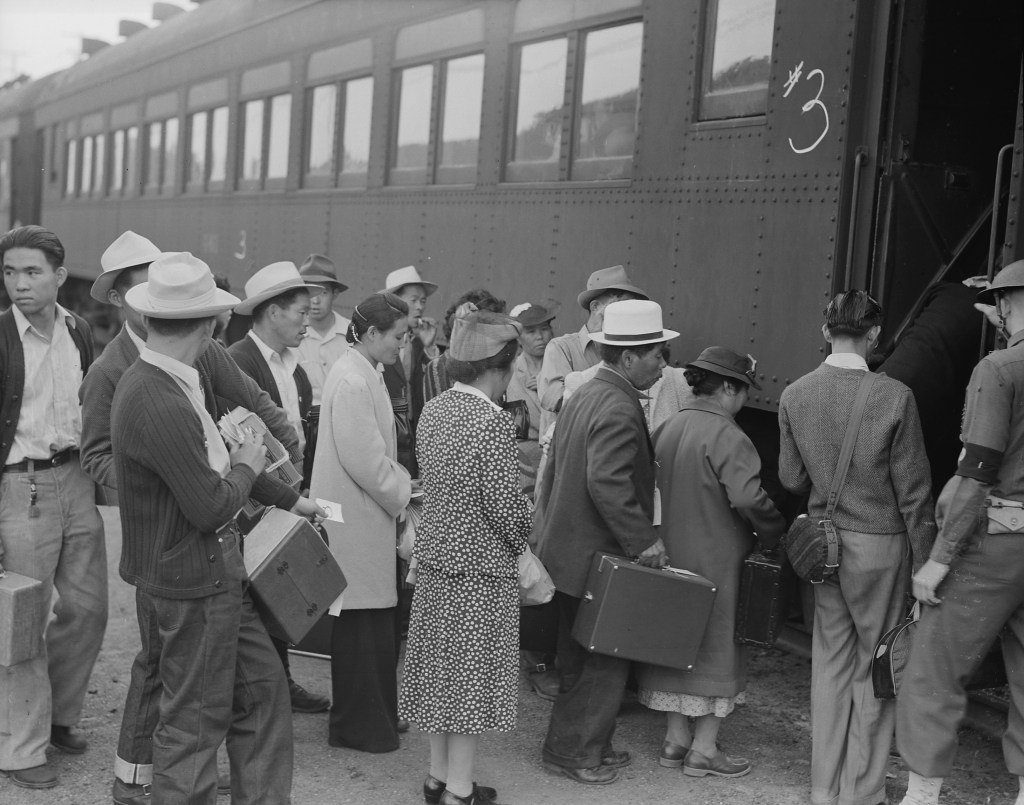
The primary purpose of Executive Order 9102 was to address a mounting logistical crisis. Following Executive Order 9066, the military initiated the so-called “voluntary” evacuation of Japanese Americans from the West Coast. This process quickly devolved into disorder, compounded by resistance from inland states unwilling to accept displaced populations. Confronted with these challenges, the federal government recognized the need for a centralized authority to manage the long-term detention and administration of those affected.
The War Relocation Authority (WRA) was thus established and granted sweeping powers. It could coordinate the storage or liquidation of abandoned property, regulate the labor of “evacuees” for agricultural and industrial purposes, and oversee nearly every aspect of daily life within the camps—including education, food distribution, and internal security.
The Dilemma of Milton Eisenhower
The experience of the WRA’s first director, Milton Eisenhower, reveals the moral tensions embedded within the policy. Initially, Eisenhower envisioned a more “enlightened” relocation system in which Japanese Americans could remain economically productive, particularly through agricultural work. However, this vision encountered fierce nativist opposition from state officials in places such as Wyoming and Idaho, who refused to permit their resettlement.
Within a matter of months, the concept of “relocation” gave way to full-scale internment. Deeply troubled by the constitutional implications of the program he was administering, Eisenhower resigned after just ninety days. His successor, Dillon S. Myer, would lead the WRA for the remainder of its existence, overseeing the transition from temporary “Assembly Centers”—often repurposed racetracks and fairgrounds—to more permanent “Relocation Centers.”
Life Under the WRA
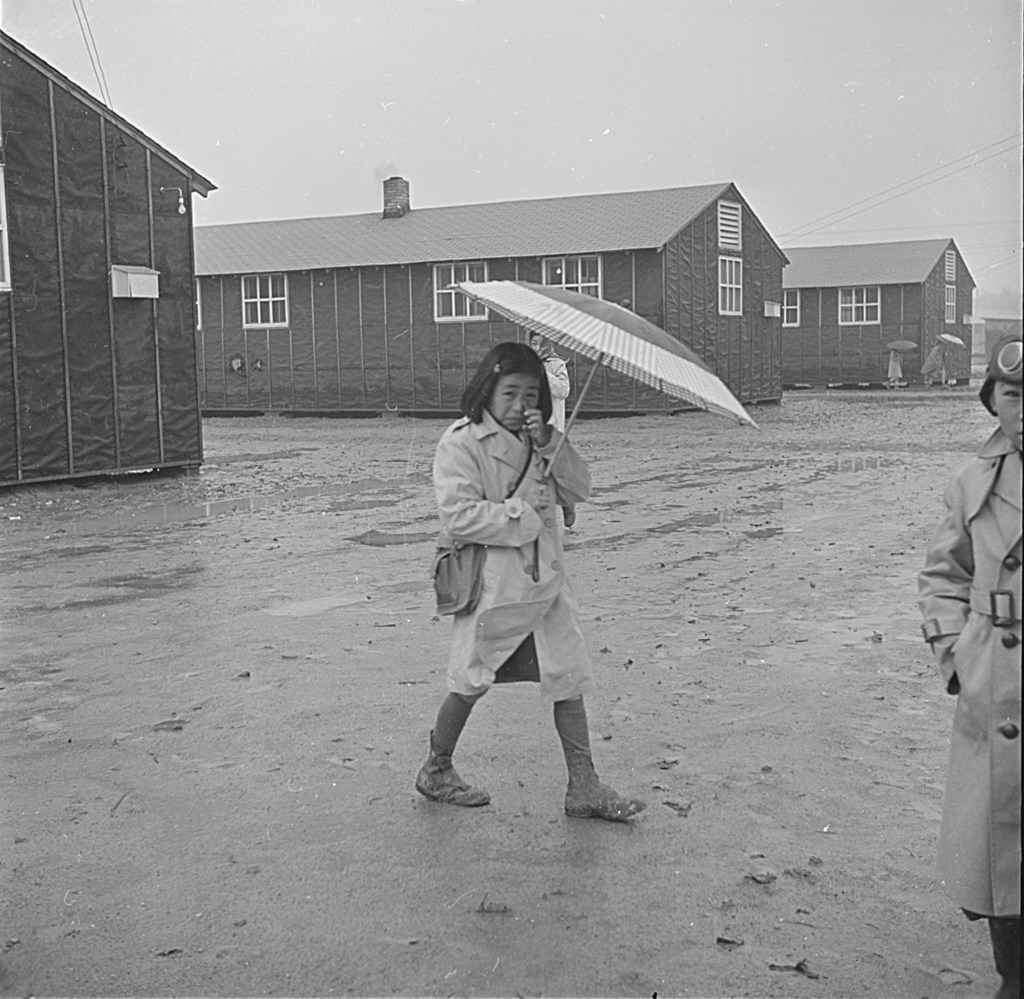
The relocation centers established under Executive Order 9102 were located in some of the most inhospitable regions of the United States, from the arid deserts of Arizona to the swampy lowlands of Arkansas. Under WRA administration, these sites evolved into self-contained communities enclosed by barbed wire and guarded perimeters.
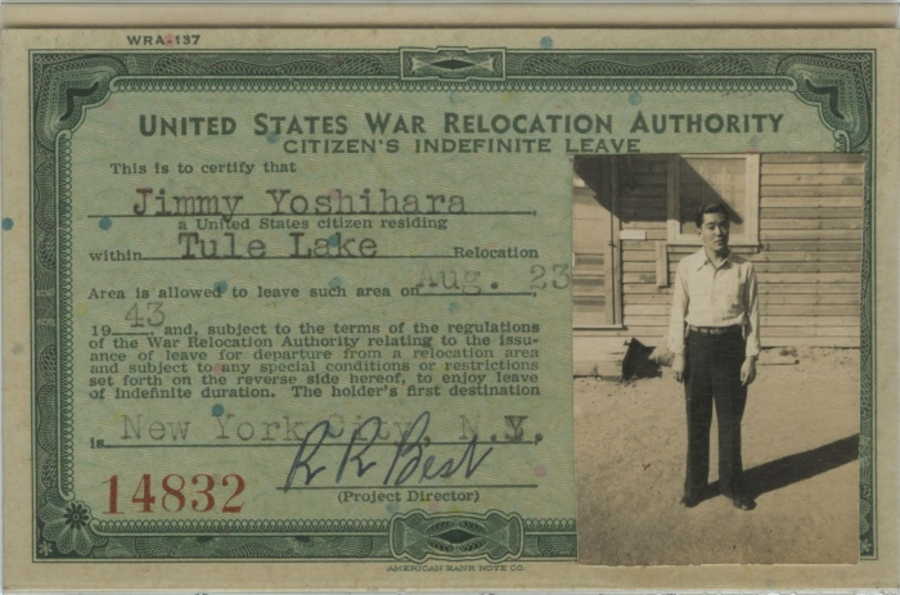
The agency operated under a fundamental contradiction: it was charged with safeguarding the welfare of a population whose civil liberties it had systematically revoked. This paradox produced a surreal environment in which the WRA promoted school systems, newspapers, and athletic programs within the camps, even as armed guards monitored residents from watchtowers. The introduction of the “loyalty questionnaire” further intensified tensions, forcing internees to declare unconditional allegiance to the United States and creating divisions that culminated in resistance movements and the establishment of protest centers such as Tule Lake.
Historical Legacy and Restitution
Executive Order 9102 remained in force until the WRA was dissolved in 1946. For decades, the bureaucratic framing of the program enabled officials to portray internment as a civilian administrative effort rather than a system of coerced confinement.
This narrative was decisively challenged in the 1980s by the Commission on Wartime Relocation and Internment of Civilians. Its findings rejected the justification of “military necessity,” concluding instead that the WRA’s actions were driven by race prejudice, war hysteria, and a failure of political leadership. Today, Executive Order 9102 stands as a stark reminder of how administrative mechanisms can be mobilized to circumvent constitutional protections during periods of national crisis.
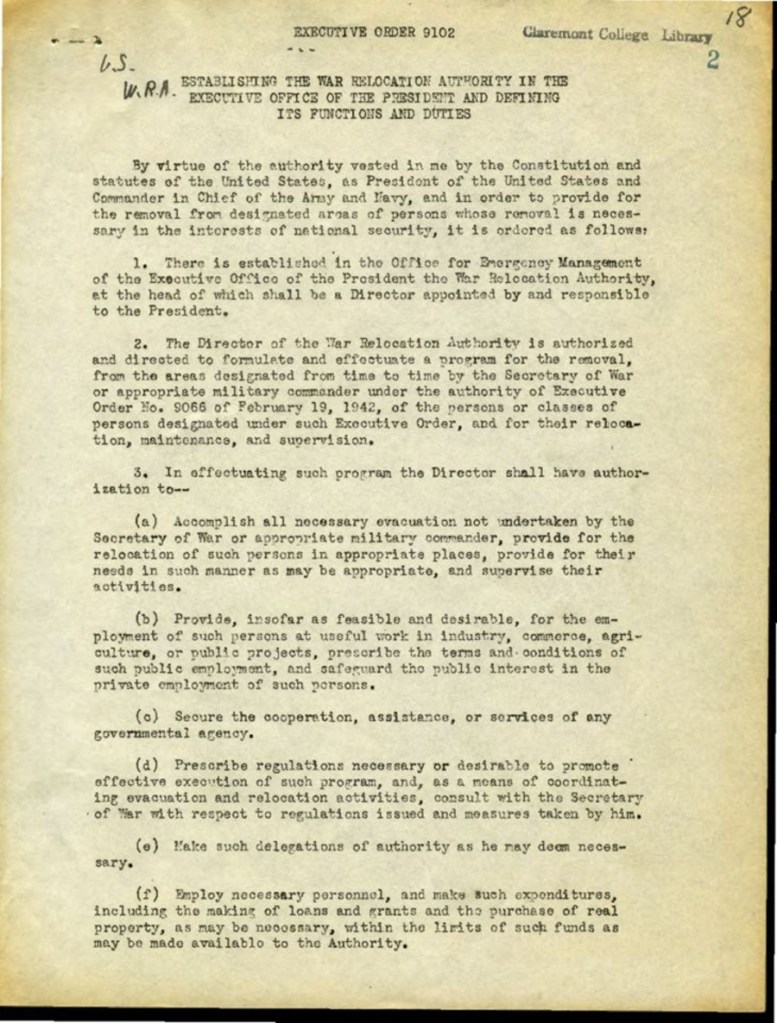
Executive Order 9102—Establishing the War Relocation Authority in the Executive Office of the President and Defining Its Functions and Duties
March 18, 1942
By virtue of the authority vested in me by the Constitution and statutes of the United States, as President of the United States and Commander in Chief of the Army and Navy, and in order to provide for the removal from designated areas of persons whose removal is necessary in the interests of national security, it is ordered as follows:
1. There is established in the Office for Emergency Management of the Executive Office of the President the War Relocation Authority, at the head of which shall be a Director appointed by and responsible to the President.
2. The Director of the War Relocation Authority is authorized and directed to formulate and effectuate a program for the removal, from the areas designated from time to time by the Secretary of War or appropriate military commander under the authority of Executive Order No. 9066 of February 19, 1942, of the persons or classes of persons designated under such Executive Order, and for their relocation, maintenance, and supervision.
3. In effectuating such program the Director shall have authority to—
(a) Accomplish all necessary evacuation not undertaken by the Secretary of War or appropriate military commander, provide for the relocation of such persons in appropriate places, provide for their needs in such manner as may be appropriate, and supervise their activities.
(b) Provide, insofar as feasible and desirable, for the employment of such persons at useful work in industry, commerce, agriculture, or public projects, prescribe the terms and conditions of such public employment, and safeguard the public interest in the private employment of such persons.
(c) Secure the cooperation, assistance, or services of any governmental agency.
(d) Prescribe regulations necessary or desirable to promote effective execution of such program, and, as a means of coordinating evacuation and relocation activities, consult with the Secretary of War with respect to regulations issued and measures taken by him.
(e) Make such delegations of authority as he may deem necessary.
(f) Employ necessary personnel, and make such expenditures, including the making of loans and grants and the purchase of real property, as may be necessary, within the limits of such funds as may be made available to the Authority.
4. The Director shall consult with the United States Employment Service and other agencies on employment and other problems incident to activities under this Order.
5. The Director shall cooperate with the Alien Property Custodian appointed pursuant to Executive Order No. 9095 of March 11, 1942, in formulating policies to govern the custody, management, and disposal by the Alien Property Custodian of property belonging to foreign nationals removed under this Order or under Executive Order No. 9066 of February 19, 1942; and may assist all other persons removed under either of such Executive Orders in the management and disposal of their property.
6. Departments and agencies of the United States are directed to cooperate with and assist the Director in his activities hereunder. The Departments of War and Justice, under the direction of the Secretary of War and the Attorney General, respectively, shall insofar as consistent with the national interest provide such protective, police, and investigational services as the Director shall find necessary in connection with activities under this Order.
7. There is established within the War Relocation Authority the War Relocation Work Corps. The Director shall provide, by general regulations, for the enlistment in such Corps, for the duration of the present war, of persons removed under this Order or under Executive Order No. 9066 of February 19, 1942, and shall prescribe the terms and conditions of the work to be performed by such Corps, and the compensation to be paid.
8. There is established within the War Relocation Authority a Liaison Committee on War Relocation, which shall consist of the Secretary of War, the Secretary of the Treasury, the Attorney General, the Secretary of Agriculture, the Secretary of Labor, the Federal Security Administrator, the Director of Civilian Defense, and the Alien Property Custodian, or their deputies, and such’ other persons or agencies as the Director may designate. The Liaison Committee shall meet at the call of the Director and shall assist him in his duties.
9. The Director shall keep the President informed with regard to the progress made in carrying out this Order, and perform such related duties as the President may from time to time assign to him.
10. In order to avoid duplication of evacuation activities under this Order and Executive Order No. 9066 of February 19, 1942, the Director shall not undertake any evacuation activities within military areas designated under said Executive Order No. 9066, without the prior approval of the Secretary of War or the appropriate military commander.
11. This Order does not limit the authority granted in Executive Order No. 8972 of December 12, 1941; Executive Order No. 9066 of February 19, 1942; Executive Order No. 9095 of March 11, 1942; Executive Proclamation No. 2525 of December 7, 1941; Executive Proclamation No. 2526 of December 8, 1941; Executive Proclamation No. 2527 of December 8, 1941; Executive Proclamation No. 2533 of December 19, 1941; or Executive Proclamation No. 2537 of January 14, 1942; nor does it limit the functions of the Federal Bureau of Investigation.
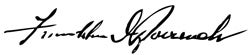
FRANKLIN D ROOSEVELT
The White House,
March 18, 1942.
sources
https://ccdl.claremont.edu/digital/collection/p15831coll18/id/589/
https://en.wikipedia.org/wiki/Executive_Order_9102
https://www.federalregister.gov/executive-order/9102
https://en.wikipedia.org/wiki/Internment_of_Japanese_Americans
https://fraser.stlouisfed.org/series/publications-war-relocation-authority-6297
Donation
Your readership is what makes my site a success, and I am truly passionate about providing you with valuable content. I have been doing this at no cost and will continue to do so. Your voluntary donation of $2 or more, if you are able, would be a significant contribution to the continuation of my work. However, I fully understand if you’re not in a position to do so. Your support, in any form, is greatly appreciated. Thank you. To donate, click on the credit/debit card icon of the card you will use. If you want to donate more than $2, just add a higher number in the box left from the PayPal link. Your generosity is greatly appreciated. Many thanks.
$2.00
 History of Sorts
Leave a comment