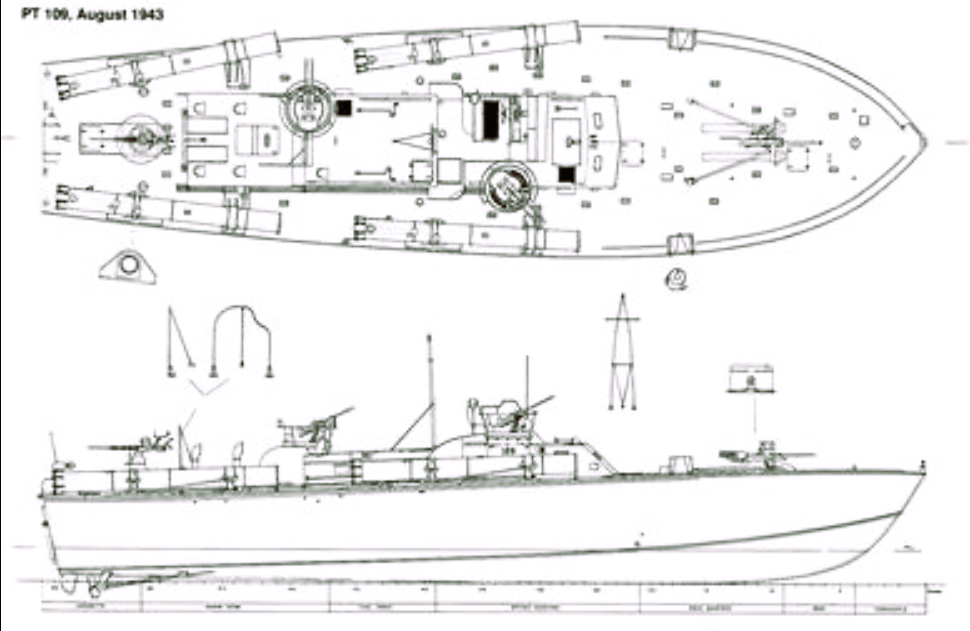
On the night of August 1-2, 1943, during World War II, Lieutenant John F. Kennedy, future President of the United States, experienced a defining moment in his military career when his patrol torpedo boat, PT-109, was destroyed in the Solomon Islands. This event not only showcased Kennedy’s leadership and bravery but also became a significant episode in his life, shaping his future political trajectory.
PT-109 was part of a squadron of patrol torpedo boats based on the island of Tulagi in the Solomon Islands. Their mission was to intercept Japanese supply ships and destroyers that were attempting to reinforce and resupply their garrisons in the region. On the fateful night, Kennedy and his crew were ordered to patrol the Blackett Strait, a narrow passage between Kolombangara and Arundel Island. The night was moonless, and the waters were pitch-black, making navigation extremely challenging.
At around 2:00 AM, amidst the inky darkness, the Japanese destroyer Amagiri suddenly appeared, bearing down on PT-109 at high speed. The destroyer rammed the small wooden boat, slicing it in two. The collision resulted in an explosion, and the boat quickly began to sink. Two of the thirteen crew members were killed instantly, while the remaining eleven were thrown into the water, clinging to the wreckage.

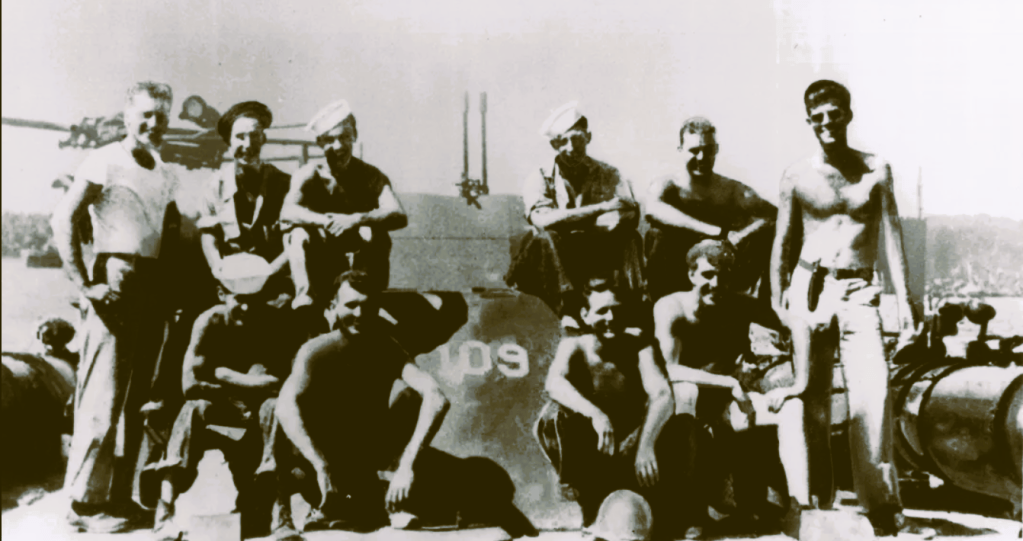
In the aftermath of the collision, Kennedy demonstrated remarkable leadership and courage. Despite the dire situation, he rallied his crew and organized their efforts to survive. He ordered them to swim towards a small island, about 3.5 miles away. Kennedy, a former Harvard University swimmer, towed a badly injured crew member, Patrick McMahon, by clenching the strap of McMahon’s life vest in his teeth. This grueling swim took several hours, but Kennedy’s determination and physical endurance ensured that the crew reached the island safely.
Once on the island, the crew faced new challenges. They had no food or fresh water and were surrounded by enemy forces. Kennedy continued to show exemplary leadership, scouting the area and swimming to other nearby islands in search of help. After several days of surviving on coconuts and rainwater, Kennedy encountered two Solomon Islander scouts, Biuku Gasa and Eroni Kumana. Kennedy carved a message into a coconut shell, which the islanders delivered to an Australian coastwatcher, Lieutenant Reginald Evans. This message ultimately led to the rescue of Kennedy and his crew on August 8, 1943.
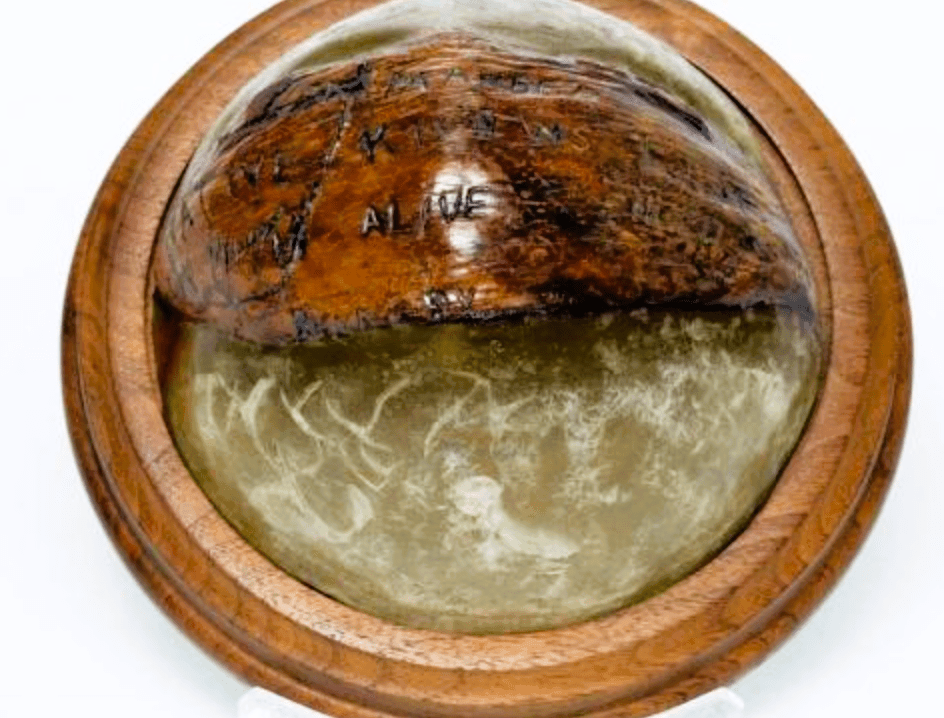
NAURO ISL
COMMANDER . . . NATIVE KNOWS
POS’IT . . . HE CAN PILOT . . . 11 ALIVE
NEED SMALL BOAT . . . KENNEDY
The PT-109 incident became a cornerstone of Kennedy’s public image. He was awarded the Navy and Marine Corps Medal for his heroism and leadership. The coconut shell with his carved message was preserved and later displayed in the Oval Office during his presidency. This episode of courage and resilience contributed significantly to Kennedy’s political narrative, portraying him as a war hero and a man of exceptional character.
The story of PT-109 was widely publicized and further popularized by the 1963 movie “PT-109,” which dramatized the events of that night. The film helped cement Kennedy’s legacy as a wartime hero in the American consciousness.
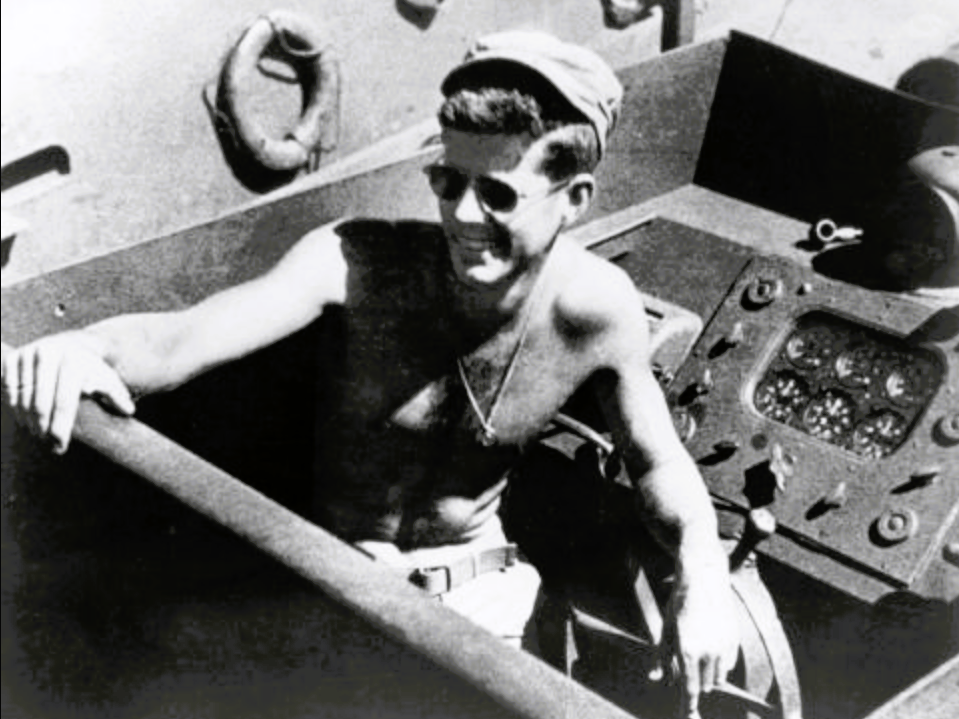
For his courage and leadership, Kennedy was awarded the Navy and Marine Corps Medal, and injuries suffered during the incident also qualified him for a Purple Heart. Ensign Leonard Thom also received the Navy and Marine Corps Medal. But for John F. Kennedy, the consequences of the event were more far-reaching than simple decorations.
The story was picked up by the writer John Hersey, who told it to the readers of The New Yorker and Reader’s Digest. It followed Kennedy into politics and provided a strong foundation for his appeal as a leader.
The sinking of PT-109 and the subsequent survival ordeal exemplified John F. Kennedy’s leadership, bravery, and perseverance. It was a pivotal moment that not only saved the lives of his crew but also played a significant role in shaping his future as a statesman and leader. This incident, etched in history, remains a testament to Kennedy’s character and his ability to inspire and lead under the most challenging circumstances.
Sources
https://www.jfklibrary.org/learn/about-jfk/jfk-in-history/john-f-kennedy-and-pt-109
Donation
Your readership is what makes my site a success, and I am truly passionate about providing you with valuable content. I have been doing this at no cost and will continue to do so. Your voluntary donation of $2 or more, if you are able, would be a significant contribution to the continuation of my work. However, I fully understand if you’re not in a position to do so. Your support, in any form, is greatly appreciated. Thank you. To donate, click on the credit/debit card icon of the card you will use. If you want to donate more than $2, just add a higher number in the box left from the PayPal link. Your generosity is greatly appreciated. Many thanks.
$2.00
 History of Sorts
Leave a comment