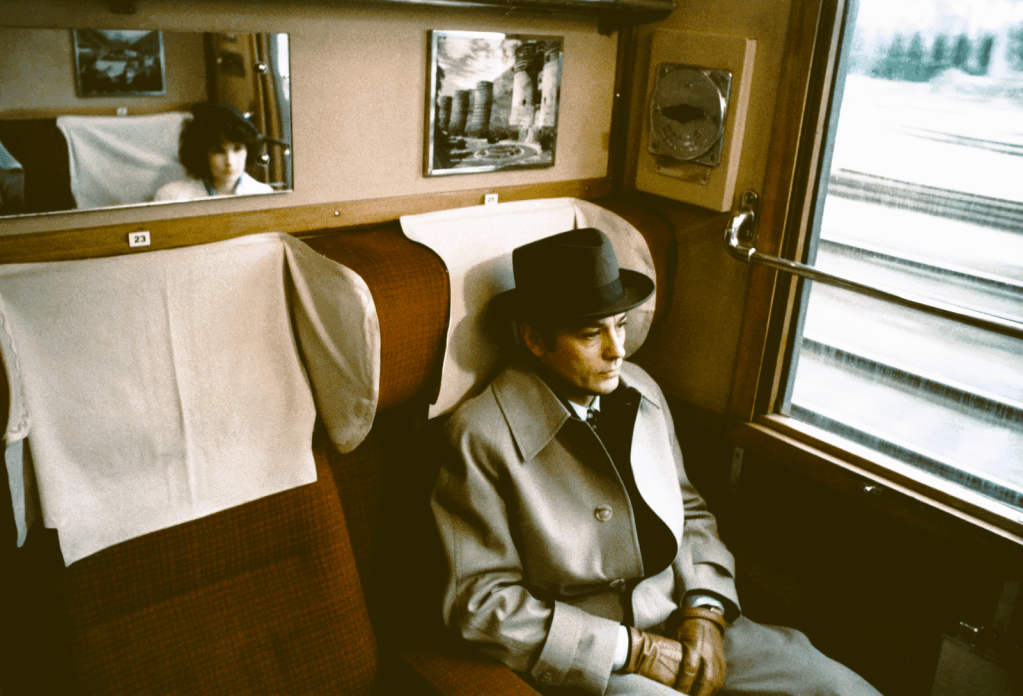
Alain Delon would have celebrated his 90th birthday today. Sadly, he passed away last year, leaving behind a legacy that forever shaped European cinema — and, to a certain extent, Hollywood as well. Known for his striking screen presence, enigmatic charm, and unforgettable roles, Delon stood as one of the true icons of 20th-century film.
Today, rather than looking back at his entire career, I want to focus on what I believe is his finest and most haunting performance: Mr. Klein (1976). Directed by Joseph Losey, this psychological drama captures Delon at his most nuanced and restrained, portraying a Parisian art dealer who becomes entangled in the paranoia and moral chaos of Nazi-occupied France.
What makes Mr. Klein extraordinary is how it mirrors Delon’s own cinematic persona — elegant, distant, and morally ambiguous. It’s a film about identity, guilt, and the slow erosion of certainty, and Delon embodies all of it with an unsettling grace. In many ways, Mr. Klein is not only one of Delon’s greatest achievements but also one of European cinema’s most quietly devastating masterpieces.
Introduction
Joseph Losey’s 1976 film Monsieur Klein, starring Alain Delon, is one of the most haunting examinations of moral blindness and state violence in postwar cinema. Set in Nazi-occupied Paris in 1942, it tells the story of Robert Klein, a successful art dealer who profits from the desperation of Jewish sellers but suddenly finds himself accused of being Jewish due to a bureaucratic error. His efforts to clear his name become an obsessive descent into paranoia and moral reckoning.
The film functions as both a historical drama and a philosophical parable about complicity, identity, and the seductive power of bureaucracy. Losey transforms the thriller format into a slow-burning moral nightmare, revealing how ordinary individuals can become enmeshed in the machinery of oppression.
Plot Overview
Robert Klein is a charming, cultured Parisian dealer who buys valuable artworks cheaply from Jews fleeing persecution. One morning, he receives a Jewish newspaper addressed to him. When he reports the mistake to the authorities, the incident triggers suspicion rather than reassurance. His name appears on a list of Jewish residents; his documents are questioned; his acquaintances begin to doubt him.
As Klein searches for another man of the same name — a mysterious “double” who may or may not exist — his world narrows into a web of files, forms, and interrogations. In his desperate attempt to prove his “pure” French identity, he mirrors the very logic of the regime he once exploited. The film concludes with Klein, swept up in the mass arrest of Parisian Jews, being transported toward the trains of deportation — an ironic punishment for a man who thought he stood safely outside the system.
Themes and Analysis
1. Mistaken Identity as Moral Allegory
The confusion between two men named “Monsieur Klein” operates as a metaphor for the collapse of moral identity under authoritarian rule. Losey uses this device not as a mystery to solve but as a way of exploring how identity can be erased or rewritten by bureaucratic power. Klein’s frantic need to prove who he is reflects how state systems of classification — racial, religious, or political — can turn the personal into the political. The more Klein insists on his innocence, the more he demonstrates his spiritual guilt.
2. Complicity and Profiteering
At the beginning, Klein profits from others’ misfortune. He buys paintings from Jewish collectors who must sell to survive. The film never portrays him as overtly cruel; rather, his sin is indifference. He represents the comfortable middle class who, in times of persecution, look away and benefit quietly. This moral blindness mirrors the historical reality of those in occupied France who prospered while others were stripped of rights and property.
3. Bureaucracy and the Violence of Paperwork
The most chilling scenes in Monsieur Klein are not violent; they are administrative. Losey lingers on offices, clerks, files, and official stamps. These symbols of order and legality become instruments of terror. The state’s obsession with identification — lists, racial tests, residence checks — creates a Kafkaesque world where truth is irrelevant once the bureaucracy decides your status. Klein’s destruction is not caused by cruelty alone but by a system that no longer distinguishes between justice and paperwork.
4. The Search for the Double
The unseen “other” Klein may be real or imaginary, but his presence functions as a projection of guilt. Some interpretations suggest that the second Klein represents the conscience of the first — the moral self he refuses to acknowledge. The doubling motif connects the personal and political: the two Kleins symbolize France itself, divided between oppressor and victim, denier and witness.
5. Losey’s Direction and Style
Losey, an American exile blacklisted during the McCarthy era, was deeply familiar with the experience of persecution and suspicion. His detached, clinical direction mirrors the themes of alienation. The cinematography is restrained, using muted colors and tight interiors to create a sense of suffocation. Alain Delon’s performance is crucial: his usual charisma turns cold, almost reptilian, allowing us to see how charm and cruelty can coexist under respectability.
Historical Parallels and Real Examples
Although fictional, Monsieur Klein draws directly from historical realities of occupied France.
1. The Vélodrome d’Hiver Roundup (1942)
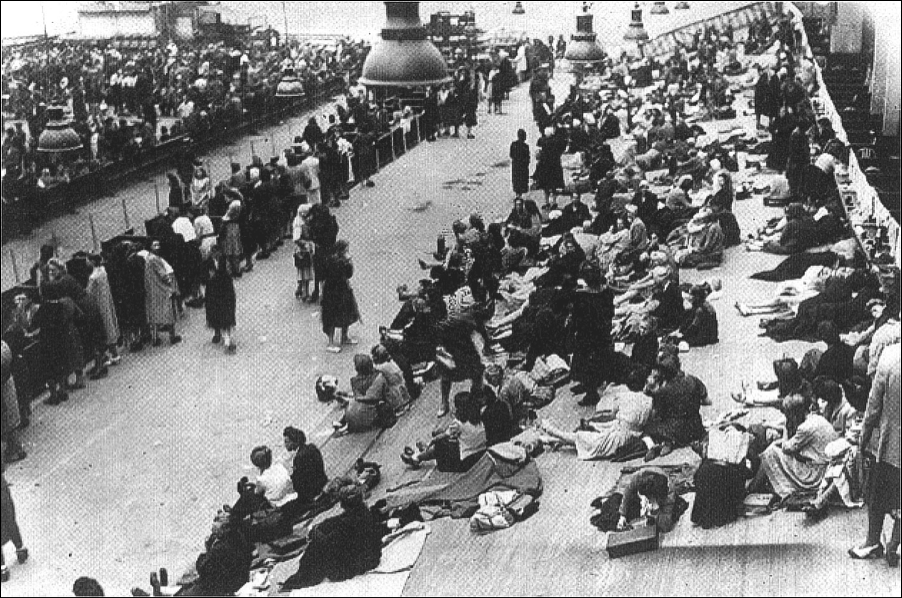
In July 1942, French police, under Nazi direction, arrested more than 13,000 Jews in Paris. They were held in the Vélodrome d’Hiver, an indoor cycling stadium, before being deported to Auschwitz. The film’s final scenes, showing buses filled with men, women, and children under French guard, unmistakably reference this event. Losey’s inclusion of French policemen — not Germans — underscores the moral complicity of the collaborationist regime.
2. The Commissariat-General for Jewish Affairs and Identity Papers
Under Vichy law, Jews were required to register their identity and carry papers marked with “Juif.” Certificates proving “non-Jewish origin” became essential to avoid persecution. Bureaucratic errors could condemn innocent people. The obsessive scrutiny of Klein’s ancestry and documents in the film reflects the real terror of classification — where racial identity was determined by files and officials rather than personal truth.
3. The Looting and Forced Sale of Jewish Art
During the Occupation, thousands of artworks were confiscated or sold under duress. German agencies such as the Einsatzstab Reichsleiter Rosenberg, along with French dealers, facilitated the massive transfer of cultural property. Many French art dealers, like Klein, profited from these transactions while maintaining a façade of legality. The film uses this setting to expose how beauty and culture can mask moral corruption.
4. Denunciations and Bureaucratic Collaboration
The film’s tone of paranoia echoes the historical atmosphere of denunciation that characterized occupied Paris. Neighbors, colleagues, and rivals frequently reported each other to the authorities. These denunciations were processed through a bureaucratic system that prized efficiency over humanity. Klein’s downfall — caused not by an enemy but by an administrative process — mirrors the way ordinary citizens were destroyed by paper trails and gossip.
Interpretations and Symbolism
A National Allegory
Released in 1976, the film coincided with renewed debates in France about the Vichy government’s responsibility for the Holocaust. For decades, many French narratives portrayed the nation as a victim of Germany; Monsieur Klein quietly dismantled that myth by showing French complicity through a morally neutral protagonist.
The Kafkaesque Dimension
Losey’s narrative structure — circular, unresolved, dreamlike — evokes Franz Kafka’s world of bureaucratic absurdity. Klein’s repeated appeals to authority only tighten the noose around him. The system that should protect him becomes the agent of his destruction. In this sense, the film transcends its historical setting and becomes a timeless fable about how modern institutions dehumanize.
Moral Awakening Too Late
Klein’s tragedy is that he awakens to moral truth only when it is too late. His final act — voluntarily boarding the transport with the deportees — may represent recognition, guilt, or surrender. Whether he accepts his fate or simply cannot escape it remains ambiguous, leaving the viewer to grapple with the question of responsibility.
Conclusion
Monsieur Klein is not merely a historical film; it is a moral investigation. By focusing on one man’s unraveling, Losey exposes the mechanisms through which societies rationalize cruelty. The film shows how evil can thrive not only through hatred but through indifference, paperwork, and the quiet pursuit of profit.
It remains one of cinema’s most powerful meditations on identity and complicity — a warning that the line between oppressor and victim can vanish when bureaucracy replaces conscience.
sources
https://en.wikipedia.org/wiki/Alain_Delon
https://en.wikipedia.org/wiki/Monsieur_Klein
https://www.imdb.com/title/tt0074916/
Donation
Your readership is what makes my site a success, and I am truly passionate about providing you with valuable content. I have been doing this at no cost and will continue to do so. Your voluntary donation of $2 or more, if you are able, would be a significant contribution to the continuation of my work. However, I fully understand if you’re not in a position to do so. Your support, in any form, is greatly appreciated. Thank you. To donate, click on the credit/debit card icon of the card you will use. If you want to donate more than $2, just add a higher number in the box left from the PayPal link. Your generosity is greatly appreciated. Many thanks.
$2.00
 History of Sorts
Leave a comment