I have written quite extensively about the failure of the Dutch to protect their Jewish neighbors and even resist the Nazi occupiers in general. However, on February 24, 1941, the Dutch communist party called for a nationwide strike to protest against the treatment of Jews as well as the forced labor in Germany. The Communist Party of the Netherlands made illegal by the Germans, printed and spread a call to strike throughout Amsterdam the next morning. The first to strike were the city’s tram drivers, followed by other city services as well as companies like De Bijenkorf and schools. Eventually, 300,000 people joined in the strike, bringing much of the city to a halt and catching the Germans by surprise.
Though the Germans immediately took measures to suppress the strike, which had grown spontaneously as other workers followed the example of the tram drivers, it still spread to other areas, including Zaanstad, Kennemerland in the west, Bussum, Hilversum and Utrecht in the east and the south. The strike did not last long. By February 27, the German police suppressed much of the unrest. Although ultimately unsuccessful, this was significant as it represented the first and only direct action against the Nazis’ treatment of Jews in Europe.
On August 24, 1941, at 3 p.m., in a coffee shop at the Zutphen train station, Doctors, Roorda, Brutel de la Rivière, Eeftinck Schattenkerk, and some other members of the Society met to set up a resistance group.
The name of this group would be “Medisch Contact” Medical Contact. About 5000 of the 6500 Physicians joined the group. Initially, the resistance was only aimed against the Society of Physicians.
In March 1943, the group informed the German-run Chamber of Physicians that they would remove their signs from the door and no longer fulfill their duties as Doctors. 42000 Doctors signed the letter. They also considered that their Jewish colleagues could not sign because they were not even allowed to work as Doctors anymore. Most of the Jewish Doctors had already been in transition camps or deported at that stage.
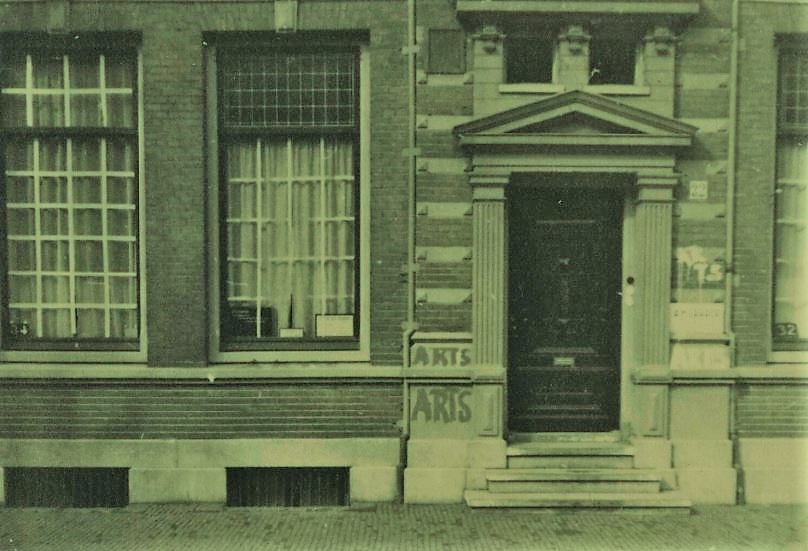
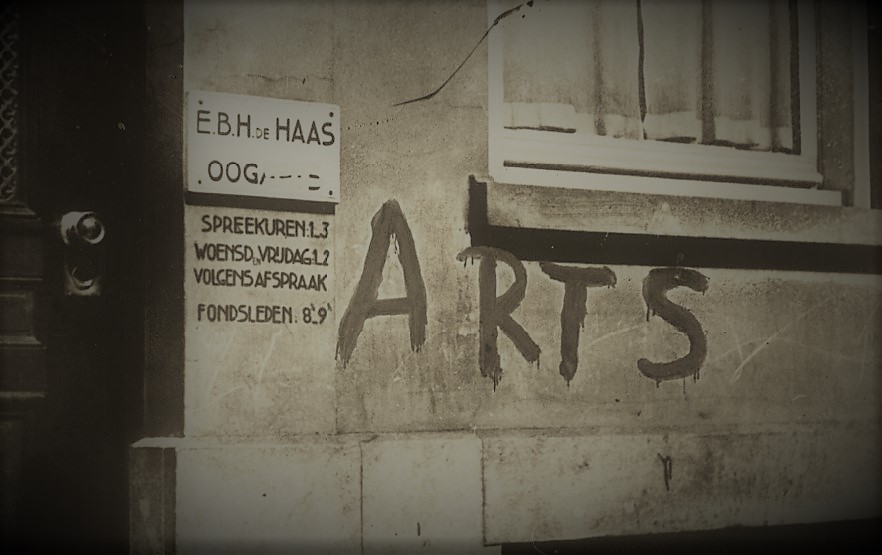
The NSB would paint the word Arts (Dutch for physician or doctor) on the walls and/or doors of the Doctors of the Medisch contact.
There were also individual acts of resistance from some Doctors—like Doctor Allard Oosterhuis.
Allard Lambertus Oosterhuis (July 19, 1902, Delfzijl; January 1, 1967, Killiney) was a Dutch resistance hero during World War II.
In 1922, Oosterhuis went to Amsterdam to study medicine, and after his studies, he became a doctor in Delfzijl. Thanks to his work as a cruiser, with his ships Cascade and Libelle, he was able to put up a smuggling route for the resistance between the harbor of Delfzijl and Stockholm. An essential colleague of his in the Dutch resistance was the coaster captain Harry Roossien, who made many trips during the war. Due to these activities, many people and materials left the occupied Netherlands, and radio transmitters, photos from the Dutch Queen, and money for the resistance were shipped into the country.
He was the leader of the resistance group “’t Zwaantje” (The Swan) from Delfzijl. The name comes from a pub named De witte Zwaan (The White Swan]) which Oosterhuis regular visited. He used the name Zwaantje as a codename in the illegal documentation he sent to the resistance and the allies.
Unknowns betrayed the resistance group, and on July 12, 1943, the German Sicherheitsdienst dismantled them. Despite receiving a collective death sentence on June 23, 1944, most members of the group survived the war while held in German camps. The Allies liberated them in the autumn of 1945.
After the war, Oosterhuis quit his profession as a doctor due to health reasons and became a cruiser with his ship, MS Stientje Mensinga, a rebuilt landing vehicle from 1943. The ship was sunk during a heavy storm on the Irish coast by Erritshead in 1961.
In 1952, Oosterhuis settled permanently in Ireland and received the Bronze Cross for bravery against the occupier during World War II. He passed away at the age of 64 in Ireland, and his remains are buried in Delfzijl.
Sources
https://www.medischcontact.nl/nieuws/laatste-nieuws/artikel/het-medisch-contact-in-verzet.htm

Donation
Your readership is what makes my site a success, and I am truly passionate about providing you with valuable content. I have been doing this at no cost and will continue to do so. Your voluntary donation of $2 or more, if you are able, would be a significant contribution to the continuation of my work. However, I fully understand if you’re not in a position to do so. Your support, in any form, is greatly appreciated. Thank you. To donate, click on the credit/debit card icon of the card you will use. If you want to donate more than $2, just add a higher number in the box left from the PayPal link. Your generosity is greatly appreciated. Many thanks.
$2.00

 History of Sorts
Leave a comment