Many people assume there was no resistance in Germany against the Nazi regime, and to be honest, there wasn’t much. Nevertheless, some were relentless in trying to end that regime.
There were dozens of assassination attempts on the life of Hitler. The most famous was the 20 July plot. Some of those involved in that plot weren’t necessarily anti-Nazi but leaning towards it based on the way the war was going. I, therefore, think it is a mistake that all should be considered to be heroes.
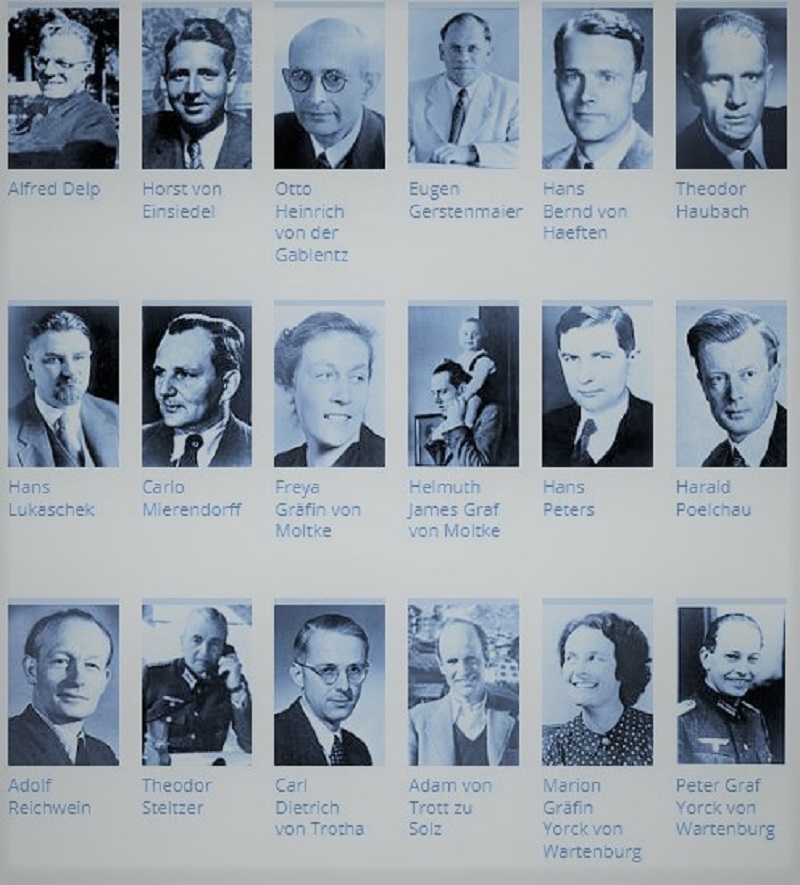
One of the men was Adam von Trott zu Solz. He was one of the leaders of Colonel Claus von Stauffenberg’s plot of 20 July 1944 to assassinate Hitler. He was arrested within days, placed on trial and found guilty. Sentenced to death on 15 August 1944 by the Volksgerichtshof (People’s Court), he was hanged in Berlin’s Plötzensee Prison on 26 August. He had also been a member of the Kreisau Circle.
From 1940 on, men and women opposed the regime but with a variety of social backgrounds, values, and values met for talks in Berlin, on the Kreisau estate in Silesia, and in Munich. The driving force behind it was the friends Helmuth James Graf von Moltke and Peter Graf Yorck von Wartenburg. Catholic and Protestant Christian clergy, Social De
The Kreisau Circle aimed to draft basic principles for an intellectual, political, and social new order after the end of the Third Reich. They prepared themselves for the time afterwards through conferences, discussions, and memoranda. They hoped to provide a new foundation for human coexistence and the state. Questions of the state structure, the restriction of state power, the economy, the church, and education were discussed in depth. Particularly important was to embed Germany in a new European postwar order.
Although the circle did not promote violent overthrow of the regime, their planning was considered by the Nazis to be treasonous as it rested on the assumption that Germany would lose the war.
The members of the Kreisau Circle recognized early on not only the devastation of the cities but also the horrific destruction in the minds and hearts of the people (Moltke). They knew that a functioning democracy required both participation and a sense of responsibility to its citizens. As early as 1939, Moltke had outlined his concept of democracy in a text on Small Communities:
“Only those who have carried some form of responsibility in smaller communities will have the right sense of responsibility towards a larger community, the state or any other large communities …”
The participation of women in the Kreisau Circle discussion was often limited to the presence of their husbands. Freya von Moltke, a founding participant, was cut off from The Circle’s correspondence following her husband Helmuth von Moltke’s arrest.
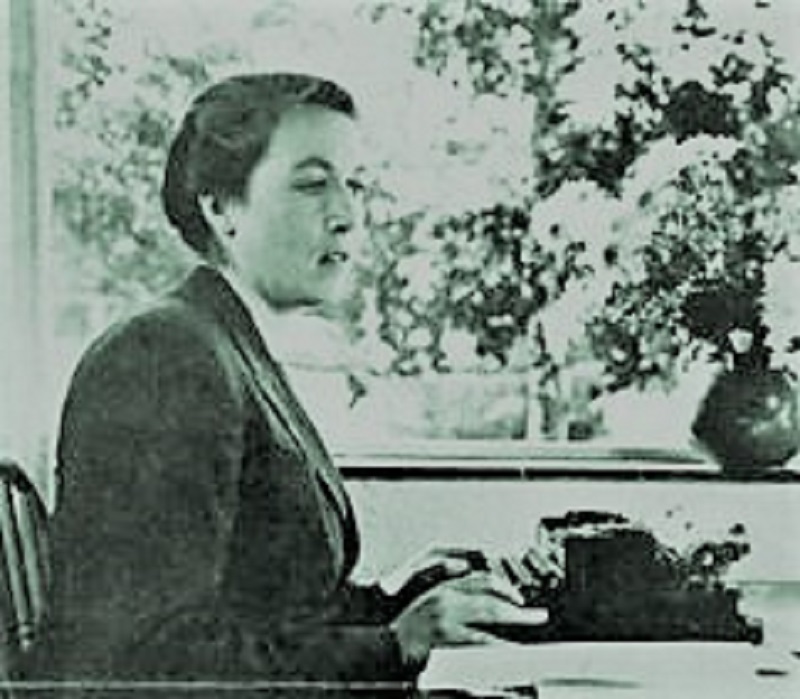
There are also no known female members who—were not married to a male member. However, despite these limitations, women played an integral role in the Kreisau Circle. Margrit von Trotha, for example, utilized her skills as an economist to partake in the plans for Germany’s future economy. In addition, in Marion Yorck von Wartenburg’s memoirs, she refers to The Circle as Our Group, indicating that she was a part of The Circle’s membership and discourse. A known list of female members of The Circle included: Freya von Moltke (lawyer), Marion Yorck von Wartenburg (lawyer), Margrit von Trotha (economist), Rosemarie Reichwein (physician/therapist), and Irene Yorck von Wartenburg.
The group disagreed on several different issues. Whereas Peter Graf Yorck von Wartenburg and Helmuth von Moltke were strongly anti-racist, others, such as Fritz-Dietlof von der Schulenburg, believed that Jews should be eliminated from public service and evinced unmistakably anti-Semitic prejudice. As late as 1938, he repeated his call to remove all Jews from government and the civil service. His biographer, Albert Krebs, attests that Moltke was never able to rid himself of feelings of alienation toward the intellectual and material world of Jewry. He was appalled to learn of the crimes perpetrated against the Jewish population in the occupied Soviet Union, despite this, it was not the major factor in his determination to see Hitler removed.
In the autumn of 1943, Helmuth von Moltke learned from an informant that a Gestapo spy had discovered an anti-Nazi salon in Berlin and that there would be a round-up of all participants. Moltke warned his friend, who had been present at the salon, Otto Kiep, of the round-ups.[2] Kiep, former German Consul General in New York and member of the counterintelligence department under Admiral Wilhelm Canaris failed to escape and was arrested in January 1944. The Gestapo later discovered that von Moltke had warned him of the arrests, and Helmuth was then arrested on 19 January 1944. This left the Kreisau Circle without one of its integral members. Freya von Moltke was also ousted from the group following Helmuth’s arrest, as the members were worried she would be interrogated. During this time, Yorck struggled to maintain the cohesion of the group. However, this was not the death knell of The Circle because the Gestapo was not yet aware of the resistance. Before the attempted assassination of Adolf Hitler, Helmuth von Moltke was treated fairly in prison and allowed to correspond with his wife, Freya.
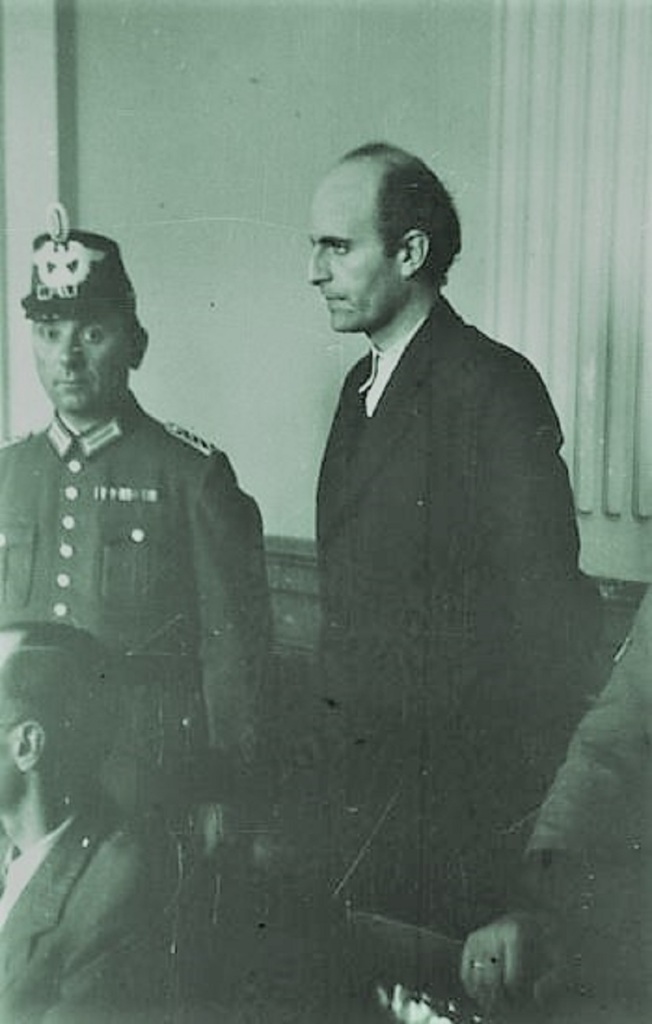
The mass round-up of suspects after the July 1944 Bomb Plot and the subsequent torture of these suspects led to the Gestapo gaining the names of many plotters or supposed plotters—including men in the Kreisau Circle. Yorck von Wartenburg was arrested as part of the July Bomb Plot, tried, found guilty and executed in August 1944. Von Moltke had already been arrested (January 1944) and was tried before the People’s Court. He was found guilty of treason and executed in January 1945.
Sources
https://www.kreisau.de/en/kreisau/kreisau-circle/
https://www.gdw-berlin.de/en/recess/topics/12-the-kreisau-circle/
https://spartacus-educational.com/Kreisau_Circle.htm

 History of Sorts
Leave a comment