One of the definitions of hygiene is conditions or practices conducive to maintaining health and preventing disease—specifically through cleanliness.
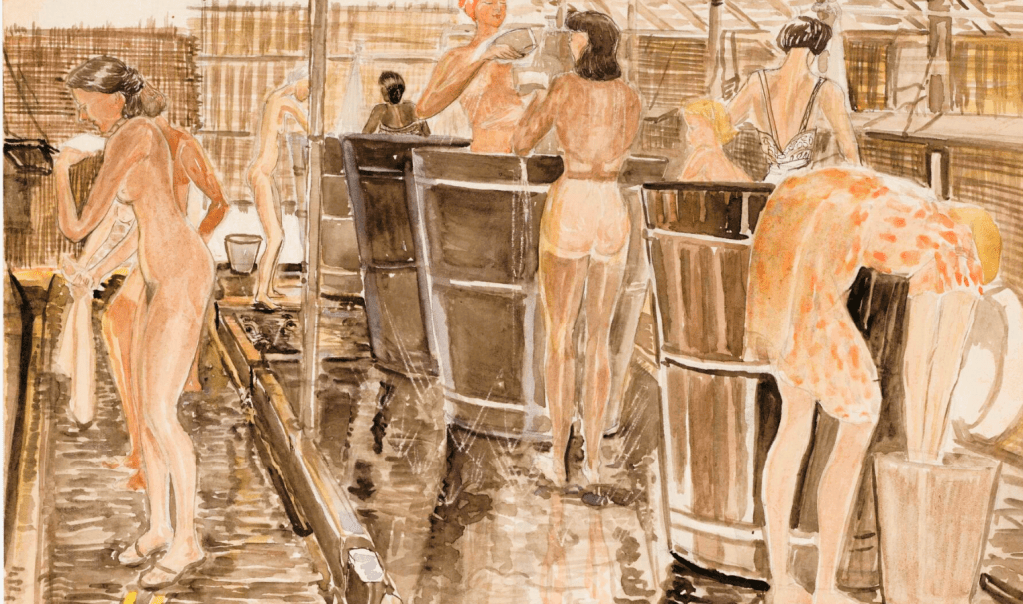
The lack of hygiene was one of the hidden killers during World War II, and indeed any other war, because it wasn’t always possible to keep a minimal level of hygiene. This post has a few depictions of how hygiene was maintained during World War II. The drawing above is of women washing in tubs in the Japanese-run camp Kampong Makassar in the Dutch East Indies, Indonesia.

Arbeitseinsatzlager Erika, a judicial penal camp to relieve the overcrowded prisons. The first prisoners arrived on 19 June 1942. The prisoners were often black marketers and illegal slaughterers, people who had violated distribution laws. Eight Jews also remained in the camp. Abuse was more the rule than the exception.

European women and children washing themselves in the so-called bathroom at the civilian internment camp, Kampong Makassar.

Battle of Arnhem. Allied soldiers in front of a house southwest of Arnhem. The house serves as a changing and washing room for the soldiers.
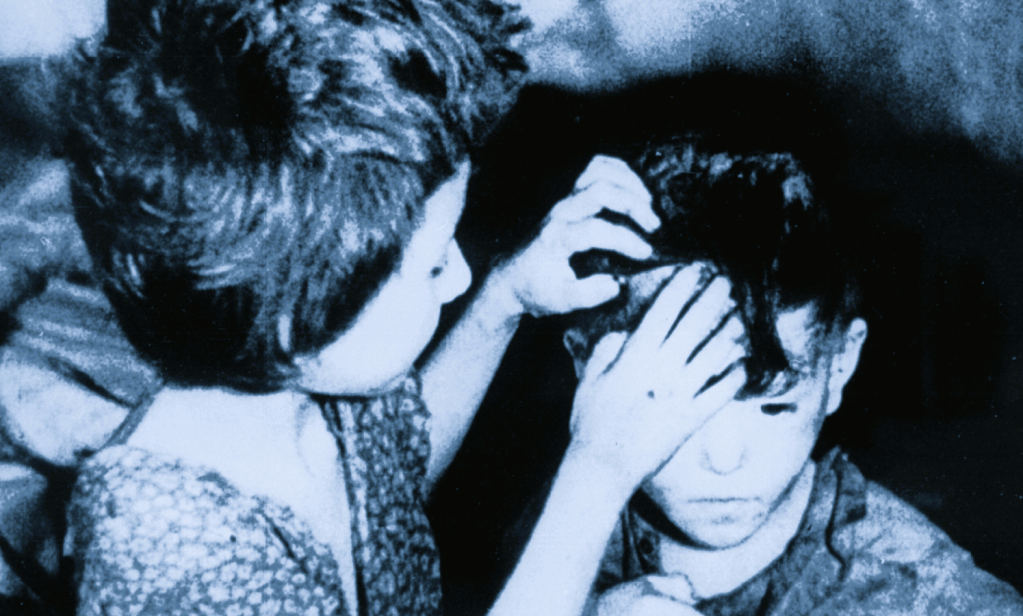
Two poverty-stricken Polish children check each other for nits.
Source
 History of Sorts
Leave a comment