
The title of this blog alludes to a brief history, although it will probably be a long read and includes a 15-minute watch and listen. However, in the greater scheme of things and—taking into consideration the long and complex history of anti-Semitism—this blog is a relatively brief history.
Anti-Semitism is throughout history. I’ve attached at the end of this blog, a video produced by the United States Holocaust Memorial Museum.
The origin of “antisemitic” terminologies is found in the responses of Moritz Steinschneider, a Moravian bibliographer and Orientalist, to the views of Ernest Renan, a French philosopher and Semitic scholar. As Alex Bein, a German Jewish historian once wrote: “The compound anti-Semitism appears to have been used first by Steinschneider, who challenged Renan on account of his ‘anti-Semitic prejudices’ [i.e., his derogation of the “Semites” as a race]. Avner Falk similarly writes: “The German word antisemitisch was first used in 1860 by the Austrian Jewish scholar Moritz Steinschneider (1816–1907) in the phrase Antisemitische Vorurteile (anti-Semitic prejudices). Steinschneider used this phrase to characterise the French philosopher Ernest Renan’s false ideas about how ‘Semitic races’ were inferior to “Aryan races.”
I am going to highlight just some attacks on Jews, Starting with an attack which happened on the day of love—Valentine’s Day, 1349. Like so often before and after, the Jews were used as the scapegoats for events they had no control over. In this case, it was the bubonic plague.
The atmosphere in Strasbourg in early 1349 was tense. The Black Death had not yet reached the city, though nervous citizens anticipated the first case of victims to sicken and die any day. The Bishop of Strasbourg, Berthold III, rallied against Jews. The elected officials held firmly against it. Mayor Kunze of Wintertur, Strasbourg Sheriff Gosse Sturm, and a local lay leader named Peter Swaber—all forcefully defended and protected the Jews of Strasbourg.
On February 10, 1349, the restless Strasbourg citizenry finally had enough. A mob gathered up and overthrew Strasbourg’s city government, installing an unstable people government instead. This hateful group that was now in charge was a strange mixture led by the local guilds of butchers and tailors, and financially backed by the local nobles, who hated the Jews and hoped to take their property. One of this new mob’s first acts was to arrest the city’s Jews on the charge of poisoning Christian wells to spread the Black Death.
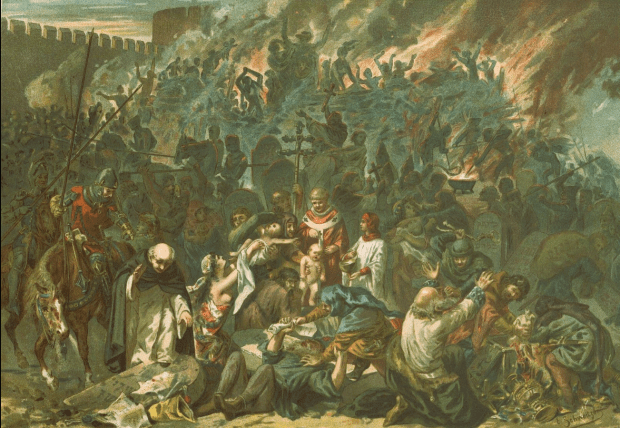
Friday, February 13, 1349, would become a black day for the Jews in Strasbourg. Usually, they would have been occupied with preparing for Shabbat, baking challah, cleaning their homes and preparing festive meals. Instead, under heavy armed guard, women, children and men were dragged from their homes, put in prison, and charged with murder. Any Jew who was willing to convert to Christianity would have their life spared, or so they were told. As the terrified Jews awaited their fate, the city’s new governors were building a huge wooden platform that could hold thousands of people inside the Jewish cemetery. For the Jews, the next day was Shabbat. For Strasbourg’s Christian citizens, the next day was February 14, St. Valentine’s Day. They designated this Saint’s Day as the date on which they would execute Strasbourg’s entire Jewish population.
A large crowd assembled on the morning of Valentine’s Day to watch. A local priest named Jakob Twinger von Konigshofen recorded the grisly massacre as “…they burned the Jews on a wooden platform in their cemetery,” he wrote. “There were about two thousand of them.” Some young children were yanked away from their parents’ arms to be saved to be baptized and raised as Christians. For most Jews, however, no such aid arrived. As the enormous wooden structure went up in flames, approximately 2,000 thousand Jews were slowly burned alive.
On many occasions, Jews were accused of drinking the blood of Christian children in mockery of the Christian Eucharist. According to the authors of these so-called blood libels, the procedure for the alleged sacrifice was something like this: a child who had not yet reached puberty was kidnapped and taken to a hidden place. The child would be tortured by Jews, and a crowd would gather at the place of execution (in some accounts the synagogue itself) and engage in a mock tribunal to try the child. The child would be presented to the tribunal naked and tied and eventually be condemned to death. In the end, the child would be crowned with thorns and tied or nailed to a wooden cross. The cross would be raised, and the blood dripping from the child’s wounds would be caught in bowls or glasses and then drunk. Finally, the child would be killed with a thrust through the heart from a spear, sword, or dagger. Its dead body would be removed from the cross and concealed or disposed of, but in some instances, rituals of black magic would be performed on it. This method, with some variations, can be found in all the alleged Christian descriptions of ritual murder by Jews.
The story of William of Norwich (d. 1144) is often cited as the first known accusation of ritual murder against Jews. The Jews of Norwich, England, were accused of murder after a Christian boy, William. It was claimed that the Jews had tortured and crucified him. The legend of William of Norwich became a cult, and the child acquired the status of a holy martyr.[88] Little Saint Hugh of Lincoln (d. 1255), in the 13th century, reputedly had his belly cut open and his entrails removed for some occult purpose, such as a divination ritual, after being taken from a cross. It was alleged that Simon of Trent (d. 1475), during the fifteenth century, was held over a large bowl, so that all of his blood could be collected.
During the Middle Ages, such blood libels were directed against Jews in many parts of Europe. The believers in these false accusations reasoned that the Jews, having crucified Jesus, continued to thirst for pure and innocent blood at the expense of innocent Christian children.[89] Jews were also sometimes falsely accused of desecrating consecrated hosts in a reenactment of the Crucifixion; this crime was known as host desecration, and it carried the death penalty.
As European commerce grew in the late Middle Ages, some Jews became prominent in trade, banking, and moneylending, and Jews’ economic and cultural successes tended to arouse the envy of the populace. This economic resentment, allied with traditional religious prejudice, prompted the forced expulsion of Jews from several countries and regions, including England (1290), France (14th century), Germany (1350s), Portugal (1496), Provence (1512), and the Papal States (1569). Intensifying persecution in Spain culminated in 1492 in the forced expulsion of that country’s large and long-established Jewish population.
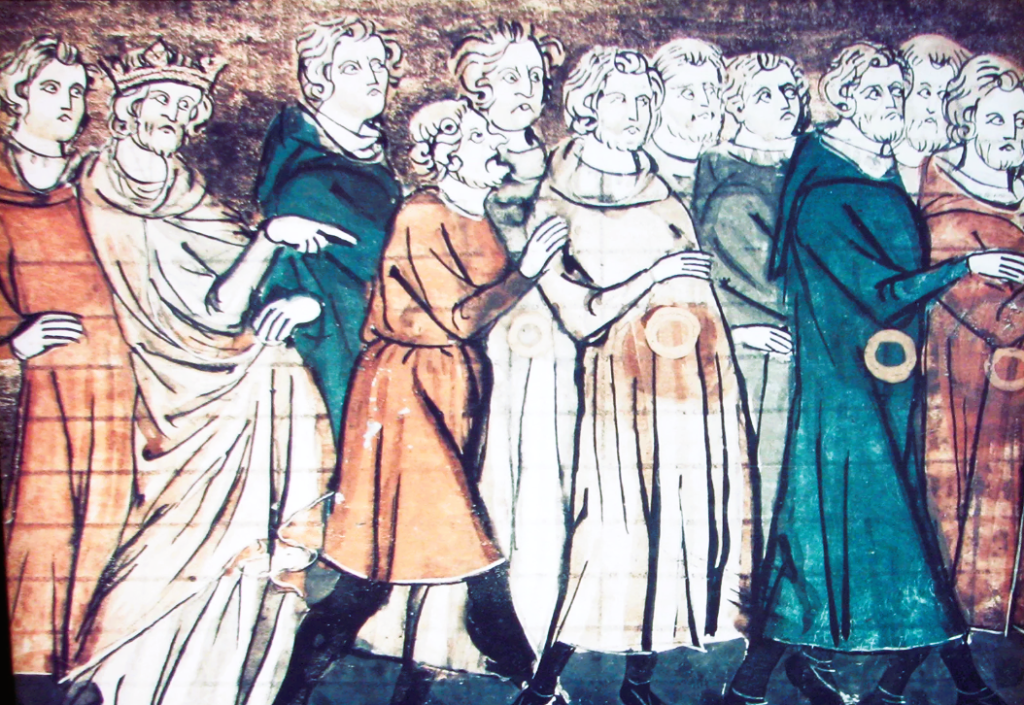
Only Jews who had converted to Christianity were allowed to remain, and those suspected of continuing to practice Judaism faced persecution in the Spanish Inquisition. As a result of these mass expulsions, the centres of Jewish life shifted from Western Europe and Germany to Turkey and then to Poland and Russia.
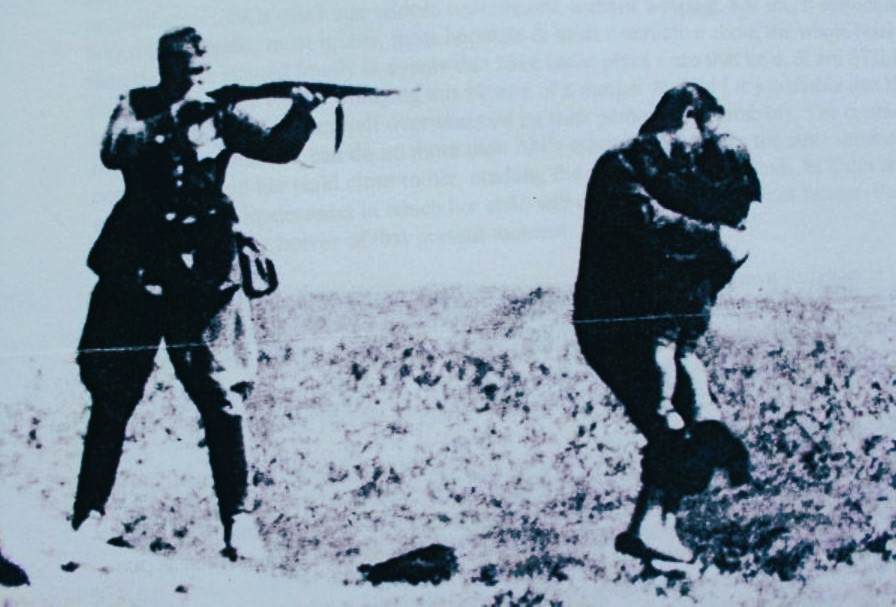
The Holocaust
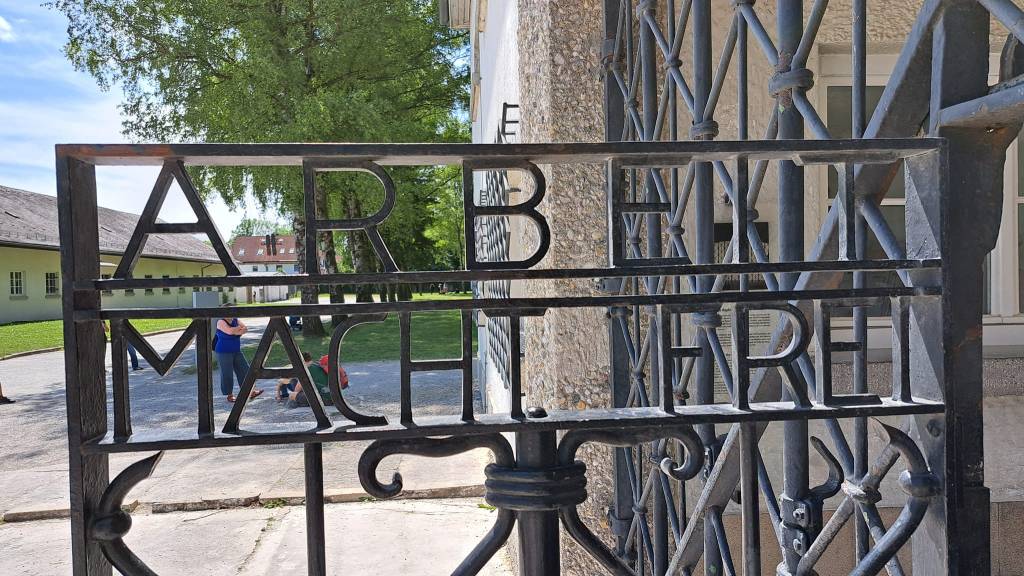


The early Christian church portrayed Jews as unwilling to accept the word of God; illuminations showed Satan binding the eyes of the Jews. Some church leaders intensified the charge—condemning Jews as agents of the devil and murderers of God. The accusation was not renounced until the 1960s when the Second Vatican Council officially repudiated the ancient charge that Jews had murdered Christ.
After the murder of millions of Jews, you’d expect the world had learned its lessons—but it didn’t!
Sources
https://www.ushmm.org/antisemitism/what-is-antisemitism/why-the-jews-history-of-antisemitism
https://www.britannica.com/topic/anti-Semitism
https://jwa.org/media/jewish-persecution-strasbourg-1349
Donation
Your readership is what makes my site a success, and I am truly passionate about providing you with valuable content. I have been doing this at no cost and will continue to do so. Your voluntary donation of $2 or more, if you are able, would be a significant contribution to the continuation of my work. However, I fully understand if you’re not in a position to do so. Your support, in any form, is greatly appreciated. Thank you. To donate, click on the credit/debit card icon of the card you will use. If you want to donate more than $2, just add a higher number in the box left from the PayPal link. Your generosity is greatly appreciated. Many thanks.
$2.00
 History of Sorts
Leave a comment