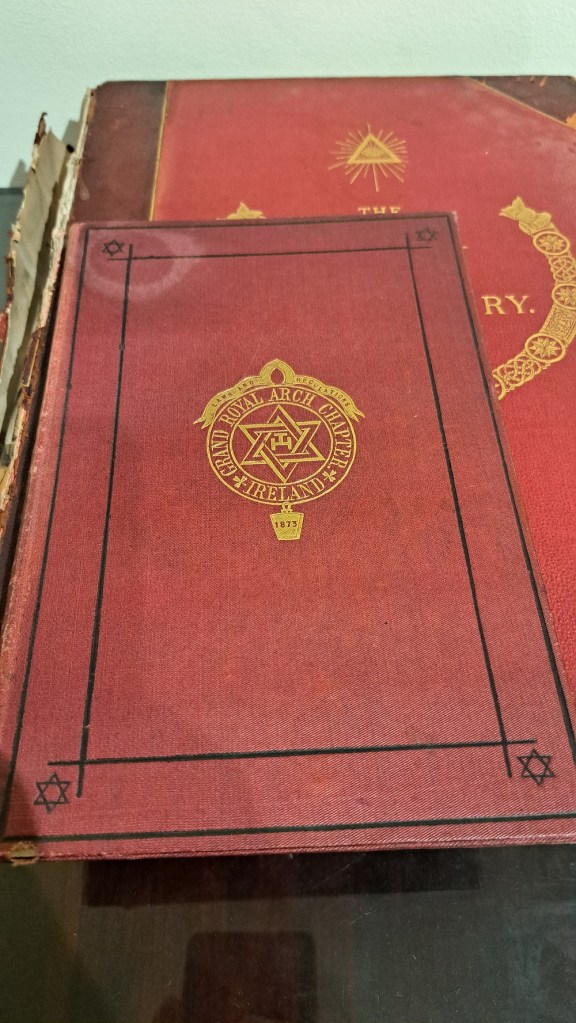
The Persecution of Freemasons During the Holocaust
The Holocaust is widely recognized for the systematic genocide of six million Jews, along with the persecution and murder of other marginalized groups such as Roma (Gypsies), disabled individuals, Slavs, political dissidents, and homosexuals. However, lesser-known is the plight of the Freemasons (a global fraternal organization) that became one of the targets of the Nazi regime.
Freemasonry: Ideals and Influence
Freemasonry is one of the world’s oldest and most enduring fraternal organizations, with roots tracing back to the late 16th or early 17th century. Founded on principles such as mutual aid, Enlightenment, universal brotherhood, and the promotion of moral and ethical development, Freemasonry spread across Europe and later the world. Freemasons advocated values of reason, tolerance, and equality, which made them influential in many Enlightenment and revolutionary movements, including the American and French revolutions.
While Freemasonry itself is not political, many of its members have historically supported democratic and liberal movements, contributing to its reputation as a bastion of progressive and humanist values. However, these same values—liberty, equality, and fraternity—positioned Freemasonry in stark opposition to totalitarian ideologies, including that of Nazism.
Nazi Ideology and Freemasonry
The Nazi regime espoused a hyper-nationalistic, anti-Semitic, and totalitarian ideology. Nazism sought to create a racially pure “Aryan” state, eradicate supposed “inferior races,” and eliminate any organizations or ideologies that opposed these goals. Freemasonry, with its emphasis on universal brotherhood and secretive nature, was seen as an affront to the Nazi regime’s goal of racial and national purity.
Several key factors explain why the Nazis targeted the Freemasons:
- Freemasonry’s Embrace of Tolerance and Diversity: The Freemasons promoted ideas that encouraged tolerance, international cooperation, and brotherhood, which were incompatible with the Nazi vision of ethnic purity and authoritarian control. The Masonic commitment to liberal democracy, freedom of thought, and individual rights clashed directly with the Nazi regime’s emphasis on racial supremacy and the subjugation of minorities.
- Anti-Semitic Conspiracy Theories: The Nazis, along with other far-right and fascist groups, believed in the existence of a global conspiracy involving Jews and Freemasons. The “Protocols of the Elders of Zion,” a fraudulent anti-Semitic text circulated in the early 20th century, purported that Jews were plotting world domination and working hand-in-hand with Freemasons. Nazi propaganda perpetuated the myth of a “Judeo-Masonic” conspiracy, wherein Jews and Freemasons were accused of trying to destabilize nations through liberalism, communism, and globalism.
- Freemasonry’s Influence on Enlightenment and Liberal Thought: Freemasonry’s historical association with Enlightenment ideals made it an ideological enemy of the Nazi regime, which sought to suppress liberal values in favor of an authoritarian, militaristic society. The Nazis saw Freemasonry as a subversive force that had, through its influence, helped foment democratic revolutions, such as those in France and America.
- Masonic Secrecy: Freemasonry’s secretive rituals and exclusive membership led to a further perception of it as a “shadowy” organization. In the paranoid mind of the Nazi state, this made Freemasonry appear as an organization with clandestine goals, in opposition to the Nazi regime’s demand for complete loyalty and transparency.

Nazi Persecution of Freemasons
Early Bans and Suppression
The persecution of Freemasons in Nazi Germany began almost immediately after Adolf Hitler’s rise to power in 1933. Freemasonry was quickly outlawed, and Masonic lodges were shut down. The Enabling Act of March 1933 gave Hitler the power to bypass the Reichstag (parliament) and issue decrees that suppressed Freemasonry along with other political, social, and cultural institutions deemed dangerous to the Nazi regime.
Freemasons were often dismissed from public service, teaching positions, and other areas of employment where the Nazis exerted control. Lodges were confiscated, and their property—books, artifacts, and documents—was seized by the state. Some of this confiscated material was displayed in anti-Masonic exhibitions, such as the infamous 1937 Munich exhibition, where Masonic symbols were used to illustrate the alleged connections between Freemasonry, Jews, and communism.
Despite the secrecy of the organization the Freemasons were targeted via propaganda in most of the Nazi-occupied countries.
The most famous piece of Anti-Free Mason propaganda was the French movie “Forces occultes.”

Concentration Camps and Repression
Freemasons who remained active or were discovered by the Nazi regime faced imprisonment in concentration camps. Like other groups targeted by the Nazis, Freemasons were subject to arrest, torture, and execution. Freemasons interned in the camps were often identified by an inverted red triangle, a symbol used for political prisoners, though they could also wear the yellow triangle if their Masonic affiliation was linked to supposed Jewish connections.
Many Freemasons were brutally interrogated, tortured, and executed. While it is difficult to estimate the precise number of Freemasons who perished in Nazi camps, thousands are believed to have died either from execution or the inhumane conditions of the camps. Due to the secretive nature of the organization and because Freemasons could more easily hide their membership than, for example, Jews, many members avoided direct identification as Freemasons. However, those who were identified or suspected of membership faced the same brutal fate as other persecuted groups.
Because many of the Freemasons who were arrested were also Jews and/or members of the political opposition, it is not known how many individuals were placed in Nazi concentration camps and/or were targeted only because they were Freemasons.
Persecution in Occupied Europe
The Nazi campaign against Freemasonry extended to occupied territories across Europe. In France, Belgium, the Netherlands, Poland, and elsewhere, Freemasonry was suppressed, and Masonic property was confiscated. In France, for example, the collaborationist Vichy regime supported Nazi efforts to dismantle Freemasonry, closing lodges and persecuting known Freemasons.

Freemasonry was also banned in other fascist and Nazi-allied states, such as Italy under Mussolini and Spain under Franco. In some of these countries, the persecution of Freemasons was already ongoing before the Nazis rose to power, as totalitarian regimes frequently viewed the organization with suspicion.
Legacy of Masonic Persecution During the Holocaust
The persecution of Freemasons during the Holocaust is a significant, though often overlooked, aspect of the Nazi regime’s broader campaign of terror. Freemasons, like many other victims of Nazism, were targeted for their beliefs, their values, and their perceived opposition to the totalitarian state.
Post-War Revival of Freemasonry
After the defeat of the Nazis in 1945, Freemasonry was revitalized in many countries across Europe. In Germany, where the organization had been completely outlawed, Masonic lodges re-emerged; however, it took time to recover from the devastation of the war. Freemasonry also played a role in rebuilding democratic institutions in post-war Europe, contributing to efforts aimed at restoring liberty, fraternity, and human rights.
However, Freemasonry remained suppressed in Eastern Europe under Soviet control, as Communist regimes also viewed Freemasonry with suspicion. Like the Nazis, the Soviets saw Freemasonry as a subversive force and a potential threat to state power. It was only the fall of the Iron Curtain in 1989 that Freemasonry could fully return to some parts of Eastern Europe.
Masonic Memory and Commemoration
The persecution of Freemasons during the Holocaust has been commemorated by Masonic organizations worldwide. In some cases, memorials have been established to honor the Freemasons who perished during Nazi rule. Masonic publications and histories have documented the repression faced by members, and efforts have been made to educate both Masons and the public about the suffering endured by the fraternity during this dark period.
Freemasons today continue to uphold the values of brotherhood, tolerance, and the pursuit of moral and intellectual improvement—values that, during the Holocaust, led to their persecution but ultimately contributed to their survival and resurgence after the war.
The persecution of Freemasons during the Holocaust stands as a testament to the Nazi regime’s obsessive desire to control every aspect of thought, belief, and association within the societies it dominated. Freemasonry’s commitment to liberal values of freedom, equality, and fraternity made it an enemy of the Nazi state, which sought to extinguish any form of opposition or ideological diversity.
While the suffering of Freemasons during the Holocaust is often overshadowed by the atrocities committed against Jews and other groups, their experience offers valuable insights into the broader patterns of repression employed by totalitarian regimes. Freemasonry’s survival and revival after World War II symbolize the resilience of ideas and values that promote human dignity, freedom, and justice.
Sources
https://encyclopedia.ushmm.org/content/en/article/freemasonry-under-the-nazi-regime
https://www.hmd.org.uk/learn-about-the-holocaust-and-genocides/nazi-persecution/freemasons
https://www.ugle.org.uk/discover-freemasonry/resources/video-hub/freemasonry-and-holocaust
Donation
Your readership is what makes my site a success, and I am truly passionate about providing you with valuable content. I have been doing this at no cost and will continue to do so. Your voluntary donation of $2 or more, if you are able, would be a significant contribution to the continuation of my work. However, I fully understand if you’re not in a position to do so. Your support, in any form, is greatly appreciated. Thank you. To donate, click on the credit/debit card icon of the card you will use. If you want to donate more than $2, just add a higher number in the box left from the PayPal link. Your generosity is greatly appreciated. Many thanks.
$2.00

 History of Sorts
Leave a comment