
NASA’s connection to Nazis stems primarily from Operation Paperclip. This secret U.S. government program that recruited German scientists, including those who had worked for the Nazi regime during World War II. This program played a crucial role in shaping the early space and missile development of the United States, which would eventually lead to the establishment of NASA.
1. Operation Paperclip (1945–1959):
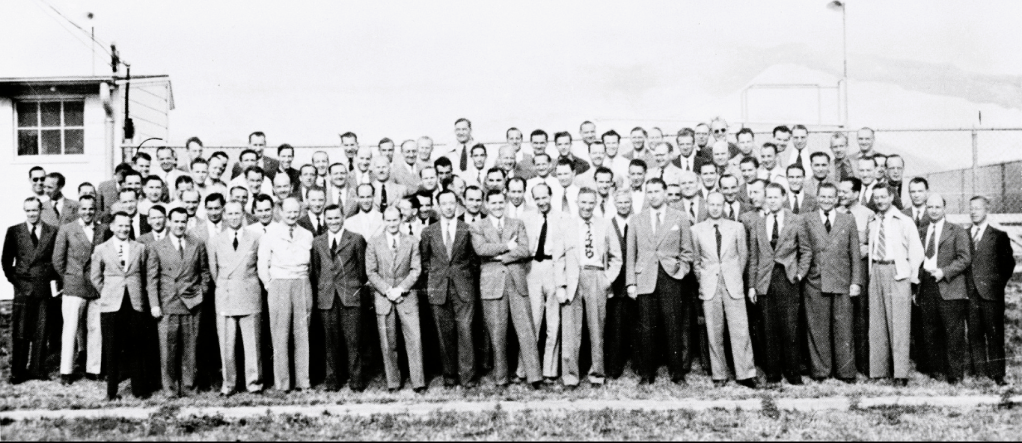
After World War II, both the United States and the Soviet Union were eager to harness the scientific and technical expertise of German scientists who had developed advanced missile technology, particularly the V-2 rocket, which was the world’s first long-range guided ballistic missile. The U.S. initiated Operation Paperclip to recruit these scientists, many of whom had been members of the Nazi Party or had worked closely with the Nazi military.
2. Wernher von Braun and Peenemünde:
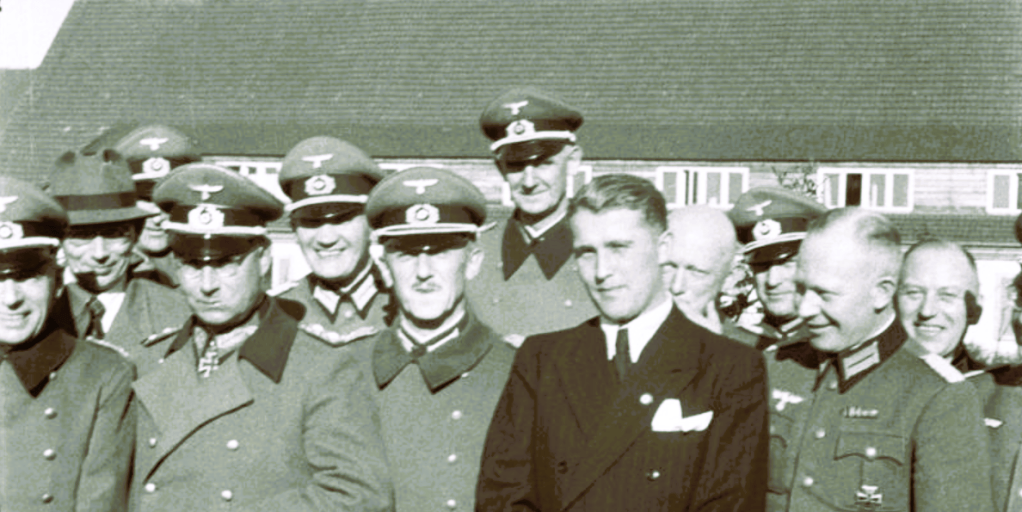
The most famous and significant figure among these scientists was Wernher von Braun, a German aerospace engineer who had been a key developer of the V-2 rocket at the Peenemünde Army Research Center. Von Braun was a member of the Nazi Party and the SS (Schutzstaffel). However, he later claimed that his membership was more of a formality than an ideological commitment.
During the war, von Braun’s V-2 rockets were used by the Nazis to bomb cities like London and Antwerp, causing thousands of civilian deaths. The rockets were built using forced labor from concentration camp prisoners, especially from the Mittelbau-Dora concentration camp, where the conditions were brutal, and thousands of laborers died.
After the war, von Braun and around 1,600 other German scientists and engineers were brought to the U.S. under Operation Paperclip. Von Braun went on to play a leading role in the U.S. missile program and eventually became a key figure in NASA.

3. Von Braun’s Role in NASA:
Wernher von Braun’s work in the U.S. began with the development of military ballistic missiles. Still, his expertise transitioned into space exploration as part of the Cold War space race. By the late 1950s, when NASA was formed in response to the Soviet Union’s launch of Sputnik, von Braun was instrumental in the development of the Redstone and Jupiter rockets, which were early American space-launch vehicles.
His most outstanding achievement was leading the development of the Saturn V rocket, which eventually carried the Apollo astronauts to the Moon in 1969. Von Braun is often credited as the architect of the U.S. space program.
4. Ethical Controversies:
The recruitment of von Braun and other German scientists who had been involved with the Nazi regime raised significant ethical questions. While von Braun’s technical contributions were undeniable, his involvement with the Nazi war machine and the use of forced labor during the war have been widely criticized. The U.S. government’s decision to overlook their Nazi ties for the sake of technological advantage has been a matter of historical debate, particularly regarding how much von Braun and others knew about the atrocities committed under the Third Reich.
5. NASA’s Legacy:
Despite the ethical concerns, the contributions of these former Nazi scientists were vital to America’s success in the space race. Von Braun became the first director of NASA’s Marshall Space Flight Center, and his leadership was instrumental in making the Apollo program a reality.
In summary, NASA’s connection to the Nazis primarily stems from its reliance on German scientists like Wernher von Braun, recruited through Operation Paperclip. Their expertise, gained from developing technology for the Nazi regime, was used to advance American space and missile programs, ultimately leading to the triumphs of the Apollo Moon landings. However, this success is intertwined with the troubling legacy of their wartime activities under Hitler’s regime.
Wernher von Braun and Peenemünde: The Dual Legacy of Innovation and Destruction
Wernher von Braun stands as one of the most pivotal figures in the history of rocketry and space exploration. His groundbreaking work laid the foundation for humanity’s journey into space, culminating in the Apollo Moon landings. However, von Braun’s story is deeply intertwined with the darker chapters of 20th-century history, particularly his involvement with the Nazi regime and the development of military technology during World War II. Central to this dual legacy is the Peenemünde Army Research Center, where von Braun and his team developed the infamous V-2 rocket. The work at Peenemünde embodied both the revolutionary advancements in aerospace engineering and the devastating human cost of military innovation during the war.
Early Life and Aspirations
Born on March 23, 1912, in Wirsitz, Germany (now Wyrzysk, Poland), Wernher von Braun displayed an early fascination with space travel. Influenced by the science fiction works of authors like Jules Verne and H.G. Wells, von Braun pursued physics and engineering, dreaming of the possibility of exploring outer space. He earned a doctorate in physics in 1934, and his early experiments with liquid-fueled rockets quickly garnered the attention of the German military, which saw the potential of rocketry for warfare. As Nazi Germany sought to modernize its military capabilities in preparation for what would become World War II, von Braun’s vision of space exploration took a backseat to the development of weapons of war.
Peenemünde and the Development of the V-2 Rocket
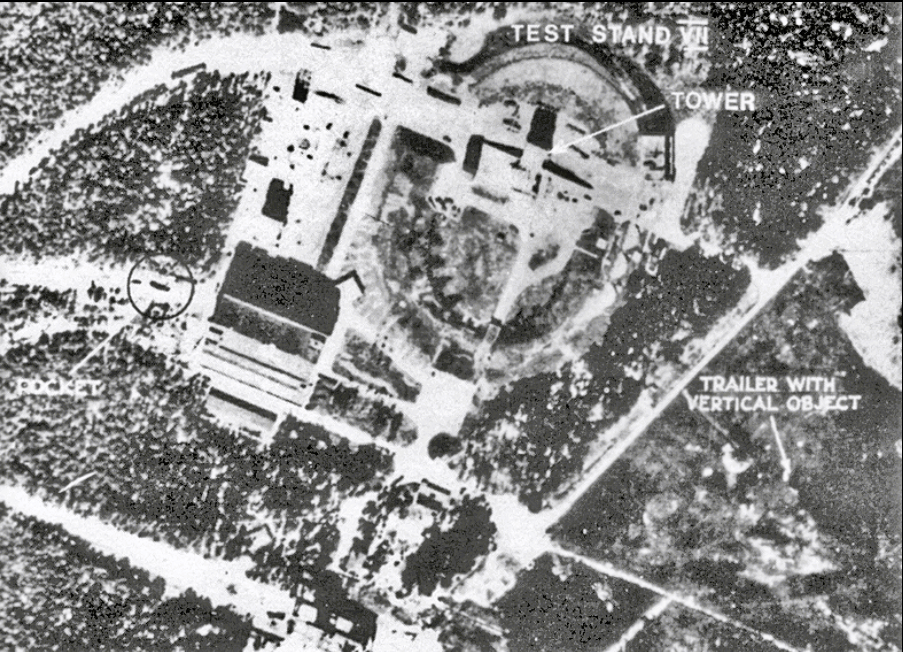
In 1937, Wernher von Braun became the technical director of the Peenemünde Army Research Center, a remote facility on the Baltic Sea that would become the birthplace of modern rocket technology. Peenemünde was built under the guidance of the German Army and later the Nazi regime, with the goal of developing advanced ballistic missiles capable of striking enemy targets from long distances. It was here that von Braun, along with a team of engineers and scientists, created the V-2 rocket, or Vergeltungswaffe 2 (“Vengeance Weapon 2”), the world’s first long-range guided ballistic missile.
The V-2 rocket represented an unprecedented leap in aerospace engineering. Standing over 14 meters tall and capable of reaching speeds of up to 5,760 kilometers per hour (3,580 mph), the V-2 could carry a one-ton warhead to targets hundreds of kilometers away. Powered by liquid oxygen and alcohol, it was the first human-made object to enter the edge of space during its flight. These technological innovations were groundbreaking and would form the basis for future space exploration. However, in the context of the war, the V-2 was developed as a weapon of terror aimed primarily at civilian populations in Allied cities.
The Dark Side of Peenemünde: Forced Labor and the Nazi War Effort
Despite its technical achievements, Peenemünde’s history is marred by its direct connection to the atrocities of the Nazi regime. In 1943, following a devastating British bombing raid on Peenemünde, much of the V-2 rocket production was moved to the Mittelwerk facility, which was built underground to avoid further Allied attacks. The production of the V-2 relied heavily on forced labor from concentration camp prisoners, primarily from the nearby Mittelbau-Dora camp. Thousands of prisoners, including political prisoners, Jews, and others targeted by the Nazis, were forced to work under inhumane conditions. Malnutrition, abuse, and disease were rampant, and estimates suggest that between 10,000 and 20,000 laborers died due to the brutal working conditions, more than the number of people killed by the V-2 rocket itself.

While von Braun’s direct involvement in the forced labor system remains a subject of debate, it is clear that he was aware of the conditions at Mittelwerk. As technical director, von Braun visited the production facilities and was likely cognizant of the use of slave labor. His later claims that he had little control over the labor conditions are contradicted by his leadership role and his status within the Nazi hierarchy. Moreover, von Braun had been a member of the Nazi Party since 1937 and joined the SS (Schutzstaffel) in 1940. However, later, he downplayed these affiliations, describing them as largely symbolic.
The V-2 in Action: A Weapon of Terror
The V-2 rocket became operational in 1944, and it was used by Nazi Germany to bombard Allied cities, particularly London and Antwerp. The rocket’s supersonic speed made it impossible to detect or intercept, striking without warning and causing massive destruction. Between 1944 and 1945, approximately 3,000 V-2 rockets were launched, killing an estimated 9,000 civilians and soldiers. Although the V-2’s impact on the course of the war was limited—Germany was already on the defensive by the time the rockets were deployed—it remains one of the most notorious weapons of the conflict, symbolizing both the terrifying potential of new military technologies and the desperation of the Nazi regime in its final months.

Post-War Transition: Operation Paperclip and NASA
As World War II drew to a close, both the United States and the Soviet Union sought to capture German scientific expertise in the hopes of gaining an advantage in the Cold War. Wernher von Braun and many of his colleagues from Peenemünde were among the top targets of Operation Paperclip, a secret U.S. program designed to recruit former Nazi scientists. Von Braun and around 1,600 others were brought to the United States, where their knowledge of rocketry would be critical in the development of American missile technology and, later, the space program.
In the U.S., von Braun worked initially for the Army on ballistic missile development but later became the leading figure in NASA’s space exploration efforts. His crowning achievement was the Saturn V rocket, which successfully carried the Apollo 11 astronauts to the Moon in 1969. By then, von Braun had become a symbol of the space age, praised as a visionary who helped humanity take its first steps beyond Earth.
The Complex Legacy of Wernher von Braun and Peenemünde
Wernher von Braun’s legacy is one of duality—he was both a visionary scientist and an engineer who contributed to one of the most destructive technologies of World War II. The work at Peenemünde represents this tension between scientific progress and moral compromise. On the one hand, the development of the V-2 rocket was a revolutionary step in the history of aerospace engineering, and von Braun’s later work with NASA undeniably propelled humanity into the space age. On the other hand, his collaboration with the Nazi regime and his involvement in a project that caused the suffering and death of countless forced laborers casts a long shadow over his achievements.
The Peenemünde chapter of von Braun’s life is a stark reminder of the ethical dilemmas that often accompany technological progress. It raises important questions about the responsibilities of scientists and engineers, particularly when their work is entangled with oppressive regimes. Von Braun’s story exemplifies the complexities of moral compromise in times of war, where the line between progress and destruction can be perilously thin.
Sources
https://www.bbc.com/travel/article/20170629-the-german-village-that-changed-the-war
https://museum-peenemuende.de/?lang=en
https://www.pbs.org/wgbh/americanexperience/features/chasing-moon-wernher-von-braun-and-nazis/
https://www.smithsonianmag.com/air-space-magazine/a-amp-s-interview-michael-j-neufeld-23236520/
Donation
Your readership is what makes my site a success, and I am truly passionate about providing you with valuable content. I have been doing this at no cost and will continue to do so. Your voluntary donation of $2 or more, if you are able, would be a significant contribution to the continuation of my work. However, I fully understand if you’re not in a position to do so. Your support, in any form, is greatly appreciated. Thank you. To donate, click on the credit/debit card icon of the card you will use. If you want to donate more than $2, just add a higher number in the box left from the PayPal link. Your generosity is greatly appreciated. Many thanks.
$2.00


 History of Sorts
Leave a comment