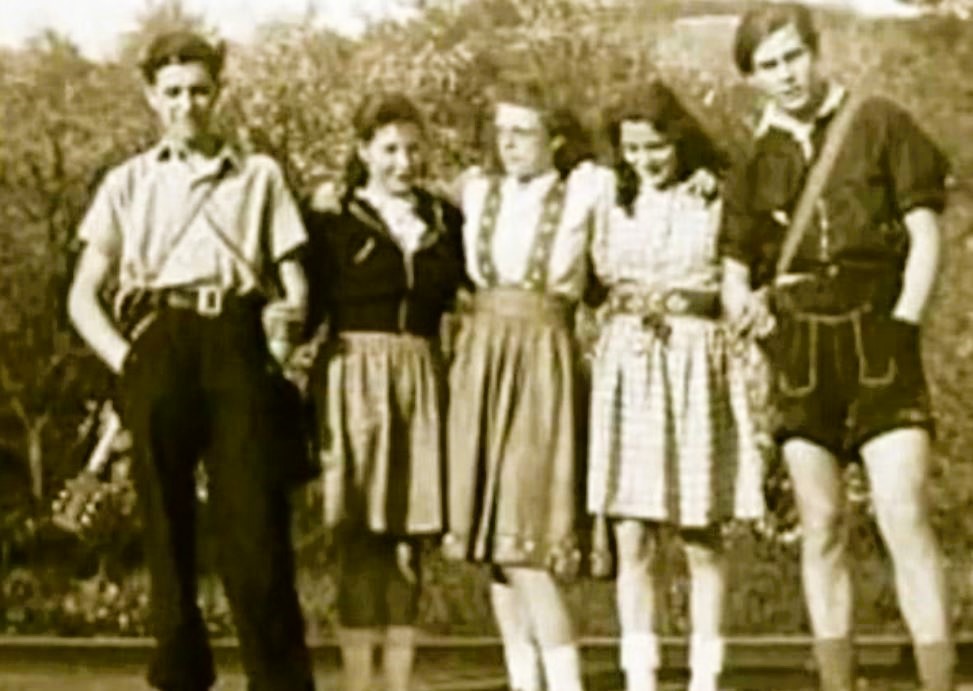
The Edelweiss Pirates, or Edelweißpiraten, were a group of loosely organized German youth who stood in open defiance of the Nazi regime during the Third Reich. They played a unique if often overlooked, role in resisting Nazi authority, fighting against conformity, and supporting anti-fascist efforts. Although they were not as coordinated or ideologically unified as other resistance groups, the Edelweiss Pirates demonstrated courage and nonconformity in one of the darkest periods of history.
Here’s a look at who the Edelweiss Pirates were, what they believed, how they resisted, and the impact they left behind.
Origins and Background: Roots of the Edelweiss Pirates
The roots of the Edelweiss Pirates trace back to the broader German youth movement of the early 20th century, which championed independence, personal freedom, and connection with nature. This era saw the formation of groups such as the Wandervogel, whose members would hike, camp, and explore the outdoors as a response to the regimented urban and industrial life of the time. These youth movements emphasized self-determination and anti-authoritarian values, setting the stage for the development of groups like the Edelweiss Pirates during the 1930s.
When Adolf Hitler and the Nazi Party came to power in 1933, they quickly absorbed or outlawed all independent youth organizations, replacing them with the Hitlerjugend (Hitler Youth) for boys and the Bund Deutscher Mädel (League of German Girls). These state-run organizations emphasized Nazi ideology, discipline, and unwavering loyalty to Hitler. The Hitler Youth sought to shape young Germans into obedient, militaristic citizens, and it was mandatory for boys aged 14 to 18.
But not all young people conformed. Many teenagers rejected the authoritarian values of the Hitler Youth, finding its militaristic rigor restrictive and its ideological conditioning repulsive. These nonconforming teens created informal groups, calling themselves names like the Kittelbach Pirates, Navajos, Travelling Dudes, and, most notably, the Edelweißpiraten (Edelweiss Pirates). The Edelweiss flower became a symbol of resistance, its hardy nature embodying their defiance.

Who Were the Edelweiss Pirates?
The Edelweiss Pirates were mainly working-class youth aged 14 to 18, although some younger and older individuals participated. They were typically less ideologically defined than other resistance groups. Still, they were united in their opposition to the Nazi regime’s control over their lives. They expressed this defiance through music, fashion, graffiti, and physical confrontations with Hitler Youth members.

Many of these teens dressed in nonconformist styles: long hair, plaid shirts, and colorful scarves, often adorned with the Edelweiss flower emblem. This was a stark contrast to the Hitler Youth uniforms, symbolizing individuality and rebellion against conformity. They also used music—swing, jazz, and even banned music genres—as a cultural and political statement, as Nazi Germany deemed these “degenerate” because of their American and African origins.
The Edelweiss Pirates valued freedom of expression and enjoyed outdoor activities such as hiking, camping, and singing. These seemingly innocent gatherings allowed them to organize out of the watchful eye of Nazi authorities. However, their defiance also took more severe forms, including acts of sabotage, physical resistance, and anti-Nazi propaganda.
Forms of Resistance: How the Edelweiss Pirates Opposed the Nazis
1. Cultural and Symbolic Defiance
The Edelweiss Pirates’ clothing, music, and slang were symbolic acts of resistance, conveying their rejection of Nazi values. By embracing banned music, wearing non-regulated clothing, and engaging in public displays of individualism, they established a counter-culture within Nazi Germany. In many ways, this symbolic defiance challenged the idea that the Nazis held absolute control over German youth.
2. Physical Confrontations with the Hitler Youth
Conflicts between the Edelweiss Pirates and the Hitler Youth were common, as they frequently clashed in parks, streets, and at youth gatherings. The Edelweiss Pirates would sometimes ambush Hitler Youth groups, harassing or even assaulting them. These confrontations became violent at times, leading Nazi officials to view the Edelweiss Pirates as a direct threat to their youth control efforts.
3. Graffiti and Leaflets
The Edelweiss Pirates used graffiti to share anti-Nazi messages, mock Hitler, or encourage others to resist the regime. Slogans like “Down with Hitler” or “Hitler = Mass Murder” appeared on walls throughout cities like Cologne, where the Edelweiss Pirates were especially active. They also produced and distributed anti-Nazi leaflets, sometimes in collaboration with other resistance groups such as the Communist Youth.
4. Sheltering Deserters and Supporting Allied Forces
Some Edelweiss Pirates went further in their resistance efforts by sheltering army deserters, escaped prisoners, or political dissidents who were fleeing Nazi persecution. They also assisted Allied forces, if indirectly, by sabotaging war production or providing information on the Nazi infrastructure.
5. Direct Sabotage
In the later stages of the war, particularly in industrial areas, the Edelweiss Pirates engaged in acts of sabotage. This included tampering with railways, cutting telephone lines, and disrupting factories vital to the Nazi war effort. These actions, while modest in scope, underscored their willingness to risk their lives for the resistance cause.
Nazi Repression: The Gestapo Crackdown on the Edelweiss Pirates
As the war progressed, the Nazi regime grew increasingly intolerant of the Edelweiss Pirates and other nonconformist youth groups. While earlier resistance efforts were seen as minor acts of youthful rebellion, their escalated acts of sabotage and anti-Nazi propaganda brought them under the Gestapo’s radar. By 1942, the Gestapo began serious efforts to dismantle these groups.
Members of the Edelweiss Pirates faced arrest, imprisonment, and, in some cases, execution. One infamous case involved the Cologne branch, where members were captured and interrogated. Thirteen Pirates, including the group’s leader, Barthel Schink, were publicly hanged in 1944 as a warning to others. Schink, who was only 16 years old, became a martyr of the Edelweiss Pirates’ struggle and is remembered as a symbol of their resistance.
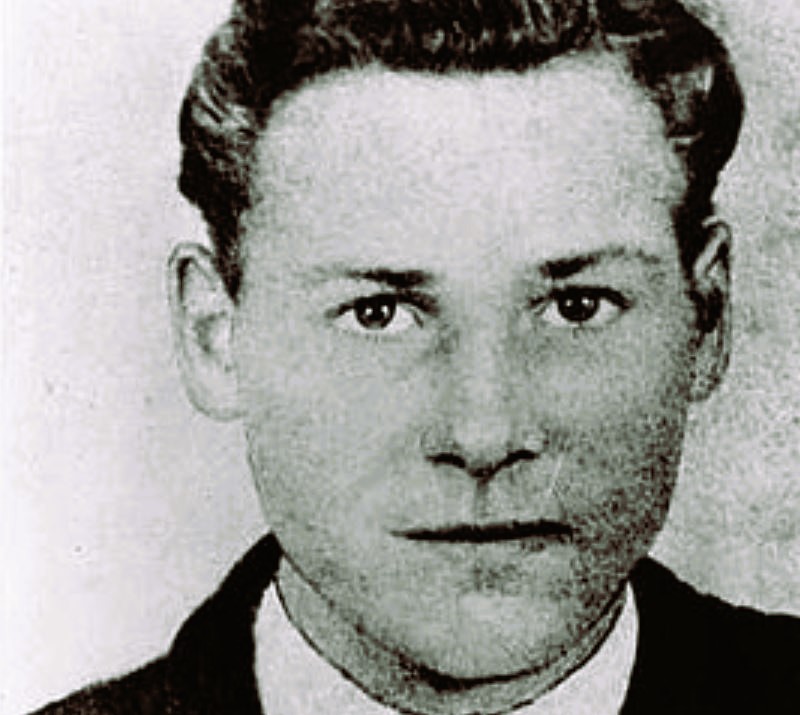
For many, the Gestapo’s persecution revealed the brutal lengths to which the Nazis would go to enforce conformity. Ironically, this suppression underscored the regime’s vulnerability, as it felt compelled to harshly target even small, decentralized youth groups.
Legacy and Historical Impact of the Edelweiss Pirates
The Edelweiss Pirates were never a centralized resistance organization like the White Rose or the July 20th Plot conspirators, and they did not wield significant influence over the Nazi regime’s operations. However, their defiance left a lasting impact on Germany’s historical memory, highlighting the diversity of anti-Nazi resistance efforts.
In post-war Germany, the Edelweiss Pirates were initially seen as mere juvenile delinquents or hooligans rather than heroes of resistance. It wasn’t until much later that they began to receive recognition for their courageous defiance. In the 1980s, with the emergence of more nuanced perspectives on resistance within Nazi Germany, the Edelweiss Pirates started to be recognized as symbols of resistance against tyranny. Today, their story serves as a reminder of the importance of individuality and the courage to stand against oppressive regimes, even in the face of overwhelming odds.
Lessons from the Edelweiss Pirates
The Edelweiss Pirates’ resistance was unconventional but impactful, embodying the spirit of youth who dared to defy a totalitarian regime. Through music, style, physical defiance, and symbolic acts, they showed that resistance can take many forms. Their fight for autonomy reminds us of the power of grassroots activism, even when it seems insignificant on a grand scale.
Today, the story of the Edelweiss Pirates serves as an inspiration, particularly for those standing up against oppressive systems. It underscores the importance of cultural and symbolic resistance, the courage to confront authoritarianism, and the role young people can play in shaping history—even when the odds are stacked against them.
Yad Vashem
The Cologne-based Edelweiss Pirates clandestinely admitted two Jewish youths—the Schwarz brothers—into their organization, helping them avoid deportation to Auschwitz. In the later stages of the war, they also sheltered Friedel Krämer and her daughter Ruth, as well as Paul Urbat, a young man of mixed Jewish descent from Köln-Bickendorf. These individuals were hidden in a cellar on Schönsteinstrasse, where the group also stockpiled ammunition and food. Remarkably, they declined any material compensation for hiding these Jewish refugees.
One member, Michael Jovy, was the son of a former Center Party mayor from Gladbeck. He had been arrested by the Gestapo in November 1939 and later convicted by the Berlin People’s Court in 1941 for “preparation of high treason.” Sent to Siegburg prison, he met the 15-year-old son of a Communist inmate who introduced him to the Edelweiss Pirates. In 1944, against all odds, Jovy escaped the feared 999 probation battalion and joined the group in Köln.
Two prominent members of the Edelweiss Pirates, Bartholomäus Schink, and Jean Jülich, were notably active in aiding Jews. Schink, moved by witnessing a Jewish barber’s brutal treatment by the SA, became determined to oppose Jewish persecution. Tragically, in October 1944, the Gestapo dismantled the organization, arresting most of its members, including Schink and Jülich. Schink, only 16, was among 13 individuals publicly hanged on November 10, 1944, without trial. Jülich, however, survived imprisonment until the war’s end. Jovy managed to evade capture by joining a reconnaissance unit and later crossing over to the Allied lines.
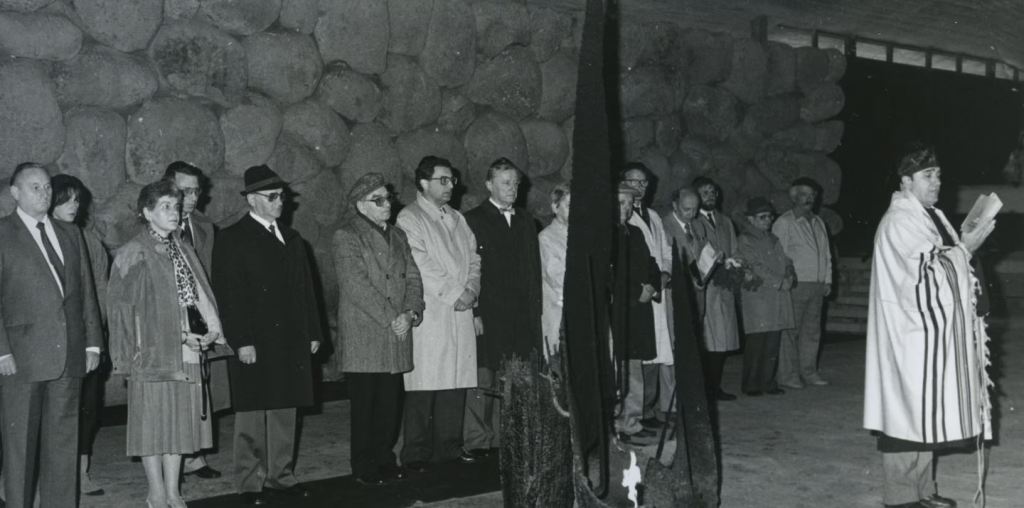
On November 18, 1982, Yad Vashem honored Michael Jovy, Jean Jülich, and Bartholomäus Schink as Righteous Among the Nations.
Yad Vashem honored the group Edelweiss Pirates as Righteous Among the Nations in 1998.
Sources
https://www.gdw-berlin.de/en/recess/topics/13-resistance-by-young-people/
https://www.facinghistory.org/resource-library/rejecting-nazism
https://libcom.org/article/edelweiss-pirates-1939-1945
https://www.accidentaltalmudist.org/heroes/2020/11/11/eidelweiss-pirates/
https://collections.yadvashem.org/en/righteous/4017378
Donation
Your readership is what makes my site a success, and I am truly passionate about providing you with valuable content. I have been doing this at no cost and will continue to do so. Your voluntary donation of $2 or more, if you are able, would be a significant contribution to the continuation of my work. However, I fully understand if you’re not in a position to do so. Your support, in any form, is greatly appreciated. Thank you. To donate, click on the credit/debit card icon of the card you will use. If you want to donate more than $2, just add a higher number in the box left from the PayPal link. Your generosity is greatly appreciated. Many thanks.
$2.00

 History of Sorts
Leave a comment