
When you see a photograph of a Wehrmacht officer in the context of the Holocaust, it’s natural to assume he was complicit in the atrocities of that time. Yet, in the case of Lieutenant Albert Battel, that assumption couldn’t be more wrong. Battel defied expectations and risked his life to oppose Nazi crimes—revealing an extraordinary story of courage amidst horror.
Albert Battel: A Story of Courage and Moral Defiance in Nazi Germany
Albert Battel’s story stands out in the dark history of Nazi Germany, not only because of his remarkable bravery but because it exemplifies an extraordinary act of moral defiance from within the ranks of the Wehrmacht, the German army. Born in 1891 in Klein-Pramsen, Upper Silesia, Germany (now in Poland), Battel was a lawyer by profession, a man of principle, and someone who, despite the oppressive atmosphere of Nazi Germany, retained a fierce moral compass. His actions during World War II, particularly his courageous defiance in the town of Przemyśl, set him apart as a person of conscience who was willing to risk everything to save Jewish lives. For his efforts, Battel was posthumously honored as one of the “Righteous Among the Nations” by Yad Vashem, Israel’s Holocaust memorial, in 1981. This essay explores Albert Battel’s early life, his defiance in Przemyśl, the consequences he faced, and his legacy as a rare figure of resistance within the Nazi military framework.
Early Life and Career
Albert Battel grew up in a region that experienced the shifting boundaries and national identities of early 20th-century Europe. His early life in Upper Silesia, a culturally diverse and contested area influenced his open-mindedness and ethical perspective. After serving as a soldier in World War I, he pursued a law degree and established himself as a lawyer, dedicating himself to justice. By the time World War II began, Battel was a middle-aged man with a well-established legal career. He had become a reserve officer in the Wehrmacht and, eventually, called back to military service as Germany conscripted an increasing number of men due to the expanding scope of the war. This context set the stage for his fateful deployment to Przemyśl, a town in occupied Poland.
The Situation in Przemyśl
In Przemyśl, Battel witnessed firsthand the brutal treatment of Jewish people under Nazi rule. By 1942, the town’s Jewish population had been forced into a ghetto and subjected to the draconian anti-Semitic laws of the Nazi regime. Deportations to extermination camps were increasingly frequent as Nazi forces aimed to clear ghettos as part of the “Final Solution.” Battel, as an officer stationed in Przemyśl, was keenly aware of the SS’s activities, especially the plans for deportation to Belzec. In this extermination camp, Nazis murdered hundreds of thousands of Jews during the Holocaust. Aware that deportation to Belzec meant almost certain death, Battel faced an intense moral dilemma. As a Wehrmacht officer, the expectation was to comply with orders from the SS. However, as a lawyer and a man of conscience, he could not stand by and witness such atrocity without intervening.
Battel’s Act of Defiance
When the SS prepared to enter the Przemyśl Ghetto to round up Jewish residents for deportation, Battel took the unprecedented step of actively opposing them.
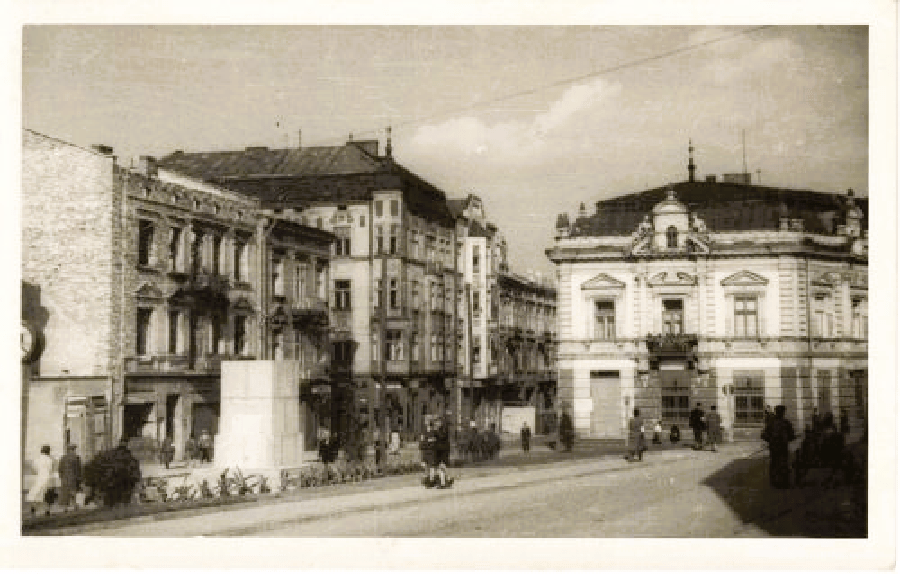
In one of the few documented cases of direct defiance within the German army, he ordered his unit to block the bridge leading into the ghetto, barring the SS from proceeding with the deportations. Furthermore, he directed his soldiers to secure the entrance gate and, in the heat of the moment, took charge of the situation, refusing to allow the SS access.
Battel did not stop there. Under his command, the Germans used army trucks to transport Jewish men, women, and children to military barracks where they could find temporary refuge. Estimates suggest that Battel’s intervention saved around 100 Jews from certain death, an act of courage that was both remarkable and highly dangerous. His defiance was not only against the orders of the SS but was effectively an act of insubordination to the Nazi state and its policies of genocide.
Consequences and the Price of Conscience
In Nazi Germany, helping Jews was considered a grave offense, one punishable by severe penalties, often including death. While Battel did not face immediate repercussions, his actions did not go unnoticed. The SS was furious at his intervention, and the Gestapo opened an investigation into his conduct. Heinrich Himmler, one of the most feared leaders of the Nazi regime and head of the SS, is said to have personally denounced Battel. The Gestapo prepared to take punitive measures against him, though the collapse of the Nazi regime at the end of the war prevented them from carrying out these plans.
During the war, Battel’s career took a downturn and suffered when the Germans transferred him to Przemyśl, effectively blocking his chances for promotion. This transfer damaged his standing in the eyes of the Nazi leadership, leading them to view his military record as tarnished. As a result, he remained under suspicion until the end of the war.
Battel was released from the army in 1944 due to a medical condition. Upon returning to his hometown of Breslau—he was drafted into the Volkssturm, a German national militia founded during the last few months of the war.
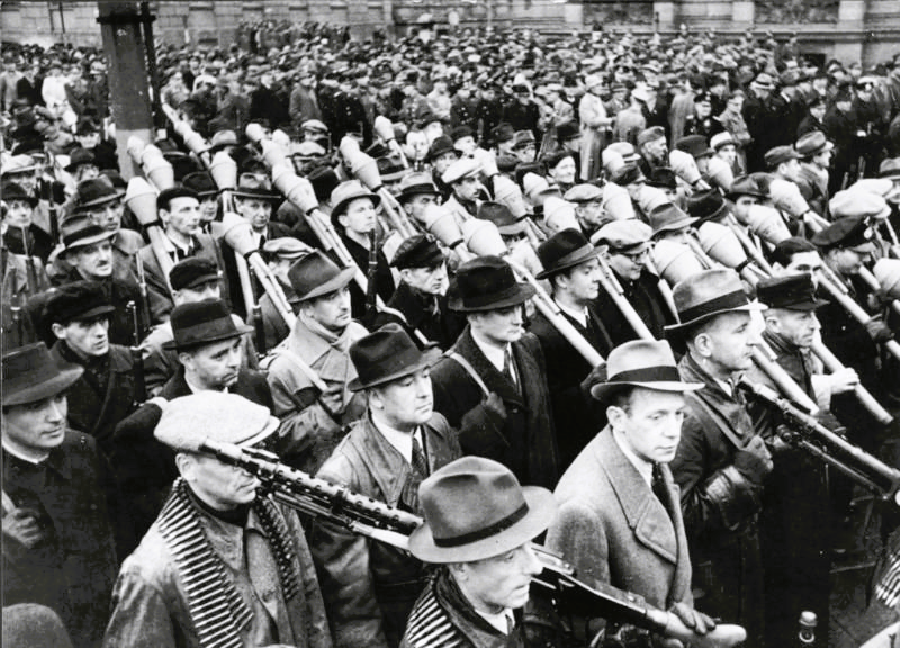
After the war, Battel returned to his profession as a lawyer. Still, the shadow of his association with the Nazi party and the complexities of post-war Germany limited his opportunities. Although he had acted with immense bravery, he was unable to receive the full recognition of his actions in his lifetime, and he died in 1952, long before the full details of his resistance became widely known.
Legacy and Recognition as “Righteous Among the Nations”
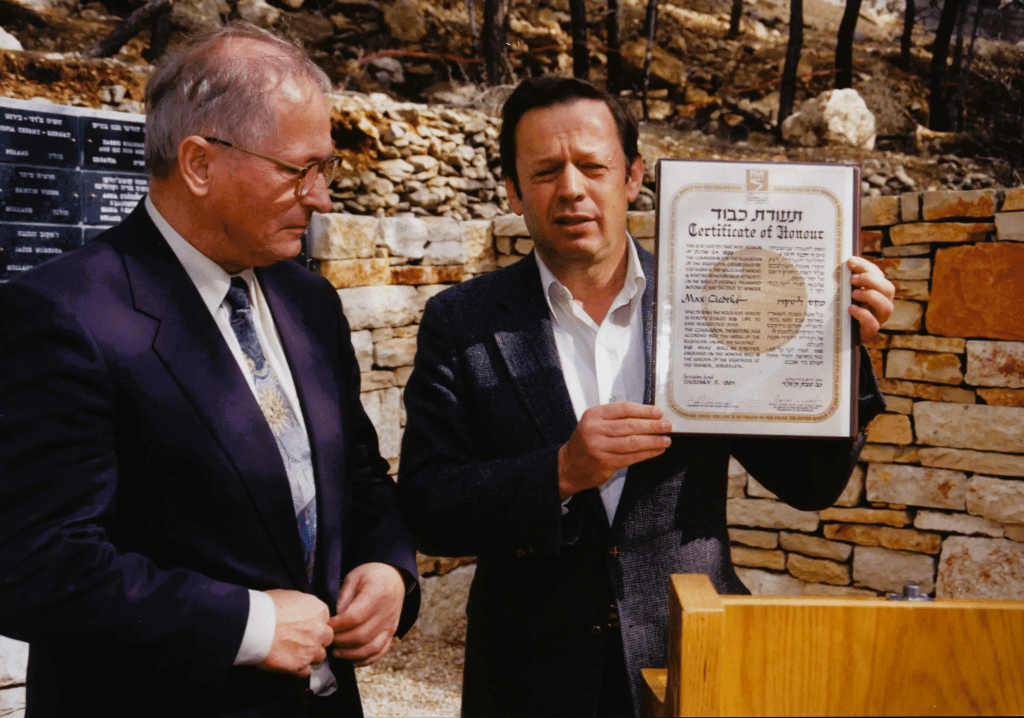
In 1981, nearly three decades after his death, Albert Battel’s legacy was officially recognized when Yad Vashem honored him as one of the “Righteous Among the Nations.” A recognition given to non-Jews who risked their lives to save Jews during the Holocaust. For Yad Vashem, Battel’s actions embodied the highest principles of humanity, standing out as an act of resistance within the very institution that carried out Nazi atrocities.
Battel’s story sheds light on the moral complexities within the Wehrmacht. The Nazi military was overwhelmingly complicit in war crimes and the Holocaust. Yet, within its ranks, there were rare individuals like Battel who actively resisted and took significant risks to help others. His example challenges simplistic views of the Wehrmacht as a monolithic force of compliance and raises important questions about individual responsibility and moral choice under oppressive regimes. In the face of profound evil, Battel chose to risk everything for the lives of people he did not know personally, guided by a sense of justice and humanity.
Broader Significance and Lessons for Today
Albert Battel’s courage teaches us that even in the most authoritarian systems, individuals retain the power to make moral choices. His life serves as a testament to the idea that, regardless of circumstances, one can and should act in defense of human rights and dignity. By his actions, Battel demonstrated that true courage involves standing up for what is right, even when it comes at a personal cost. His decision to defy the SS is an example of what philosopher Hannah Arendt called “the banality of good” — the notion that just as ordinary people can commit unspeakable atrocities, ordinary individuals can also make extraordinary moral choices.
In remembering, Albert Battel reminds us that history is shaped not only by sweeping movements and ideologies but also by individuals who dare to make moral decisions. He remains a symbol of the human capacity for good even within institutions marked by evil, and his story provides hope that moral resistance is possible, even under the most dire conditions. His actions encourage us to reflect on the power of personal responsibility, the importance of moral courage, and the imperative to act against injustice, regardless of the risks.
In sum, Albert Battel’s life and legacy stand as a powerful reminder of the impact one person can have in the face of widespread wrongdoing. His story has inspired generations to understand the importance of conscience, and it endures as an example of humanity’s capacity for compassion, even amid the darkest chapters of history.
Key Aspects of Battel’s Legacy
Defying Nazi Orders: His story is a rare example of a Wehrmacht officer openly defying the Nazi regime to protect Jewish lives, even though it meant putting himself at significant risk.
Moral Integrity: Battel’s actions were rooted in a strong moral conviction against the cruelty of the Nazi policy toward Jews, showing that even within the ranks of the German military, some individuals maintained their humanity.
Posthumous Recognition: His heroism was recognized long after his death, helping to highlight the complex and multifaceted resistance that occurred during the Holocaust, even within institutions complicit in Nazi crimes.
Sources
https://www.holocausthistoricalsociety.org.uk/contents/ghettosj-r/przemysl.html
https://www.yadvashem.org/righteous/stories/battel.html
https://www.ifcj.org/news/fellowship-blog/dr-albert-battel-a-righteous-gentile-from-germany
https://www.accidentaltalmudist.org/heroes/2024/08/20/nazi-who-didnt-follow-orders-albert-battel/
https://en.wikipedia.org/wiki/Albert_Battel
Donation
Your readership is what makes my site a success, and I am truly passionate about providing you with valuable content. I have been doing this at no cost and will continue to do so. Your voluntary donation of $2 or more, if you are able, would be a significant contribution to the continuation of my work. However, I fully understand if you’re not in a position to do so. Your support, in any form, is greatly appreciated. Thank you. To donate, click on the credit/debit card icon of the card you will use. If you want to donate more than $2, just add a higher number in the box left from the PayPal link. Your generosity is greatly appreciated. Many thanks.
$2.00

 History of Sorts
Leave a comment