
The Politionele Acties, or “Police Actions,” represent one of the most contentious episodes in the history of Indonesia and the Netherlands. Conducted between 1947 and 1949, these military operations were part of the Dutch effort to regain control of their former colony after Indonesia’s declaration of independence on August 17, 1945. What unfolded was a conflict marked by violence, diplomacy, and international pressure, ultimately reshaping the trajectory of both nations.
Historical Context
Indonesia, once a prized possession of the Dutch empire known as the Dutch East Indies, endured centuries of colonial exploitation. During World War II, Japan occupied the region, weakening Dutch control and emboldening nationalist movements. When Japan surrendered in 1945, Indonesian leaders Sukarno and Mohammad Hatta proclaimed independence. However, the Netherlands, determined to restore its colonial authority, refused to recognize the new republic, setting the stage for a four-year struggle.
The Politionele Acties: A Misleading Name
The term “Politionele Acties” was a euphemism, as these were large-scale military campaigns rather than simple policing operations. The Dutch government justified these actions as necessary to “restore order,” but in reality, they were attempts to suppress the Indonesian independence movement and reassert Dutch control.

First Politionele Actie (Operation Product)
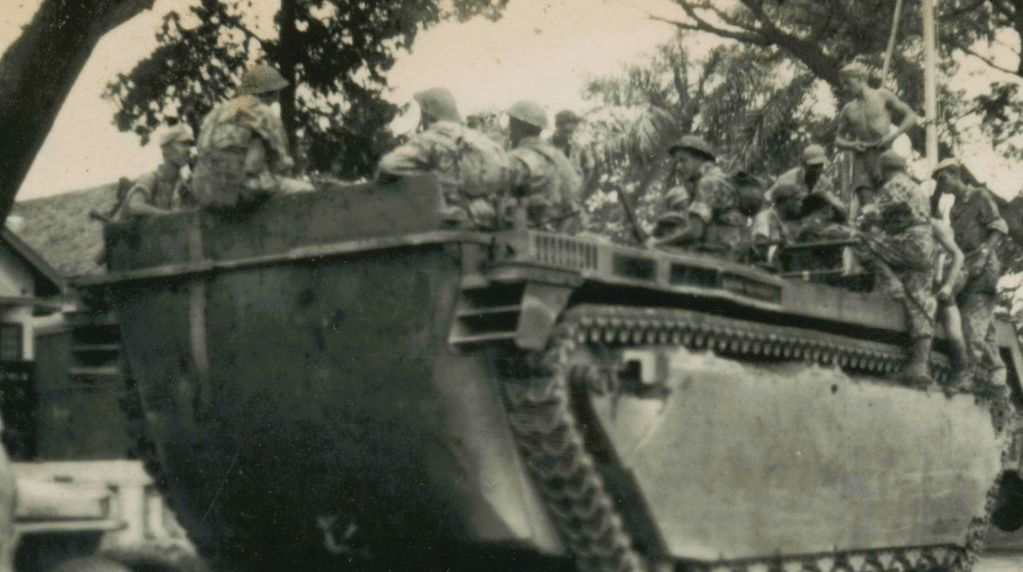
Launched on July 21, 1947, the First Politionele Actie targeted economically vital areas in Java and Sumatra. The Dutch aimed to regain control over plantations and industries critical to their economy. While the operation achieved some territorial gains, it faced fierce resistance from Indonesian forces. The violence drew international condemnation, particularly from newly independent nations and the United Nations, which called for a ceasefire.
Second Politionele Actie (Operation Kraai)
Undeterred, the Dutch launched a second operation on December 19, 1948. Dubbed Operation Kraai, it sought to dismantle the Indonesian republican government by capturing its stronghold in Yogyakarta. Dutch forces succeeded militarily, even capturing key leaders, including Sukarno and Hatta. However, their actions further galvanized international opposition and strengthened Indonesian resolve.
The Role of International Pressure
The global political landscape after World War II was increasingly hostile to colonialism. The United Nations, supported by influential nations like the United States and India, condemned the Dutch actions. The U.S., in particular, threatened to withhold crucial economic aid, pressuring the Netherlands to negotiate.

The Road to Independence
The Dutch were ultimately forced to recognize the futility of their efforts. In 1949, after protracted negotiations at the Round Table Conference in The Hague, the Netherlands formally transferred sovereignty to the Republic of Indonesia on December 27, 1949. This marked the end of the Indonesian National Revolution and the birth of Indonesia as an independent nation.
Legacy and Reflection
The Politionele Acties left deep scars. In Indonesia, the conflict symbolized the resilience and sacrifices of a people fighting for self-determination. For the Netherlands, it prompted a reckoning with its colonial past. Reports of massacres, extrajudicial killings, and other atrocities committed by Dutch forces continue to surface, prompting apologies and calls for reparations.
In recent years, efforts to confront this history have gained momentum. The Dutch government has acknowledged the excessive violence used during the operations, and both nations have engaged in dialogue to foster understanding and reconciliation.
The Politionele Acties were more than just military campaigns; they were a clash of ideologies in a world transitioning from colonial domination to self-rule. They underscore the complexities of decolonization and the enduring impact of colonial legacies. As both Indonesia and the Netherlands continue to reflect on this period, it serves as a powerful reminder of the importance of acknowledging and learning from history to build a more just and equitable future.
Indonesian Population and the Context of the Politionele Acties
The Indonesian population at the time was composed of a diverse array of ethnic groups, with Javanese, Malay, Sundanese, Balinese, and many other groups living in the Dutch East Indies. The population was largely rural and agrarian, dependent on subsistence farming and plantation labor. Many Indonesians lived under colonial conditions of exploitation, particularly through forced labor on Dutch-controlled plantations and resource extraction enterprises.
When World War II ended, the Japanese occupation (1942–1945) had already disrupted colonial administration, and the Indonesian nationalist movement was gaining momentum. After the war, Dutch efforts to restore colonial control clashed with the aspirations of the Indonesian people for independence. During this period, the Politionele Acties were launched, further exacerbating the challenges faced by the civilian population.
Effects of the Politionele Acties on the Population
Violence and Mass Displacement:
The two military offensives (the First Politionele Actie in 1947 and the Second Politionele Actie in 1948–1949) resulted in widespread violence.
Thousands of Indonesians were killed, and millions were forced to flee their homes to escape the fighting.
Many areas experienced scorched-earth policies and destruction as villages were razed and agricultural land was rendered unproductive.
Urban Centers Affected:
Urban areas like Yogyakarta (the Republican capital) and other towns were targeted as part of the military campaigns, leading to significant civilian casualties and suffering.
The Dutch military’s strategy to capture major urban centers like Yogyakarta during the Second Politionele Actie displaced tens of thousands of people.
Economic Disruption:
The Dutch military campaigns severely impacted the rural and agrarian populations, who depended on rice cultivation and other subsistence farming for their livelihoods.
Economic activity was disrupted as agricultural land was destroyed, food supplies became scarce, and infrastructure was damaged.
Food Shortages:
With military occupation and disruption of local agriculture, food supplies became scarce. The rural population struggled to access adequate food, leading to malnutrition and starvation in many areas.
The Dutch military’s occupation exacerbated this by diverting resources to support their troops.
Forced Labor and Resource Exploitation:
While the Politionele Acties were officially described as “policing operations,” they forced many Indonesians into labor camps and other forms of coerced service under harsh and inhumane conditions.
Plantation economies were re-established through forced labor, which negatively impacted rural and agrarian communities.
Psychological and Social Trauma:
The continuous threat of violence, displacement, and resource deprivation left psychological scars on Indonesian civilians.
Indonesian families were torn apart by violence, forced evacuations, and the destruction of homes and villages.
Impact on Specific Populations
Peasantry and Rural Populations:
The rural, agrarian peasant majority bore the brunt of the fighting and economic disruption. Many peasants lost their land, livestock, and livelihoods during the Politionele Acties.
Forced resettlements and military campaigns caused large-scale displacements of farming populations.
Women were particularly vulnerable during the fighting. Many were killed, raped, or forced to flee their homes without access to basic care or safety.

Efforts to reconstruct post-war homes and provide food to children were stymied by the ongoing conflict.
Ethnic and Regional Divisions:
Indonesia’s diverse ethnic groups experienced varying degrees of suffering, depending on their geographic location and the presence of military operations in their areas.
While the central and urban areas (Java, Sumatra) experienced the most direct violence, rural ethnic groups and smaller communities were also heavily affected by displacement and military violence.
sources
https://www.verzetsmuseum.org/nl/kennisbank/politionele-acties
https://oorlogsverhalen.com/themas/politionele-acties/
https://www.oorlogsbronnen.nl/thema/Politionele%20acties
https://en.wikipedia.org/wiki/Police_actions_(Indonesia)
Donations
Your readership is what makes my site a success, and I am truly passionate about providing you with valuable content. I have been doing this at no cost and will continue to do so. Your voluntary donation of $2 or more, if you are able, would be a significant contribution to the continuation of my work. However, I fully understand if you’re not in a position to do so. Your support, in any form, is greatly appreciated. Thank you. To donate, click on the credit/debit card icon of the card you will use. If you want to donate more than $2, just add a higher number in the box left from the PayPal link. Your generosity is greatly appreciated. Many thanks.
$2.00
 History of Sorts
Leave a comment