For the last few weeks, I have been playing Wordle, a web-based word game created and developed by Welsh software engineer Josh Wardle. Players have six attempts to guess a five-letter word.
Wouldn’t it be interesting to do a World War II blog based on five-letter word subjects?
Tanks
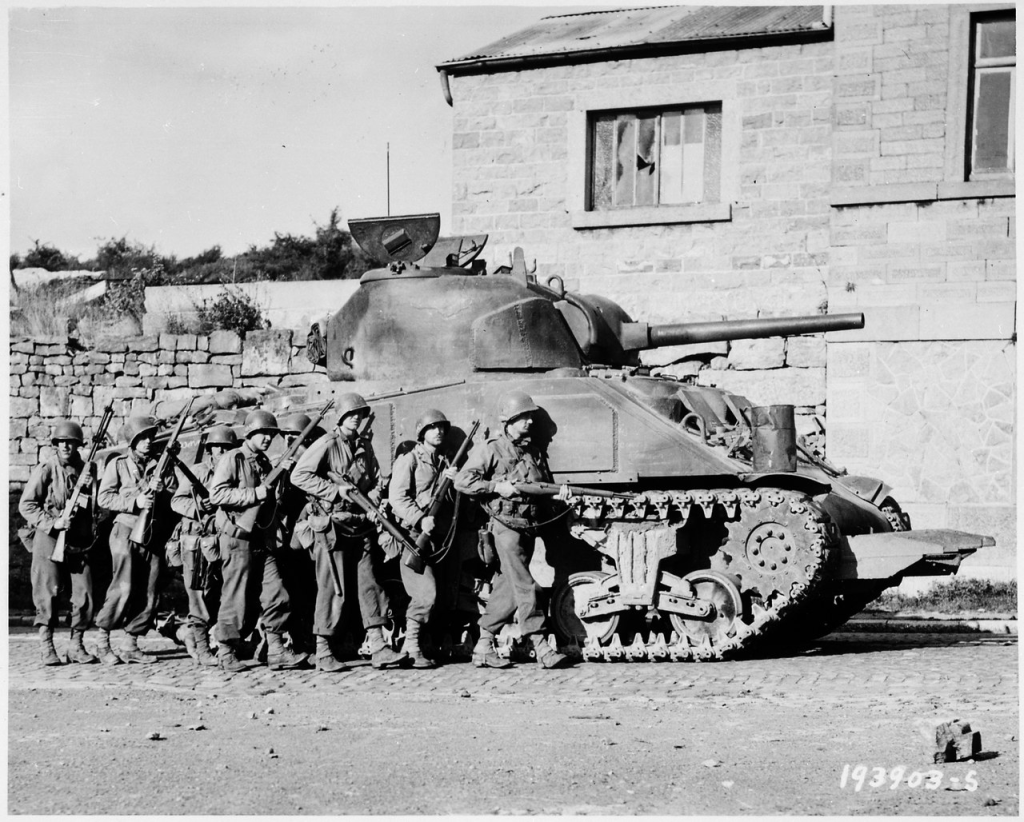
World War II tanks played a crucial role in mechanized warfare, evolving rapidly to meet the demands of battle across various fronts. Early war tanks, such as the German Panzer I and II, were lightly armored and used mainly for reconnaissance. However, as the war progressed, more advanced models emerged, like the Panzer IV, Tiger I, and Tiger II, which featured superior armor and firepower.
The Soviet T-34 became one of the most influential tanks due to its sloped armor, mobility, and ease of production. Meanwhile, the American M4 Sherman was widely used by Allied forces, balancing reliability, mobility, and firepower, though it struggled against heavier German tanks.
British tanks like the Matilda II and Churchill excelled in armor protection, while the Comet, introduced towards the war’s end, improved firepower. Countries such as Japan and Italy also deployed tanks, though more advanced designs from the Allies and Axis often outclassed them.
World War II saw significant developments in tank technology, leading to the foundation of modern armored warfare principles.
Ships
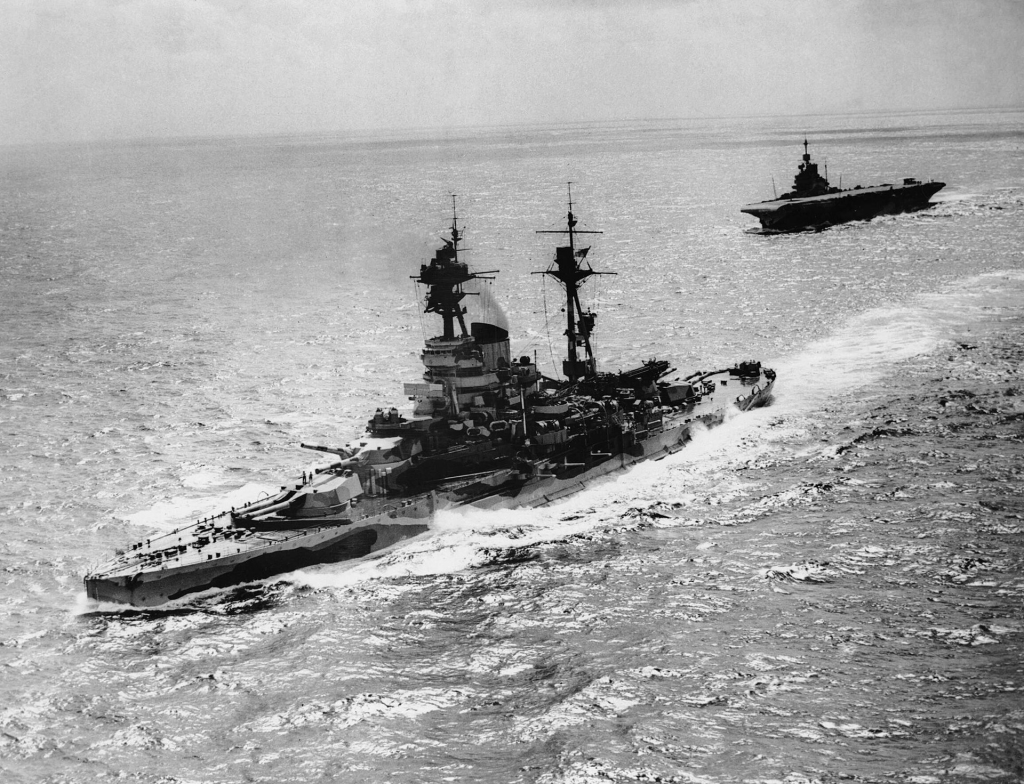
World War II saw the use of a vast array of naval ships that played crucial roles in battles across the Atlantic and Pacific theaters. These included battleships, such as the USS Missouri and the German Bismarck, which were heavily armored and armed with large-caliber guns. Aircraft carriers, like the USS Enterprise and the Japanese Akagi, revolutionized naval warfare by allowing planes to strike from the sea. Destroyers and cruisers provided support and protection for larger ships, while submarines, particularly the German U-boats, were used for stealth attacks and disrupting enemy supply lines. Landing craft and amphibious assault ships were essential for operations like the D-Day invasion. The war saw the decline of battleships in favor of carriers and the rise of naval air power as a decisive factor in warfare.
Bombs
During World War II, bombs played a crucial role in aerial warfare, shaping both military strategy and civilian life. Bombing campaigns were conducted by all major powers, with high-explosive and incendiary bombs used to destroy enemy infrastructure, military targets, and cities.
The conflict saw the development of advanced bombs, including:
• High-Explosive Bombs: Used to destroy buildings, bunkers, and military targets.
• Incendiary Bombs: designed to start large fires and are especially effective in city bombing, as seen in the firebombing of Dresden and Tokyo.
• Bouncing Bombs: Used by the British RAF’s “Dambusters” to destroy German dams.
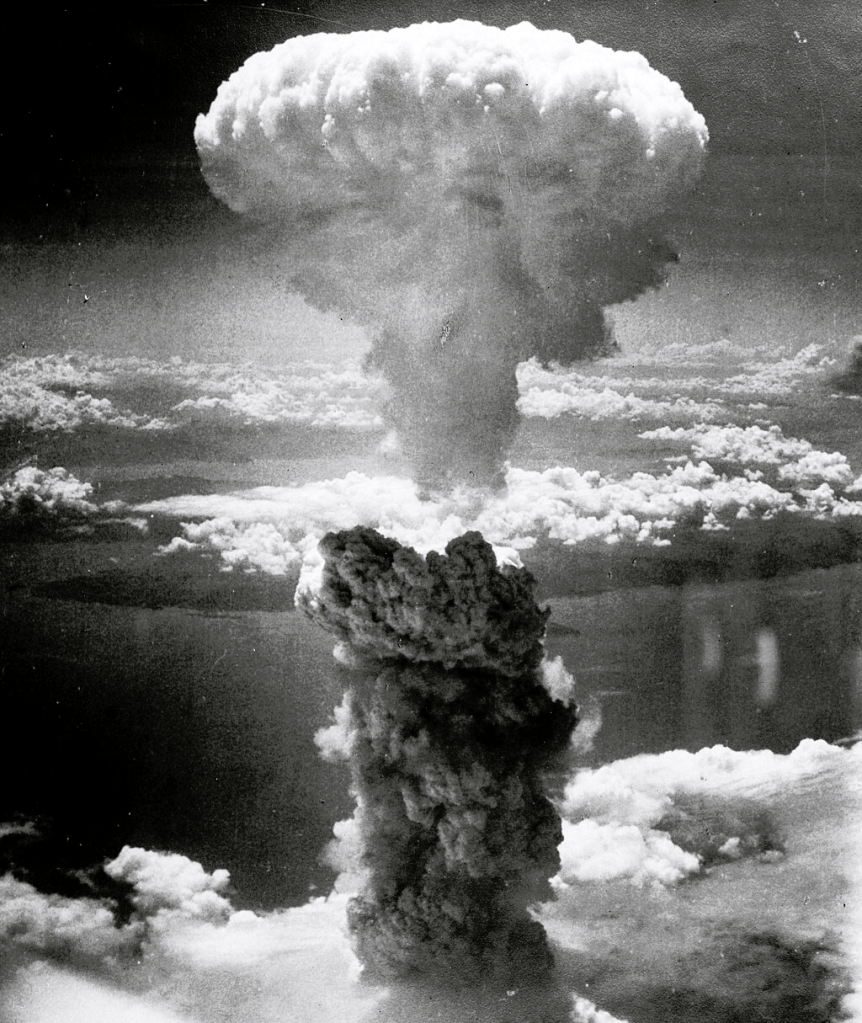
• Atomic Bombs: The most devastating, dropped on Hiroshima and Nagasaki in 1945, leading to Japan’s surrender.
Troops
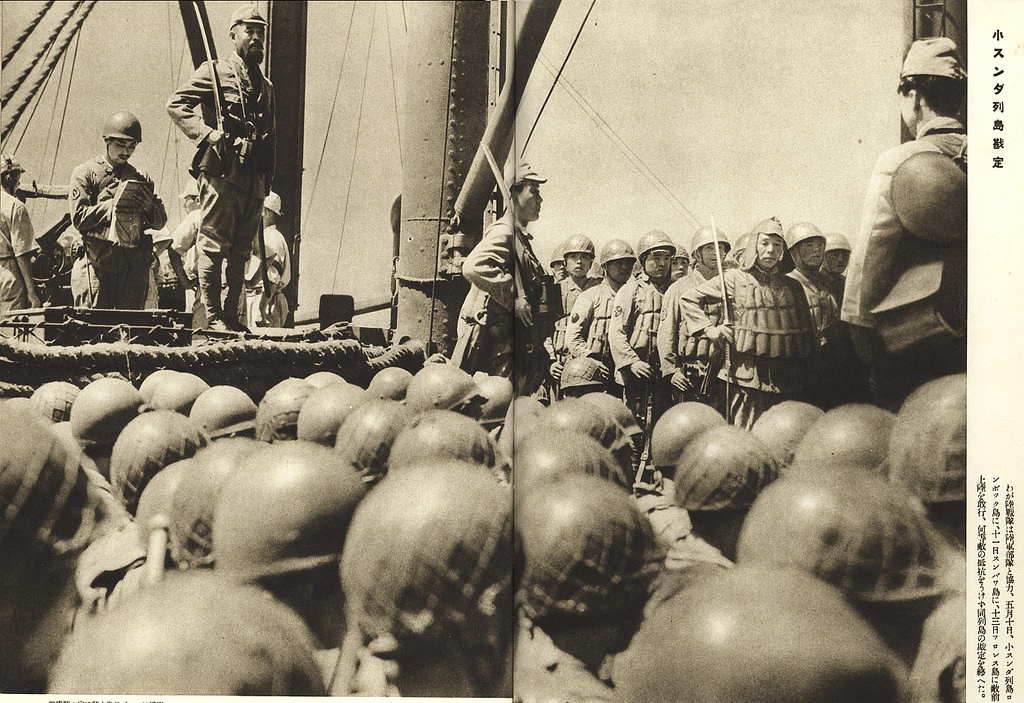
World War II involved millions of troops from multiple nations, divided mainly between the Allied and Axis powers. Allied troops, including soldiers from the U.S., Soviet Union, Britain, China, and other countries, fought against Axis forces led by Germany, Japan, and Italy. Troops were deployed across Europe, Africa, and the Pacific, engaging in major battles such as D-Day, Stalingrad, and the Pacific island-hopping campaign. They endured harsh conditions, advanced weaponry, and brutal combat, playing a crucial role in shaping the war’s outcome and the post-war world order.
Flags
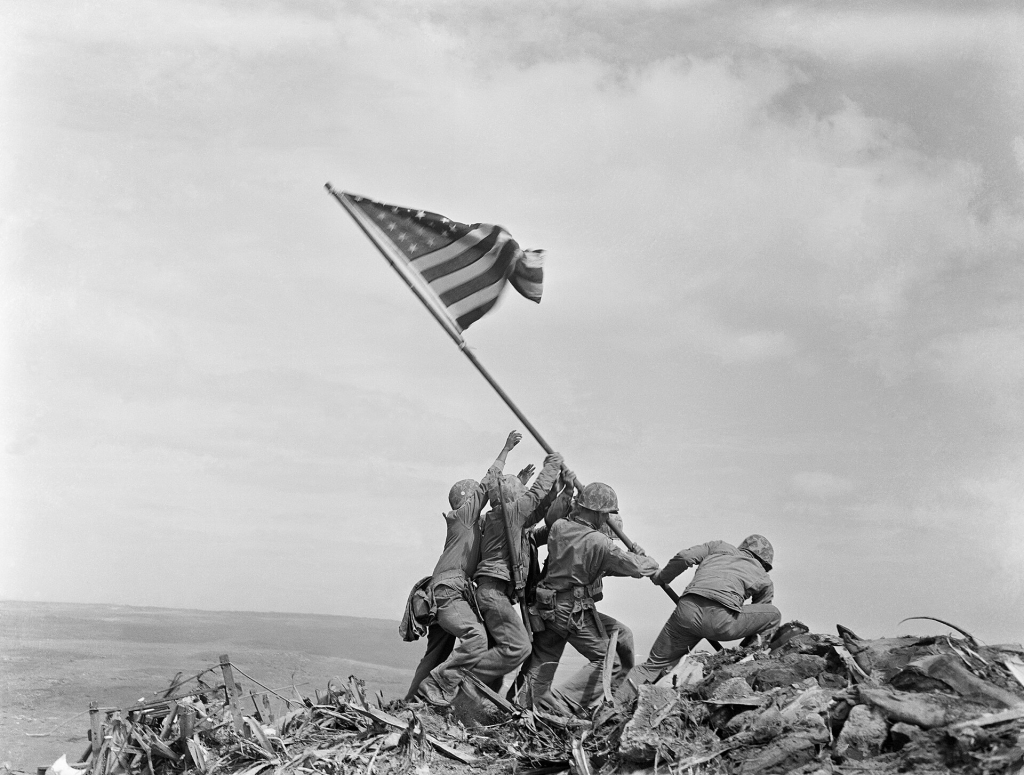
During World War II, flags played a significant role in representing nations, military forces, and ideological movements. The Axis Powers, including Nazi Germany, Imperial Japan, and Fascist Italy, used distinctive flags, such as the swastika-emblazoned Nazi flag, Japan’s Rising Sun flag, and Italy’s tricolor with fascist symbols. The Allied Powers, including the United States, the United Kingdom, the Soviet Union, and China, retained their national flags, symbolizing unity against Axis aggression. Military units and resistance movements also had unique banners. Flags were crucial for propaganda, identity, and morale during the war.
Sources
https://en.wikipedia.org/wiki/Tanks_in_World_War_II
https://en.wikipedia.org/wiki/List_of_ships_of_World_War_II
https://en.wikipedia.org/wiki/Strategic_bombing_during_World_War_II
https://en.wikipedia.org/wiki/World_War_II_by_country#
https://en.wikipedia.org/wiki/Battle_of_Iwo_Jima
Donations
Your readership is what makes my site a success, and I am truly passionate about providing you with valuable content. I have been doing this at no cost and will continue to do so. Your voluntary donation of $2 or more, if you are able, would be a significant contribution to the continuation of my work. However, I fully understand if you’re not in a position to do so. Your support, in any form, is greatly appreciated. Thank you. To donate, click on the credit/debit card icon of the card you will use. If you want to donate more than $2, just add a higher number in the box left from the PayPal link. Your generosity is greatly appreciated. Many thanks.
$2.00


 History of Sorts
Leave a reply to silverapplequeen Cancel reply