
On February 3, 1959, the world of rock and roll suffered an unimaginable tragedy when a small plane carrying Buddy Holly, Ritchie Valens, and J.P. “The Big Bopper” Richardson crashed in a snow-covered field in Clear Lake, Iowa. This devastating event, immortalized in Don McLean’s 1971 hit song American Pie, is often referred to as “The Day the Music Died.” It marked the abrupt end of three promising careers and left an enduring impact on the music industry and its fans.
The Artists and Their Legacy
Buddy Holly, a pioneer of rock and roll, was only 22 years old but had already revolutionized the genre with hits like “That’ll Be the Day,” “Peggy Sue,” and “Rave On.” His innovative use of recording techniques, songwriting prowess, and influence on later artists like The Beatles cemented his place as a foundational figure in rock history. Ritchie Valens, just 17 years old, was a rising star known for “La Bamba,” a song that brought Latin influences into mainstream rock. His potential was limitless, and his tragic death robbed the world of what could have been a long and successful career. J.P. “The Big Bopper” Richardson, famous for his energetic performances and the hit song “Chantilly Lace,” was a radio DJ turned musician whose charisma and creativity endeared him to fans.
The Fateful Flight

The fateful events of February 3, 1959, unfolded when Holly, frustrated with the harsh winter conditions of their tour bus, chartered a small Beechcraft Bonanza aircraft to take him and a few others to their next tour stop in Moorhead, Minnesota. Originally, Waylon Jennings, Holly’s bassist, was set to be on the plane, but he gave up his seat to Richardson, who was suffering from the flu. Tommy Allsup, Holly’s guitarist, also intended to board but lost his seat to Valens in a coin toss—one of history’s most tragic twists of fate. The pilot, Roger Peterson, was not adequately trained for night flight in the snowy conditions, and soon after takeoff, the plane crashed, killing everyone on board.
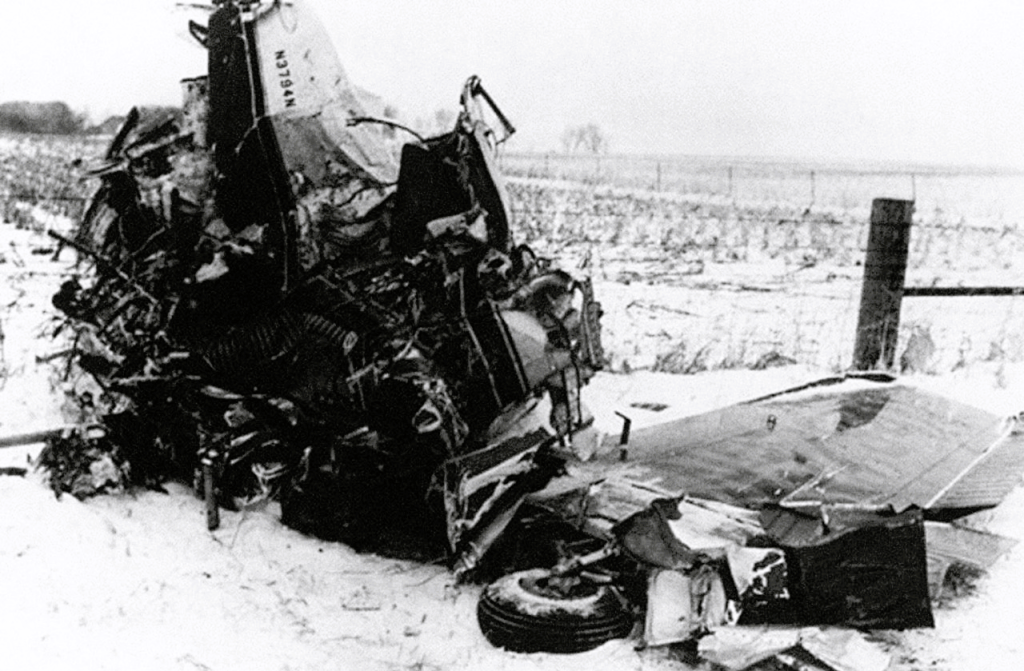
Holly’s pregnant wife, María Elena, learned of his death through television reports. A widow after just six months of marriage, she suffered a miscarriage shortly afterward, reportedly due to the psychological trauma. Holly’s mother, upon hearing the news on the radio at home in Lubbock, Texas, screamed and collapsed in shock.
María Elena did not attend the funeral and has never visited his gravesite. In a later interview, she reflected on her grief, saying:
“In a way, I blame myself. I wasn’t feeling well when he left—I was two weeks pregnant and wanted Buddy to stay with me, but he had already scheduled that tour. It was the only time I wasn’t with him. And I blame myself because I know that if I had gone along, Buddy never would have gotten on that airplane.”
In response to the miscarriage suffered by Holly’s wife and the distressing manner in which she learned of his death, authorities later implemented a policy requiring that victims’ names not be publicly disclosed until their families have been notified.
Impact on the Music Industry
The loss of these artists sent shockwaves through the music world. Holly’s death, in particular, left a deep void, as he had been an innovator and mentor to many young musicians. His influence extended far beyond his own time, inspiring later rock and roll icons like Bob Dylan, The Rolling Stones, and The Beatles. Valens’ contributions to bringing Latin rhythms into rock paved the way for future artists of diverse backgrounds, while The Big Bopper’s dynamic stage presence and showmanship set the stage for larger-than-life performances in rock music.
Cultural Significance and Remembrance
Don McLean’s American Pie encapsulated the sorrow of this tragic event, referring to it as “The Day the Music Died.” The song’s poetic lyrics capture the feelings of loss and transformation in American music. Over the years, tributes and memorials have been established, including the Surf Ballroom in Clear Lake, Iowa, where the musicians performed their final show, and a memorial at the crash site. The legacy of these artists continues to live on, ensuring their music and contributions to rock and roll remain influential for generations to come.

The crash on February 3, 1959, was a pivotal moment in rock and roll history. It not only ended the lives of three young and talented musicians but also changed the course of popular music forever. While “The Day the Music Died” signifies loss, it also serves as a reminder of the enduring power of music and the timeless influence of those who create it. Buddy Holly, Ritchie Valens, and The Big Bopper may have been taken too soon, but their music and impact remain alive in the hearts of fans worldwide.
sources
https://www.history.com/this-day-in-history/the-day-the-music-died
https://en.wikipedia.org/wiki/The_Day_the_Music_Died
Donations
Your readership is what makes my site a success, and I am truly passionate about providing you with valuable content. I have been doing this at no cost and will continue to do so. Your voluntary donation of $2 or more, if you are able, would be a significant contribution to the continuation of my work. However, I fully understand if you’re not in a position to do so. Your support, in any form, is greatly appreciated. Thank you. To donate, click on the credit/debit card icon of the card you will use. If you want to donate more than $2, just add a higher number in the box left from the PayPal link. Your generosity is greatly appreciated. Many thanks.
$2.00
 History of Sorts
Leave a comment