
Without intending to boast too much about my fellow Dutch people, it is widely known that the Dutch are inventive and creative. These qualities were especially evident during World War II, particularly in the final months of the war.
As a result of the failed Operation Market Garden, the northern provinces endured a brutal winter and widespread famine.
With the exception of a few pockets of German resistance in the southern border regions, most of the south was liberated in September 1944.
However, the situation was drastically different in the North. In September 1944, the exiled Dutch government called for a railway strike to aid the Allied liberation efforts. In response, the German occupiers imposed a transport embargo, cutting off food supplies to the northern and western Netherlands. Though the embargo was partially lifted in early November 1944, allowing limited food transport via waterways, an unusually early and severe winter had already set in, freezing the canals and making barge transport impossible.
As a result, over 20,000 people perished during what became known as the “Hunger Winter.”
Those who survived often did so by consuming whatever food remained, including tulip bulbs. The Dutch government even published recipes to help people prepare meals using them. One such recipe is below:
Tulip Bulb and Brown Bean Patties
Ingredients
- 1 cup brown beans
- 1 cup tulip bulbs
- Onions (if available)
- Curry substitute (if available)
- Salt to taste (if available)
- Marjoram to taste (if available)
- Oil
Preparation
- Cook the beans and tulip bulbs until soft.
- Let them cool, then mash them into a smooth paste.
- Sauté the onion with the curry substitute and mix it into the paste.
- Add salt and marjoram to taste.
- Shape the mixture into small balls and fry them in minimal oil.
Generating Light During Power Outages
Throughout the war, power outages were frequent, but the Dutch found inventive ways to generate light. My mother and her siblings often shared stories of how my grandfather and the older children ensured the family still had light. This method was not unique to my family—it was widely used across the country.
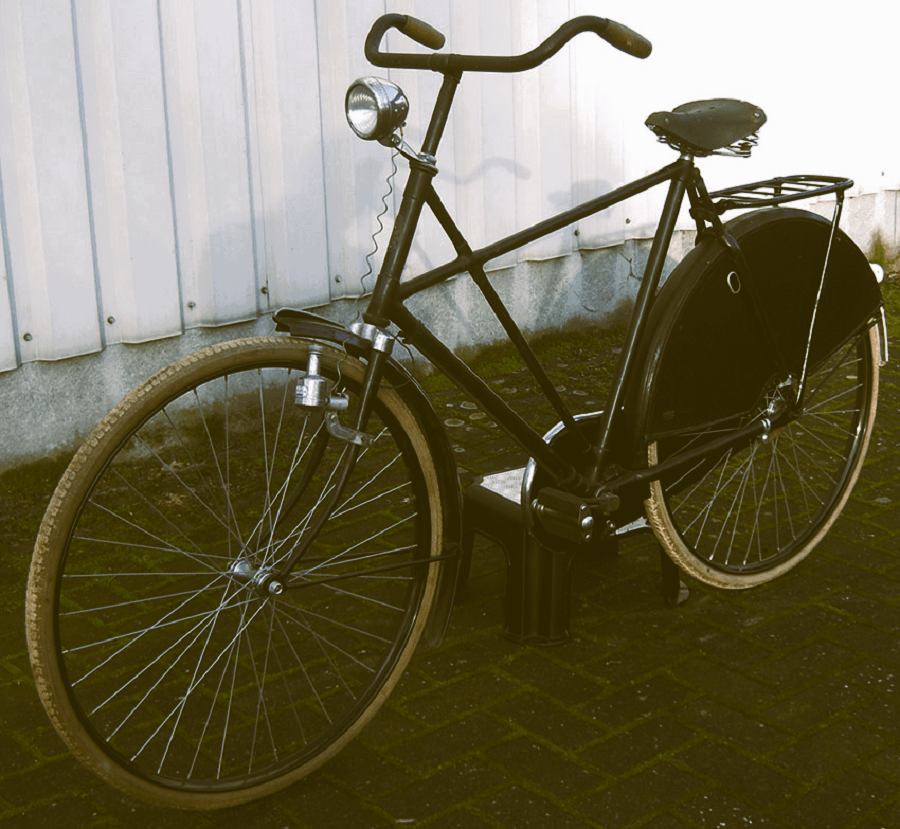
The setup was simple but required physical effort. A bicycle was placed indoors, and the back wheel was either removed or secured to the floor to keep it stationary—much like a modern exercise bike. A senior male family member would pedal, activating the bicycle’s dynamo, which converted the mechanical energy into electricity, producing light from the bicycle lamp.
These resourceful solutions exemplify the resilience and ingenuity of the Dutch people during one of the darkest periods in their history.
https://www.verzetsmuseum.org/nl/kennisbank/verduistering-en-luchtbescherming
Donation
Your readership is what makes my site a success, and I am truly passionate about providing you with valuable content. I have been doing this at no cost and will continue to do so. Your voluntary donation of $2 or more, if you are able, would be a significant contribution to the continuation of my work. However, I fully understand if you’re not in a position to do so. Your support, in any form, is greatly appreciated. Thank you. To donate, click on the credit/debit card icon of the card you will use. If you want to donate more than $2, just add a higher number in the box left from the PayPal link. Your generosity is greatly appreciated. Many thanks.
$2.00
 History of Sorts
Leave a comment