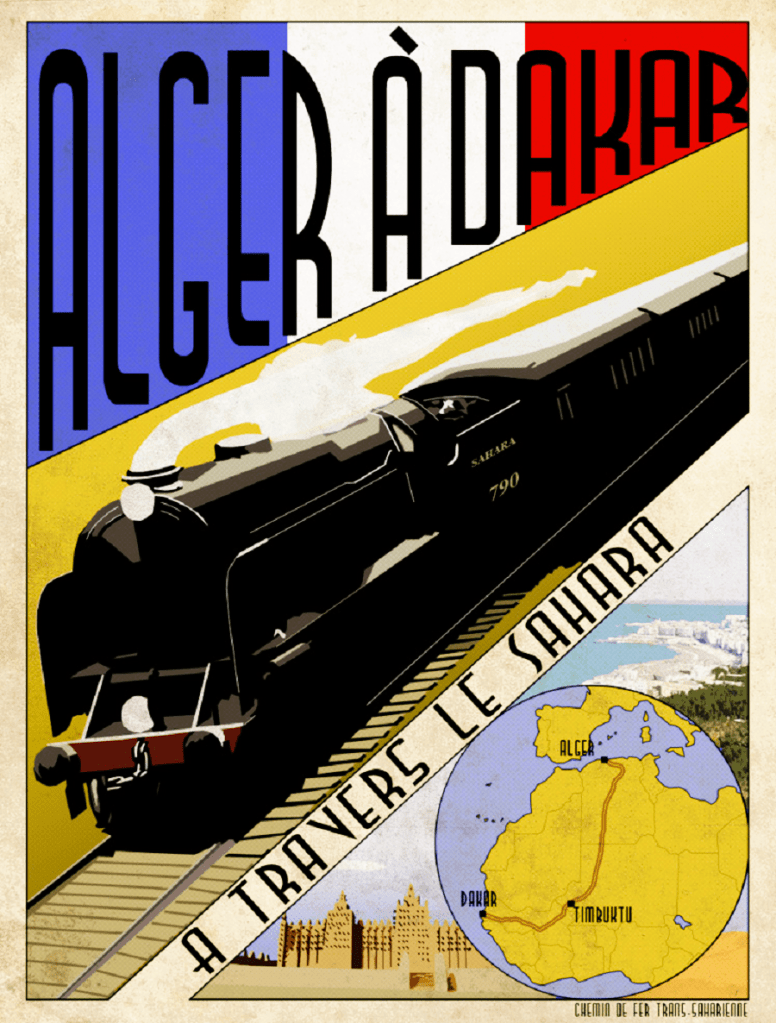
The phrase “From hero to zero” is perhaps the most fitting way to describe the trajectory of Philippe Pétain’s legacy. Once hailed as a national savior and military genius, his descent into infamy was marked by his collaboration with Nazi Germany and his betrayal of France’s republican values.
Pétain: From World War I Hero to Vichy Collaborator
After World War I, Pétain was widely regarded as the most accomplished defensive strategist of his time. His leadership at the Battle of Verdun earned him immense national admiration, culminating in his elevation to Marshal of France. On December 8, 1918, in a grand public ceremony at Metz, President Raymond Poincaré presented him with his baton, solidifying his status as one of France’s greatest military heroes.
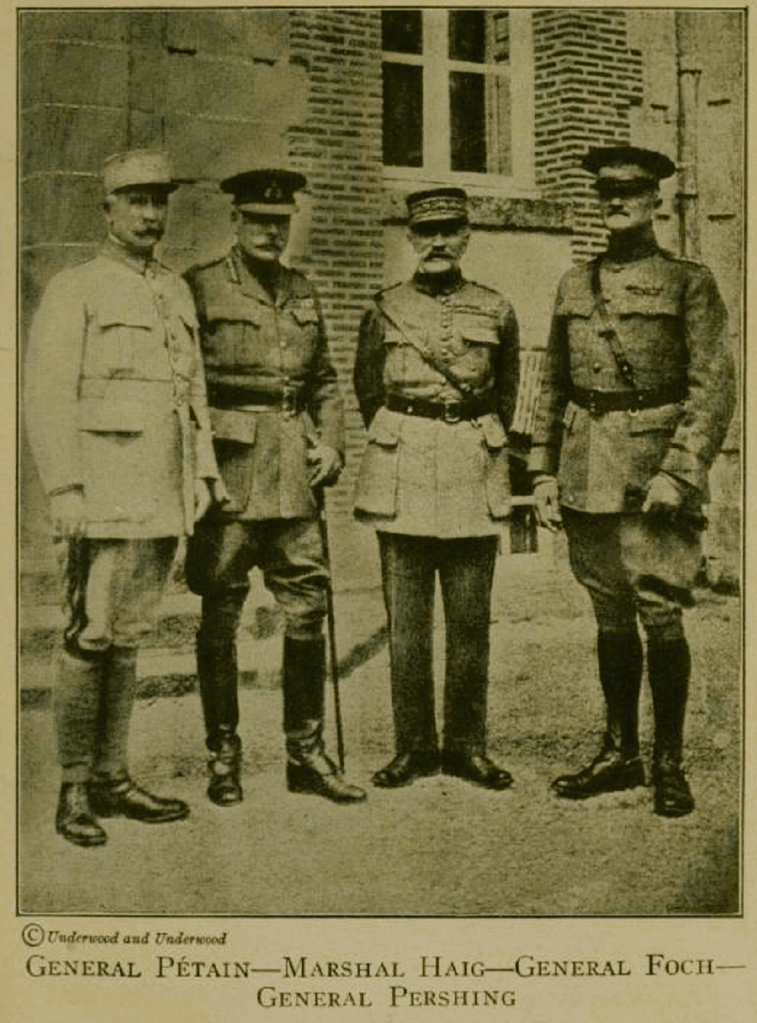
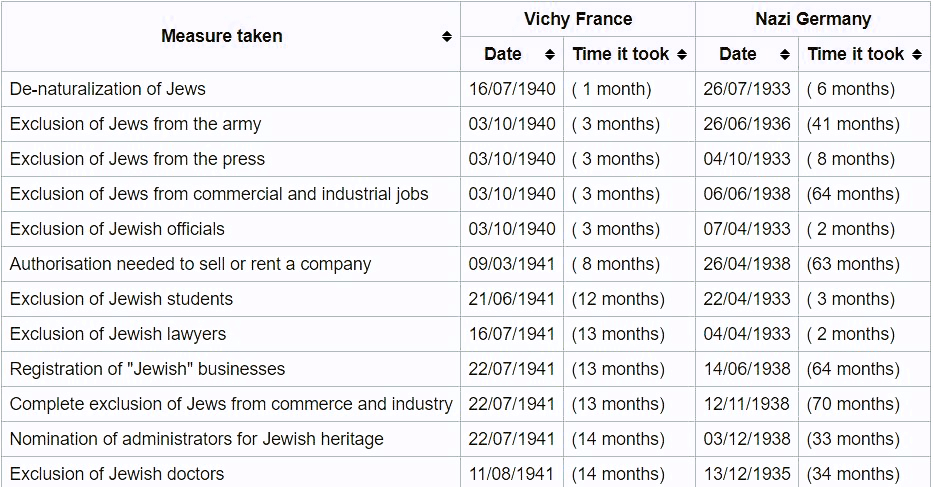
However, the perception of Pétain changed drastically after Nazi Germany occupied France in June 1940. Enthusiastic in his efforts to appease the occupiers, he readily assumed the role of a puppet leader under the Vichy regime. He obeyed Nazi directives without hesitation—whether it was collaboration, repression, or the persecution of Jews. His government actively participated in the implementation of antisemitic policies, demonstrating its eagerness to curry favor with its German overlords.
Vichy’s Antisemitic Policies and the Jewish Population in North Africa
As a colonial power, France had a significant Jewish population residing in its North African territories, including Algeria, Tunisia, and Morocco. In October 1940, the Vichy government independently enacted the Statut des Juifs, a set of antisemitic laws that stripped Jews of their rights. Notably, this legislation was not imposed by the Germans but was a voluntary decision by the Vichy regime, underscoring its ideological alignment with Nazi racial policies.
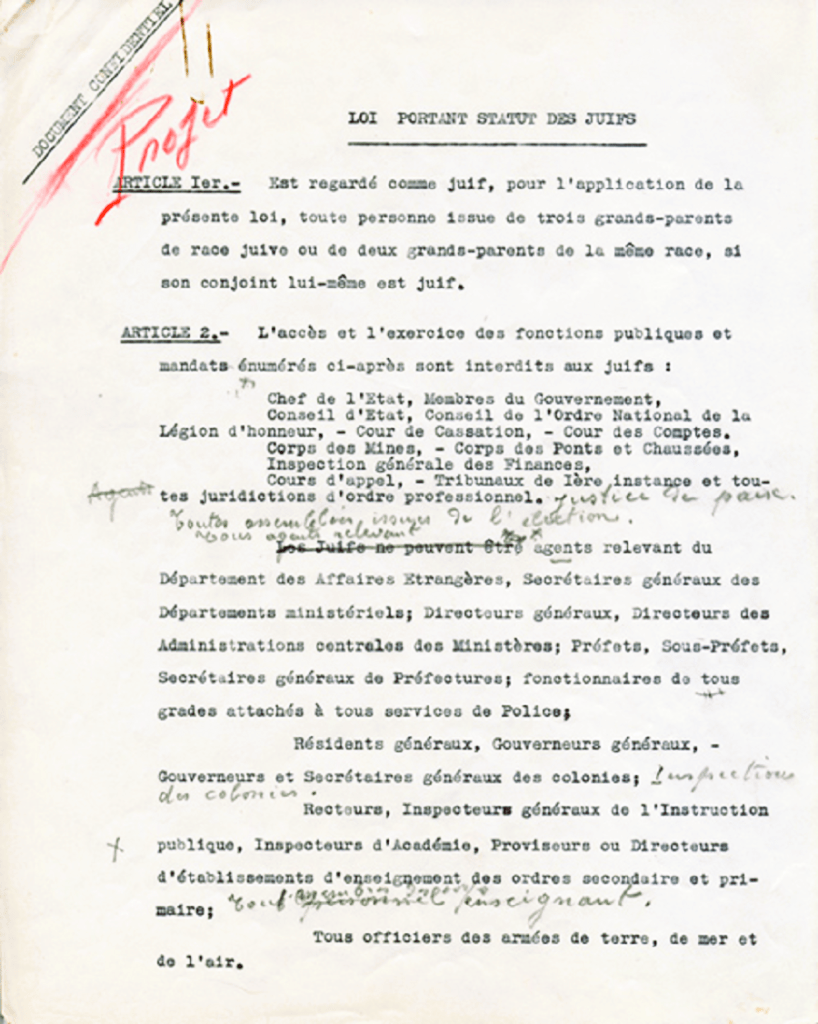
Unlike in mainland France, where German influence was more direct, there was no external pressure compelling Vichy authorities to extend these discriminatory laws to the colonies. Yet, Pétain’s regime went even further by rescinding the Crémieux Decree—a law that had granted French citizenship to Algerian Jews since 1870. This move effectively rendered 110,000 Algerian Jews stateless overnight. Under the leadership of Admiral Darlan and General Giraud, antisemitic laws were enforced with particular severity in Algeria, often justified under the pretense of fostering “equality” between Muslims and Jews.
The Trans-Saharan Railway: A Vichy Initiative Built on Forced Labor
One of the Vichy regime’s more overlooked crimes was the initiation of the Trans-Saharan Railway, a large-scale infrastructure project intended to link North Africa’s coal-rich regions. To construct this railway, thousands of prisoners of war and Jews were subjected to brutal forced labor.
Approximately 2,000 Algerian Jews were among those sent to labor and concentration camps throughout Algeria, including notorious camps like Bedeau and Djelfa. Though the French had used such camps before, the expansion of these facilities and the intensified exploitation of forced laborers were distinct to the Vichy period. Prisoners endured inhumane conditions, working 10-hour shifts under the scorching desert sun with inadequate food, shelter, and medical care. Many perished from disease, exhaustion, starvation, and frequent beatings inflicted by the guards. Typhus outbreaks swept through the camps, claiming additional lives. The Vichy government demonstrated a complete disregard for the well-being of these individuals, treating them as disposable laborers rather than human beings.
Despite the extensive historical documentation of Japan’s Burma Railway, also known as the “Death Railway,” there remains relatively little information available about the exact number of casualties suffered during the construction of the Trans-Saharan Railway. The lack of comprehensive records has left this dark chapter of Vichy France’s crimes largely unexamined in mainstream history.
Liberation and the Struggle for Jewish Reinstatement
The early Allied liberation of Algeria in November 1942 saved the Algerian Jewish community from further persecution.
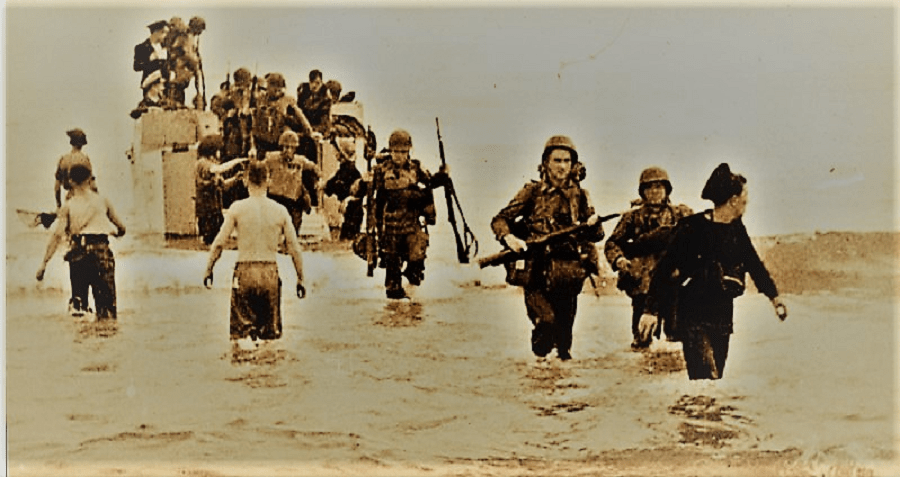
However, their “liberation” was far from immediate or complete. While the Vichy government was deposed, its discriminatory policies lingered. It was not until March 14, 1943, that General Giraud officially repealed most of Vichy’s antisemitic statutes. Yet, he deliberately retained the revocation of the Crémieux Decree, as he personally blamed France’s defeat on the Jewish population.
It took the intervention of the French Committee of National Liberation (CFLN) to fully restore Jewish rights. In October 1943, the CFLN overturned Giraud’s decision, reinstating Algerian Jews as full French citizens after three years of statelessness and oppression.
The history of the Trans-Saharan Railway and the forced labor camps of Algeria remains one of the lesser-known atrocities of the Vichy regime. While Philippe Pétain’s role in the persecution of Jews in mainland France is well-documented, his policies in North Africa deserve greater scrutiny. His government’s voluntary zeal in enacting racial laws, its complicity in forced labor, and its attempt to erase Jewish citizenship reveal the extent of Vichy France’s betrayal of its own people. The story of the Trans-Saharan Railway is not just about a failed infrastructure project; it is a stark reminder of the suffering endured under a regime that placed ideology and expedience above humanity.
sources
https://trove.nla.gov.au/newspaper/article/111597148
https://en.wikipedia.org/wiki/Trans-Saharan_Railway
Please support us so we can continue our important work.
Donation
Your readership is what makes my site a success, and I am truly passionate about providing you with valuable content. I have been doing this at no cost and will continue to do so. Your voluntary donation of $2 or more, if you are able, would be a significant contribution to the continuation of my work. However, I fully understand if you’re not in a position to do so. Your support, in any form, is greatly appreciated. Thank you. To donate, click on the credit/debit card icon of the card you will use. If you want to donate more than $2, just add a higher number in the box left from the PayPal link. Your generosity is greatly appreciated. Many thanks.
$2.00

 History of Sorts
Leave a reply to tzipporahbatami Cancel reply