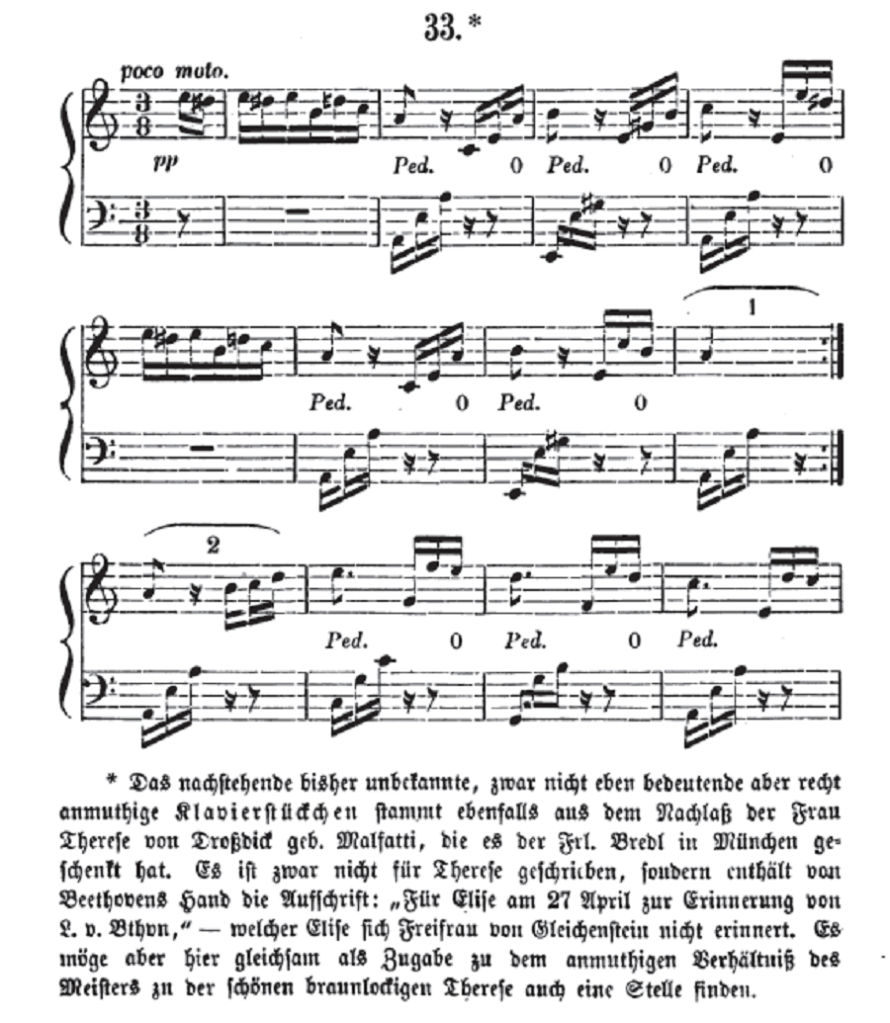
Few pieces of classical music have achieved the universal recognition and enduring popularity of Ludwig van Beethoven’s “Für Elise.” Composed on April 27 1810, but not published until 1867, decades after Beethoven’s death, “Für Elise” stands today as one of the most iconic piano pieces in history. Its simple, haunting melody has transcended time, finding its way into popular culture, film, and education, often serving as an entry point for budding pianists around the world. This essay will explore the history, structure, and cultural impact of “Für Elise,” highlighting why it remains a beloved piece across generations.
Historical Context and Mystery
The full title of the piece is Bagatelle No. 25 in A minor. The term “bagatelle” refers to a short, light-hearted piece of music. Despite its widespread fame, “Für Elise” was not published during Beethoven’s lifetime. It was discovered by musicologist Ludwig Nohl, who claimed to have found the original manuscript, which has since been lost. This loss has contributed to ongoing mysteries surrounding the piece — particularly, the identity of “Elise.”
Scholars have speculated that “Elise” may have been a mistranscription of “Therese,” referring to Therese Malfatti, a woman Beethoven is believed to have proposed to around that time. Others suggest different muses from Beethoven’s life, but the true dedicatee remains uncertain, adding an element of romantic intrigue to the piece’s story.
Musical Structure and Style
“Für Elise” is written in A minor and features a simple, flowing melodic line that immediately captures listeners’ attention. The piece is structured in a rondo form (A–B–A–C–A), where the main theme (the recognizable opening) returns between contrasting sections. This accessible structure, combined with its emotional expressiveness, makes “Für Elise” appealing both to novice players and experienced musicians.
The opening motif, with its gentle oscillations between notes, feels both melancholic and tender. The middle sections, while more animated, provide contrast without overwhelming the listener. Technically, “Für Elise” is approachable for intermediate pianists, which has contributed to its popularity as a learning piece. However, interpreting its emotional nuances requires a level of sensitivity that makes it continuously engaging even for seasoned performers.
Cultural Impact
Beyond the concert hall and practice room, “Für Elise” has permeated global culture. It is heard in countless films, television shows, advertisements, and even cell phone ringtones. Its familiar melody can evoke a range of emotions, from nostalgia to tranquility, depending on the context in which it appears.
In educational contexts, “Für Elise” often marks a milestone in a young pianist’s development, representing a transition from beginner to more advanced repertoire. Its ability to be both technically manageable and musically rich allows it to serve both educational and artistic purposes.
“Für Elise” endures not merely because of its charming melody, but because of its deep emotional resonance, historical mystique, and universal accessibility. Beethoven, often associated with grand, complex symphonies and profound musical innovations, revealed in “Für Elise” his capacity for intimate, lyrical expression. This short bagatelle continues to captivate listeners and players alike, a testament to the timelessness of Beethoven’s genius.
source
https://en.wikipedia.org/wiki/F%C3%BCr_Elise
https://www.classicfm.com/composers/beethoven/fur-elise-meaning-who-is-elise/

 History of Sorts
Leave a reply to silverapplequeen Cancel reply