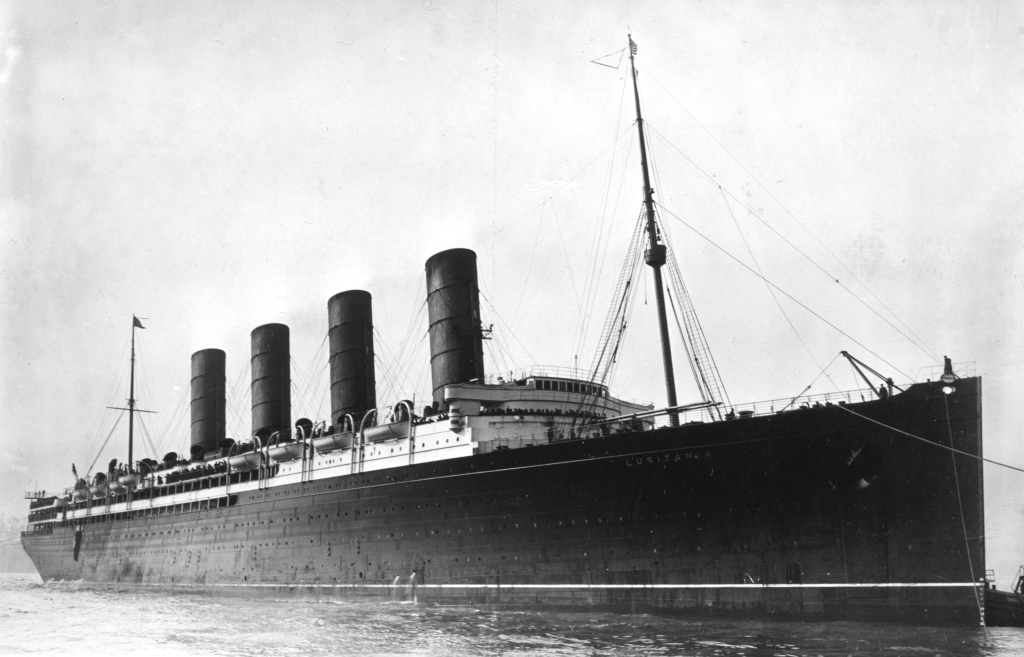
On May 7, 1915, the RMS Lusitania, a British ocean liner operated by the Cunard Line, was torpedoed and sunk by a German U-boat off the southern coast of Ireland. This tragic event resulted in the deaths of 1,198 of the 1,959 people aboard, including 128 Americans. The sinking of the Lusitania had far-reaching consequences, both politically and emotionally, contributing significantly to shifting public opinion in the United States and edging the nation closer to involvement in World War I.
Background
The Lusitania was launched in 1906 and was one of the largest and fastest passenger ships of its time. Renowned for its luxury and speed, it was a symbol of British maritime superiority. However, with the outbreak of World War I in 1914, the Lusitania found itself operating in increasingly dangerous waters. Germany had declared the seas around the British Isles a war zone, warning that ships, even civilian ones, might be targeted without warning.
Despite these threats, the Lusitania continued its regular transatlantic service between Liverpool and New York. On its final voyage in May 1915, the ship departed New York harbor carrying civilians, crew, and a controversial cargo of munitions and war supplies intended for Britain.
The Attack
On the afternoon of May 7, as the Lusitania approached the Irish coast near Kinsale, it was struck by a torpedo fired from the German submarine U-20, commanded by Captain Walther Schwieger. A single torpedo struck the starboard side of the ship, followed by a second, larger internal explosion—likely caused by igniting the ship’s munitions or coal dust. Within just 18 minutes, the ship sank into the sea.
Due to the rapid sinking and lack of adequate lifeboat drills or preparation, chaos ensued. Lifeboats were launched hastily, many improperly, leading to further casualties. The final death toll stood at nearly two-thirds of those onboard, including many women and children.
Immediate Aftermath
The sinking of the Lusitania sent shockwaves across the world. In Britain and its allies, the event was portrayed as a barbaric act of German aggression. In Germany, the attack was justified as a legitimate response to Britain’s naval blockade and the ship’s transport of contraband war materials.
In the United States, the event sparked outrage and mourning. The death of American citizens intensified public debate about U.S. neutrality in the conflict. President Woodrow Wilson demanded accountability but stopped short of declaring war. Germany, in response to the diplomatic pressure, temporarily curtailed its policy of unrestricted submarine warfare.
Long-Term Impact
The Lusitania’s sinking significantly influenced the course of World War I. It marked a turning point in public opinion in neutral countries, particularly the United States, which had until then stayed out of the conflict. Although the U.S. did not enter the war immediately, the event set in motion a chain of diplomatic tensions that would culminate in the U.S. declaration of war against Germany in April 1917.
Furthermore, the incident highlighted the dangers of modern warfare and the vulnerability of civilian lives in a total war context. It also prompted changes in naval policy, including greater precautions for passenger ships and eventually the development of convoy systems to protect merchant vessels.
The sinking of the RMS Lusitania remains one of the most significant maritime disasters of the early 20th century, not only because of the immense loss of life but also due to its profound political consequences. It exposed the brutal nature of submarine warfare, challenged notions of civilian immunity, and helped galvanize support for the Allied cause. More than just a tragedy at sea, the Lusitania’s demise was a pivotal moment in the global shift toward total involvement in the First World War.
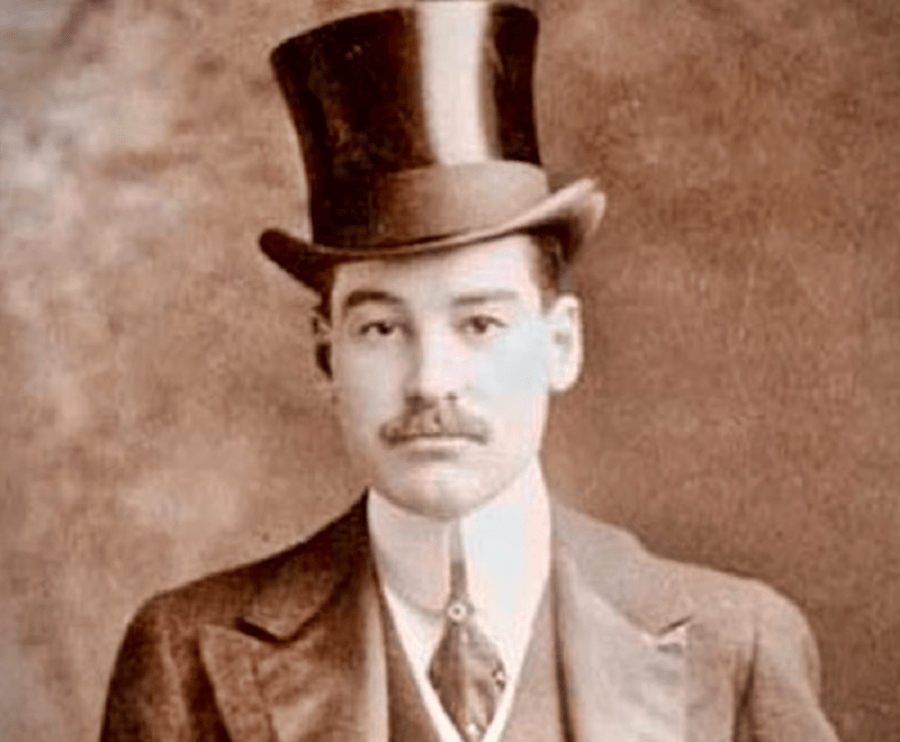
Alfred Gwynne Vanderbilt was an American businessman and heir to the powerful Vanderbilt family fortune. Known for his wealth and social status, he is remembered not only for his prominence in high society but also for his heroic actions during one of the most infamous maritime disasters of the early 20th century — the sinking of the Lusitania.
On May 7, 1915, the RMS Lusitania, a British ocean liner, was torpedoed by a German U-boat off the coast of Ireland during World War I. The attack resulted in the deaths of nearly 1,200 passengers and crew. Among the passengers was Alfred Vanderbilt, who was traveling as a civilian and had no military affiliation. Despite the chaos and danger, Vanderbilt displayed remarkable courage and selflessness. According to eyewitnesses, he gave up his own life jacket to a young woman who did not have one and helped others, including children and women, into lifeboats. He worked to calm panicked passengers and remained aboard the sinking ship, refusing to save himself.
Vanderbilt did not survive the disaster, and his body was never recovered. His actions, however, left a lasting impression. Though he had no obligation to act heroically, he did so instinctively, showing concern for the lives of others over his own. His sacrifice has been remembered as a poignant example of nobility and selflessness in the face of tragedy.
Alfred Vanderbilt’s legacy is not defined solely by his wealth or social standing, but by the courage and humanity he demonstrated in his final moments.
sources
https://www.onthisday.com/articles/hero-millionaire-saves-lusitania-children
https://en.wikipedia.org/wiki/RMS_Lusitania
https://www.loc.gov/collections/world-war-i-rotogravures/articles-and-essays/the-lusitania-disaster/
Donation
Your readership is what makes my site a success, and I am truly passionate about providing you with valuable content. I have been doing this at no cost and will continue to do so. Your voluntary donation of $2 or more, if you are able, would be a significant contribution to the continuation of my work. However, I fully understand if you’re not in a position to do so. Your support, in any form, is greatly appreciated. Thank you. To donate, click on the credit/debit card icon of the card you will use. If you want to donate more than $2, just add a higher number in the box left from the PayPal link. Your generosity is greatly appreciated. Many thanks.
$2.00
 History of Sorts
Leave a comment