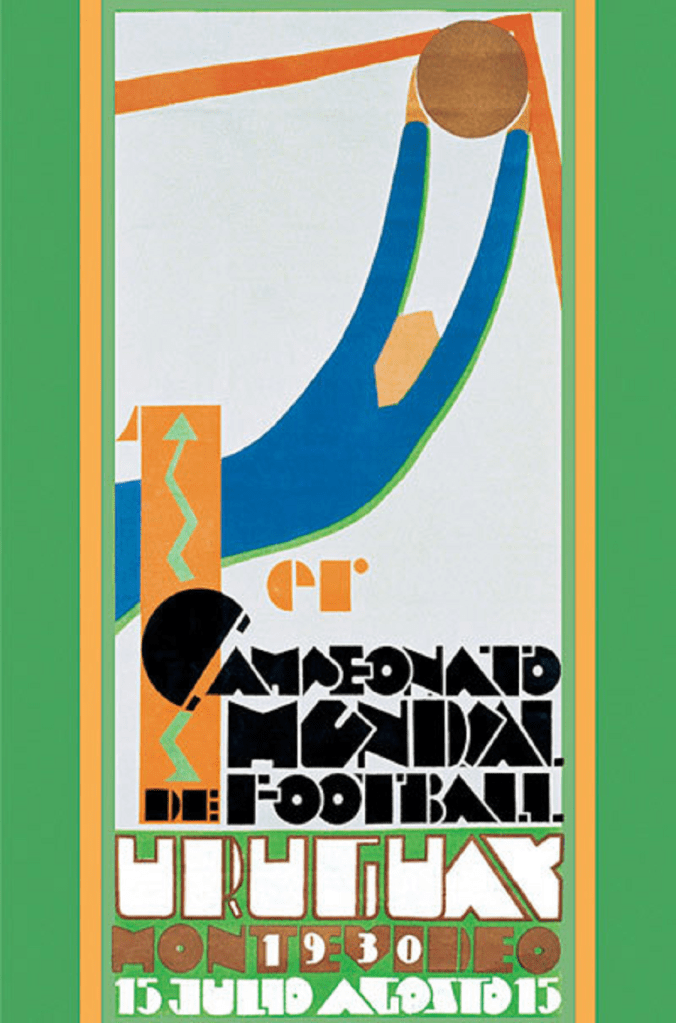
The 1930 FIFA World Cup: The Inaugural Chapter of Football History
The 1930 FIFA World Cup stands as a landmark event in the history of sports, marking the beginning of what would become the most prestigious football tournament in the world. Held in Uruguay from July 13 to July 30, 1930, this inaugural edition of the tournament laid the foundation for international football competition and captured the imagination of sports fans across the globe. Despite its modest scale compared to modern standards, the 1930 World Cup was rich in significance, innovation, and historical context.
Background and Organization
The idea of a global football tournament had long been in the minds of sports organizers, but it was not until 1929 that the Fédération Internationale de Football Association (FIFA), under the leadership of President Jules Rimet, officially approved the creation of the World Cup. Uruguay was selected as the host country for several reasons: it was celebrating its centenary of independence in 1930, it had won Olympic gold in football in 1924 and 1928, and it offered to cover travel and accommodation expenses for participating teams.
Despite the generous offer, the tournament faced logistical challenges. The Great Depression and long sea voyages discouraged many European nations from participating. Ultimately, only 13 teams took part: seven from South America, four from Europe, and two from North America.
- Argentina
- Belgium
- Brazil
- Bolivia
- Chile
- France
- Mexico
- Paraguay
- Peru
- Romania
- United States
- Uruguay
- Yugoslavia
The Egyptian team missed the ship
Format and Matches
The tournament was structured into four groups, with the group winners advancing to the semi-finals. All matches were played in the capital city of Montevideo, primarily in the newly constructed Estadio Centenario, a stadium built specifically for the event and still considered one of football’s sacred venues.

Among the highlights of the group stage were the strong performances by host nation Uruguay and Argentina. Both nations dominated their respective groups and advanced through the semi-finals with decisive wins. The final, held on July 30, 1930, was a fiercely contested match between Uruguay and Argentina, two football powerhouses with an intense rivalry.
Uruguay emerged victorious with a 4-2 win in front of a crowd of nearly 70,000 spectators. The victory was met with nationwide celebrations, and Uruguay became the first-ever FIFA World Cup champion. The win also earned Uruguay the honor of retaining the Jules Rimet Trophy until the next tournament.

Legacy and Significance
The 1930 FIFA World Cup holds immense historical significance. It was the first step toward establishing a truly global competition in football, a sport already growing in popularity worldwide. Despite limited participation and rudimentary infrastructure, the tournament was a success and proved the viability of international football competition.
Additionally, the World Cup brought together nations in a spirit of sportsmanship and cultural exchange during a time of global economic uncertainty. It also highlighted the growing passion for football in South America, a region that would continue to play a central role in the sport’s development.
The 1930 FIFA World Cup was more than just a sporting event; it was a pioneering moment in world football that set the stage for decades of unforgettable tournaments, iconic players, and global unity through sport. With Uruguay’s triumph and the tournament’s successful execution, the dream of a global football championship was not only realized but also immortalized. Today, as the World Cup continues to evolve, the memory of its humble and historic beginnings in Montevideo remains an enduring symbol of the beautiful game’s universal appeal.
sources
https://www.footballhistory.org/world-cup/1930-uruguay.html
https://en.wikipedia.org/wiki/1930_FIFA_World_Cup
https://www.olympics.com/en/news/first-fifa-world-cup-football-1930-uruguay-champion-records
Donation
Your readership is what makes my site a success, and I am truly passionate about providing you with valuable content. I have been doing this at no cost and will continue to do so. Your voluntary donation of $2 or more, if you are able, would be a significant contribution to the continuation of my work. However, I fully understand if you’re not in a position to do so. Your support, in any form, is greatly appreciated. Thank you. To donate, click on the credit/debit card icon of the card you will use. If you want to donate more than $2, just add a higher number in the box left from the PayPal link. Your generosity is greatly appreciated. Many thanks.
$2.00
 History of Sorts
Leave a comment