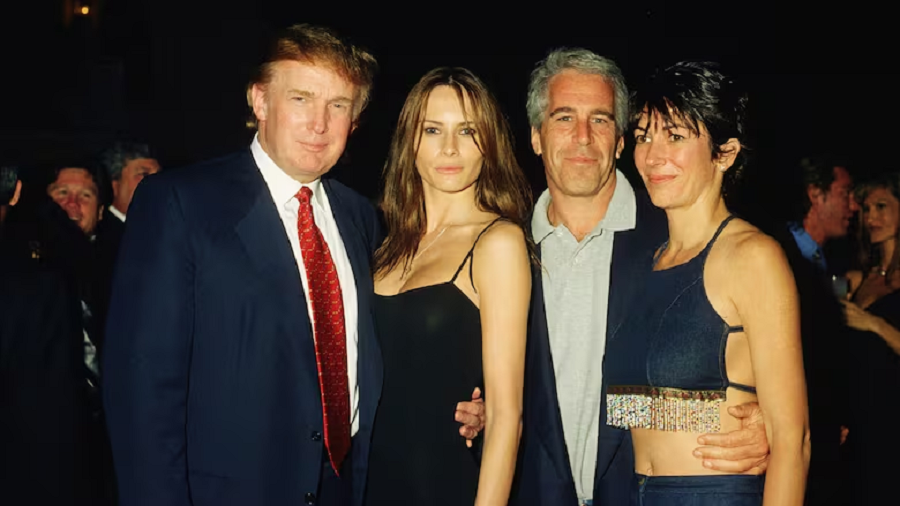
Jeffrey Epstein’s death on August 10, 2019, touched off a storm of outrage, conspiracy theories, and a long-running official review of how a high-profile detainee awaiting federal sex-trafficking trial could die in federal custody. Below I’ll walk through the timeline and the strongest pieces of evidence, explain what official investigations found, and separate the reasonable open questions from speculation.
Quick timeline (the essentials)
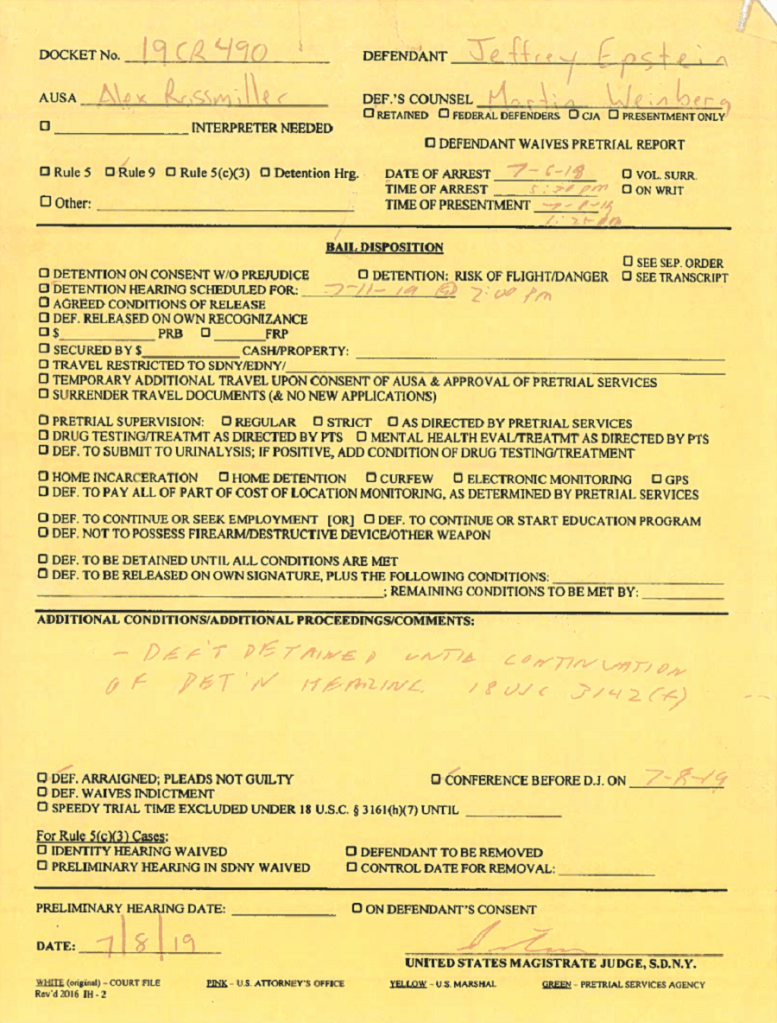
Epstein was arrested in July 2019 on federal sex-trafficking and conspiracy charges and detained at the Metropolitan Correctional Center (MCC) in Manhattan.
In early August he was placed on suicide watch after an incident; staff later removed him from constant watch. On the night of August 9–10, 2019, Epstein was assigned to the Special Housing Unit (SHU) and—contrary to policy—was left without a cellmate.
At about 6:30 a.m. on August 10, staff found Epstein unresponsive in his cell; he was pronounced dead at a hospital. The New York City medical examiner ruled the death a suicide by hanging.
The autopsy and medical evidence
The New York City medical examiner’s office concluded the cause of death was suicide by hanging. That finding is the official medico-legal determination and remains the baseline explanation.
However, the autopsy photos and report showed fractures to bones in Epstein’s neck (including a fractured hyoid bone). Some forensic pathologists noted that such fractures are seen in both hanging and homicidal strangulation; others cautioned they are compatible with suicidal hanging, especially in older individuals. The presence of those fractures fueled questions and skepticism—but they are not, by themselves, definitive proof of homicide.
What went wrong at MCC: the Inspector General’s findings
In June 2023 the Department of Justice Office of Inspector General (DOJ OIG) released a detailed report reviewing the Bureau of Prisons’ (BOP) handling of Epstein in the days before his death. The OIG concluded that a “combination of negligence, misconduct and poor job performance” by MCC staff enabled Epstein to die. Key findings included:
Epstein’s cellmate was transferred out the day before his death and no replacement was assigned, contrary to the unit’s requirement to keep him with a cellmate.
Two correctional officers who were supposed to check inmates every 30 minutes failed to perform those checks, fell asleep for long stretches, and later falsified log entries. The officers were later criminally charged for falsifying records.
Several cameras covering the area outside Epstein’s cell malfunctioned or produced unusable footage that night, and the institution’s communication and supervision failures made it impossible to follow standard protocols.
Office of the Inspector General
The OIG’s report places accountability squarely on routine failures and misconduct at MCC rather than on an identifiable external plot.
Investigations by the FBI and Justice Department: what they found
The FBI opened a criminal probe after Epstein’s death; the DOJ and FBI later conducted broader reviews of investigatory holdings and looked for evidence of foul play or a “client list” that might change the narrative around his death. Public summaries and later memos reported that the agencies found no evidence to support homicide theories and no single “client list” proving a larger conspiracy of blackmailing powerful figures. Those reviews reinforced the medical examiner’s suicide finding while also noting institutional failures.
Why the conspiracy theories took hold
Three ingredients created fertile ground for conspiracy theories:
Epstein’s astonishing wealth and powerful social circle (celebrities, business leaders, and politicians).
The highly unusual procedural breakdowns at MCC: missing checks, sleeping guards, broken cameras, and falsified logs. Those are real, documented failures.
Office of the Inspector General
The ambiguous autopsy detail (neck fractures) that experts can interpret differently.
When high-stakes death meets clear institutional failure and ambiguous forensic detail, speculation fills the gap. That does not make conspiracy claims true, but it explains why they spread and why many remain unsatisfied with official explanations.
What the evidence supports — and what it doesn’t
Supported by the record: Epstein died while in federal custody; the medical examiner ruled suicide by hanging; MCC staff failed to follow rules and in some cases engaged in misconduct; cameras had gaps or malfunctions; two guards were charged for falsifying records. These are documented facts from official reports and reputable news investigations.
Not established by public evidence: an organized external plot or an identifiable person(s) who entered the SHU and murdered Epstein. No credible, publicly disclosed forensic, video, or witness evidence has emerged proving such a homicide. Reviews by federal investigators did not turn up such proof.
The human and institutional lessons
The case exposed serious weaknesses in BOP operations: staffing, supervision, camera maintenance, and record integrity. The OIG report labeled these failures as more than procedural lapses — they were misconduct and dereliction of duty. Fixing such systemic problems is essential to restore accountability and public trust.
For survivors and the public, the death meant that Epstein would never stand trial in federal court for the 2019 charges. That reality intensified demands for transparency and for a full accounting of his network and alleged enablers. Recently, the DOJ has sought to unseal more grand-jury materials in related cases—another sign of continuing legal and political fallout.
Open questions and what might change things
Some records remain sealed; litigation and document releases continue. New, verifiable evidence—good-quality video, forensics, or reliable eyewitness testimony—could change the picture, but nothing publicly released to date has done so. Continued declassification or unsealing orders could add clarity (or raise new questions). For now, the strongest, corroborated account is: suicide by hanging, enabled by significant staff failures at MCC.
Prince Andrew
In November Prince Andrew was interviewed by Emily Maitlis, about his connection to Jeffrey Epstein, The one thing that stuck with from that interview was the following line.
“On balance, could I have avoided ever meeting him? Probably not and that’s because of my friendship with Ghislaine, it was… it was… it was inevitable that we would have come across each other. Do I regret the fact that he has quite obviously conducted himself in a manner unbecoming? Yes.”
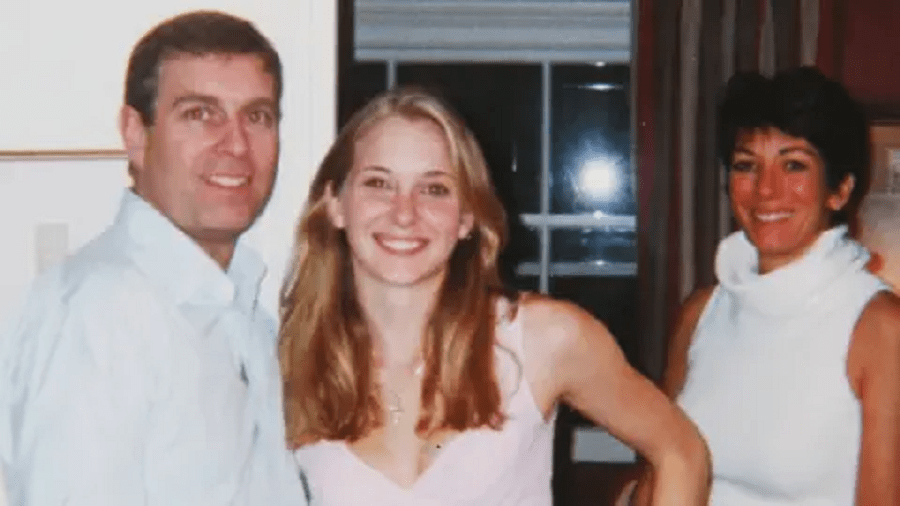
Virginia Giuffre (née Roberts) was an American woman who has alleged that, as a teenager, she was trafficked for sex by financier Jeffrey Epstein and British socialite Ghislaine Maxwell. She claimed that this trafficking included being coerced into sexual encounters with several powerful men, when she was 17, one of whom she had named as Prince Andrew, Duke of York, the second son of Queen Elizabeth II.
Prince Andrew has consistently and categorically denied all allegations, stating he has no recollection of meeting Giuffre. The accusations became a major scandal in late 2019, particularly after his BBC Newsnight interview, which was widely criticized and led to him stepping back from public royal duties.
In 2021, Giuffre filed a civil lawsuit in the U.S. against Prince Andrew for sexual assault related to incidents she says occurred when she was 17. The case was settled out of court in early 2022 without admission of liability, with Andrew reportedly paying a substantial sum to Giuffre and to her charity supporting victims of abuse. In April 25, 2025 she committed suicide.
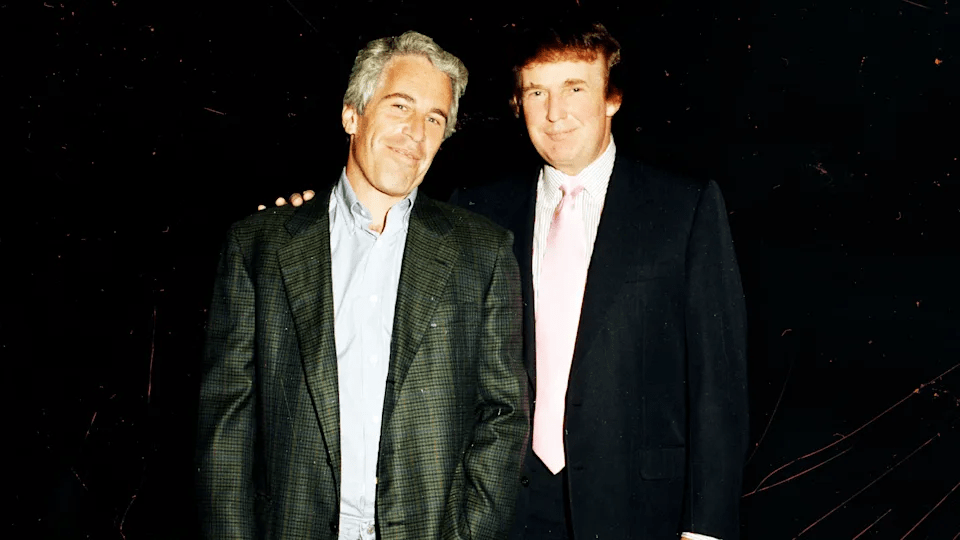
President Donald Trump claimed that Jeffrey Epstein, the late sex offender with whom he had socialized for more than a decade, “stole” Virginia Giuffre and other young female staffers by hiring them away from his Mar-a-Lago country club.
Speaking to reporters aboard Air Force One on his return to Washington from Scotland, Trump expanded on earlier remarks about his falling out with Epstein. He reiterated that he had banned Epstein from Mar-a-Lago because “he did something that was inappropriate” — namely, “he stole people that worked for me.”
Jeffrey Epstein’s death is a painful mix of a legally and morally repellent accused who avoided trial, and a system failure that looks inexcusable. Those two truths can and should coexist. The official findings point to suicide and severe institutional negligence; the combination of Epstein’s profile and the documented lapses understandably fuels suspicion. If you want to follow future developments, key documents to watch for are the OIG materials, any newly unsealed grand-jury exhibits, and any further DOJ or FBI disclosures.
It is also important to note that Donald J Trump was the President of the USA, at the time when Epstein allegedly committed suicide
Sources and further reading
DOJ Office of Inspector General report on the MCC custody and supervision of Jeffrey Epstein (June 2023).
Office of the Inspector General
New York City Medical Examiner public statements and coverage on the autopsy.
PBS
Reporting on guards’ failures and charges (CBS News, Reuters, NYT).
CBS News
AP News
Investigative pieces on the autopsy and forensic debate (CBS 60 Minutes, Washington Post).
CBS News
The Washington Post
Recent DOJ moves and news about unsealing grand-jury materials.
New York Post
ABC News
sources
https://oig.justice.gov/sites/default/files/2023-06/6-27-2023.pdf?utm_source
https://www.theguardian.com/us-news/2025/jul/29/trump-epstein-virginia-giuffre
https://www.bbc.com/news/uk-59861831
https://www.bbc.com/news/articles/cql67qk0dd3o
https://www.yahoo.com/news/epstein-showed-photos-trump-topless-215004755.html
https://abcnews.go.com/US/times-trumps-appeared-epstein-files-doj-released/story?id=123848078
https://en.wikipedia.org/wiki/Virginia_Giuffre_v._Prince_Andrew
Donation
Your readership is what makes my site a success, and I am truly passionate about providing you with valuable content. I have been doing this at no cost and will continue to do so. Your voluntary donation of $2 or more, if you are able, would be a significant contribution to the continuation of my work. However, I fully understand if you’re not in a position to do so. Your support, in any form, is greatly appreciated. Thank you. To donate, click on the credit/debit card icon of the card you will use. If you want to donate more than $2, just add a higher number in the box left from the PayPal link. Your generosity is greatly appreciated. Many thanks.
$2.00
 History of Sorts
Leave a comment