Introduction
General Walter Stahlecker’s report, officially known as The Stahlecker Report, stands as one of the most chilling and revealing documents from World War II. Written in 1941, it provides a detailed account of the early activities of Einsatzgruppe A, a Nazi mobile killing unit operating in the Baltic states and parts of the Soviet Union. The report is not merely a military or intelligence document; it is a self-congratulatory account of mass murder, offering direct evidence of the Nazi regime’s systematic extermination policies toward Jews and other perceived enemies (Office of the United States Chief of Counsel for Prosecution of Axis Criminality [OCCPAC], 1946).
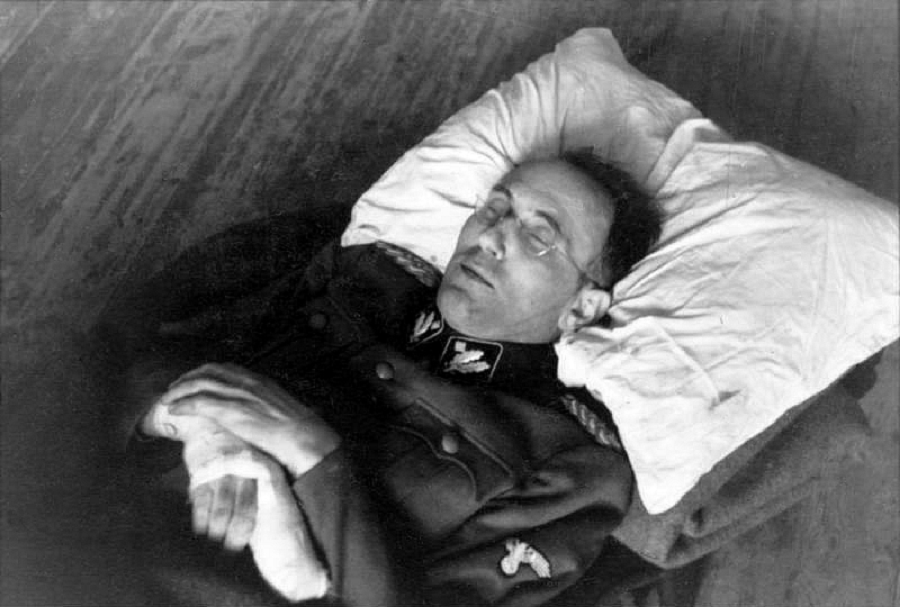
Stahlecker was fatally wounded in action on 22 March 1942, by Soviet partisans near Krasnogvardeysk, Russia
Background and Context
Walter Stahlecker (1900–1942) was a high-ranking officer in the SS and head of Einsatzgruppe A, one of four Einsatzgruppen units that followed the German army (Wehrmacht) into the Soviet Union after the launch of Operation Barbarossa in June 1941. These units were tasked with identifying and eliminating “undesirable” elements—primarily Jews, communists, and others the Nazis deemed threats (Hilberg, 1985). Stahlecker’s group operated in the Baltic region, including Lithuania, Latvia, and Estonia, as well as parts of Belarus.
By the end of 1941, Einsatzgruppe A was responsible for the deaths of approximately 250,000 people, most of them Jews (United States Holocaust Memorial Museum [USHMM], n.d.). The report Stahlecker submitted to his superiors in Berlin was intended to demonstrate his unit’s “efficiency” in fulfilling these genocidal objectives.
Content of the Report
The Stahlecker Report, dated October 15, 1941, combines military, political, and racial commentary. It opens by describing the rapid occupation of the Baltic states and the challenges the Nazis faced in organizing local administrations under German control. However, the report’s most infamous sections detail the systematic killing of Jews and the methods used to mobilize local populations to assist in the genocide (USHMM, n.d.).
Stahlecker proudly describes how his forces incited anti-Jewish pogroms by exploiting existing antisemitism. For example, in Lithuania, local collaborators were encouraged to believe they were avenging supposed Soviet crimes committed by Jews (OCCPAC, 1946). These orchestrated riots led to mass killings before the Einsatzgruppen themselves took direct control of extermination operations.
One of the most disturbing elements of the report is its use of statistics and photographs. Stahlecker includes precise figures for the number of Jews killed in each region, portraying mass murder as an administrative achievement. He claimed that by late 1941, Einsatzgruppe A had “eliminated almost all Jews” in the territories under its control (OCCPAC, 1946). The attached photographs—showing massacres and bodies—were used as “proof” of successful missions.
Historical and Legal Significance
The Stahlecker Report later became crucial evidence in the postwar Nuremberg Trials, particularly during the Einsatzgruppen Trial of 1947–1948. It provided undeniable, firsthand documentation of the Nazi policy of extermination well before the construction of extermination camps such as Auschwitz or Treblinka reached their deadly peak (Rhodes, 2002). The report demonstrates that the Holocaust began not in gas chambers, but through mass shootings carried out in the open fields, forests, and ravines of Eastern Europe.

Moreover, the tone of the report reveals the bureaucratic mindset that enabled genocide. Stahlecker writes in a detached, technical style, reducing mass murder to a series of logistical tasks. This bureaucratic normalization of killing underscores the industrial and administrative nature of the Holocaust (Browning, 1992).
Moral and Scholarly Reflection
The Stahlecker Report remains one of the most horrifying yet invaluable documents for Holocaust historians. It strips away any ambiguity about Nazi intentions and the direct involvement of the SS and police apparatus in orchestrating genocide. It also exposes how local collaborators, motivated by fear, nationalism, or antisemitism, became complicit in the Nazi extermination project (Hilberg, 1985).
From a moral perspective, the report serves as a reminder of how ordinary administrative systems and military hierarchies can be perverted into instruments of mass murder. It challenges societies to remain vigilant against ideologies that dehumanize others under the guise of order, security, or racial purity.
General Walter Stahlecker’s report is more than a historical document—it is a confession of genocide. Its coldly bureaucratic tone and statistical precision reflect the Nazi regime’s attempt to legitimize and systematize mass murder. As a primary source, it provides irrefutable evidence of the early phases of the Holocaust in Eastern Europe and stands as a stark warning of the depths to which human cruelty can descend when sanctioned by ideology and power.
References
Browning, C. R. (1992). Ordinary Men: Reserve Police Battalion 101 and the Final Solution in Poland. HarperCollins.
Hilberg, R. (1985). The Destruction of the European Jews. Holmes & Meier.
Office of the United States Chief of Counsel for Prosecution of Axis Criminality. (1946). Nazi Conspiracy and Aggression: Volume VII (Document 2273-PS, Exhibit USA-276): Report by SS-Brigadeführer Stahlecker on the Activities of Einsatzgruppe A. U.S. Government Printing Office.
Rhodes, R. (2002). Masters of Death: The SS-Einsatzgruppen and the Invention of the Holocaust. Vintage Books.
United States Holocaust Memorial Museum (USHMM). (n.d.). Stahlecker Report. Holocaust Encyclopedia.
sources
https://www.holocausthistoricalsociety.org.uk/contents/germanbiographies/franzwalterstahlecker.html
https://encyclopedia.ushmm.org/content/en/timeline-event/holocaust/1939-1941/stahlecker-report
https://en.wikipedia.org/wiki/Franz_Walter_Stahlecker
https://pages.uoregon.edu/dluebke/NaziGermany443/StahleckerReport.html
Donation
Your readership is what makes my site a success, and I am truly passionate about providing you with valuable content. I have been doing this at no cost and will continue to do so. Your voluntary donation of $2 or more, if you are able, would be a significant contribution to the continuation of my work. However, I fully understand if you’re not in a position to do so. Your support, in any form, is greatly appreciated. Thank you. To donate, click on the credit/debit card icon of the card you will use. If you want to donate more than $2, just add a higher number in the box left from the PayPal link. Your generosity is greatly appreciated. Many thanks.
$2.00

 History of Sorts
Leave a comment