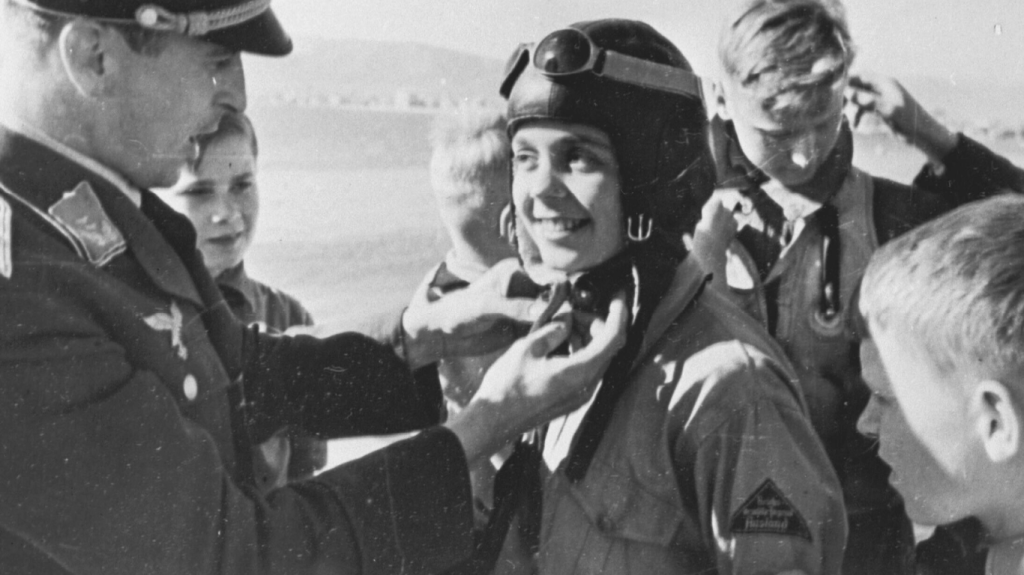
In the dying embers of the Third Reich, when the skies above Germany burned red and the cities lay in ruins, the last defenders of Adolf Hitler’s empire were not seasoned soldiers—but children.
Boys who only months earlier had drilled with wooden rifles now faced tanks and artillery. Their voices had barely deepened, yet they screamed the same words as their fallen fathers: “Heil Hitler!”
These were the Hitler Youth—the boys molded by years of Nazi indoctrination into instruments of devotion and destruction. And in the final chapters of the Second World War, they became both the most fanatical believers and the most pitiful victims of Hitler’s vision.
The Making of Fanatics
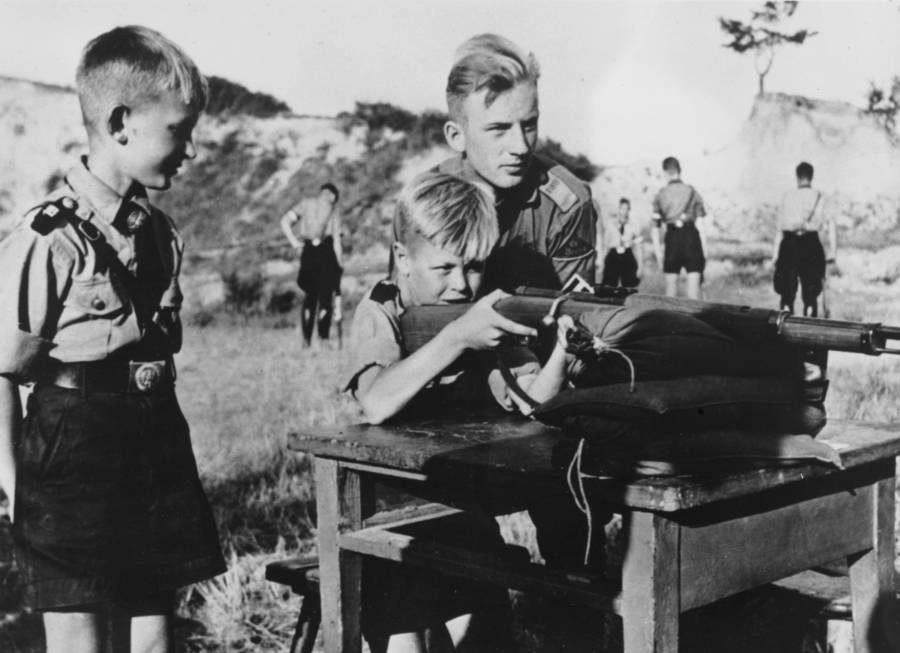
The Hitlerjugend (HJ) was more than a youth organization; it was a machine of belief. Founded in the 1920s and absorbed into the Nazi state after 1933, it became compulsory by 1936. Every boy and girl was trained not only in fitness and discipline but in ideology—taught that obedience was purity, sacrifice was honor, and Hitler was their savior (Koch, The Hitler Youth: Origins and Development, 1975).

By 1943, the tide of war had turned, and Reich Youth Leader Artur Axmann transformed the movement into a reservoir for Germany’s collapsing armies. He declared:
“The youth of Germany must defend the homeland with the same fanaticism with which their fathers conquered Europe.”
(Axmann speech, January 1944, Bundesarchiv Berlin)
The indoctrination had worked. Thousands of boys volunteered for frontline service, not out of fear—but faith.

Normandy, 1944: The Child Warriors of the 12th SS
When Allied troops landed in Normandy in June 1944, they met the 12th SS Panzer Division “Hitlerjugend”—a formation composed largely of seventeen-year-olds, led by veteran SS officers such as Kurt “Panzermeyer” Meyer and Fritz Witt.
To the Allies’ astonishment, the teenage soldiers fought with a zeal bordering on madness.
“They fought like wild animals,” recalled one Canadian infantryman of the Royal Winnipeg Rifles. “We thought we were facing veterans, not boys. But they wouldn’t give up—you had to kill them or they’d kill you.”
(Testimony recorded in Stacey, C.P., The Victory Campaign, Ottawa: Department of National Defence, 1960)
The same fanaticism that drove them to stand their ground also led to atrocity. In the villages of Authie and Buron, members of the Hitlerjugend Division executed 156 Canadian prisoners of war between June 7 and 8, 1944 (Canadian War Crimes Investigation Unit, The Abbaye d’Ardenne Case Files, 1945).
A survivor described his captors:
“They were children—schoolboys in uniform. They shouted ‘Heil Hitler!’ as they shot unarmed men.”
(Testimony of Pvt. George T. Cromar, Abbaye d’Ardenne Trial, Ottawa, 1946)
At his trial, Kurt Meyer claimed he could not control his men. The court disagreed. Yet many witnesses noted that even without orders, the boys killed with conviction—they had been trained to see mercy as treason.
The Last Battle: Berlin, 1945
By April 1945, the dream of a thousand-year Reich had collapsed into a nightmare of rubble and smoke. Yet in the heart of Berlin, the Hitlerjugend fought on. Soviet reports describe boys as young as twelve arming themselves with Panzerfausts—handheld anti-tank weapons—and ambushing Soviet armor in the streets (Beevor, Berlin: The Downfall 1945, 2002).
“They were children in uniform, shouting ‘For the Führer!’ and firing at tanks,” wrote American war correspondent Melvin “Bud” Friar. “The Russians cut them down without mercy.”
(Friar, Frontline Dispatches, May 1945)
To retreat was to die. SS patrols executed any youth who refused to fight.
“We saw them hanging from lamp posts,” recalled nurse Anneliese Kohlmann. “A sign on one body read, ‘Coward.’”
(Kohlmann, Memoirs of a Nurse in the Ruins, 1947)
Inside bunkers, some boys clutched portraits of Hitler, whispering prayers to a man who was already dead. One Soviet officer later said:
“We could not hate them. They were only children, and they had been betrayed.”
(Soviet Army report, May 1945, Central Archive of the Russian Federation)
Voices of the Captured
After the war, Allied intelligence officers interrogated captured members of the Hitlerjugend and the Volkssturm, the civilian militia that included many indoctrinated boys. Their testimonies reveal how deeply belief had replaced thought.
“We were told that to die for Hitler was the greatest honor. The Führer was our father. The enemy were beasts—not human,” said a 17-year-old prisoner taken near Bremen in May 1945.
(U.S. Army Interrogation Report 31-45, SHAEF Archives)
Others broke only when faced with the truth.
“I shot at a tank and missed,” confessed one 15-year-old to a British Red Cross worker. “It fired back. My friend Hans was blown apart. I thought I’d failed the Führer.”
(British Red Cross Youth Rehabilitation Interviews, Hamburg, 1946)
Psychologists who studied the survivors found them emotionally fractured—obedient to the point of annihilation, their sense of self replaced by ritual and fear. Dr. G.M. Gilbert, psychologist at Nuremberg, called them “a generation trained not to think, but to obey.”
Children Turned Soldiers, Soldiers Turned Ghosts
Even after Germany’s surrender, some remnants of the Hitler Youth joined the Werwolf resistance movement, carrying out sabotage and assassinations against Allied forces. Most were captured or killed within months (Pimlott, Hitler’s Children, 1985).
For others, the war never ended. They wandered through the ruins, haunted by a vanished cause. Decades later, some survivors spoke of their indoctrination with horror and guilt, calling themselves “the children who never had a chance to be children.”
Legacy of the Lost Generation
The story of the Hitler Youth is both terrifying and tragic. It reveals how a regime can corrupt innocence itself—how belief, when twisted by hatred, can transform children into killers.
They were not born monsters; they were made into them.
When Berlin fell and the world began to heal, the echoes of their voices—shouting loyalty, then fear—faded into silence.
What remained was a warning carved into the history of the 20th century:
that no cause, no ideology, no leader, is worth the soul of a child.
Postwar Hitler Youth Guerrillas: The Werewolves
As Nazi Germany faced defeat in 1944–1945, the regime created a last-ditch effort to resist the Allies: the Werwolf, or “Werewolf” movement. Its goal was to use loyal Nazis, especially young people from the Hitler Youth, to carry out guerrilla attacks, sabotage, and intelligence work behind enemy lines. The name “Werewolf” was meant to sound frightening and secretive, like a hidden force striking at night.
The Werewolves mostly included teenagers from the Hitler Youth, along with older soldiers and Volkssturm members. These young fighters were trained in basic combat and sabotage, but the movement was poorly organized and lacked resources. They carried out small attacks on railways, supply lines, and even individuals, but most operations were quickly stopped by the Allies or local authorities.
Although Nazi propaganda made the Werewolves seem like a powerful secret army, in reality, they were not very effective. Their activities caused some fear and disruption, but they could not change the outcome of the war. Many members were captured, surrendered, or simply returned to civilian life.
The Werewolf movement shows the dangers of extreme indoctrination and how totalitarian regimes can exploit youth for violent purposes. While their military impact was minimal, they remain a symbol of Nazi desperation in the final months of World War II.
The Werwolf group was established by Heinrich Himmler in the autumn of 1944, following an idea proposed by Martin Bormann and approved by Adolf Hitler. Joseph Goebbels played a key role alongside Himmler; in March 1945, he organized both a radio station and a newspaper, naming them Werwolf.
The radio station began broadcasting on May 1, 1944. Goebbels shaped the Werwolf broadcasts in the same aggressive style as his newspaper Der Angriff, promoting unwavering loyalty to Nazism at any cost. He also coined the infamous phrase: “He who is not with us is against us!”
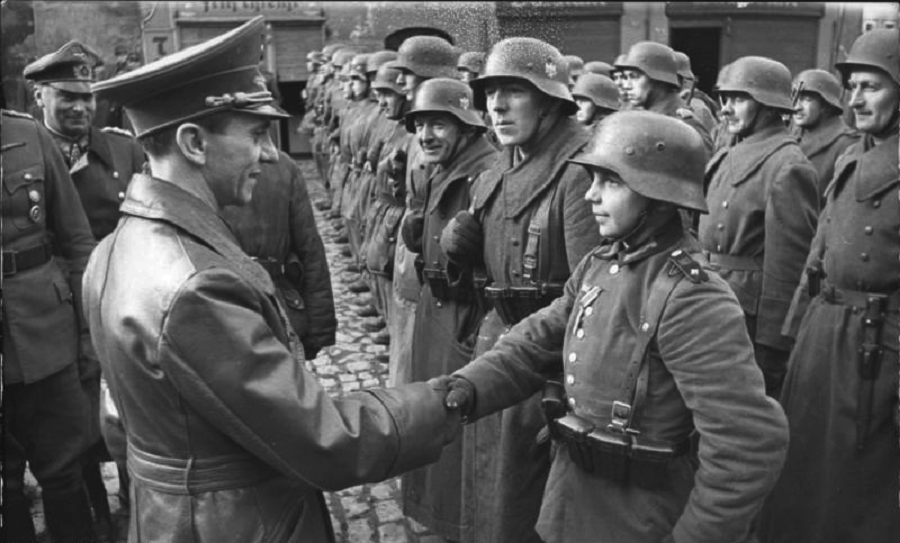
The youth involved in Werwolf were placed under the command of SS Lieutenant General Hans Prützmann, reporting ultimately to Heinrich Himmler, the head of the SS.
The League of German Girls (Bund Deutscher Mädel, or BDM) was the girls’ wing of the Nazi Party’s youth movement, established in 1930 and formalized as the official organization for girls aged 10 to 18 in 1933. It was part of the broader Hitler Youth movement, designed to indoctrinate young Germans with Nazi ideology and prepare them for their expected roles in the regime. The BDM emphasized loyalty to Adolf Hitler, racial purity, and the values of motherhood and domesticity, reflecting the Nazi ideal of women as homemakers and mothers who would raise the next generation of “racially pure” Germans.
Membership became mandatory in 1936, and girls participated in a mixture of educational, recreational, and paramilitary activities. They engaged in physical fitness exercises, camping, and community service, which were framed as training for future roles as mothers and caretakers of the German nation. Propaganda played a central role, portraying membership as both a civic duty and a source of pride. The BDM also instilled strict adherence to Nazi principles, including anti-Semitic beliefs, nationalism, and unquestioning obedience to authority.
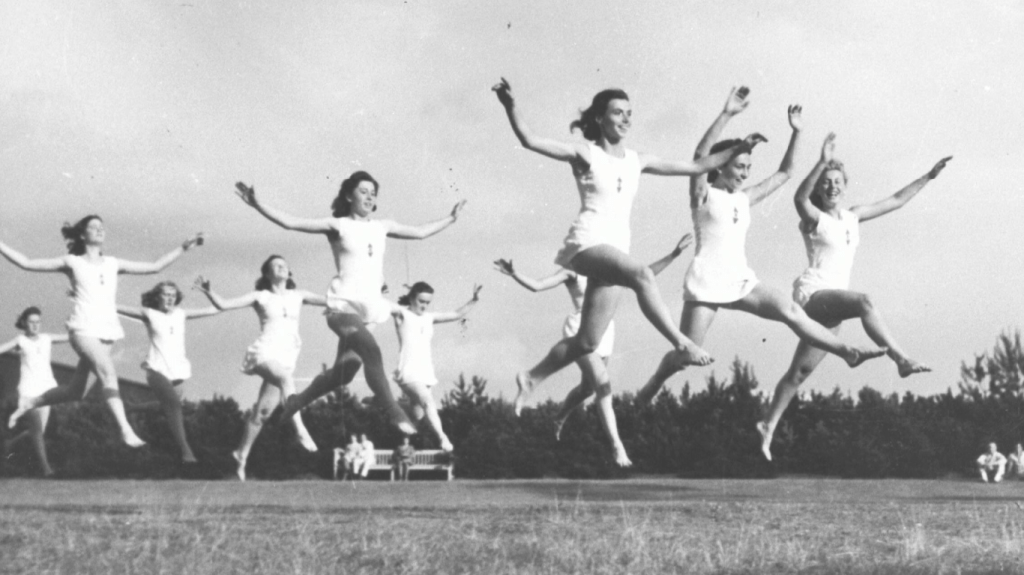
The League of German Girls demonstrates how totalitarian regimes use youth organizations to shape the values, behavior, and identity of the next generation. By targeting girls specifically, the Nazis reinforced traditional gender roles while promoting their political and racial agenda, leaving a lasting impact on the social fabric of Germany during the Third Reich.
sources
https://www.holocaust.org.uk/the-league-of-german-girls
https://en.wikipedia.org/wiki/League_of_German_Girls
https://allthatsinteresting.com/hitler-youth-photos
https://simple.wikipedia.org/wiki/Hitler_Youth
https://simple.wikipedia.org/wiki/Hitler_Youth
Donation
Your readership is what makes my site a success, and I am truly passionate about providing you with valuable content. I have been doing this at no cost and will continue to do so. Your voluntary donation of $2 or more, if you are able, would be a significant contribution to the continuation of my work. However, I fully understand if you’re not in a position to do so. Your support, in any form, is greatly appreciated. Thank you. To donate, click on the credit/debit card icon of the card you will use. If you want to donate more than $2, just add a higher number in the box left from the PayPal link. Your generosity is greatly appreciated. Many thanks.
$2.00
 History of Sorts
Leave a comment