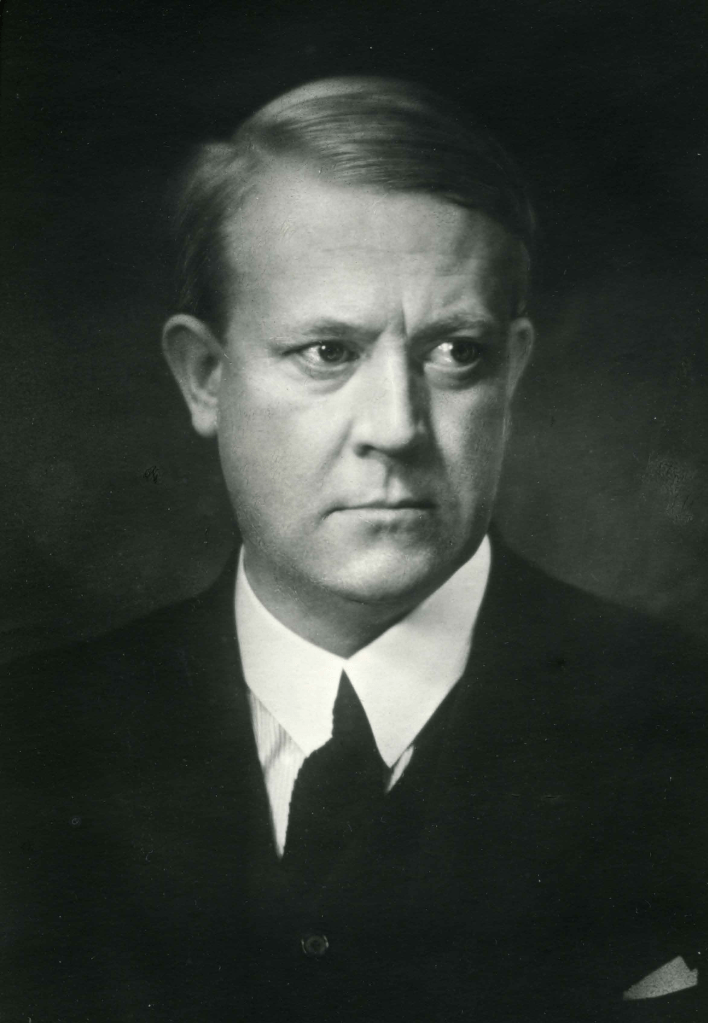
When the guns of World War II finally fell silent in 1945, Europe faced not only the monumental task of rebuilding cities and economies, but also of seeking justice. Few names were as synonymous with betrayal as Vidkun Quisling, the Norwegian politician whose collaboration with Nazi Germany turned his surname into a byword for “traitor.” His execution on October 24, 1945, marked both a symbolic and deeply emotional moment in Norway’s return to sovereignty.
The Rise of a Collaborator
Vidkun Quisling’s path to infamy began long before the German invasion of Norway in April 1940. A former army officer and minister of defense, Quisling had founded the Nasjonal Samling (National Union) party in 1933, a fascist movement inspired by Hitler’s Germany and Mussolini’s Italy. His party remained on the political fringes throughout the 1930s, attracting little public support in a nation that valued democracy and neutrality.
But when the Nazis invaded Norway, Quisling saw his opportunity. On the evening of April 9, 1940, he made a surprise broadcast on Norwegian radio, declaring himself the head of a new government loyal to Germany. This audacious coup—carried out without German authorization—was met with outrage by the Norwegian people. Nevertheless, Hitler soon recognized Quisling as a useful puppet.
The Occupation and Collaboration
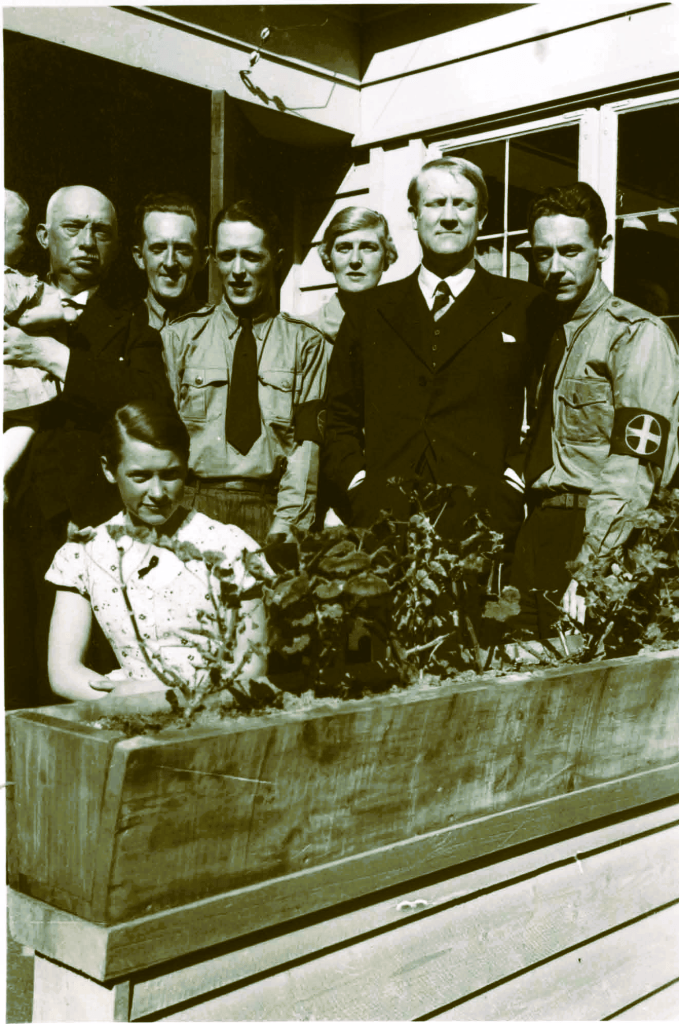
Under Nazi occupation, Quisling served as Minister-President from 1942 to 1945, governing under the watchful eye of German Reichskommissar Josef Terboven. His government implemented fascist policies, persecuted Jews, and sought to Nazify Norwegian society. Thousands of Norwegians were imprisoned, executed, or sent to concentration camps, and over 700 Norwegian Jews were deported to Auschwitz.
Quisling’s name became synonymous with treachery. In Britain, Winston Churchill famously used “quisling” to describe any traitor who collaborated with the enemy—cementing its place in the English language.
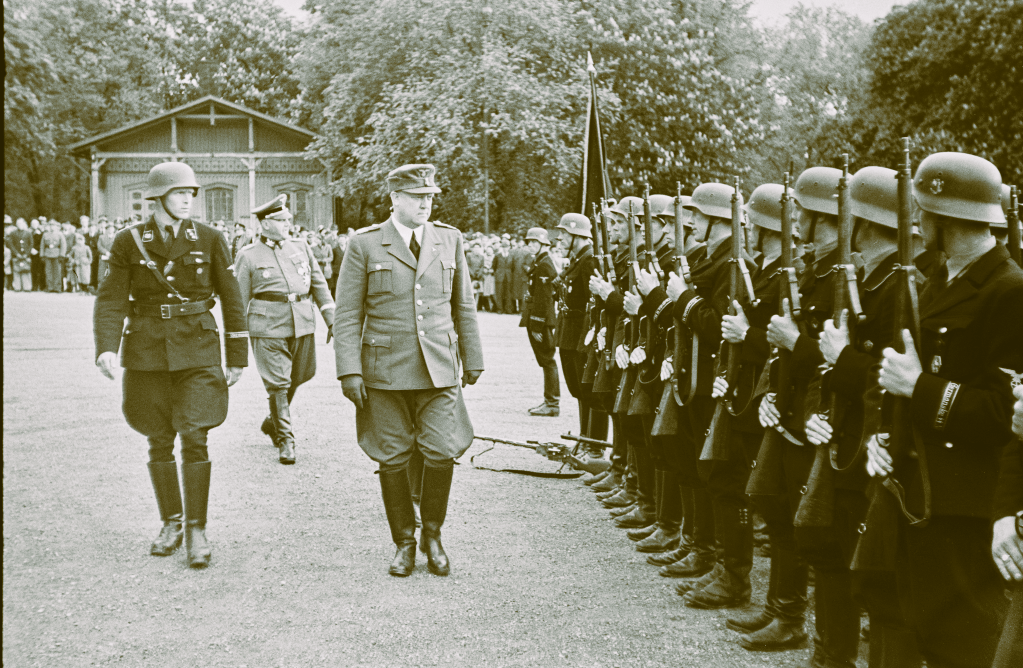
Vidkun Quisling inspects Norwegian volunteers in the Germanic SS Norway (Germanske SS Norge) at Slottsplassen in Oslo, 1944
The Fall of the Puppet Regime
By early 1945, the tide of war had turned. German forces were collapsing across Europe, and the resistance movement in Norway was growing stronger. When Germany surrendered in May 1945, Quisling’s regime crumbled instantly. He was arrested at Møllergata 19, a police headquarters in Oslo, and placed on trial for high treason, murder, and theft.
The trial, held that summer, was one of the most closely watched events in Norwegian history. Quisling defended himself with grandiose speeches, insisting that he had acted to protect Norway from the chaos of war. He portrayed himself as a misunderstood patriot and visionary. The court—and the Norwegian people—were unconvinced.
The Execution at Akershus Fortress
Quisling was deeply interested in science, Eastern religions, and metaphysics, eventually amassing a personal library that included works by Spinoza, Kant, Hegel, and Schopenhauer. Although he followed developments in quantum physics, he remained largely disengaged from more contemporary philosophical thought. Seeking to unite philosophy and science, he formulated a system he called Universism (or Universalism), which he envisioned as a comprehensive explanation of existence. His original writings on the subject reportedly extended to some two thousand pages.
Rejecting the core tenets of orthodox Christianity, Quisling proposed Universism as a new philosophy of life. The term itself was borrowed from Dutch sinologist Jan Jakob Maria de Groot, whose work on Chinese philosophy argued that Taoism, Confucianism, and Buddhism collectively formed a world religion he called Universism. Quisling claimed his own system “followed from the universal theory of relativity, of which the specific and general theories of relativity are special instances.”
His magnum opus was intended to comprise four parts: an introduction; an account of humanity’s evolution from individual to increasingly complex forms of consciousness; an exposition of his moral and legal principles; and a final section encompassing science, art, politics, history, race, and religion. The projected conclusion, titled The World’s Organic Classification and Organisation, was never completed. Quisling worked on the manuscript only sporadically during his political career—something his biographer Hans Fredrik Dahl later described as “fortunate,” since Quisling “would never have won recognition” as a philosopher.
During his trial, and particularly after his sentencing, Quisling revived his interest in Universism. Interpreting the events of the war as part of a divine progression toward the establishment of God’s kingdom on earth, he sought to justify his actions in those terms. In early October, he composed a fifty-page treatise titled Universistic Aphorisms, which he described as “an almost ecstatic revelation of truth and the light to come,” a work his biographer said bore “the mark of nothing less than a prophet.” The text also contained sharp criticisms of Nazi materialism. At the same time, Quisling wrote a sermon titled Eternal Justice, which reiterated his central beliefs, including his conviction in reincarnation.
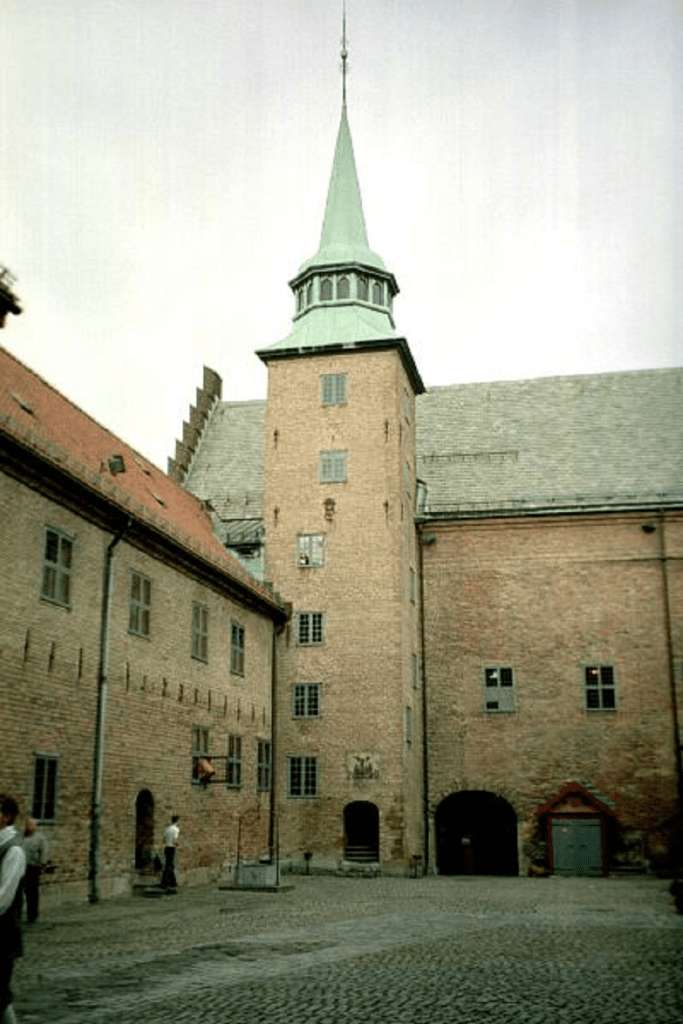
On October 24, 1945, Vidkun Quisling was executed by firing squad at Akershus Fortress in Oslo. The location carried deep symbolism: during the occupation, the fortress had been used by the Nazis to imprison and execute Norwegian resistance members. Now, it served as the site of retribution.
Quisling met his fate calmly. Witnesses reported that he refused a blindfold and stood upright as the rifles fired. He was 58 years old. His body was cremated, and his ashes were scattered in the Oslofjord—ensuring there would be no grave to become a shrine.
Legacy of a Name
The name “Quisling” endures as one of history’s most notorious synonyms for treason. His betrayal remains a defining wound in Norway’s collective memory, a reminder of how fragile democracy can become in the face of tyranny. Yet the story of his downfall is also one of national redemption: Norway’s people resisted, endured, and ultimately reclaimed their freedom.
The execution of Vidkun Quisling was not merely an act of vengeance—it was a moral reckoning. It symbolized the restoration of justice in a country that had suffered under occupation and collaboration. In the end, Quisling achieved the infamy he had courted all his life—not as a savior of Norway, but as its greatest traitor.
sources
https://en.wikipedia.org/wiki/Vidkun_Quisling
https://www.ebsco.com/research-starters/history/norwegians-execute-nazi-collaborator-quisling
https://encyclopedia.ushmm.org/content/en/article/vidkun-quisling-1
https://www.britannica.com/biography/Vidkun-Abraham-Lauritz-Jonsson-Quisling
https://encyclopedia.ushmm.org/content/en/film/war-crimes-trial-of-vidkun-quisling
Donation
Your readership is what makes my site a success, and I am truly passionate about providing you with valuable content. I have been doing this at no cost and will continue to do so. Your voluntary donation of $2 or more, if you are able, would be a significant contribution to the continuation of my work. However, I fully understand if you’re not in a position to do so. Your support, in any form, is greatly appreciated. Thank you. To donate, click on the credit/debit card icon of the card you will use. If you want to donate more than $2, just add a higher number in the box left from the PayPal link. Your generosity is greatly appreciated. Many thanks.
$2.00
 History of Sorts
Leave a comment