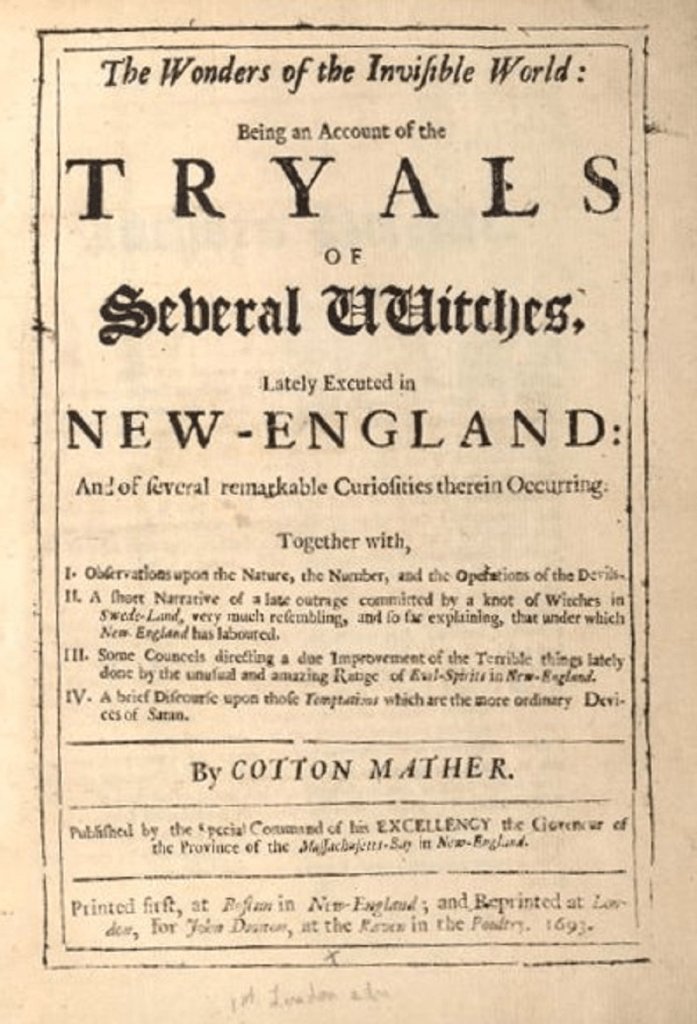
The Salem Witch Trials of 1692 stand as one of the most infamous episodes in early American history. Rooted in fear, religious extremism, and social tensions, these trials led to the execution of twenty individuals and the imprisonment of many more in colonial Massachusetts. Although often remembered as a tragic example of mass hysteria, the Salem Witch Trials also reveal deep insights into the psychological, social, and political dynamics of Puritan New England. This essay explores the historical context, causes, proceedings, and lasting consequences of the Salem Witch Trials, shedding light on how fear and fanaticism can fracture a community and distort justice.
Historical Context
The Salem Witch Trials took place in the Puritan colony of Massachusetts Bay during a time of profound uncertainty. The late 17th century was marked by political instability, war, and religious anxiety. The Puritans, who had migrated from England to establish a “city upon a hill,” believed that their community had a divine mission to uphold God’s law. Their worldview was deeply theocratic—where religious and civil life were intertwined—and any deviation from orthodoxy was considered a threat to the moral order.
Tensions also ran high between neighboring communities, particularly between Salem Town, a prosperous trading center, and Salem Village (modern-day Danvers), a poorer, agrarian community. Internal disputes over land ownership, church leadership, and political autonomy further divided the villagers. These simmering conflicts created a fertile ground for suspicion and accusation.
The Outbreak of the Witchcraft Accusations
The crisis began in January 1692 when Betty Parris, the nine-year-old daughter of Reverend Samuel Parris, and her cousin Abigail Williams began to exhibit strange behaviors—screaming fits, convulsions, and trance-like states. A local doctor, unable to find a medical explanation, declared the cause to be witchcraft. Under pressure to identify the source of their torment, the girls accused three women: Tituba, a slave from the Caribbean; Sarah Good, a destitute beggar; and Sarah Osborne, an elderly woman who had defied Puritan norms by remarrying.
The accusations quickly spiraled. Fear spread through Salem and nearby towns as more individuals—often outsiders or those with social enemies—were accused of consorting with the Devil. The fact that the afflicted girls’ symptoms appeared inexplicable by contemporary medical knowledge gave the accusations an air of legitimacy. Moreover, ministers and magistrates interpreted the events as evidence that Satan was actively at work in the colony, testing their faith.
The Legal Proceedings
The colonial government, overwhelmed by the number of accusations, established a Special Court of Oyer and Terminer (meaning “to hear and determine”) in May 1692 to prosecute the suspected witches. Chief Justice William Stoughton presided over the court, which accepted spectral evidence—testimony that the spirit or specter of the accused had appeared to the victim in a vision or dream. This form of evidence, inherently subjective and unverifiable, became a cornerstone of the trials.
Among the first to be executed was Bridget Bishop, hanged on June 10, 1692. Over the following months, nineteen others were executed by hanging, and one man, Giles Corey, was pressed to death with heavy stones for refusing to enter a plea. More than 150 people were imprisoned, and many languished for months in harsh conditions awaiting trial.
The turning point came in the autumn of 1692. Prominent ministers, including Increase Mather, began to question the validity of spectral evidence. Mather’s treatise, Cases of Conscience Concerning Evil Spirits, argued that it was better for ten witches to go free than for one innocent person to be condemned. By October, Governor William Phips dissolved the Court of Oyer and Terminer and later established a new court that excluded spectral evidence. The executions ceased, and by May 1693, the remaining accused were released.
Underlying Causes and Social Dynamics
Historians have proposed numerous explanations for the Salem Witch Trials, ranging from psychological to socio-political factors.
Religious and Psychological Fear:
The Puritans’ strict religious beliefs fostered an intense fear of the Devil and his supposed agents. Witchcraft accusations offered a way to externalize internal fears and uncertainties, especially during times of crisis.
Gender and Power:
Most of the accused were women—particularly those who did not conform to traditional gender roles or who threatened male authority. The trials reflected deep-seated misogyny within a patriarchal society.
Social and Economic Tensions:
Conflicts between Salem Village and Salem Town, as well as between wealthy landowners and poorer farmers, likely fueled accusations. Historian Paul Boyer and Stephen Nissenbaum, in Salem Possessed, argue that witchcraft allegations often mirrored existing social and economic rivalries.
Political Instability:
The trials occurred during a period when Massachusetts was without a stable government due to the recent revocation of its colonial charter. This instability undermined legal authority and contributed to a sense of chaos.
Aftermath and Legacy
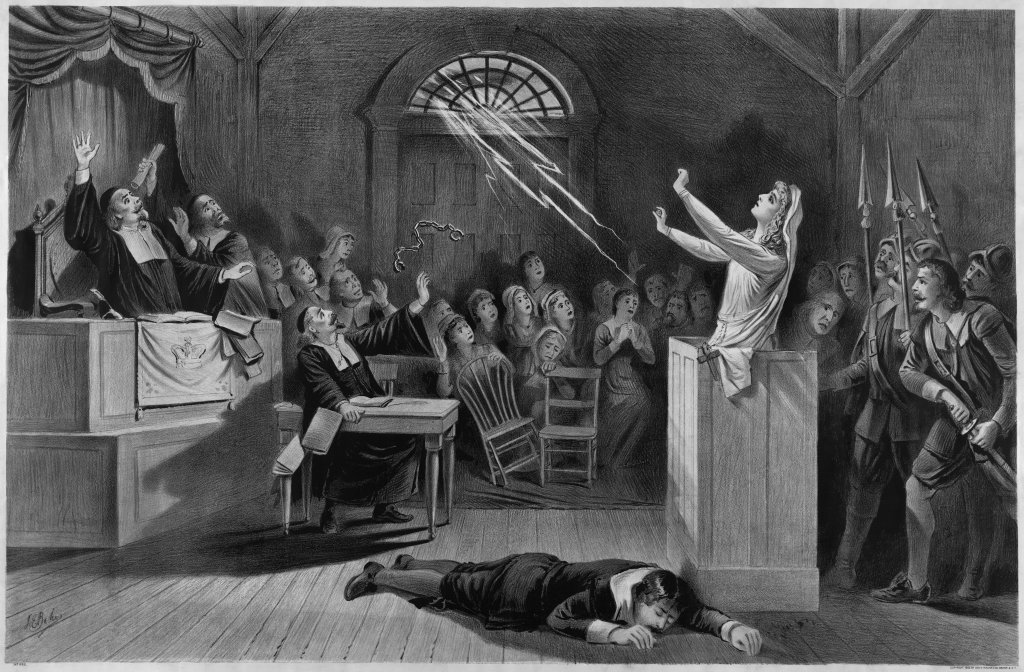
In the aftermath of the trials, widespread guilt and remorse swept through the colony. In 1697, the Massachusetts General Court declared a Day of Fasting and Soul-Searching to atone for the tragedy. Many of the judges and jurors publicly confessed their error. In 1702, the trials were declared unlawful, and in 1711, the colony passed a bill restoring the rights and reputations of the accused, along with financial compensation to their families.
The Salem Witch Trials have since become a lasting symbol of the dangers of mass hysteria, scapegoating, and the breakdown of due process. They have inspired countless works of literature, most notably Arthur Miller’s play The Crucible (1953), which used the trials as an allegory for McCarthyism and the Red Scare in 20th-century America.
The Salem Witch Trials represent more than just a tragic episode of colonial superstition—they reveal the destructive potential of fear when combined with religious extremism, social tension, and flawed judicial reasoning. What began as a few mysterious illnesses escalated into a community-wide crisis that claimed innocent lives and shattered public trust. The lessons of Salem remain profoundly relevant today, reminding us that the pursuit of justice must be grounded in evidence, reason, and compassion. In moments of fear, societies must resist the temptation to turn against themselves, lest they repeat the mistakes of 1692.
sources
https://www.salem.org/salem-witch-trials
https://www.bostonglobe.com/2025/10/28/metro/nh-witchcraft-accusations/
https://www.britannica.com/event/Salem-witch-trials
https://www.smithsonianmag.com/history/a-brief-history-of-the-salem-witch-trials-175162489/
 History of Sorts
Leave a comment