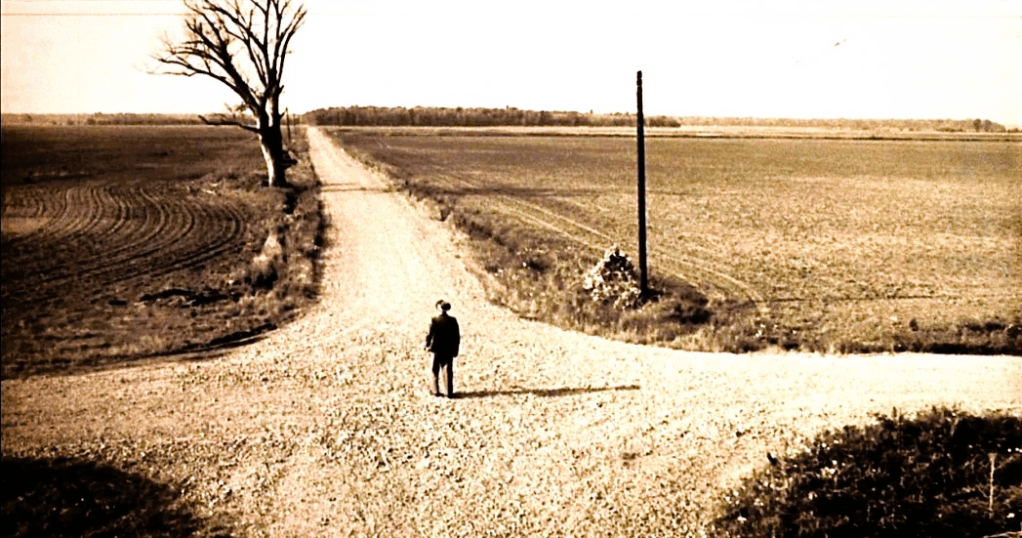
Robert Johnson, often hailed as the “King of the Delta Blues,” occupies a mythical space in the annals of American music. His life and career, marked by mystery and immense talent, have been immortalized not only by his songs but also by the legend that he sold his soul to the devil at a crossroads in exchange for his unparalleled guitar skills. This essay explores the life of Robert Johnson, the origins and symbolism of the Crossroads Legend, and its enduring impact on his legacy and the blues as a genre.
The Life and Music of Robert Johnson
Born on May 8, 1911, in Hazlehurst, Mississippi, Robert Johnson grew up amid the rich musical culture of the Mississippi Delta. Though his life was tragically short—he died under mysterious circumstances at the age of 27 in 1938—Johnson’s recordings have become some of the most celebrated works in blues history. Songs like “Cross Road Blues,” “Hellhound on My Trail,” and “Sweet Home Chicago” display not only his lyrical depth but also his groundbreaking guitar techniques, which included intricate fingerpicking and the use of bottleneck slide.
Johnson’s rapid transformation from a struggling musician to a blues virtuoso fueled speculation among his contemporaries. Friends and fellow musicians noted how he seemingly disappeared for a time, only to return with astonishing skill. This unexplained improvement became fertile ground for the creation of the Crossroads Legend.
The Crossroads Legend
The Crossroads Legend asserts that Robert Johnson gained his extraordinary abilities by making a pact with the devil. According to the story, Johnson took his guitar to a crossroads, traditionally said to be near Clarksdale, Mississippi. There, he encountered a supernatural figure—often identified as the devil—who tuned his guitar, played a few songs, and handed it back to Johnson, granting him mastery of the instrument in exchange for his soul.
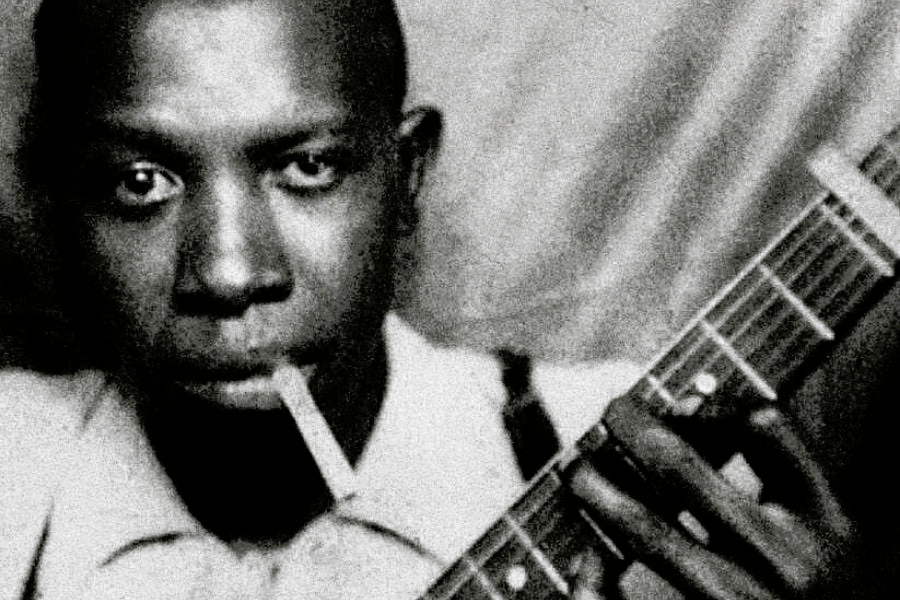
This legend is not unique to Johnson. Similar stories have been attached to other blues musicians, such as Tommy Johnson (no relation), and have roots in African-American folklore. The crossroads itself holds deep symbolic significance in African spiritual traditions, often representing a place of decision, transformation, and encounter with the divine or supernatural. In the context of the Crossroads Legend, it became a metaphor for artistic transcendence and the sacrifices required to achieve greatness.
Symbolism and Cultural Context
The Crossroads Legend is rich with symbolism. At its core, it reflects the struggles and choices faced by musicians like Robert Johnson, who lived in poverty and pursued their art despite societal disapproval. During the early 20th century, blues music was often regarded as “devil’s music” by religious communities, further feeding into the myth. The legend also captures the allure of the blues itself—a genre deeply rooted in emotion, spirituality, and the tension between human suffering and transcendence.
Additionally, Johnson’s lyrics contributed to the perpetuation of the legend. Songs like “Cross Road Blues” and “Me and the Devil Blues” feature themes of desperation, spiritual bargaining, and the supernatural. While these songs are likely metaphorical, they provided fertile ground for interpretations linking Johnson to the devil.
The Legacy of the Legend
The Crossroads Legend has become inseparable from Robert Johnson’s legacy, elevating him from a remarkable musician to a near-mythical figure. His story has inspired countless artists and creators, from Eric Clapton to the Coen Brothers, whose film O Brother, Where Art Thou? includes a character based on Johnson. The crossroads itself, symbolically tied to his story, has become a cultural touchstone, drawing tourists and fans to Clarksdale, Mississippi, in search of the legendary site.
While the legend may obscure the true scope of Johnson’s talent and hard work, it also highlights the enduring fascination with his music. It serves as a reminder of the power of storytelling in shaping cultural memory, as well as the mystique that often surrounds great artists.
Robert Johnson’s life and music, amplified by the Crossroads Legend, exemplify the blues as both an art form and a cultural phenomenon. The legend adds a layer of mystery to his legacy, symbolizing the sacrifices and struggles inherent in the pursuit of artistic excellence. Whether viewed as fact, metaphor, or folklore, the tale of Johnson and the crossroads continues to captivate audiences, ensuring his place not only in the history of music but also in the realm of myth. Through his timeless recordings and the enduring power of his story, Robert Johnson remains an icon, a symbol of the blues, and a testament to the transformative power of music.
https://faroutmagazine.co.uk/robert-johnson-myth-devil-crossroads-story/
https://www.honest-broker.com/p/the-real-story-of-blues-legend-robert
https://www.britannica.com/biography/Robert-Johnson-American-musician
https://guitar.com/features/history/beyond-the-crossroads-the-tragic-real-life-of-robert-johnson/
Donation
Your readership is what makes my site a success, and I am truly passionate about providing you with valuable content. I have been doing this at no cost and will continue to do so. Your voluntary donation of $2 or more, if you are able, would be a significant contribution to the continuation of my work. However, I fully understand if you’re not in a position to do so. Your support, in any form, is greatly appreciated. Thank you. To donate, click on the credit/debit card icon of the card you will use. If you want to donate more than $2, just add a higher number in the box left from the PayPal link. Your generosity is greatly appreciated. Many thanks.
$2.00
 History of Sorts
Leave a comment