
This piece isn’t about a Star Wars Christmas special—though, to be honest, seeing Santa join Darth Vader on the Dark Side would be undeniably awesome.
When we think of Christmas, images of jolly Santa Claus, festive decorations, and cheerful Christmas carols come to mind. But hidden within the warmth of holiday cheer lies a figure steeped in ancient folklore—a horned, fearsome creature named Krampus. Originating from the Alpine regions of Europe, Krampus has become an enduring symbol of the darker side of the holiday season. This blog explores the origins, traditions, and modern resurgence of Krampus, the Christmas demon who punishes the naughty.
Origins of Krampus
Krampus is believed to predate Christianity and is rooted in pre-Christian Alpine traditions. His name derives from the German word krampen, meaning “claw,” and he is often associated with the wild spirits of nature found in pagan winter solstice celebrations. Early depictions show him as a horned figure, part man and part beast, evoking fear and awe among those who encountered him.
As Christianity spread through Europe, early Christian leaders attempted to suppress pagan traditions, but Krampus survived. Rather than erasing him, the Church incorporated him into Christian lore, pairing him with the benevolent St. Nicholas, the saintly figure who rewarded good children. In this duality, Krampus became the enforcer of moral behavior, punishing the naughty while St. Nicholas rewarded the virtuous.
Krampus’s Fearsome Appearance
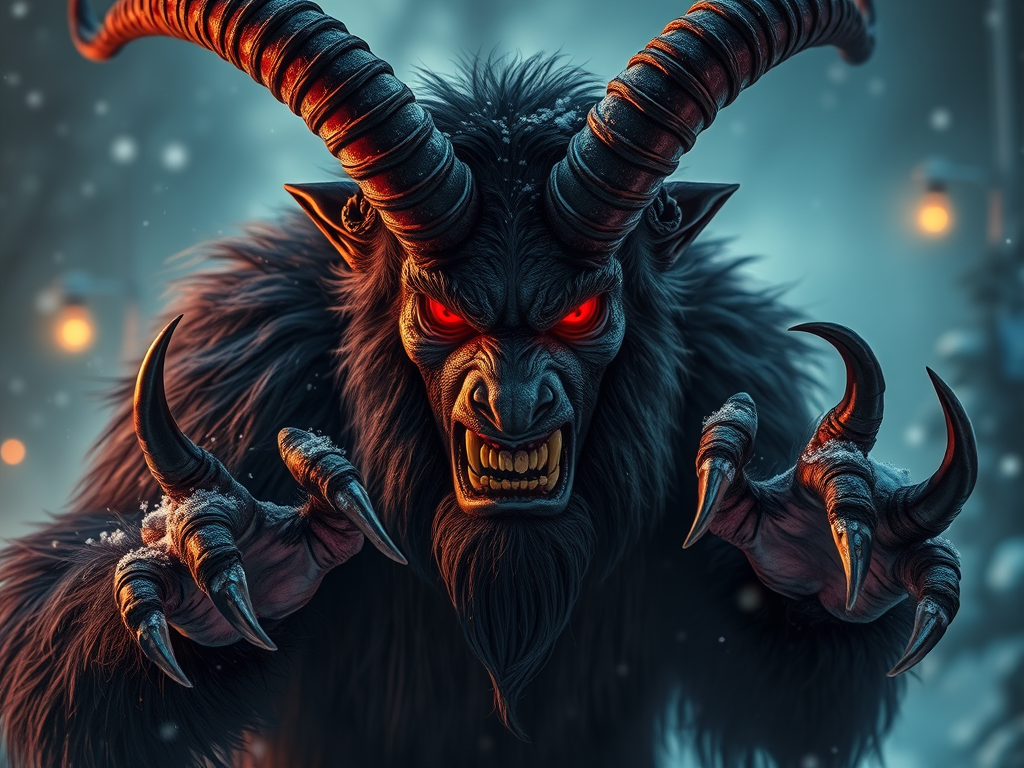
Krampus is often depicted as a terrifying figure with:
- Horns and Fangs: Resembling a devil, his horns curve ominously from his head.
- Shaggy Fur: Typically black or dark brown, his fur gives him a beastly, untamed appearance.
- Long Tongue: His elongated tongue is grotesquely exaggerated, often depicted as lolling from his mouth.
- Chains and Bells: These are sometimes used as a symbol of Christian attempts to bind and control him.
- Birch Rods and Sack: He carries a bundle of birch branches (ruten) to swat naughty children and a sack or basket to carry them away—sometimes threatening to drown or eat them.
This frightful visage served a practical purpose in folklore: to terrify children into good behavior.
Krampusnacht: A Night of Fear
One of the most iconic traditions associated with Krampus is Krampusnacht, or “Krampus Night,” celebrated on the evening of December 5th. This night precedes St. Nicholas Day on December 6th, when children traditionally receive gifts for good behavior.
On Krampusnacht, young men dress as Krampus in elaborately designed costumes and parade through villages and towns in a tradition known as the Krampuslauf (Krampus run). These events can be riotous, with participants engaging in antics, scaring onlookers, and playfully swatting people with their birch rods.
Krampusnacht is especially popular in Austria, Germany, Hungary, and parts of northern Italy. In some towns, these events are an opportunity for community bonding, blending ancient traditions with modern festivities.
Beginning before the 17th century, tales of a horned figure who appeared around Christmastime to punish sinners began emerging across Europe, especially in Eastern European regions. Many historians trace the origins of these legends to pre-Christian pagan traditions, noting that Krampus’s arrival aligns with various pagan winter rituals.
In Austria, the Krampus tradition faced suppression following the 1923 election, when the Dollfuss regime, under the Fatherland’s Front (Vaterländische Front) and the Christian Social Party, banned its practice. By the 1950s, the government further condemned the tradition by distributing pamphlets titled “Krampus Is an Evil Man.” However, by the late 20th century, Krampus celebrations experienced a revival, gaining popularity once again. This resurgence extended to Bavaria, where the tradition has been rekindled alongside a revival of the region’s craft of hand-carved wooden masks.
The Duality of Krampus and St. Nicholas
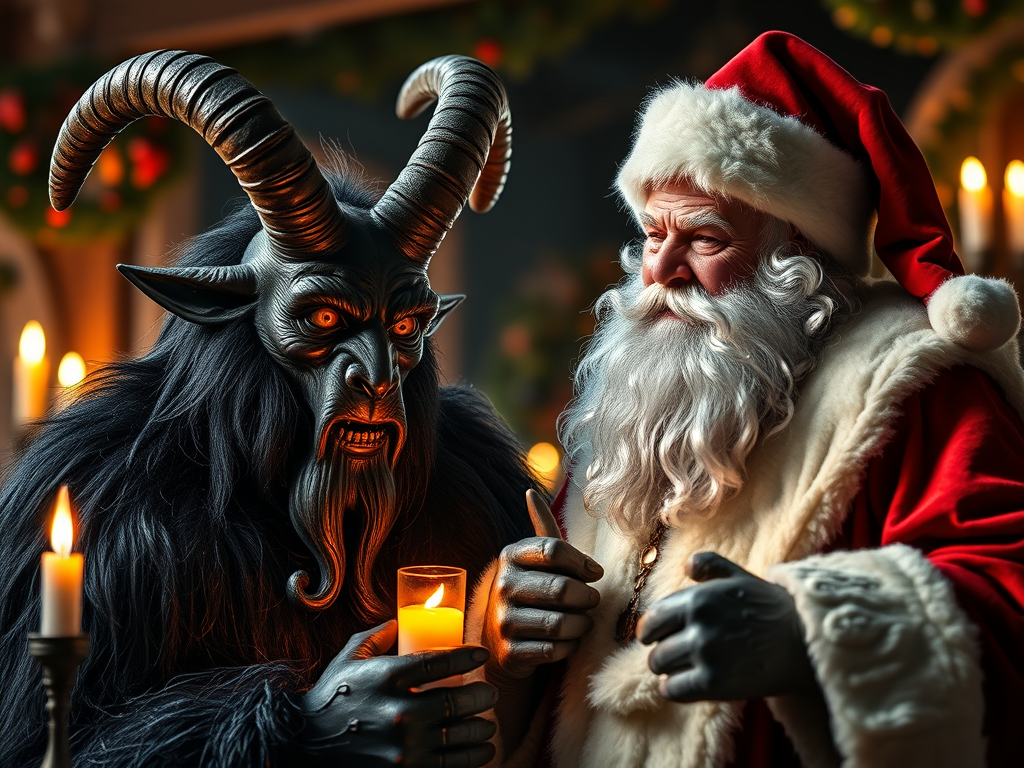
Krampus’s role as St. Nicholas’s dark counterpart emphasizes the moral duality often found in folklore. While St. Nicholas rewards good children with gifts, Krampus punishes those who misbehave. Together, they reinforce the idea that actions have consequences, a lesson deeply embedded in the Christmas season.
This duality also highlights the blend of Christian and pagan elements in European traditions. St. Nicholas embodies Christian virtue and charity, while Krampus represents the untamed, primal forces of the natural world, reminding people of the balance between light and dark, order and chaos.
Krampus in the Modern World
In recent decades, Krampus has experienced a cultural revival, not only in Europe but also internationally. This resurgence is fueled by a fascination with folklore, a love for the macabre, and a growing interest in alternative Christmas traditions. Here’s how Krampus continues to captivate modern audiences:
Krampuslauf Parades
Krampus parades have become annual spectacles, especially in Austria and Germany. These events feature stunningly crafted costumes, loud bells, and theatrical performances. The artistry and effort put into creating Krampus masks and outfits are remarkable, blending traditional designs with modern creativity.
Krampuskarten
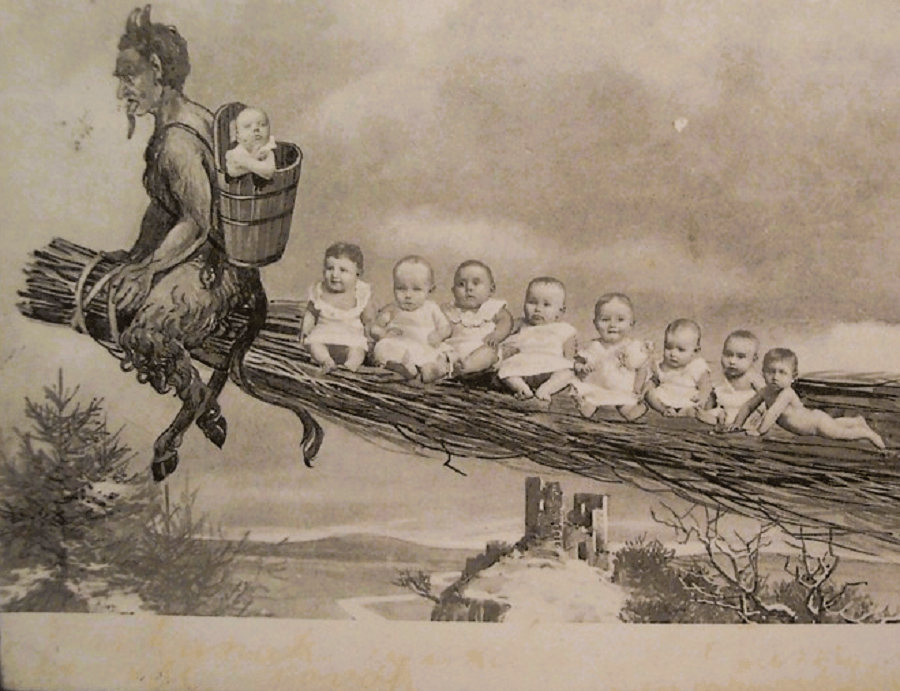
Vintage Krampus-themed greeting cards, known as Krampuskarten, were popular in the 19th and early 20th centuries. These cards often depicted Krampus in humorous or slightly disturbing scenarios, such as chasing misbehaving children or mischievously interacting with adults. Today, Krampuskarten have become collectors’ items and are even reimagined in modern designs.
Pop Culture
Krampus has found his way into movies, books, and TV shows, often portrayed as a darkly humorous or outright terrifying character. Notable examples include:
- The 2015 horror-comedy film Krampus, which reintroduced the character to a global audience.
- Appearances in TV shows like American Dad! and The Venture Bros., which add a comedic twist to his legend.
- Graphic novels and children’s books that explore his story in creative ways.
Global Appeal
While Krampus remains most prominent in Alpine regions, his legend has spread worldwide. In the United States, for example, Krampus-themed events, parties, and runs have become increasingly popular, often blending traditional elements with local culture.
Why Krampus Endures
Krampus’s enduring appeal lies in his ability to embody the darker aspects of human nature and the holiday season. He serves as a reminder that the festive cheer of Christmas is not without its shadows. His story resonates with people seeking to reconnect with ancient traditions, as well as those who enjoy the playful thrill of a good scare.
In a world where Christmas is often commercialized, Krampus provides a link to the past, grounding the holiday in its folkloric and moral roots. Whether you view him as a terrifying enforcer or a mischievous figure of fun, Krampus is a fascinating character who enriches the tapestry of Christmas traditions.
Krampus is much more than a scary figure from folklore. He is a cultural icon, a symbol of the interplay between light and dark, and a reminder of the moral lessons that underpin the holiday season. Whether you celebrate him through Krampusnacht festivities, send a Krampuskarten, or simply enjoy his stories, Krampus adds a unique dimension to Christmas.
So, the next time you hear the jingling of bells, take a moment to wonder: is it St. Nicholas bringing gifts, or Krampus coming to ensure you’ve been good this year?
Sources
https://www.history.com/news/krampus-christmas-legend-origin
https://www.britannica.com/topic/Krampus
https://www.britannica.com/topic/Krampus
https://en.wikipedia.org/wiki/Krampus
Donation
Your readership is what makes my site a success, and I am truly passionate about providing you with valuable content. I have been doing this at no cost and will continue to do so. Your voluntary donation of $2 or more, if you are able, would be a significant contribution to the continuation of my work. However, I fully understand if you’re not in a position to do so. Your support, in any form, is greatly appreciated. Thank you. To donate, click on the credit/debit card icon of the card you will use. If you want to donate more than $2, just add a higher number in the box left from the PayPal link. Your generosity is greatly appreciated. Many thanks.
$2.00
 History of Sorts
Leave a comment