
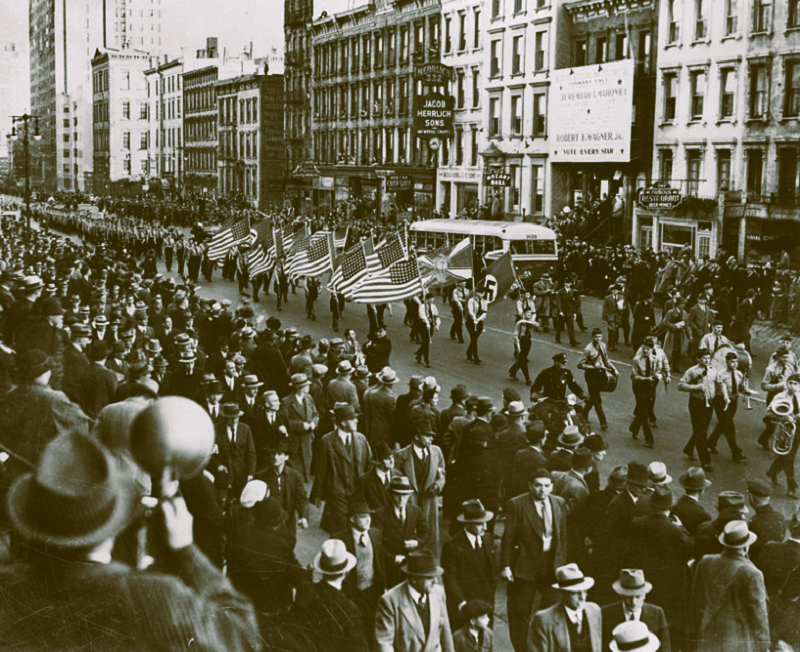
It should never be forgotten that it was Germans who voted for Adolf Hitler. No matter how you twist and turn it, there is no escaping that fact. However, National Socialism and Fascism were not just German political ideologies—they were international. Most of Europe and even the USA subscribed to a level of National Socialism (e.g. Nazism).
It should also not be forgotten that not all Germans were bad. They may even have been Nazis, but not necessarily a keen supporter of Hitler or his policies. In fact, 651 Germans were awarded “Righteous Among the Nations.” Compare the 651 Germans to the 217 Russians and 113 Latvians.
Some of you may not know what that means. The Righteous Among the Nations, honoured by Yad Vashem, are non-Jews who took self-life-threatening risks to save Jews during the Holocaust. Rescue took many forms, and the Righteous came from different nations, religions and walks of life. What they had in common was that they protected their Jewish neighbours at a time when hostility and indifference prevailed.
Below are a few of the German Righteous Among the Nations. Some might even surprise you.
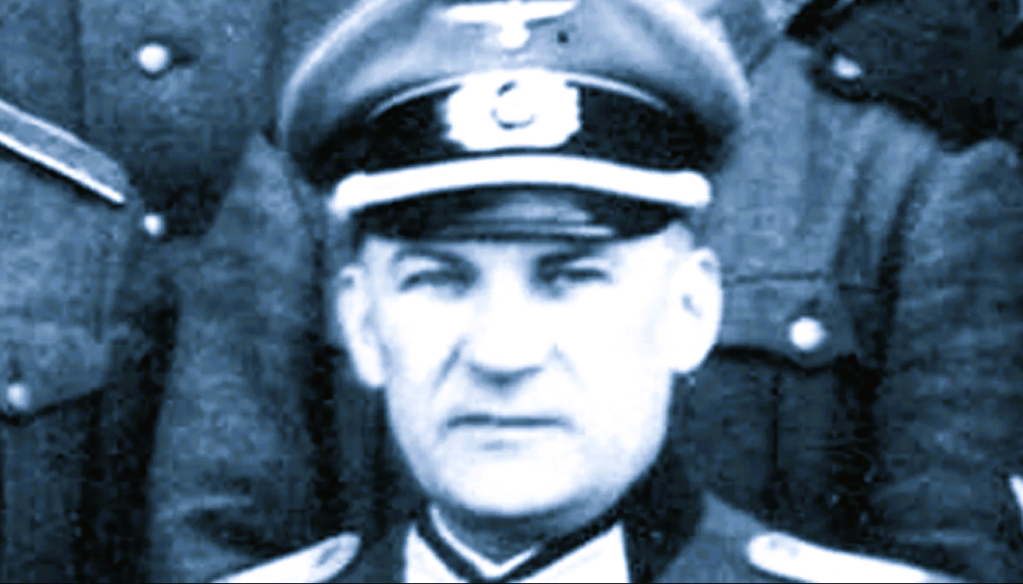
Albert Battel was born on 21 January 1891 in Klein-Pramsen. As a fifty-one-year-old reserve officer and lawyer from Breslau, Dr. Battel was stationed in Przemysl in south Poland as the adjutant to the local military commander, Major Max Liedtke. When the SS prepared to launch their first large-scale “resettlement” (liquidation) action against the Jews of Przemysl on 26 July 1942, Battel, in consort with his superior, ordered the bridge over the River San, the only access into the Jewish ghetto, to be blocked. As the SS commando attempted to cross to the other side, the sergeant-major in charge of the bridge threatened to open fire unless they withdrew. All this happened in broad daylight, to the amazement of the local inhabitants. Still later that same afternoon, an army detachment under the command of Oberleutenant Battel broke into the cordoned-off area of the ghetto with army trucks to whisk off up to 100 Jews and their families to the barracks of the local military command. These Jews were placed under the protection of the Wehrmacht and sheltered from deportation to the Belzec Extermination Camp. The remaining ghetto inmates, including the head of the Judenrat, Dr. Duldig, underwent resettlement in the following days.
After this incident, the SS authorities began a secret investigation into the outrageous conduct of the army officer who had dared defy them under such embarrassing circumstances. It turned out that Battel, though himself a member of the Nazi party since May 1933, had already attracted notice in the past by his friendly behaviour toward the Jews. Before the war, he had been indicted before a party tribunal for having extended a loan to a Jewish colleague. Later, during his service in Przemysl, he was officially reprimanded for cordially shaking the hand of the chairman of the Jewish Council, Dr. Duldig. The entire affair reached the attention of the highest level of the Nazi hierarchy. No less a figure than Heinrich Himmler, the Reichsführer-SS, took a lively interest in the results of the investigation and sent a photocopy of the incriminating documentation to Martin Borman, chief of the Party Chancellery and Hitler’s right-hand man. In the accompanying letter, Himmler, one of the most dreaded men in the Third Reich, vowed to have the lawyer arrested immediately after the war.
All this remained unknown to Battel. In 1944, he was discharged from military service because of heart disease. He returned to his hometown, Breslau, and was to be drafted into the Volk Storm (Volkssturm) and fall into Russian captivity. After his release, he settled in West Germany. He had been prevented from returning to practice law by a court of de-Nazification. He died in Hattersheim near Frankfurt.
Battel’s heroic stand against the SS was unparalleled in the annals of the Third Reich. He became recognized only a long time after his death—most notably—through the tenacious efforts of the Israeli researcher and lawyer Dr. Zeev Goshen.

Willi Ahrem was the Obertruppführer Commandant of a forced labour camp affiliated with the Todt Organization at Nemirov, Ukraine. As such, he distinguished himself by his humane behaviour toward the labourers—especially the Jewish labourers and protected them from starvation. The first SS Aktion directed against the Jews of Nemirow took place in November 1941. Ahrem, who heard of the plan the day before, immediately warned the German-speaking Jehoschua Menzer. The latter passed on the information to other Jews, who escaped to nearby villages and the forests. The Menzer family, along with two other Jews, found refuge in a cellar in Ahrem’s house, where they were provided with blankets and food. Some 2,500 Jews were shot in the back in the course of this first Aktion. The remaining Jews were dealt with in a similar fashion in the Aktion in July 1942. Once again, Ahrem warned Menzer in time and sheltered the Menzers in his house. As soon as the Aktion was over, he smuggled them, together with another woman survivor, to the Dzhurin ghetto in Transnistria (the area occupied by Romania between the Dniester and the Bug rivers). This was an audacious operation, which Ahrem carried out at great personal risk. In the Dzhurin ghetto, Ahrem provided his destitute Jewish protégés with badly needed clothing, food, and other necessities, bribing his way with the Romanian gendarmes, who threatened to denounce him. He also acted as a courier between other ghetto inmates and the Jewish community in Bucharest, faithfully transferring monies sent by relatives. In the meantime, however, Ahrem’s position had become very vulnerable, and he barely managed to clear himself of the denunciation—it claimed he was helping Jews. Following that incident, he was moved, in 1943, to Germany until the end of the war. On 15 June 1965, Yad Vashem recognized Willi Ahrem as Righteous Among the Nations.

Hermann Friedrich Graebe was born on 19 June 1900 in Gräfrath, a small town in the Rhineland of Germany. His family was poor. His father was a weaver, and his mother helped supplement the family’s income by working as a domestic. Besides the economic hardship, the Graebes were Protestants who lived in a predominantly Roman Catholic area. In 1924, Hermann Friedrich Graebe was married and then completed his training as an engineer.
Graebe joined the Nazi party in 1931 but soon became disenchanted with the movement. By 1934—one year after Hitler’s rise to power—in a party meeting, he openly criticized the Nazi campaign against Jewish businesses. If he needed to be taught a lesson about the danger of such a move, it soon came. Following that incident, Graebe was apprehended by the Gestapo and jailed in Essen for several months. Fortunately for him, he was released without trial.
Graebe worked for the Josef Jung construction company in Solingen. From 1938 to 1941, his company sent him to supervise the construction of the fortifications on Germany’s western border. In the summer of 1941, shortly after the Germans invaded the Soviet Union, he was directed by the Todt Organization headquarters in Berlin to report to the offices of the Reich Railway Administration in Lwow (today Lviv in Ukraine). His assignment was to recruit construction teams to help build, renovate structures and maintain the essentials for railroad communications in the Ukraine. Arriving in Volhynia, a region in North West Ukraine, in September 1941, Graebe first set up his head office in Zdolbunov and deployed his subsidiary offices throughout Volhynia and the former Soviet Ukraine. Graebe’s company, Jung, employed a Jewish workforce comprising approximately 5,000 men and women.
Graebe became a witness to the atrocities perpetrated by the Germans and their Ukrainian auxiliaries against the Jewish population. In one of these incidents, on 5. October 1942, he was present at the mass-killing site at the airfield near Dubno. He witnessed 5,000+ Jewish men, women, and children lined up naked in front of previously dug pits, where they were cold-bloodedly executed by the SS firing squads and the Ukrainians. After the war, his poignant accounts of the horrendous scenes he had witnessed in Dubno and elsewhere in Ukraine were incorporated into the evidence of the Nuremberg trials, at which he testified for the prosecution.
Graebe was not content to remain a detached observer of unspeakable crimes. Propelled by his boundless moral indignation—he set out to save as many Jews as he could. By arguing that he was performing work essential for the German war effort, he deliberately accepted more assignments and contracts than his company could handle. In consequence, the need arose to employ a greater number of Jewish workers. Graebe went to great lengths to protect his Jewish employees and their families. In the process, he did not hesitate to compromise his position or property and—with time—even risk his own life.
In July 1942, Graebe learned from his Wehrmacht sources of an imminent liquidation action to be directed against the Jews of Rivne. He had 112 Jews from the Ostrog, Mizoch, and Zdolbunov ghettos working for him in Rivne, and immediately obtained a “writ of protection” from the deputy district commissioner and rushed to Rivne where a gun in hand, he managed to secure the release of 150 Jews. It was a very close call—the Ukrainian police were already busy driving the ghetto inmates to the collection point from where they were to be taken to their deaths. Graebe marched the lucky ones on foot to Zdolbunov, out of harm’s way.
The Germans went on with the liquidation of Wolhynia’s Jews. When, some months later, the Germans incarcerated the Jews of Zdolbunov in a ghetto and started deporting them, Graebe provided 25 workers with falsified “Aryan” identification papers. He subsequently transported them in stages, in his own car, to the far-flung company branch in Poltava, hundreds of miles to the east a place that was safer for the Jews. The Poltava branch was pure fiction: Graebe had set it up and maintained it at his own expense for the sole purpose of providing shelter for his Jewish workers. With the subsequent advance of the Red Army, the group escaped to the Russian side. Among those saved in this manner were Tadeus Glass with wife and son, Albina Wolf and daughter Lucia, Barbara Faust, Kitty Grodetski, and others. The transfer to Poltava was most dangerous to all involved. Had Graebe’s car been stopped at one of the numerous German roadblocks on the way—both the rescuer and the rescued would have been doomed.
Over time, Graebe’s uneconomic policies and unconventional practices began to arouse the suspicion of his company chiefs back in Solingen. They wanted to recall and put him on trial for embezzlement, but this was never implemented. After the collapse of the German positions in Eastern Poland, Graebe moved with his Jewish office team to Warsaw and then to the Rhineland. In September 1944, he defected with about twenty of his charges to the American lines, where he rendered valuable strategic advice concerning the West Wall.
From February 1945 until the autumn of 1946, Graebe worked closely with the War Crimes Branch of the US Army on the preparation of the Nuremberg Trials.
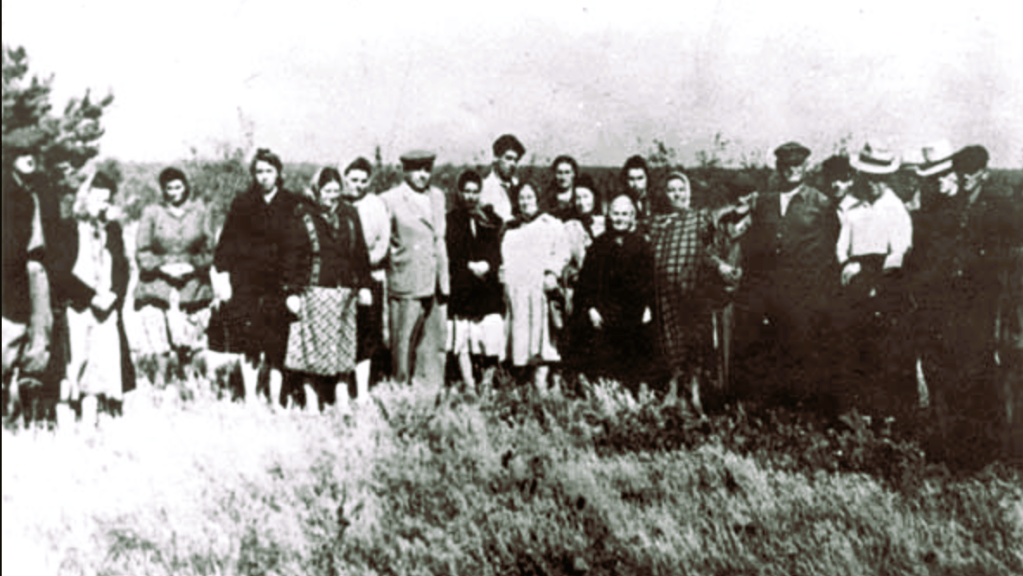
Graebe gave the following eyewitness account:
“My foreman and I went directly to the pits. Nobody bothered us. Now I heard rifle shots in quick succession from behind one of the earth mounds. The people who had got off the trucks—men, women and children of all ages—had to undress upon the order of an SS man who carried a riding or dog whip. They had to put down their clothes in fixed places, sorted according to shoes, top clothing and undergarments. I saw heaps of shoes of about 800 to 1000 pairs, great piles of under-linen and clothing. Without screaming or weeping these people undressed, stood around in family groups, kissed each other, said farewells, and waited for a sign from another SS man, who stood near the pit, also with a whip in his hand. During the fifteen minutes, I stood near, I heard no complaint or plea for mercy. I watched a family of about eight persons, a man and a woman both of about fifty, with their children of about twenty to twenty-four, and two grown-up daughters about twenty-eight or twenty-nine. An old woman with snow-white hair was holding a one-year-old child in her arms and singing to it and tickling it. The child was cooing with delight. The parents were looking on with tears in their eyes. The father was holding the hand of a boy about ten years old and speaking to him softly; the boy was fighting his tears. The father pointed to the sky, stroked his head and seemed to explain something to him. At that moment the SS man at the pit started shouting something to his comrade. The latter counted off about twenty persons and instructed them to go behind the earth mound. Among them was the family I have just mentioned. I well remember a girl, slim with black hair, who, as she passed me, pointed to herself and said, “Twenty-three years old.” I walked around the mound and found myself confronted by a tremendous grave. People were closely wedged together and lying on top of each other so that only their heads were visible. Nearly all had blood running over their shoulders from their heads. Some of the people shot were still moving. Some were lifting their arms and turning their heads to show that they were still alive. The pit was nearly two-thirds full. I estimated that it already contained about a thousand people. I looked for the man who did the shooting. He was an SS man, who sat at the edge of the narrow end of the pit, his feet dangling into the pit. He had a Tommy gun on his knees and was smoking a cigarette. The people, completely naked, went down some steps which were cut in the clay wall of the pit and clambered over the heads of the people lying there to the place to which the SS man directed them. They lay down in front of the dead or wounded people; some caressed those who were still alive and spoke to them in a low voice. Then I heard a series of shots. I looked into the pit and saw that the bodies were twitching or the heads lying already motionless on top of the bodies that lay beneath them. Blood was running from their necks. The next batch was approaching already. They went down into the pit, lined themselves up against the previous victims and were shot.”eneath them. Blood was running from their necks. The next batch was approaching already. They went down into the pit, lined themselves up against the previous victims and were shot.”
Graebe was the only German to testify for the prosecution at the Nuremberg Trials. In 1948, after receiving threats against his life, Graebe decided to emigrate to the United States. Soon after settling with his family in San Francisco, he resumed his efforts to bring to justice German war criminals residing in the German Federal Republic. His constant preoccupation with the Nazi past went against the grain of postwar German society, and it made him something of a persona non-grata in his native country.
On 23 March 1965, Yad Vashem recognized Hermann Friedrich Graebe as Righteous Among the Nations.
Sources
https://www.yadvashem.org/righteous/statistics.html
Donation
Your readership is what makes my site a success, and I am truly passionate about providing you with valuable content. I have been doing this at no cost and will continue to do so. Your voluntary donation of $2 or more, if you are able, would be a significant contribution to the continuation of my work. However, I fully understand if you’re not in a position to do so. Your support, in any form, is greatly appreciated. Thank you. To donate, click on the credit/debit card icon of the card you will use. If you want to donate more than $2, just add a higher number in the box left from the PayPal link. Your generosity is greatly appreciated. Many thanks.
$2.00
 History of Sorts
Leave a comment