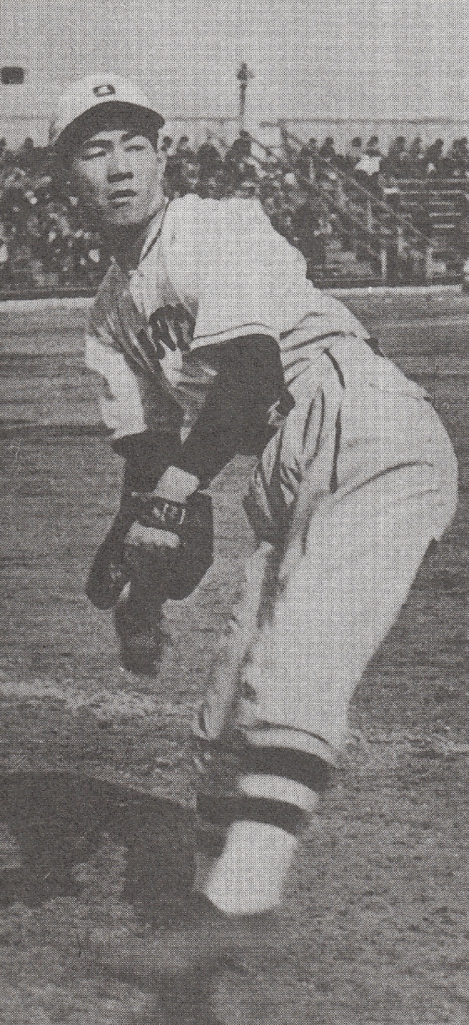
The story of Eiji Sawamura is both a tale of extraordinary talent and a poignant reminder of the human cost of war. Known as one of Japan’s greatest baseball players, Sawamura’s life was a trajectory of brilliance interrupted by history. His journey from prodigious athlete to soldier aboard the ill-fated SS Hawaii Maru is emblematic of an era when sports, national pride, and global conflict collided in tragic ways.
I. The Making of a Baseball Prodigy
Eiji Sawamura was born on February 1, 1917, in Ureshino, a small town in Mie Prefecture. From a young age, he demonstrated an unusual aptitude for throwing objects with speed and accuracy. Stories from his childhood recount him hurling pebbles at cicadas in the fields, perfecting the motion that would later define his pitching. His father recognized the potential in his son’s natural talent and introduced him to the baseball, effectively igniting the spark that would make Sawamura a national figure.
Sawamura’s adolescent years were marked by an almost obsessive dedication to pitching. By high school, he was already a standout, capturing attention at the prestigious Koshien tournaments, the proving grounds for Japan’s elite young athletes. His pitching style combined a fierce fastball with a devastating curve, making him a nightmare for opposing hitters. Beyond his physical gifts, he carried a composure and intensity that set him apart: the mound was his stage, and every pitch a controlled act of precision.
II. The 1934 All-Star Game: Facing the Giants of Baseball
Sawamura’s fame reached its zenith in 1934, when he was selected to face a touring team of American Major League Baseball stars, including Babe Ruth, Lou Gehrig, Jimmie Foxx, and Charlie Gehringer. At just 17 years old, he struck out Ruth, Gehrig, and Foxx—a feat that earned him legendary status in Japan and admiration abroad. Although the Japanese team lost the game 1–0, Sawamura’s performance cemented his reputation as a prodigious talent, capable of challenging the greatest players in the world.
The 1934 exhibition match became a defining moment not only in Sawamura’s career but in Japanese baseball history. It demonstrated the country’s growing proficiency in the sport and provided a symbolic victory in the form of personal achievement, even amid defeat. The young pitcher’s composure and skill became the benchmark for future generations.
III. Professional Career and National Icon
Sawamura joined the Tokyo (Yomiuri) Giants in 1936, where he continued to excel. He threw the first no-hitter in Japanese professional baseball and recorded several others during his short career. Known for his precise mechanics and a fastball that seemed to defy physics, he became a figure of national pride. Fans flocked to the stadiums to witness the young pitcher, who combined athletic brilliance with humility and discipline.
His dominance on the mound earned him more than accolades; it also made him a symbol of hope during a time when Japan was increasingly embroiled in military conflicts across Asia. Yet, even as he achieved professional success, global events were encroaching upon his life, altering the trajectory of his promising career.
IV. From Baseball Diamond to Battlefield
With the escalation of World War II, Sawamura’s career was repeatedly interrupted by military service. Drafted in 1938, and then again in 1941, he served in China and later in the Philippines. The war years were harsh, and Sawamura, like many of his contemporaries, was forced to navigate the tension between national duty and personal ambition.
Despite his service, Sawamura maintained a connection to baseball. Accounts suggest that he spoke quietly to fellow soldiers about games, pitches, and strategies, keeping the essence of his life’s passion alive even amid the hardships of war. Yet, the battlefield was no place for the precision and artistry of a baseball diamond; it was dangerous, chaotic, and indifferent to talent.
V. The SS Hawaii Maru and the Final Voyage
In late 1944, Sawamura was aboard the SS Hawaii Maru, a Japanese transport ship tasked with moving troops to reinforce Japanese positions in the Philippines. The ship, like many transport vessels at the time, was overcrowded, poorly equipped, and vulnerable to attack.
On December 2, 1944, while off the coast of Luzon, the ship was torpedoed by the American submarine USS Sea Devil. The attack was swift and catastrophic. Soldiers, including Sawamura, were trapped in flooding compartments, and many perished before reaching safety. Sawamura, at just 27 years old, died during the sinking. His body was never recovered.
The SS Hawaii Maru incident underscores the broader tragedy of wartime logistics in the Pacific theater. Hundreds of soldiers and civilians lost their lives in similar sinkings, and Sawamura’s death serves as a stark reminder that war does not discriminate between athletes, civilians, or soldiers. Even national heroes were vulnerable to the randomness of wartime mortality.
VI. Legacy and Memory
Despite his untimely death, Sawamura’s legacy endured. The Sawamura Award, established in 1947, became the highest honor for pitchers in Japan, analogous to Major League Baseball’s Cy Young Award. His feats, particularly the 1934 exhibition against MLB stars, remain a source of national pride and inspiration.
Sawamura’s story is remembered not only for his skill but for the juxtaposition of extraordinary potential and tragic loss. He symbolizes a generation of Japanese athletes whose careers and lives were cut short by global conflict, and whose contributions to sports history remain profound despite their brevity.
VII. Reflection: Talent, Tragedy, and History
The intertwining narratives of Eiji Sawamura and the SS Hawaii Maru illuminate the human cost of war and the fragility of greatness. Sawamura’s rise from a small-town boy throwing pebbles to a national baseball icon represents the heights of personal achievement. His death aboard the Hawaii Maru reminds us that even the most celebrated lives are vulnerable to historical forces beyond their control.
In remembering Sawamura, we honor both his achievements on the baseball field and his sacrifice as a soldier. The story is a meditation on talent, ambition, and mortality—a narrative where sport and history converge, where personal brilliance is ultimately inseparable from the broader currents of human experience.
Conclusion
Eiji Sawamura’s life was a brilliant flare, illuminating Japanese baseball and national consciousness in the 1930s and 1940s. The sinking of the SS Hawaii Maru cut short a life of extraordinary potential, leaving behind a legacy that is as inspiring as it is tragic. He remains a symbol of youthful talent, national pride, and the fragility of life in times of war—an enduring figure whose story resonates far beyond the baseball diamond.
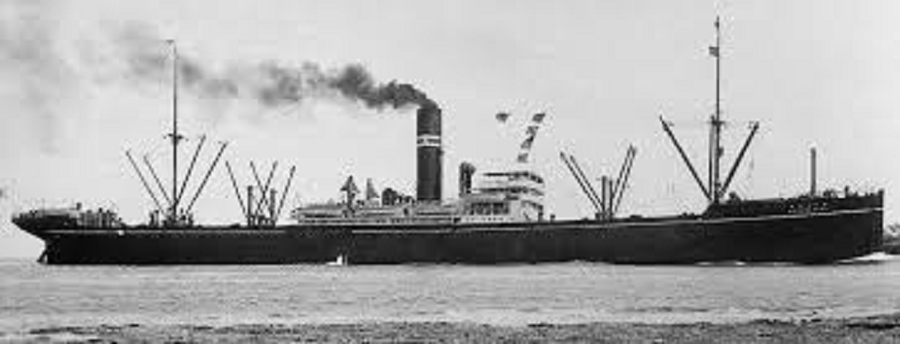
The Tragic Voyage of the Hawaii Maru: From Ocean Liner to Wartime Disaster
Introduction
The Hawaii Maru was a Japanese ocean liner whose history spans the golden age of global passenger travel to one of the deadliest maritime disasters of World War II. Originally built for commercial service, the ship was eventually requisitioned by the Japanese military, converted into a troop transport, and later used to carry prisoners of war. Its story reflects broader themes of 20th-century maritime history: globalization, militarization, and the profound human cost of conflict.
Origins and Pre-War Service
Constructed in 1915 by the Kawasaki Shipbuilding Corporation in Kobe for Osaka Shosen Kaisha, one of Japan’s leading shipping companies, the Hawaii Maru was launched as a 9,482-ton passenger-cargo liner.
During the 1920s and 1930s, the ship sailed international routes connecting Japan with North and South America, Africa, and Asia. Its ports of call included Vancouver, Seattle, New Orleans, Cape Town, Buenos Aires, Hong Kong, Singapore, Colombo, Mombasa, Zanzibar, Dar es Salaam, and Durban.
As a civilian liner, the Hawaii Maru facilitated international commerce, cultural exchange, and passenger travel. For over two decades, it served as a vital link in Japan’s maritime network, symbolizing the era’s growing global interconnectedness.
Requisition and Wartime Role
In September 1941, on the eve of World War II, the Hawaii Maru was requisitioned by the Japanese Imperial Army and converted into a troop transport—a common wartime practice of converting civilian vessels to support military logistics across the Pacific and Southeast Asia.
In its early wartime service, the ship participated in military campaigns, including the invasion of the Philippines, transporting Japanese soldiers and supplies. Later, it carried prisoners of war—primarily Dutch and British captives—under harsh conditions. Overcrowding, disease, and inadequate provisions made these voyages deadly, reflecting the notorious “hell ship” system employed by the Japanese military.
Despite multiple attacks, including a near-fatal torpedo strike by an American submarine in 1944, the Hawaii Maru survived until its final voyage.
Final Voyage and Sinking
On November 30, 1944, the Hawaii Maru departed Moji, Japan, bound for Miri, Borneo, via Manila, as part of a convoy. In the early hours of December 2, the convoy was attacked by the U.S. Navy submarine USS Sea Devil in the East China Sea near Yakushima Island.
Struck by torpedoes, the Hawaii Maru sank rapidly—in as little as 75 seconds. The death toll was catastrophic: approximately 1,843 soldiers of the Imperial Japanese Army’s 23rd Infantry Division, 60 additional troops, 83 gunners, and 148 crew members perished. Among the dead was the famed Japanese baseball pitcher Eiji Sawamura. The speed of the sinking left almost no chance for survivors, marking it as one of the deadliest maritime disasters of the war.
Human Consequences
The tragedy of the Hawaii Maru underscores the immense human cost of wartime logistics. Many victims were young soldiers en route to deployment, while previous voyages had carried prisoners under deadly conditions.
The disaster illustrates that wartime fatalities extended far beyond the battlefield. Civilian-built ships repurposed for military use, like the Hawaii Maru, often became sites of mass death when attacked by submarines or aircraft. The sheer scale of loss in a single incident highlights both the vulnerability of transport ships and the human toll of maritime warfare.
Historical Significance and Legacy
The history of the Hawaii Maru is significant for several reasons:
Conversion of Civilian Ships: Its transformation from a passenger-cargo liner to a troop and POW transport demonstrates the wartime necessity of repurposing civilian maritime assets.
Role in POW Transport: Its use to carry prisoners under brutal conditions exemplifies the broader system of Japanese “hell ships.”
Maritime Disaster: Nearly two thousand deaths make it one of the deadliest transport ship losses of World War II.
Obscured Memory: Despite the scale of the tragedy, the Hawaii Maru remains relatively unknown in popular WWII narratives, highlighting how some wartime disasters are under-recognized.
Human Cost of War Logistics: The ship’s story emphasizes that troop movements, transport convoys, and other logistical operations could be as deadly as combat itself.
Conclusion
The Hawaii Maru embodies both the promise of global maritime travel and the perils of wartime service. From its early decades as a civilian liner connecting continents to its final catastrophic voyage as a troop transport, the ship’s history traces the transformation of peace into conflict and commerce into tragedy.
Nearly two thousand lives were lost in its final moments—a stark reminder of the hidden human costs of war. Remembering the Hawaii Maru and similar vessels is essential for understanding the full scope of World War II’s maritime tragedies and the silent suffering that accompanied the visible battles of the era.
sources
https://www.graptolite.net/nippon/Hawaii_Maru.html
https://discovernikkei.org/en/nikkeialbum/items/9949/
https://www.combinedfleet.com/Hawaii_t.htm
https://en.wikipedia.org/wiki/Eiji_Sawamura
https://mainichi.jp/english/articles/20210501/p2a/00m/0na/015000c
https://phillipwats.omeka.net/items/show/8
Donation
Your readership is what makes my site a success, and I am truly passionate about providing you with valuable content. I have been doing this at no cost and will continue to do so. Your voluntary donation of $2 or more, if you are able, would be a significant contribution to the continuation of my work. However, I fully understand if you’re not in a position to do so. Your support, in any form, is greatly appreciated. Thank you. To donate, click on the credit/debit card icon of the card you will use. If you want to donate more than $2, just add a higher number in the box left from the PayPal link. Your generosity is greatly appreciated. Many thanks.
$2.00
 History of Sorts
Leave a comment