
On 20 December 1915, the Gallipoli Campaign effectively ended not with a final charge or a decisive victory, but with silence. In the early hours of that winter morning, the last Allied troops slipped away from the beaches of Anzac Cove and Suvla Bay, leaving behind empty trenches, abandoned positions, and a battlefield that had consumed months of bloodshed for no strategic gain. The evacuation, completed without alerting Ottoman forces, stands as one of the most striking paradoxes of the First World War: a flawless military withdrawal concluding one of the most costly and ill-conceived campaigns of the conflict.
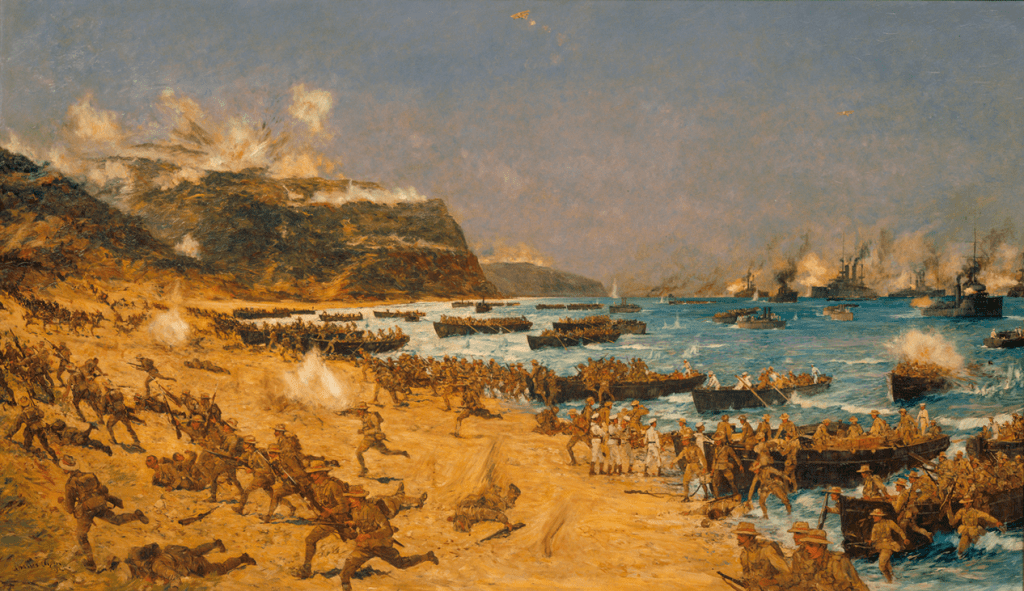
The Gallipoli Campaign had begun in April 1915 as an ambitious attempt by the Allies—principally Britain, France, Australia, and New Zealand—to force the Dardanelles, knock the Ottoman Empire out of the war, and open a sea route to Russia. Strategically bold but operationally naive, the plan underestimated Ottoman resistance, overestimated naval power, and failed to account for the peninsula’s unforgiving terrain. By the time December arrived, the campaign had devolved into stalemate. The soldiers clung to narrow strips of coastline under constant fire, enduring disease, heat, flies, and later the bitter cold. Progress was negligible, casualties were staggering, and morale was exhausted.
It was in this context that the decision to evacuate was made. Politically, Gallipoli had become an embarrassment; militarily, it was untenable. Yet withdrawal carried its own dangers. Conventional wisdom held that retreat under fire would result in catastrophic losses. Ironically, after months of mismanagement and tactical failure, Allied command executed the evacuation with meticulous precision. Over several nights in mid-December, tens of thousands of troops were removed with scarcely a shot fired by the enemy. Ingenious deceptions—such as self-firing rifles rigged with dripping water—masked the withdrawal until it was complete. By 20 December 1915, Anzac and Suvla were empty.
For the soldiers who left that morning, the evacuation was a mixture of relief and bitterness. Relief, because survival had replaced endurance as the immediate concern. Bitterness, because the sacrifices of the previous eight months seemed rendered meaningless. Friends had died for hills that were now simply abandoned. The land they left behind was soaked with memory as much as blood. Gallipoli had become a graveyard without headstones, and departure did not erase that fact.
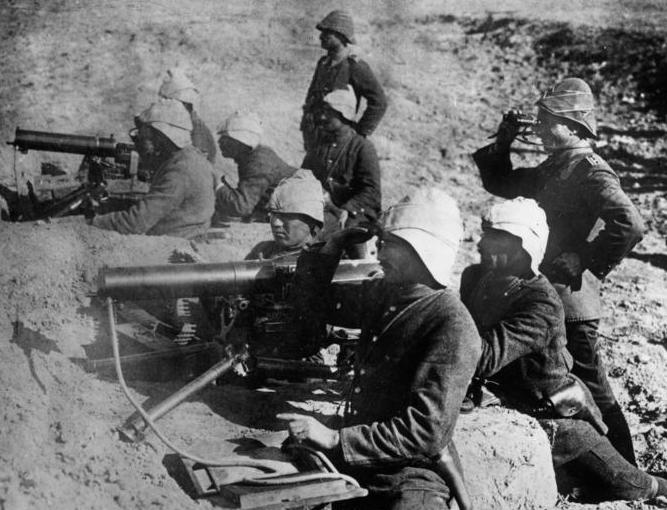
From the Ottoman perspective, Gallipoli was a defining victory. The successful defense of the peninsula preserved Istanbul and solidified Ottoman confidence at a moment when the empire’s survival was in doubt. It also elevated figures such as Mustafa Kemal, whose leadership during the campaign laid the foundations for his later role as Atatürk, the founder of modern Turkey. For the Ottomans, 20 December 1915 marked not an ending, but a validation: proof that they could stand against the great powers of Europe.
In Australia and New Zealand, Gallipoli assumed a different meaning altogether. Militarily, it was a defeat. Culturally and politically, it became a cornerstone of national identity. The experience of Anzac troops—ordinary citizens fighting and dying far from home—shaped a narrative of courage, endurance, and mateship that continues to resonate. The date 20 December does not carry the same commemorative weight as the April landings, but it represents the moment when the Anzac story transitioned from lived experience to collective memory.
The evacuation also serves as a cautionary lesson in leadership and strategy. Gallipoli demonstrated how flawed assumptions at the highest levels can cascade into disaster on the ground. It exposed the consequences of inadequate planning, poor coordination, and underestimation of an adversary. That the campaign’s most successful operation was its final retreat only sharpens this lesson.
On 20 December 1915, the guns fell silent at Anzac and Suvla, but Gallipoli did not end. It continued in the lives of veterans, in the politics of nations, and in the annual rituals of remembrance. The beaches were abandoned, yet the meaning of the campaign only began to take shape once the last boat pulled away. Gallipoli’s legacy is not found in victory or defeat alone, but in the enduring reminder of war’s cost—and the quiet, haunting power of a battlefield left behind.
sources
https://www.onthisday.com/articles/gallipoli-guts-glory-and-defeat
https://en.wikipedia.org/wiki/Gallipoli_campaign
https://www.dva.gov.au/media/media-backgrounders/gallipoli
https://www.ireland.ie/en/greatbritain/london/news-and-events/news-archive/the-irish-at-gallipoli/
 History of Sorts
Leave a comment