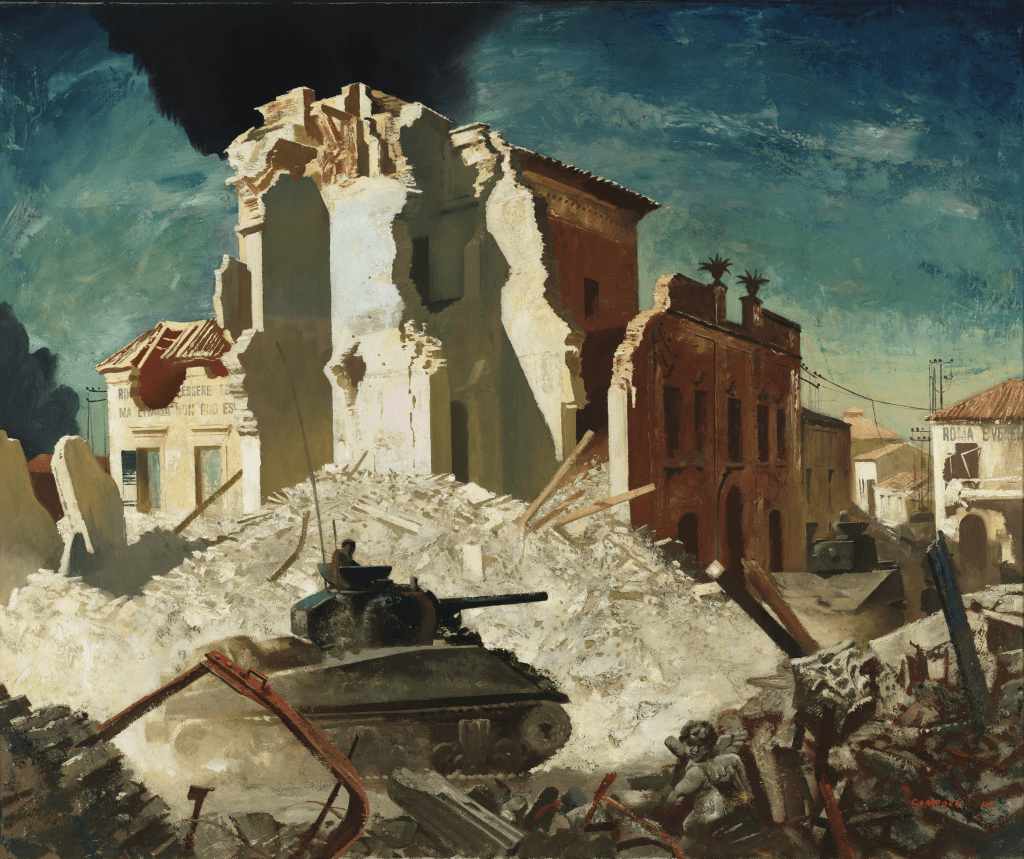
The Battle of Ortona, fought in December 1943, stands as one of the most brutal and consequential engagements involving Canadian forces during the Second World War. Often overshadowed by larger operations in Normandy or the Eastern Front, Ortona nonetheless occupies a central place in Canadian military history. The battle was not merely a contest for a small Adriatic port in southern Italy; it was a harrowing demonstration of the realities of modern urban warfare, marked by relentless close-quarters combat, heavy civilian destruction, and extraordinary human cost. By the time the fighting ended, Ortona had earned the grim nickname “Little Stalingrad.”
Canada’s Little Stalingrad in Italy
In December 1943, the quiet Adriatic town of Ortona became the scene of one of the most savage battles fought by Canadian soldiers during the Second World War. Over eight days of relentless urban combat, Canadian and German troops fought at point-blank range through ruined streets and shattered buildings. The struggle was so intense that soldiers themselves began calling it “Little Stalingrad.” Though Ortona was small, the battle left an outsized mark on Canada’s military history and on the town that bore the scars of war.

Where Ortona Fits in the War
By late 1943, the Allies had already landed in Sicily and southern Italy. Italy’s surrender in September did not end the fighting; instead, German forces took control of the country and constructed a series of defensive lines across the peninsula. Their goal was not outright victory but delay—forcing the Allies to fight for every mile northward.
Ortona lay on Italy’s eastern coast, overlooking the Adriatic Sea. While not a major city, it sat near important supply routes and ports supporting the German defensive system. Capturing Ortona would help secure the Allied flank and maintain pressure on German forces as they defended the larger Gustav Line farther inland.
The responsibility for taking the town fell largely to the 1st Canadian Infantry Division, part of the British Eighth Army. For Canadian troops, Ortona would become their first true test of large-scale urban warfare.
The Battlefield: Why Ortona Was So Deadly
Ortona’s physical layout strongly favored defenders:
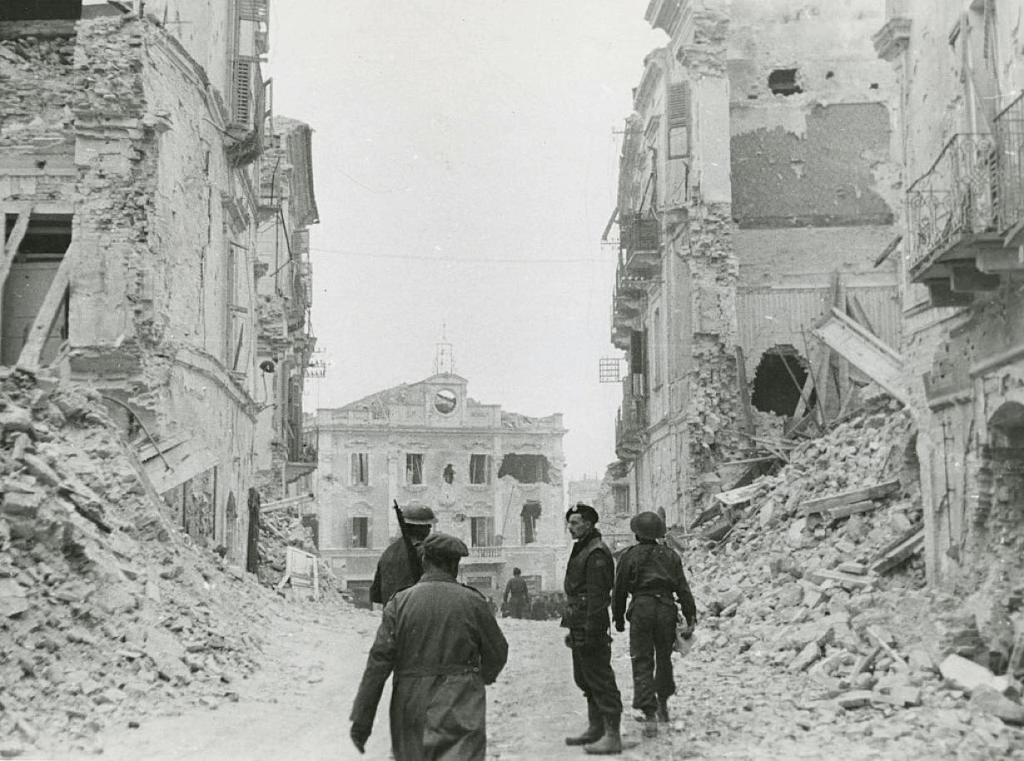
Steep cliffs dropped sharply into the sea
Narrow streets limited movement and visibility
Stone buildings provided strong defensive positions
Rivers and ravines constrained Canadian approaches
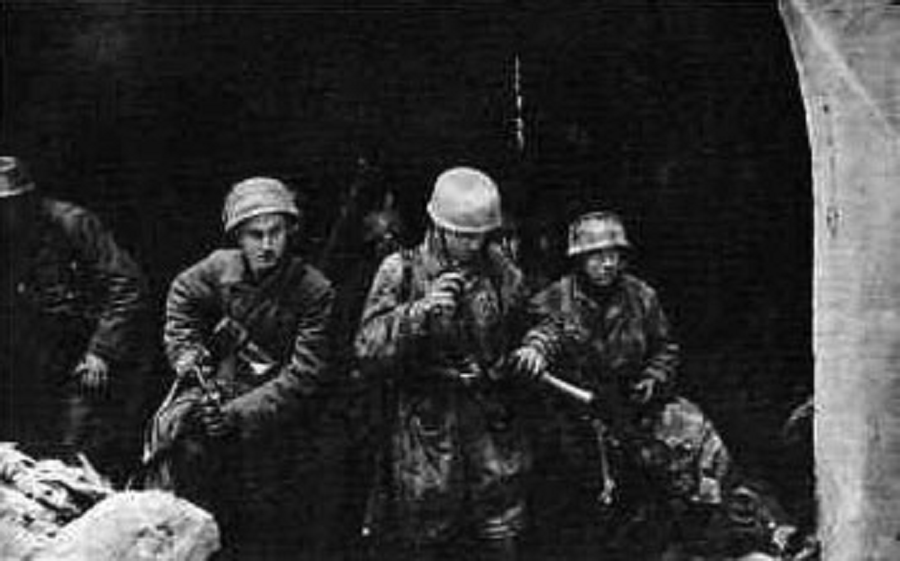
German defenders belonged to the 1st Parachute Division, elite Fallschirmjäger units known for discipline, toughness, and defensive skill. They turned Ortona into a fortified maze, filling streets with mines, wiring buildings with explosives, and positioning machine guns to cover every approach.
Timeline of the Battle of Ortona
Early December 1943
Canadian forces fight their way north along the Adriatic coast, crossing the Moro River under heavy fire.
December 20
Canadian infantry enter Ortona. Initial attacks reveal the strength of German defenses and the difficulty of advancing through the town.
December 21–26
The battle devolves into brutal house-to-house fighting. Canadian troops adopt “mouse-holing,” blasting through walls to avoid exposed streets. Progress is measured in meters, not miles.
December 27
German paratroopers withdraw during the night, having delayed the Allies long enough to serve their strategic purpose.
December 28
Canadian forces secure Ortona—now largely destroyed.
Fighting House by House
Combat in Ortona was intimate and terrifying. Streets were death traps, often covered by German machine guns or rigged with mines. To survive, Canadian soldiers adapted quickly. Using explosives, they punched holes through walls, moving from building to building without stepping outside. Each room had to be cleared by hand, often with grenades, bayonets, and submachine guns.
This style of fighting placed enormous psychological strain on soldiers. There was no front line in the traditional sense—danger existed in every doorway, staircase, and pile of rubble. Progress was slow, exhausting, and deadly.
Civilians and the Destruction of the Town
Although many civilians fled before the battle, others remained trapped in cellars beneath collapsing buildings. Ortona’s historic center was almost completely destroyed by artillery fire, demolitions, and close-quarters combat. Churches, homes, and public buildings were reduced to ruins.
The battle blurred the line between military and civilian space, highlighting a grim reality of urban warfare: entire communities can become battlefields.
Victory Without Breakthrough
When German forces withdrew, they did so deliberately and in good order. The fall of Ortona did not collapse the Gustav Line or lead to a rapid Allied advance. Instead, it represented another costly step in the slow, grinding campaign up the Italian peninsula.
For Canadian soldiers, however, Ortona was a defining moment. It proved that they could fight—and adapt—against some of the best troops Germany could field.
Casualties and Cost
The price of Ortona was staggering:
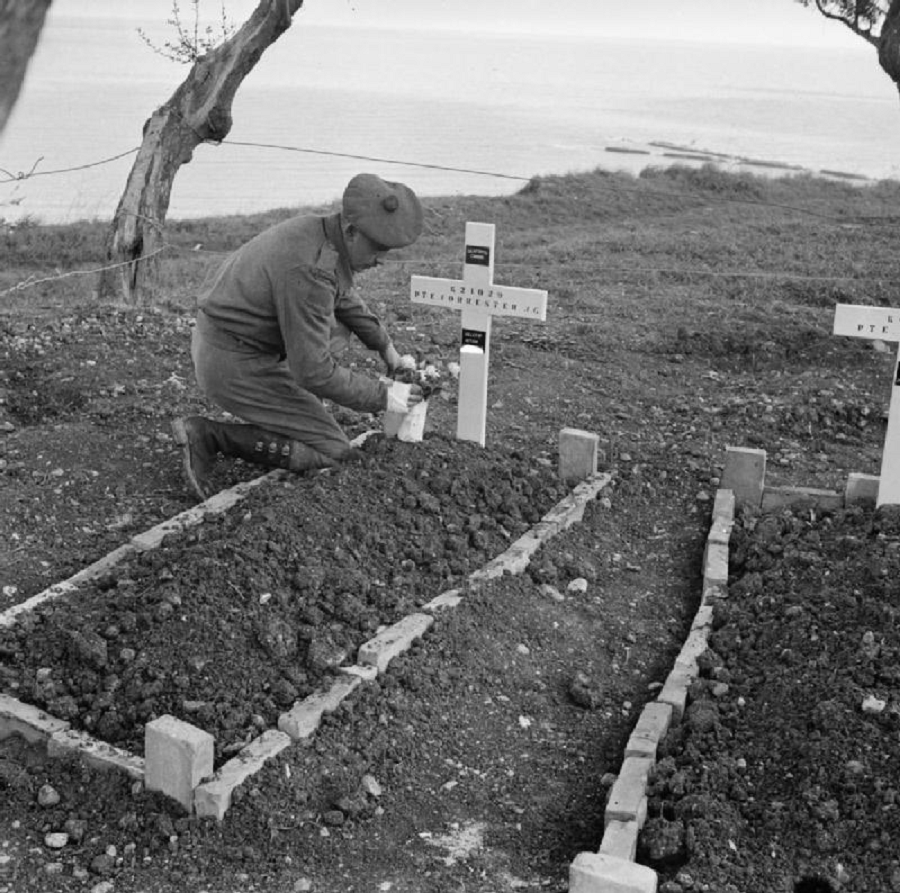
Over 2,300 Canadian casualties in December 1943
More than 500 Canadians killed
Heavy but uncertain German losses
Veterans later described Ortona as the most frightening experience of their service. Many who survived carried the psychological wounds for the rest of their lives.
Legacy and Historical Significance
The Battle of Ortona holds lasting significance for several reasons. Militarily, it provided hard-earned lessons in urban combat that would later inform Allied operations in Northwest Europe. Tactically, it demonstrated both the resilience of German defensive doctrine and the adaptability of Canadian infantry under extreme conditions.
For Canada, Ortona became a symbol of sacrifice and professionalism. The battle reinforced Canada’s reputation as a capable and determined fighting force, willing to endure severe losses to accomplish its objectives. It also contributed to a growing national consciousness of Canada’s distinct role in the Second World War, separate from but allied with British command.
Today, Ortona is remembered through memorials, regimental histories, and the accounts of veterans. The town itself has been rebuilt, but the scars of 1943 remain embedded in its collective memory. In Canadian military history, Ortona stands not as a tale of sweeping victory, but as a sobering reminder of the true cost of war—measured not only in territory gained, but in lives irrevocably changed.
sources
https://www.liberationroute.com/en/stories/82/the-battle-of-ortona
https://en.wikipedia.org/wiki/Battle_of_Ortona
https://thecanadianencyclopedia.ca/en/article/battle-of-ortona
Donation
Your readership is what makes my site a success, and I am truly passionate about providing you with valuable content. I have been doing this at no cost and will continue to do so. Your voluntary donation of $2 or more, if you are able, would be a significant contribution to the continuation of my work. However, I fully understand if you’re not in a position to do so. Your support, in any form, is greatly appreciated. Thank you. To donate, click on the credit/debit card icon of the card you will use. If you want to donate more than $2, just add a higher number in the box left from the PayPal link. Your generosity is greatly appreciated. Many thanks.
$2.00
 History of Sorts
Leave a comment