Before you all start writing to me about the obvious error in the title, let me assure you it’s not an error, neither is it one of his plays.
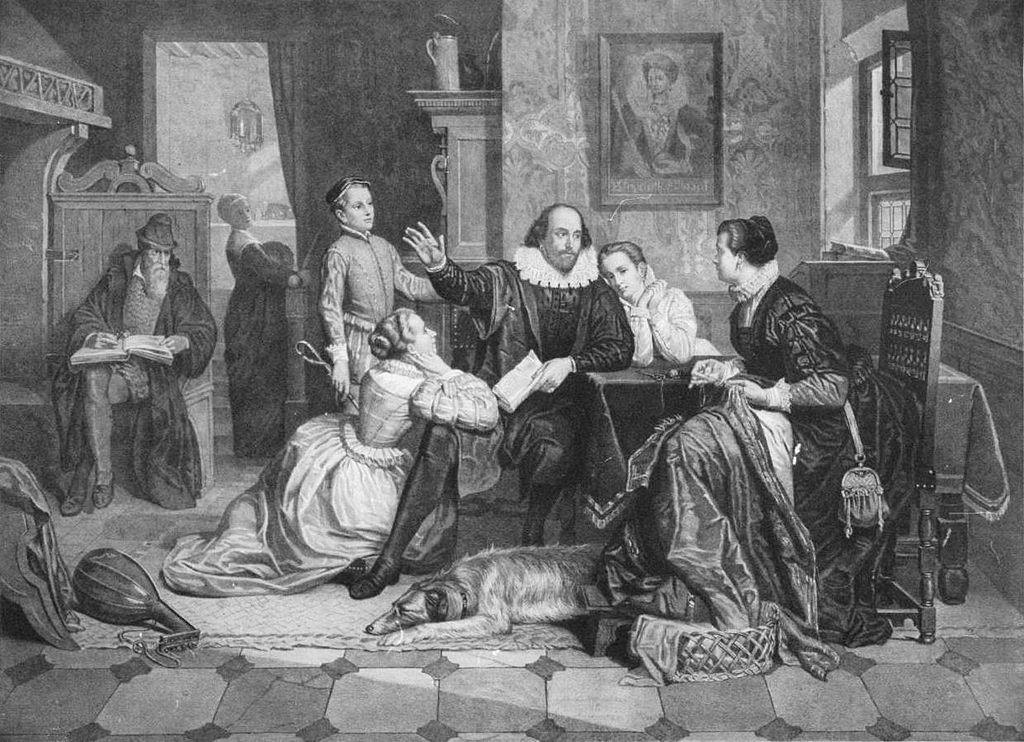
William Shakespeare had 3 children, 2 daughters Susanna and Judith and one son called Hamnet.
Susanna was born in May 1583, six months after the wedding of her parents Anne Hathaway and William Shakespeare. The baptism of Susanna Shakespeare took place in Stratford Parish Church on May 26th 1583. Two years later in 1585 Anne and William’s twins, Hamnet and Judith Shakespeare, were born. The baptism of Hamnet and Judith Shakespeare took place in Stratford Parish Church on February 2nd 1585.The twins were named after two very close friends of William and Anne, the baker Hamnet Sadler and his wife, Judith.
Little is known about the life of William Shakespeare’s son Hamnet. He was raised in his grandfather’s house predominantly by his mother Anne as his father’s work in Theatre was based in London. There are no records that show that Hamnet Shakespeare ever attended a school although it was customary for a boy from Hamnet’s background to have had an education. Neither of Hamnet’s sisters had an education and neither of them were able to read or write. There were constant outbreaks of the Bubonic Plague, otherwise known as the Black Death or the Black Plague, during Elizabethan times and in 1596 Hamnet contracted the deadly disease and died at the age of eleven.Shakespeare’s son Hamnet was buried in Stratford on August 11, 1596.

Scholars have long speculated about the influence – if any – of Hamnet’s death upon William Shakespeare’s writing. Unlike his contemporary Ben Jonson, who wrote a lengthy piece on the death of his own son, Shakespeare, if he wrote anything in response, did so more subtly. At the time his son died, Shakespeare was writing primarily comedies, and that writing continued until a few years after Hamnet’s death, when his major tragedies were written. It is possible that his tragedies gained depth from his experience.
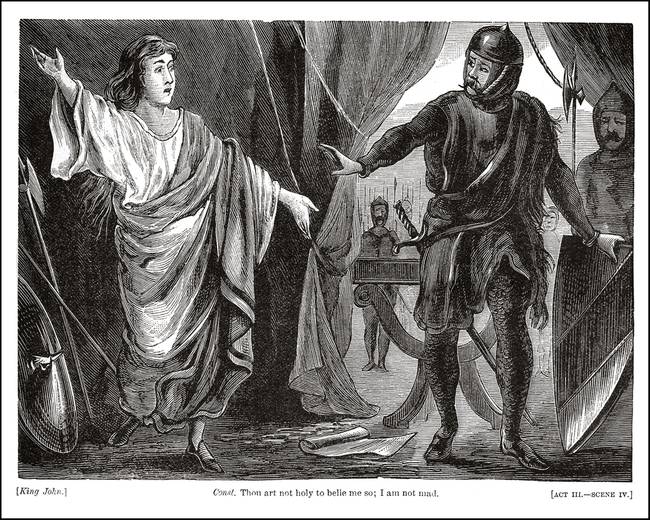
Many scholars argue that the pain of losing a beloved son is echoed most strongly in the words of Constance in the history play, King John:
CONSTANCE
Grief fills the room up of my absent child,
Lies in his bed, walks up and down with me,
Puts on his pretty looks, repeats his words,
Remembers me of all his gracious parts,
Stuffs out his vacant garments with his form.
Then, have I reason to be fond of grief?
Fare you well: had you such a loss as I,
I could give better comfort than you do.
I will not keep this form upon my head,
When there is such disorder in my wit.
O Lord! my boy, my Arthur, my fair son!
My life, my joy, my food, my all the world!
(King John, Act III, Scene 4)
sources
https://www.bbc.com/culture/article/20251120-hamnet-and-the-mystery-around-shakespeares-wife-and-son
https://www.harpersbazaar.com/culture/film-tv/a69593641/hamnet-william-agnes-shakespeare-true-story/
Donation
Your readership is what makes my site a success, and I am truly passionate about providing you with valuable content. I have been doing this at no cost and will continue to do so. Your voluntary donation of $2 or more, if you are able, would be a significant contribution to the continuation of my work. However, I fully understand if you’re not in a position to do so. Your support, in any form, is greatly appreciated. Thank you. To donate, click on the credit/debit card icon of the card you will use. If you want to donate more than $2, just add a higher number in the box left from the PayPal link. Your generosity is greatly appreciated. Many thanks.
$2.00
 History of Sorts
Leave a comment