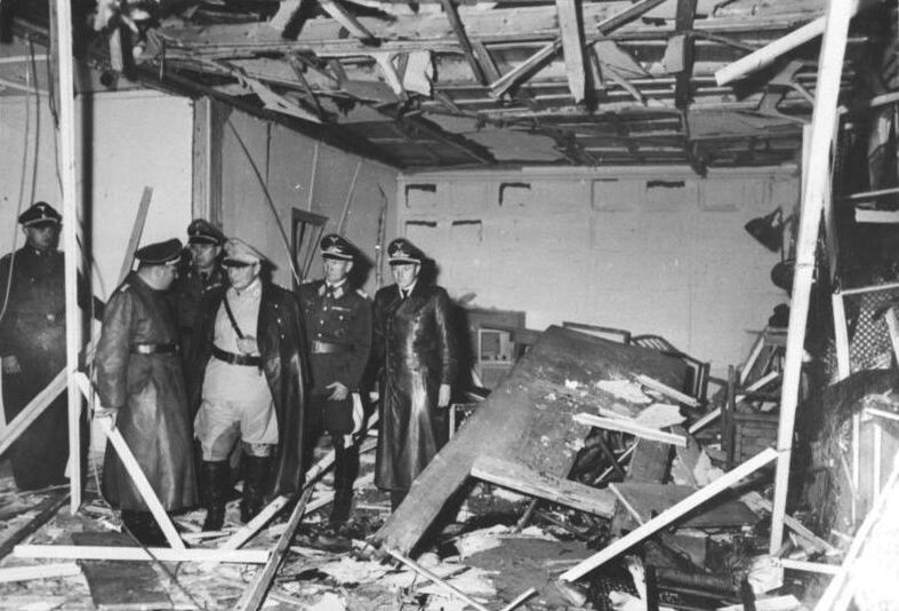
On July 20, 1944, a group of German officers planned a daring assassination attempt on Adolf Hitler. This attack was part of a broader conspiracy within the German army and administrative elite, known as the July 20 plot or Operation Valkyrie. In the early afternoon, Colonel Claus von Stauffenberg placed a bomb in a briefcase under the oak table in the Wolfsschanze (Wolf’s Lair), Hitler’s high-security headquarters in East Prussia. The explosion followed shortly after. However, Hitler survived the attempt. The rest, as they say, is history.
But imagine if things had gone differently. What if Stauffenberg’s bomb had finished its deadly work? What if Hitler had been killed that day? What would Europe have looked like then? In this article, we explore an alternative history, beginning on that sweltering July day in 1944, and take a leap into a world that might have become less torn apart.
The explosion is fatal. Hitler dies on the spot, along with several of his closest associates. Chaos erupts at the Wolfsschanze. Communications are disrupted. In Berlin, Operation Valkyrie is immediately set into motion. The conspirators seize power, taking control of the military apparatus, government buildings, and the capital.
Had Hitler died in the explosion, the conspirators would have immediately activated Operation Valkyrie. This plan was originally designed as a security measure to maintain order inside Germany during wartime, but the conspirators adapted it to stage a coup. Stauffenberg and his allies intended to use the Reserve Army to take control of Berlin and other key cities. They would announce that the Schutzstaffel, the powerful Nazi paramilitary force, had attempted a rebellion and that the army was restoring order. Under this pretext, military units would arrest leading Nazi officials and dismantle the regime’s power structure.
Several of the most prominent Nazi leaders were expected to be detained or removed from power. Figures such as Heinrich Himmler, Joseph Goebbels, and Hermann Göring would likely have been immediate targets of the coup. If the conspirators had successfully secured communication networks and convinced German military commanders that Hitler was dead, the Nazi government might have collapsed quickly. However, there was also a real possibility of conflict between army units loyal to the conspirators and SS forces still loyal to the Nazi leadership, potentially leading to a short but violent internal struggle.
The conspirators planned to establish a provisional government led by conservative military and civilian figures. Former army chief Ludwig Beck was expected to become head of state, while the conservative politician Carl Goerdeler was intended to serve as chancellor. Their goal was not only to remove the Nazi leadership but also to restore a more traditional German state based on law and order. While many of the conspirators opposed Hitler’s dictatorship and the crimes of the regime, they were not all committed democrats. Instead, they hoped to stabilize Germany and negotiate an end to the war, particularly with the Western Allies.
One of the most important questions following Hitler’s death would have been how the Allied powers responded. By 1944 the leaders of the Allied coalition—Franklin D. Roosevelt, Winston Churchill, and Joseph Stalin—had already agreed that Germany must accept unconditional surrender.
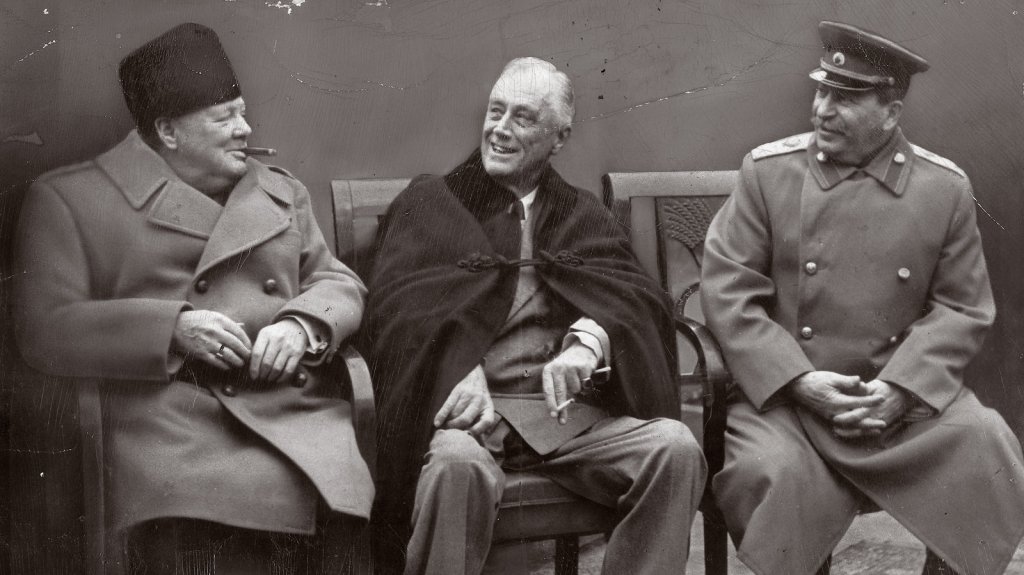
Even if a new German government had removed the Nazis, the Allies would likely still have insisted on Germany’s full capitulation. Nevertheless, the overthrow of Hitler might have opened the possibility for negotiations that could shorten the war in Europe.
Militarily, Germany’s strategic situation in 1944 was already extremely difficult. The Western Allies had launched the D-Day in June 1944, while Soviet forces were advancing rapidly in the east following major turning points such as the Battle of Stalingrad. Even with a new government, Germany would almost certainly still lose the war. However, Hitler’s death might have accelerated Germany’s surrender by several months. An earlier end to the conflict could have prevented further destruction in German cities and saved many civilian and military lives.
The Wehrmacht sides with the new government. A provisional government led by General Ludwig Beck, Carl Goerdeler, and other civilian forces is formed. They declare National Socialism a “historical aberration” and seek contact with the Allies. With this statement, they intend to explicitly distance themselves from Hitler’s ideology and make it clear that Germany wants to steer a different, more democratic course. By labeling National Socialism an “aberration,” they also attempt to suggest that this ideology did not represent the true spirit of the German people, but was rather a radical derailment that needed to be corrected.
This new government renounces racial ideology, promises reparations, and pledges full cooperation with international law. Public opinion in the West is divided, but in Washington and London, there is a sense of cautious optimism. In France, however, the reaction is more hesitant. The French government-in-exile under Charles de Gaulle does not automatically view the German coup plotters as allies. Many French people see them as part of the same military machine that has occupied their country since 1940. Furthermore, they fear that a peace with a “moderate” Germany might undermine their position as a full partner within the Allied alliance. There are other doubts as well: to what extent are the conspirators themselves complicit in previous war crimes?
The Persecution of the Jews: An Earlier End?
A painful but crucial aspect of this alternative history is the Holocaust. By July 1944, a large portion of the destruction has already been completed; Auschwitz is operating at full capacity. However, there are still hundreds of thousands of Jews in Hungary, the Netherlands, France, and other parts of Europe who have not yet been deported or murdered. The fall of Hitler could mean their salvation? Concentration camps might be liberated earlier, transports halted, and extermination facilities dismantled.
The systematic annihilation of the Roma, the disabled, and political opponents would also come to an end sooner. The scale of the Holocaust remains horrific, but in this scenario, tens of thousands—if not hundreds of thousands—of lives might have been saved. Furthermore, due to an earlier liberation, the evidence of these crimes could be documented more quickly and extensively, leaving a deeper impact on collective memory.
In this scenario, the trials against Nazi leaders would unfold differently. An international court of justice might be established more rapidly. The Nuremberg Trials still take place, but with a greater emphasis on cooperation with the new German government.
sources
 History of Sorts
Leave a comment