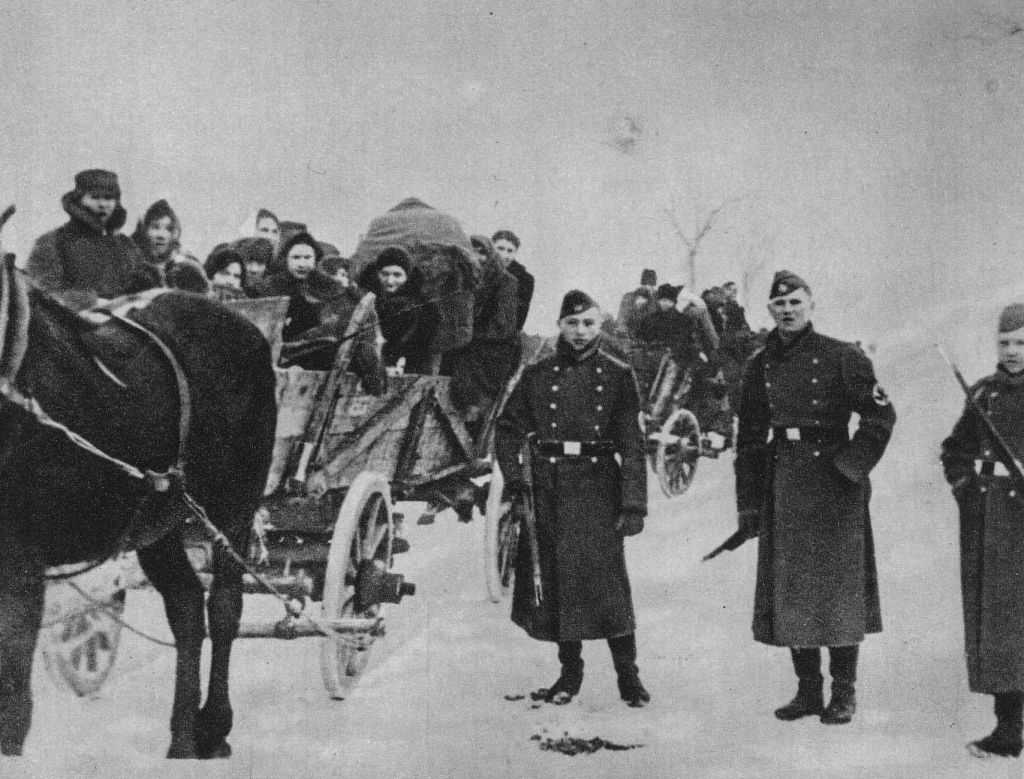
The death camp at Bełżec was located in southeastern Poland, within the Lublin District, near the remote village of Bełżec, on the Lublin–Lwów railway line. In early 1940, the Germans established several labour camps in and around Bełżec to house workers constructing the so-called “Otto Line,” a series of fortifications along the border with the Soviet Union. These Jewish labour camps were disbanded in October 1940.
The death camp itself was built from scratch as part of Aktion Reinhardt and was intended solely for the extermination of Jews. Bełżec was selected for logistical reasons: its railway station was connected to the major rail hub at Rawa Ruska (now in Ukraine), located approximately 14 km away. Key railway lines from Lwów and Stanisławów in the east, and from Rzeszów, Przemyśl, Tarnów, and Kraków in the southwest, all passed through Rawa Ruska. The chosen site for the camp was a railway siding about 400 metres from Bełżec village station and only 50 metres east of the main Lublin–Lwów line.
Construction was supervised by an unidentified red-haired SS officer known as “Der Meister” (“the Master”). Skilled Polish workers from Bełżec and the surrounding area initially built the gas chambers and barracks. These workers, who were reportedly well paid, were later replaced by Jewish labourers from nearby villages such as Lubycza Królewska and Mosty Małe.
After the northern half of the site was cleared of trees, construction began on 1 November 1941 and was completed by the end of February 1942. The camp occupied a relatively small, nearly square area: three sides measured approximately 275 metres, while the southern side measured about 265 metres. An adjacent timber yard was incorporated into the camp perimeter, which was enclosed by a double fence of barbed wire and chicken wire, camouflaged with tree branches. During later reorganisation, the space between the fences was filled with additional coils of barbed wire.
On the eastern side, a further barrier was erected along a steep slope using tree trunks fixed to wooden planks. In the camp’s later phase, a wooden fence was added along the road at the base of this slope. A line of trees was planted between the western fence and the Lublin–Lwów railway line to conceal the camp from view.
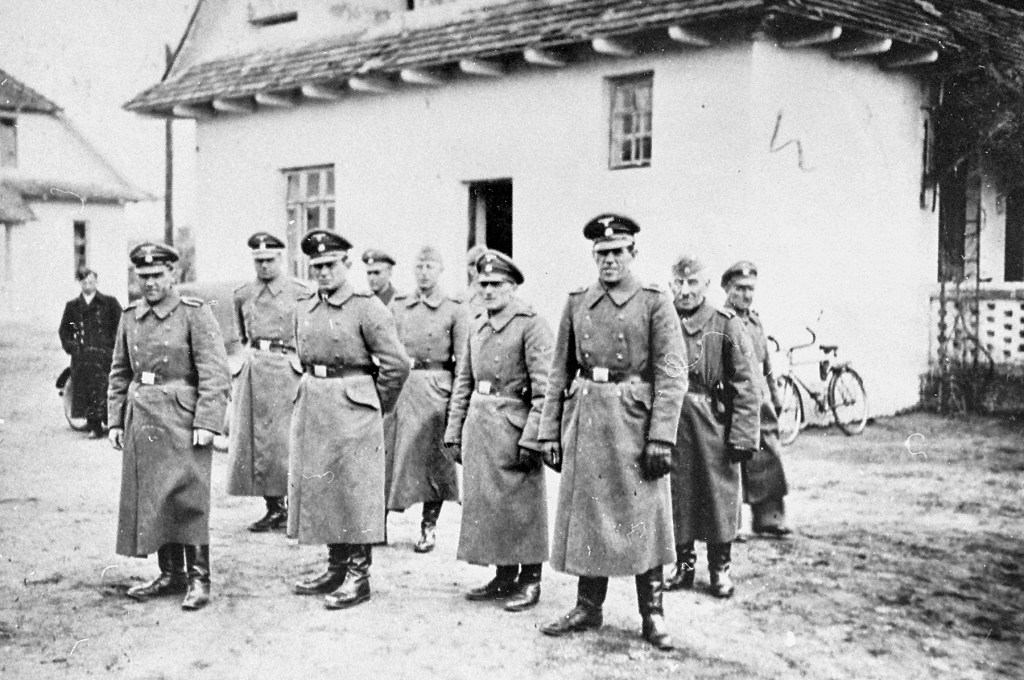
Four watchtowers were initially constructed: on the northeast and northwest sides, at the southwest corner, and at the westernmost point of the camp. The northeastern tower, built atop a concrete bunker at the highest point of the terrain, provided a commanding view of the entire site. A fifth tower, located centrally, overlooked the length of the camouflaged pathway known as “the sluice” or “the Tube,” which led to the gas chambers. The corner towers were manned by Ukrainian auxiliaries (Volksdeutsche) trained at the Trawniki SS camp and armed with rifles.
The central tower was equipped with a heavy machine gun and a searchlight. Additional towers were added during the camp’s second phase, including one near the end of the railway ramp. The guardhouse, staffed continuously by SS personnel and Ukrainian guards, stood near the main entrance on the western side. To the east of the gate was a compound for the Trawniki men, consisting of three barracks: two large huts and one smaller structure. These served respectively as living quarters, a medical and service facility (including a sickbay, dentist, and barber), and a kitchen with canteen.
Bełżec was divided into two main sections. Camp I, located in the northern and western areas, functioned as the reception zone and included the railway ramp, which could initially accommodate ten wagons at a time. Some accounts suggest that a second ramp was later added to increase capacity, although other testimonies indicate that transports were consistently processed in segments of ten wagons, with subsequent sections waiting at the station.
A 200-metre railway spur entered the camp through the northwestern gate. Inside, a secondary gate marked the point where the tracks diverged near the second ramp. An enclosed yard at the far end served as a holding area for overflow from large transports. In the later phase, two undressing barracks were constructed—one for women and children, and one for men.
Camp II, the extermination area, contained the gas chambers and large burial pits. These pits averaged approximately 20 by 30 metres in size and 6 metres in depth, and were located in the northeastern, eastern, and southern sections of the camp. Later, additional barracks were built in Camp II to house Jewish prisoners forced to work there. Camps I and II were separated by a camouflaged fence with two gates. From this boundary, a path led through the forest to an execution site.
A narrow, enclosed passage known as “die Schleuse” (“the sluice”), approximately 2 metres wide and 100 metres long, connected the undressing barracks in Camp I to the gas chambers in Camp II. This passage was concealed with camouflaged barbed wire and covered with netting to prevent aerial observation.
A key testimony regarding the camp’s construction was provided by Stanisław Kozak, a Polish worker involved in building the initial structures. In his statement of 14 October 1945, he described the construction of three barracks, including the first gassing facility, which was designed to resemble a bathing installation. The structure consisted of partitioned rooms with reinforced walls, sealed doors, and internal piping. Although outwardly presented as showers, these installations were in fact adapted for killing operations.
The initial gas chambers were rudimentary and constructed within a wooden barrack. Heating stoves were installed, likely to facilitate the use of bottled carbon monoxide gas and Zyklon B in colder conditions. However, the structure was poorly sealed; sand had to be piled against the exterior doors during operations to prevent gas leakage. This process significantly hindered efficiency, as the sand had to be removed before the bodies could be accessed.
Gas pipes and outlets were manufactured locally in Tomaszów Lubelski. To reinforce the deception, false showerheads were installed and signage indicated a bathhouse. Despite these efforts, the facility proved inadequate both in sealing and capacity. These shortcomings led to the eventual reconstruction and expansion of the gas chambers in a later phase of the camp’s operation.
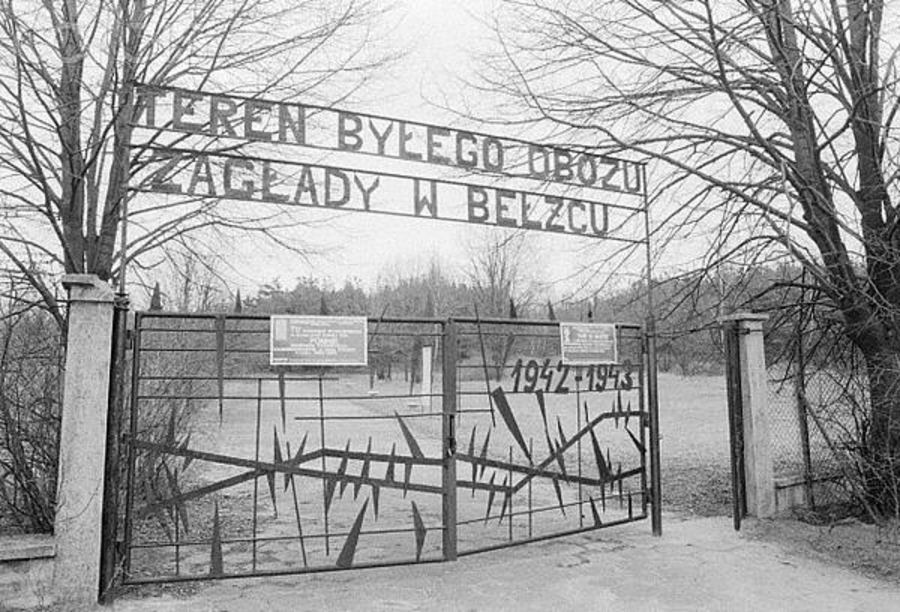
Initially, the camp contained three gas chambers. The doors were fitted with rubber seals to prevent the escape of gas, which was generated by a 250-horsepower engine located in an adjacent structure. The facility was designed under the direction of the camp commandant, Christian Wirth, reportedly following his inspection of the extermination process at Chełmno.
By the end of February 1942, the gas chambers were ready for testing. These initial trials were carried out on Jewish victims brought from the nearby town of Lubycza Królewska. On 17 March 1942, the first large-scale transport of Jews arrived from Lublin, marking the beginning of systematic killing operations at the camp.
During the first four weeks of operation—from 17 March to mid-April 1942—approximately 30,000 Jews from the Lublin ghetto were murdered at Bełżec. In addition, around 15,000 Jews from Lwów and a further 35,000 from ghettos in the Lublin district and eastern Galicia were killed during this initial phase.
The organisation and procedure of the extermination process closely resembled those later implemented at Sobibór and Treblinka. Upon arrival, victims encountered a sign at the camp entrance written in Polish, which read:
“Attention. Deposit all personal belongings here, except money, identification documents, and valuables, which must be retained. Tie your shoes together and hand them in at the designated point. Before entering the showers, remove all clothing.”
This signage formed part of a broader strategy of deception, intended to create the impression of a delousing or bathing facility and thereby minimise resistance among those being led to the gas chambers.
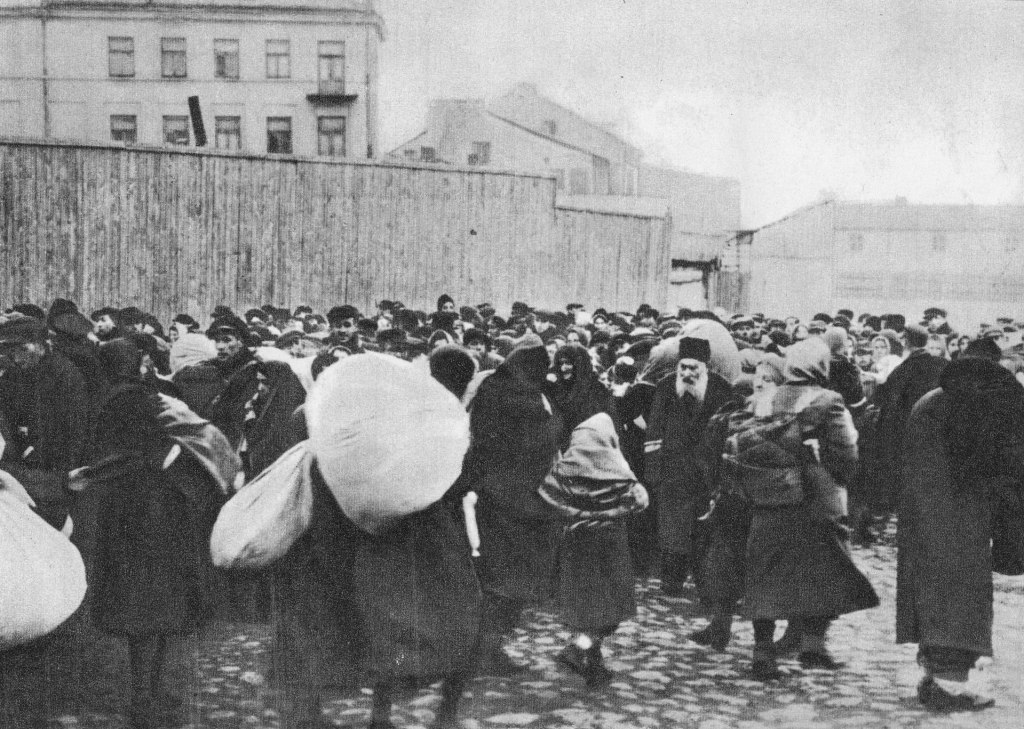
From mid-April 1942, extermination operations at Bełżec were temporarily suspended. Camp authorities concluded that the existing gas chambers were insufficient in capacity and required expansion. The original structures were dismantled and replaced with a new building containing six gas chambers, each measuring approximately 5 by 4 metres. This facility could accommodate between 1,000 and 1,200 victims at a time—roughly equivalent to the number transported in twenty trucks. Above the entrance, a sign read: “Showers and Disinfection Area,” reinforcing the ongoing strategy of deception.
Transports resumed in the second week of July 1942. Between July and October, approximately 130,000 Jews from the Kraków region and around 225,000 from the Lwów area were deported to Bełżec. These transports also included German, Austrian, and Czech Jews who had previously been deported to ghettos in occupied Poland. There were plans to deport an additional 200,000 Jews from Romania; however, the Romanian government ultimately refused to comply.
In early August 1942, SS-Hauptsturmführer Gottlieb Hering assumed command of the camp, replacing Christian Wirth, who had been promoted to Inspector of all Aktion Reinhardt extermination camps.
By the end of December 1942, Bełżec was closed. At that point, the majority of Jews in the Generalgouvernement had already been murdered, and the decision to shut down the camp was taken by the leadership of Aktion Reinhardt. Other extermination centres, including Sobibór and Treblinka, continued operations, as did Auschwitz-Birkenau.
Between December 1942 and the spring of 1943, efforts were made to eliminate evidence of the crimes committed at the site. Mass graves were exhumed, and the bodies were burned on pyres constructed from railway tracks. The approximately 600 prisoners forced to carry out this work were subsequently transported to Sobibór and killed. The site of the camp was then disguised as a farm, overseen by two Ukrainian guards.
In the summer of 1944, Bełżec was liberated by Soviet and Polish forces.
Although several prisoners attempted to escape, only one—Rudolf Reder—is known to have survived. He escaped in November 1942 and later published an account of his experiences after the war.
In total, approximately 600,000 people were murdered at Bełżec over a period of roughly seven months. The vast majority were Jews, although several thousand Roma victims were also among those killed.
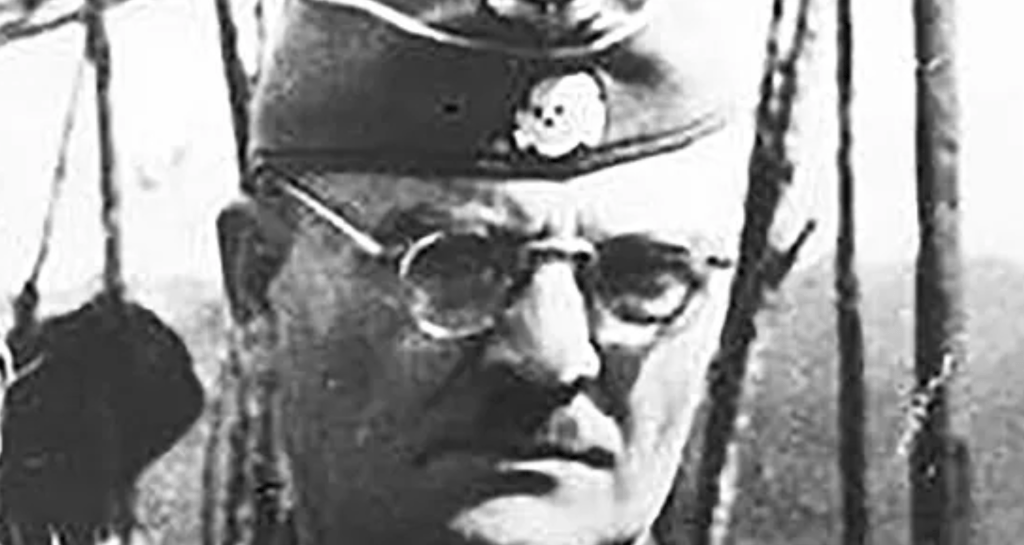
The three commandants of the camp—including Kriminalpolizei officers SS-Sturmbannführer Christian Wirth and SS-Hauptsturmführer Gottlieb Hering—had previously been involved in the forced euthanasia programme from 1940 onward, as had the majority of their German staff. Wirth held a senior supervisory role over several euthanasia centres within the Reich, while Hering served as the non-medical administrator at both the Sonnenstein gassing facility in Saxony and the Hadamar Euthanasia Centre.
Christian Wirth, in particular, had extensive experience in organised killing operations. He had participated in the early phases of the so-called “T4” programme, including gassing operations at the Brandenburg Euthanasia Centre. Owing to this background, he was regarded as a key specialist in mass killing techniques and was therefore appointed as the first commandant of Bełżec—the first stationary extermination camp established under Operation Reinhardt in the General Government.
Upon completion of construction, extermination tests were conducted in mid-April 1942. Christian Wirth visited Sobibór to oversee the experiments, accompanied by a chemist who used the pseudonym Dr. Blaurock (or Blaubacke). SS-Unterscharführer Erich Fuchs, who had previously served at Bełżec, described the preparations for the first gassing trials:
“On Wirth’s instructions, I travelled by truck to Lwów to collect a gassing engine, which I then transported to Sobibór. Once there, we unloaded the engine—a heavy Russian gasoline engine, likely from a tank or train, with at least 200 horsepower, eight cylinders, and water-cooled. We mounted it on a concrete base and connected its exhaust to the pipe conduit. Initially, the engine would not start. I repaired the ignition and the valves, after which the motor functioned. The chemist, whom I already knew from Bełżec, entered the gas chamber with a measuring instrument to test the gas concentration.
“An experimental gassing was then conducted. I recall that 30 to 40 women were confined in a single chamber. They had to undress on a covered wooden area near the gas chamber before being driven inside by SS personnel and Ukrainian auxiliaries. Once the chamber was sealed, Bauer and I operated the engine. At first, it idled. Standing next to the motor, we switched from free exhaust so that the gases were directed into the chamber. Following the chemist’s instructions, I adjusted the engine speed to a certain number of revolutions per minute so that no additional gas needed to be supplied. After approximately ten minutes, all the women were dead. The chemist and the SS officer then signalled to switch off the engine. I packed up my tools and observed the removal of the corpses, which were transported on a rail trolley from the gas chamber to a distant disposal site.”
Bełżec was the first extermination camp to cease operations, at the beginning of December 1942. The site continued to be active until March 1943, but only in a limited capacity: during this final phase, the mass graves were exhumed, and the corpses were incinerated. The gas chambers and other camp structures were systematically destroyed. Jewish prisoners who had been forced to assist with these efforts were subsequently deported to Sobibór, where they were murdered.
sources
https://www.youtube.com/@ghettofightershouse9265
https://www.yadvashem.org/articles/academic/operation-reinhard.html
https://historylearning.com/world-war-two/holocaust-index/belzec/
https://www.belzec.eu/en/page/online_exhibitions/235
https://portal.ehri-project.eu/keywords/ehri_camps-41
https://www.holocausthistoricalsociety.org.uk/contents/belzec/thebelzecdeathcamp.html
https://www.belzec.eu/en/history/camp_history/2
https://www.holocaust.cz/en/history/concentration-camps-and-ghettos/belzec-2/
https://en.wikipedia.org/wiki/Belzec_extermination_camp
Please support us so we can continue our important work.
Donation
Your readership is what makes my site a success, and I am truly passionate about providing you with valuable content. I have been doing this at no cost and will continue to do so. Your voluntary donation of $2 or more, if you are able, would be a significant contribution to the continuation of my work. However, I fully understand if you’re not in a position to do so. Your support, in any form, is greatly appreciated. Thank you. To donate, click on the credit/debit card icon of the card you will use. If you want to donate more than $2, just add a higher number in the box left from the PayPal link. Your generosity is greatly appreciated. Many thanks.
$2.00

 History of Sorts
Leave a comment