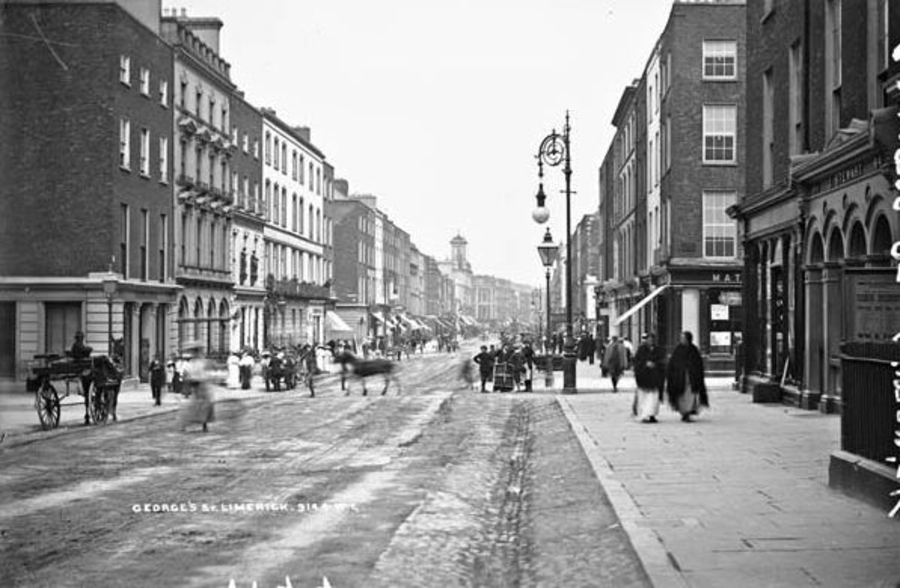
At the turn of the twentieth century, Ireland was still under British rule, and Irish political life was dominated by questions of nationalism, land reform, and identity. The Jewish population in Ireland was small—numbering only a few thousand nationwide—and largely composed of immigrants or descendants of immigrants from Eastern Europe, particularly the Russian Empire. Many had fled persecution, including violent pogroms, seeking relative safety in Western Europe.
In Limerick, the Jewish community consisted of roughly 150–200 individuals. They were mostly traders, shopkeepers, and peddlers. While economically modest, they were visible as a distinct minority—religiously, culturally, and linguistically different from the overwhelmingly Catholic Irish population
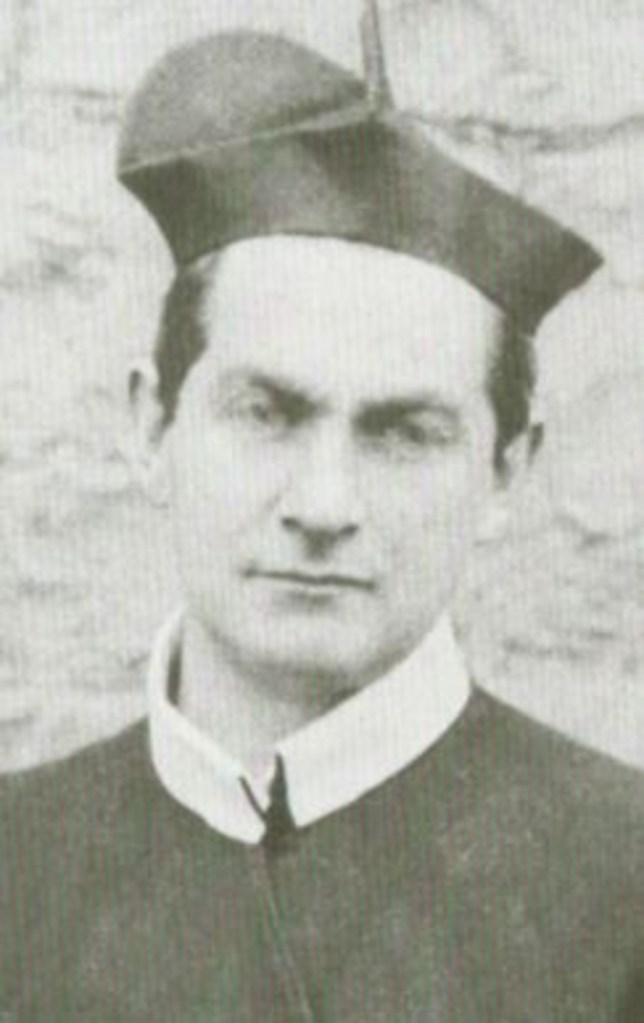
On the evening of 11 January 1904, Fr John Creagh took the pulpit during mass at the Redemptorist church at Mount St Alphonsus in Limerick. His congregation comprised the weekly meeting of the ‘Monday Division’ of the Arch-Confraternity of the Holy Family, a 6,500-strong male sodality which, under his then spiritual direction, was a powerful force in the city’s Catholic life. John Creagh, a Redemptorist and Spiritual Director of the Arch Confraternity of the Sacred Heart, gave a sermon at their weekly meeting attacking Jews. He repeated many Anti-semitic conspiracy theories, including that of ritual murder, and said that the Jews had come to Limerick “to fasten themselves on us like leeches and to draw our blood”. Dermot Keogh describes what happened after Creagh delivered his lecture calling for a boycott on 11 January 1904.
In 1904 there were roughly 35 Jewish families, about 150 people, in the Limerick urban area. They lived in Collooney Street (now Wolfe Tone Street), not far from the present-day O’Connell monument, and had established a Jewish burial ground at Kilmurray, near Castleconnell. The first attack on them came in January, a few days prior to Fr Creagh’s sermon, when, following a colourful Jewish wedding, Judge Adams commented on their commercial success and vibrancy. This led to a sour report in the Limerick Leader, which compared their prosperity to the poverty of the native population.
A few days later the matter was taken up by Fr John Creagh CSSR, spiritual director of the Arch Confraternity of the Sacred Heart, which had a membership of around 6,000.
From the pulpit, Fr Creagh stated:
‘The Jews were once chosen by God. But they rejected Christ, they crucified Him. They called down the curse of His precious blood on their heads. They were scattered over the earth after the Siege of Jerusalem in 70 AD, and they bore away with them an unquenchable hatred for the name of Jesus Christ and his followers. The Jews came to Limerick apparently the most miserable tribe imaginable, with want on their faces, and now they have enriched themselves and can boast a very considerable house property in the city. Their rags have been exchanged for silk. How do the Jews manage to make their money? Some of you may know their methods better than I do, but it is still my duty to expose these methods. They go about as peddlers from door to door, pretending to offer articles at very cheap prices, but in reality, charging several times more than in the shops…They forced themselves and their goods upon the people and the people are blind to their tricks.”
Collooney Street where most Limerick Jews lived, was only a few minutes’ walk from the Redemptorist church. The hundreds who left the church after the meeting had to pass the top of Collooney Street on their way home; many were fired up by Creagh’s incendiary sermon. The Jewish community immediately sensed the menacing mood of the crowd-turned-mob and remained locked in their homes as the church militants passed by. Jewish shops, however, remained open and their owners felt menaced. One old Fenian, a member of the confraternity, single-handedly defended a shop from attack until the police arrived to mount a guard.
John Raleigh, a teenager (15 years of age), was arrested and incarcerated in Mountjoy Prison for one month for throwing a stone at the rabbi (which struck him on the ankle). Once released he returned home to a welcoming throng who were protesting that the teenager was innocent and that the sentence imposed was too harsh. While in prison Raleigh was called a “Limerick Jew slayer” by a warder, but Raleigh, who claimed he was innocent, was insulted by this and reported the incident to the chief warder. Later, after 32 Jews had left Limerick due to the pogrom, Creagh was disowned by his superiors, who said that “religious persecution had no place in Ireland”
The outrage sharply divided public opinion, yet only two figures of national stature spoke out in condemnation: Michael Davitt, the celebrated veteran of the Land War two decades earlier, and John Redmond, leader of the Irish Parliamentary Party.
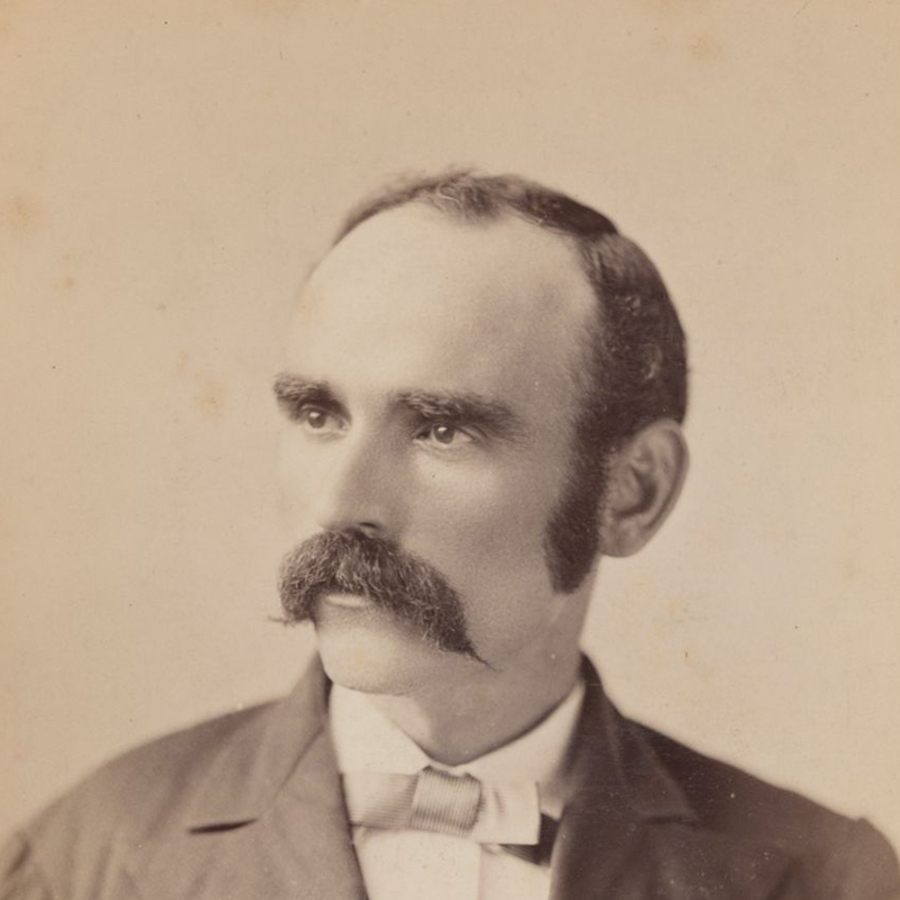
On learning that a Redemptorist priest in Limerick had delivered a virulent anti-Jewish sermon, Davitt declared:
“I protest, as an Irishman and as a Catholic, against the barbarous malignancy of anti-Semitism being introduced into Ireland under the pretence of concern for the welfare of the Irish people.”
Davitt’s stance was informed by prior experience. He had earlier investigated a pogrom in Kishinev, in the Russian province of Bessarabia (present-day Moldova), and subsequently wrote a scathing article for the New York magazine The American, condemning the Tsarist regime for its persecution of Jews.
Although the Limerick pogrom was minor in scale compared with the widespread anti-Jewish violence that swept across Russia, it can only be fully understood within this broader context.
The Limerick Pogrom occupies a unique place in Irish history. It challenges narratives of Ireland as uniformly welcoming and highlights the universality of prejudice, even among oppressed populations. It also serves as a reminder of how quickly economic grievances and religious rhetoric can combine to marginalize vulnerable communities.
In a broader European context, the event connects Ireland to the wider history of antisemitism, though in a less overtly violent form than in Eastern Europe. Its study contributes to understanding how prejudice adapts to local conditions while drawing on shared stereotypes and fears.
sources
 History of Sorts
Leave a comment