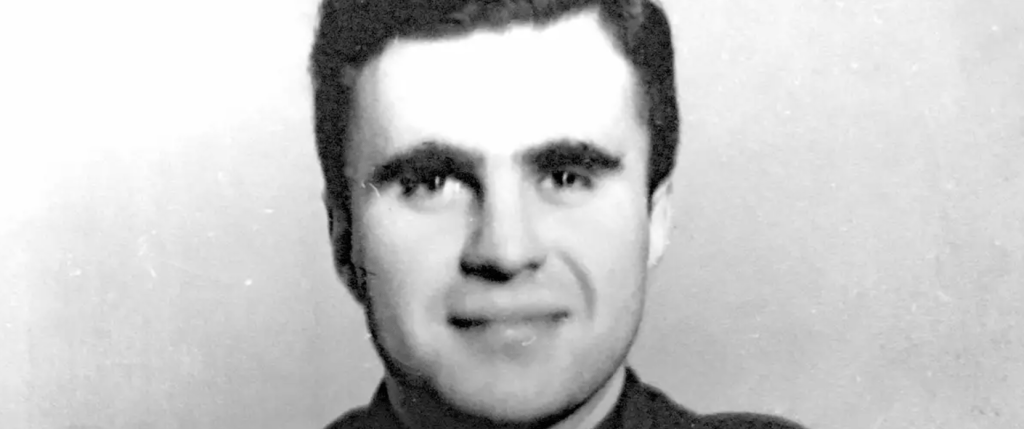
George Leitmann was just 19 years old when he arrived in Germany as a soldier in the spring of 1945, shortly before the end of World War II in Europe. American, British, and Soviet forces were advancing on all fronts, closing in to liberate the continent from the crimes of National Socialism under Adolf Hitler.
Leitmann served in the 286th Combat Engineer Battalion of the 6th US Army. When his unit entered southern Germany, the situation was chaotic and uncertain. “The front line was extremely fluid,” he later recalled.
In the final months of the war, the Wehrmacht and the SS fought with fanatic determination to sustain the collapsing Nazi regime. Amid this turmoil, Leitmann witnessed scenes that would remain with him for the rest of his life.
One encounter, in particular, never left him.
“We were approaching a suburb. We stopped,” he remembered nearly 80 years later. “There were 15 or 20 children—boys between 10 and 12 years old.” They were dead, hanged from trees.
Shocked, Leitmann knocked on a nearby door to ask what had happened. Residents told him that members of the Waffen SS had forced local boys to take Panzerfausts—handheld anti-tank weapons—and ordered them to attack American tanks. When the tanks arrived, the boys fled. The next day, the SS returned, rounded them up, and executed them. “They hanged their own children,” Leitmann said.
Historians later confirmed that, in the war’s final phase, the Wehrmacht and SS carried out numerous killings of German civilians who no longer wished to fight.
These experiences profoundly shaped Leitmann. The image of the boys haunted him for decades. “It makes you question humanity,” he said. “Perhaps most disturbing is that you begin to doubt your ability to understand people at all.”
In the years following the war, many German perpetrators denied responsibility for the devastation that had claimed more than 60 million lives. They also rejected their role in supporting a fascist ideology that classified human beings as worthy or unworthy—an ideology that culminated in the systematic murder of millions. During the Holocaust, approximately 1.5 million children were killed, most of them Jewish.
Leitmann’s story is not only that of an American soldier. He was also a Holocaust survivor.
Born in Vienna, he fled with his family after Nazi Germany annexed Austria. In 1940, he, his mother, and his grandparents secured visas to the United States. His father, Josef, could not join them. He fled to what was then Yugoslavia, and although there was hope he might be safe, George would never see him again.
After the war, Leitmann built a distinguished academic career in the United States, becoming a professor of engineering at the University of California, Berkeley. Despite his professional achievements and numerous honors, the questions raised by his wartime experiences never faded.
“I often ask myself how something so terrible could happen so quickly among such educated people,” he said. “I have no answer.”
For years, he also grappled with questions of guilt when encountering Germans: what they—or their parents—had done, or failed to do.
When Leitmann volunteered for military service at 18, his motivation was not only patriotism but also uncertainty about his father’s fate. His war became, in part, a personal search.
“When we later encountered Kaufering concentration camp ,near Munich, the others were horrified,” he said. “For them, it was disgust. For me, it was personal. I still hoped my father might have survived. That hope stayed with me whenever we saw liberated prisoners.”
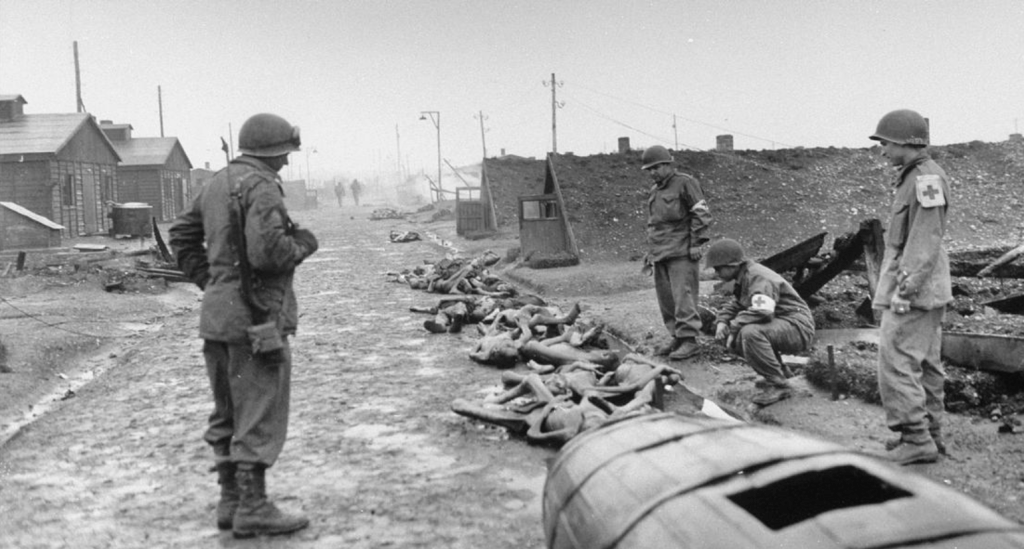
Decades later, he finally learned the truth. His father had been executed in a camp in Yugoslavia, shot along with hundreds of other prisoners—because he was Jewish.
Leitmann reflected daily on his father’s final moments.
In recent years, he has also voiced concern about the resurgence of political extremism. “The fact that large parts of the population can support fascist ideas is deeply unsettling,” he said. “Blaming certain groups has always led to disaster.”
Despite everything, Leitmann says he has lived a full life—traveling widely, building a family, and pursuing meaningful work. Yet old age brings its own challenges.
“Try not to get so old,” he remarked with a faint smile. “It’s no fun—and I mean that sincerely.”
He died on May 19, 2025, 6 days before his 100th birthday
George Leitmann was also appointed the first ombudsman at the University of California during the turbulent 1960s. He never truly retired. After becoming professor emeritus in 1991, he continued to serve the university with remarkable dedication—as chair of the Engineering Faculty, Associate Dean for International Relations, and Special Adviser to the Dean—well into his nineties.
Beyond his academic achievements, Leitmann led a rich and multifaceted life. He was a generous supporter of numerous charitable causes, an avid collector of fine art—including 19th-century American, modern, and pre-Columbian works—and served as chairman of the board of the ARTSHIP Foundation in San Francisco. He was also a connoisseur of wine and a devoted swimmer.
He is survived by his wife, Nancy, aged 101, with whom he shared 70 years of marriage; his children, Josef and Elaine; his grandchildren, Joseph, Sasha, and Nicolas; and his great-grandchildren, Chloe and Ari.
sources
https://en.wikipedia.org/wiki/George_Leitmann
https://www.dw.com/en/end-of-world-war-ii-second-world-war-concentration-camp-us-soldier/a-72448740
https://airandspace.si.edu/support/wall-of-honor/prof-dr-george-leitmann
Donation
Your readership is what makes my site a success, and I am truly passionate about providing you with valuable content. I have been doing this at no cost and will continue to do so. Your voluntary donation of $2 or more, if you are able, would be a significant contribution to the continuation of my work. However, I fully understand if you’re not in a position to do so. Your support, in any form, is greatly appreciated. Thank you. To donate, click on the credit/debit card icon of the card you will use. If you want to donate more than $2, just add a higher number in the box left from the PayPal link. Your generosity is greatly appreciated. Many thanks.
$2.00
 History of Sorts
Leave a comment