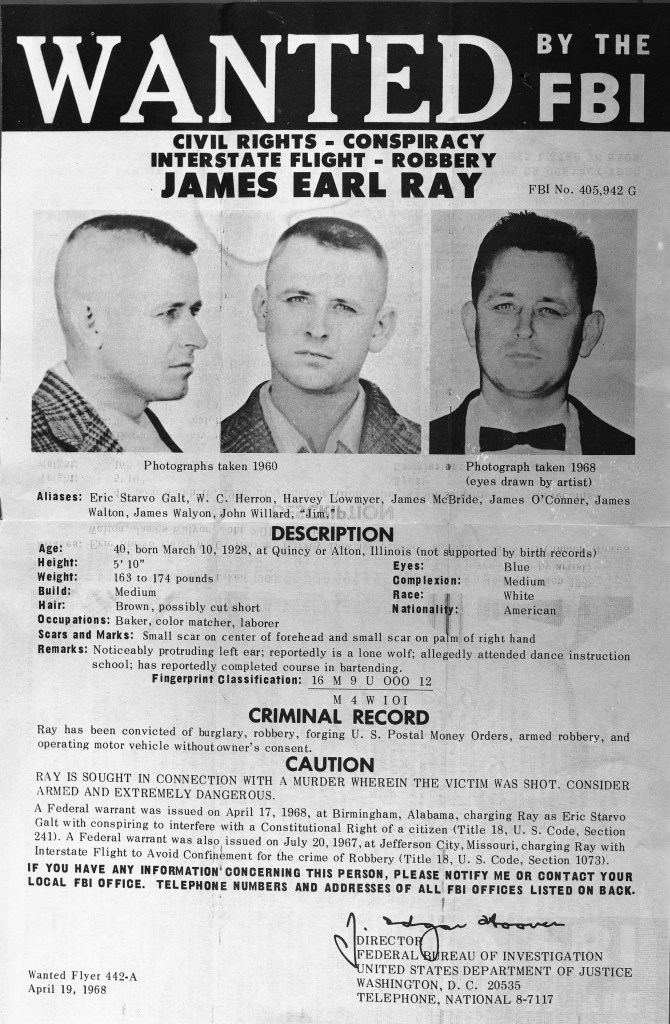
James Earl Ray (March 10, 1928 – April 23, 1998) was an American fugitive convicted of assassinating Martin Luther King Jr. at the Lorraine Motel in Memphis, Tennessee, on April 4, 1968. Following the shooting, Ray fled the United States and was arrested in London. In 1969, he pleaded guilty, thereby avoiding a jury trial and the possibility of a death sentence, and was sentenced to 99 years in prison. He later attempted multiple times to withdraw his plea and obtain a trial, but these efforts were unsuccessful.
Although not formally affiliated with a political party, Ray held segregationist views and supported Alabama governor George Wallace during his 1968 presidential campaign. Ray died in 1998 at age 70 from complications related to kidney disease and liver failure caused by hepatitis C, having served 29 years in prison.
In 1994, Memphis restaurant owner Loyd Jowers publicly claimed involvement in a conspiracy to assassinate King and alleged that Ray had been framed. A 1999 civil trial in Memphis concluded that Jowers was liable and that King had been the victim of a broader conspiracy involving multiple parties, including government agencies. The King family supported this conclusion and maintained that Ray was innocent, though the United States Department of Justice rejected these claims in a 2000 report, finding no credible evidence of such a conspiracy.
Early life
Ray was born in Alton, Illinois, to George Ellis Ray and Lucille Ray. He was the eldest of nine children in a family of Irish, Scottish, and Welsh descent. In 1935, after his father committed check fraud, the family relocated to Missouri and changed their surname to Raynes to avoid detection. Ray left school at age 12 and later enlisted in the U.S. Army near the end of World War II, serving in Germany before being discharged in 1948 due to poor performance and inability to adapt to military life.
Criminal activity and escape
Prior to 1968, Ray had an extensive criminal record, including convictions for burglary, armed robbery, and mail fraud. In 1959, he was sentenced to 20 years in prison for a robbery in St. Louis. On April 23, 1967, he escaped from the Missouri State Penitentiary by hiding in a bread delivery truck.
Following his escape, Ray traveled extensively across the United States and Canada, eventually settling briefly in Mexico under the alias Eric Starvo Galt. There, he attempted unsuccessfully to establish himself in the pornographic film industry. He later returned to the United States, where he became involved in the presidential campaign of George Wallace and began planning to emigrate to Rhodesia (now Zimbabwe).
Events leading to the assassination
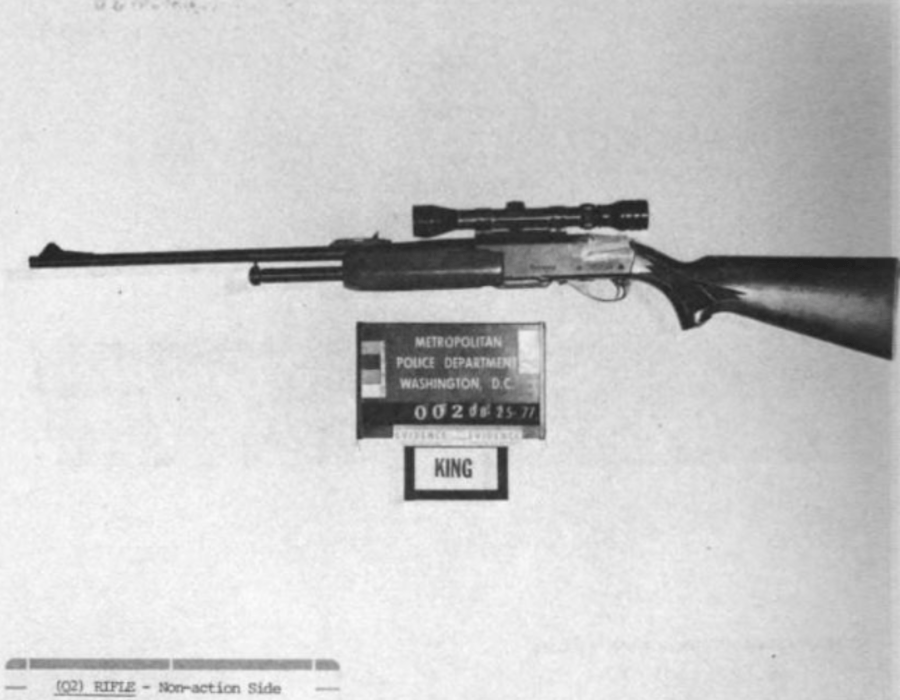
In early 1968, Ray underwent cosmetic surgery in California before traveling across the country. By late March, he had arrived in Atlanta, where he mapped locations associated with King. Shortly thereafter, he traveled to Birmingham, Alabama, where he purchased a Remington Model 760 rifle and ammunition.
After learning of King’s planned visit to Memphis, Ray drove there in early April. On April 4, 1968, he rented a room in a boarding house overlooking the Lorraine Motel. That evening, King was fatally shot while standing on the motel balcony. Authorities concluded that Ray fired the shot from his room before fleeing the scene, leaving behind a rifle and other items bearing his fingerprints.
Flight, capture, and conviction
Ray fled Memphis and traveled through several cities before reaching Canada. Using a stolen identity, he obtained a passport and flew to London, with plans to continue to Africa. On June 8, 1968, he was arrested at Heathrow Airport after being flagged by authorities.
Extradited to the United States, Ray confessed to the assassination on March 10, 1969, and pleaded guilty. Three days later, he recanted, claiming he had been part of a larger conspiracy involving a man known only as “Raoul.” Despite repeated legal challenges, his conviction was never overturned.
Later claims and investigations
Ray consistently denied acting alone and alleged he had been manipulated by unknown conspirators. His claims gained some attention through media interviews and legal advocacy, but investigations, including those by the United States House Select Committee on Assassinations, produced inconclusive or contradictory findings.
A 1999 civil trial brought by the King family concluded that a conspiracy had existed, but this finding was later disputed by federal authorities. The Department of Justice’s 2000 review found no reliable evidence supporting conspiracy claims and upheld the original conclusion that Ray was responsible.
Death
Ray spent the remainder of his life in prison, including a brief escape in 1977 before being recaptured. He died on April 23, 1998, in Nashville, Tennessee. In accordance with his wishes, his remains were cremated and his ashes scattered in Ireland, reflecting his family’s ancestral roots.
Timeline
April 4, 1968 – Assassination of Martin Luther King Jr.
From television broadcasts and coverage in the Commercial Appeal, James Earl Ray learns that Martin Luther King Jr. is staying at the Lorraine Motel in Memphis, Tennessee, in Room 306.
Already in Memphis at the New Rebel Motel, Ray identifies a better vantage point at a nearby boarding house operated by Bessie Brewer and relocates there.
3:30 p.m.
Ray rents Room 8 under the alias “John Willard,” then switches to Room 5B, which overlooks the Lorraine Motel. He determines that the bathroom window offers a clear line of sight to Room 306.
4:00 p.m.
He purchases binoculars and returns to monitor King’s movements.
5:55 p.m.
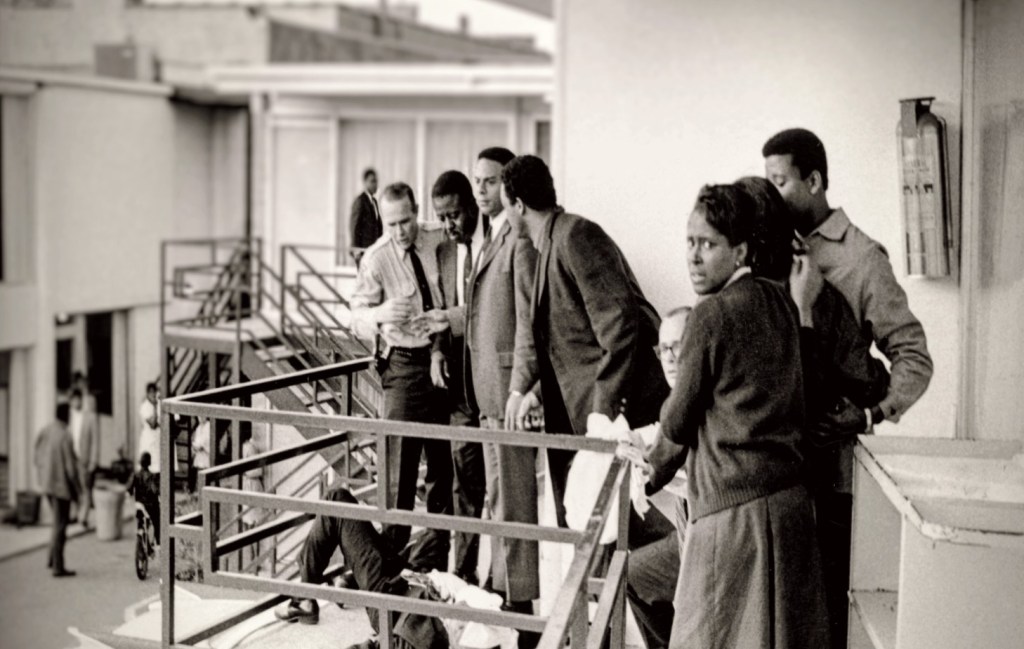
King exits his room with Ralph Abernathy and others, preparing to attend dinner at the home of Billy Kyles. King pauses on the balcony, speaking with his driver below.
6:01 p.m.
King is shot.
Ray flees the boarding house, abandoning a bundle containing a rifle and other items near a nearby business. Several witnesses observe his departure.
6:03–6:10 p.m.
Police receive reports of the shooting and begin broadcasting a suspect description: a white male fleeing in a white Ford Mustang.
6:16 p.m.
King arrives at St. Joseph’s Hospital, critically wounded.
6:30 p.m.
Police recover the abandoned bundle, which contains a rifle, binoculars, clothing, and a newspaper linking King to the motel. Investigators trace the rooming house occupant “John Willard” to a white Mustang.
7:05 p.m.
King is pronounced dead.
8:15 p.m.
Evidence is transferred to the FBI, initiating a nationwide manhunt. Civil unrest soon erupts in over 100 U.S. cities. President Lyndon B. Johnson declares a state of emergency.
April 5–11, 1968 – The Manhunt
The FBI launches its largest investigation to date, involving thousands of agents.
Evidence from the rifle leads investigators to a Birmingham, Alabama purchase under the alias “Harvey Lowmeyer.” Additional forensic links—laundry tags, fingerprints, and receipts—connect multiple aliases, including “Eric S. Galt.”
Meanwhile, Ray drives to Atlanta, abandons his Mustang after wiping it clean, retrieves belongings, and boards a bus to Detroit. From there, he crosses into Canada.
April 7–9
A national period of mourning is observed. King’s funeral draws tens of thousands, led by Coretta Scott King.
April 11
The FBI locates Ray’s abandoned Mustang in Atlanta and traces it to Los Angeles. A photograph of “Eric Galt” from a bartending school becomes a key lead.
April 12–19 – Identification of the Suspect
Investigators piece together Ray’s movements across multiple cities using financial records, training enrollments, and physical evidence.
A map recovered from an Atlanta room shows locations associated with King marked in pencil.
April 17–19
After extensive fingerprint comparisons, the FBI identifies “Eric Galt” as James Earl Ray. His name and image are distributed nationwide.
April–June 1968 – International Flight and Capture
Ray obtains a Canadian passport under the name “George Ramon Sneyd” and travels to London, then briefly to Lisbon, intending to reach Rhodesia.
Running low on funds, he commits minor robberies in London.
June 8, 1968
At Heathrow Airport, authorities identify Ray using the alias Sneyd on a watchlist. He is arrested while attempting to travel to Brussels.
June–July 1968 – Extradition
Ray contests extradition but is returned to the United States in July 1968. Legal proceedings begin in Tennessee.
1969 – Guilty Plea and Recantation
March 10, 1969
Ray pleads guilty to assassinating King and is sentenced to 99 years in prison.
March 13, 1969
He recants his confession, claiming coercion and alleging involvement of a mysterious figure named “Raoul.” He maintains this position for the rest of his life.
1970s–1990s – Appeals, Escapes, and Conspiracy Claims
Ray repeatedly appeals his conviction, all unsuccessfully.
June 10, 1977
He escapes from prison but is recaptured three days later, resulting in an extended sentence.
In 1978, the United States House Select Committee on Assassinations concludes that Ray fired the shot, though it acknowledges possible circumstantial evidence of a conspiracy.
In 1993, Loyd Jowers claims involvement in a conspiracy, though subsequent federal investigations find no credible supporting evidence.
1998–2000 – Death and Aftermath
April 23, 1998
Ray dies in prison at age 70 from complications related to kidney and liver disease.
1999
A civil trial brought by the King family concludes that a conspiracy was involved, though the damages awarded are symbolic.
June 2000
Under Attorney General Janet Reno, the Department of Justice issues a report rejecting conspiracy claims and affirming Ray’s responsibility.
sources
https://www.biography.com/activists/a66051147/martin-luther-king-jr-assassination-facts
https://en.wikipedia.org/wiki/Assassination_of_Martin_Luther_King_Jr.
https://www.pbs.org/wgbh/americanexperience/features/memphis-hunt/
https://kinginstitute.stanford.edu/assassination-martin-luther-king-jr


Leave a Reply