Margaret Connolly, the sister of Ireland’s president Catherine Connolly, told RTÉ Six One News, yesterday: “My heart lies with the Palestinian people. We’ve had 800 years of colonisation by England. Why wouldn’t we come on the flotilla?”
If she knew anything about her own country’s history, she’d know that technically she is incorrect. The English were invited by an Irish man to help him regain the throne. Then English didn’t occupy, they just outstayed their welcome.
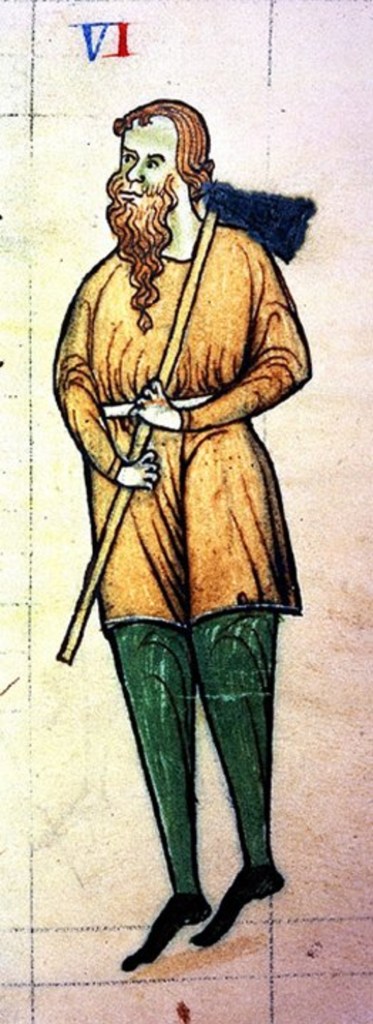
Diarmait Mac Murchada (c. 1110 – May 1171), often anglicized as Dermot MacMurrough, reigned as King of Leinster from 1127 to 1171. He is a pivotal—and controversial—figure in Irish history, best known for inviting the Anglo-Normans to Ireland, an act that fundamentally altered the island’s political landscape forever.
Rise to Power and Early Conflicts
Diarmait was born into the Uí Cheinnselaig dynasty. He was the son of Donnchadh, King of Leinster, who was famously insulted by the citizens of Dublin when they buried him with a dog’s carcass after his death in battle in 1115.
Diarmait’s path to the throne was unexpected and met with immediate resistance from the High King, Toirdelbach Ua Conchobair. Fearing Diarmait as a rival, the High King sent Tigernán Ua Ruairc (Tiernan O’Rourke) to oust him through a brutal scorched-earth campaign. Though initially deposed, Diarmait reclaimed his kingdom in 1132 with the support of local clans.
A long-standing personal and political feud defined Diarmait’s life, fueled by:
The Abduction of Derbforgaill: In 1152, Diarmait took Ua Ruairc’s wife, Derbforgaill, along with her wealth. While some accounts suggest she was a willing participant or a political refugee, the event gave Ua Ruairc a permanent casus belli against Diarmait.
Political Rivalry: For decades, Diarmait navigated the shifting alliances of Irish petty kings and High Kings, eventually aligning with Muirchertach Ua Lochlainn.
The Church Builder
Despite his reputation as a warrior, Diarmait was a prolific patron of the Church and a pioneer of Irish Romanesque architecture. Between 1140 and 1170, he commissioned several major sites:
Abbeys & Priories: Baltinglass, Ferns, and St. Saviour’s in Glendalough.
Nunneries: St. Mary de Hogge in Dublin and Kilculliheen near Waterford.
Patronage: He was a key supporter of St. Lawrence O’Toole, facilitating O’Toole’s installation as Archbishop of Dublin in 1161.
Exile and the Anglo-Norman Invitation
The turning point in Diarmait’s life came in 1166. After his protector, Muirchertach Ua Lochlainn, fell from power, a coalition led by his arch-enemy Ua Ruairc and the new High King, Ruaidrí Ua Conchobair, forced Diarmait into exile.
Desperate to regain Leinster, Diarmait traveled to France to seek an alliance with King Henry II of England. Henry granted him permission to recruit soldiers within the Angevin Empire. Diarmait struck a fateful bargain with Richard de Clare (known as “Strongbow”):
Strongbow would provide a military force to reclaim Leinster.
In return, Strongbow would marry Diarmait’s daughter, Aoife, and inherit the Kingship of Leinster upon Diarmait’s death.
The Invasion and Aftermath
In 1169, the first wave of Norman mercenaries landed at Bannow Bay. With their superior weaponry and tactics, they quickly seized Wexford and eventually Dublin.
Although Diarmait regained his throne, the success of the invasion triggered a massive shift in power:
The Marriage of Aoife and Strongbow: Following the fall of Waterford in 1170, the two were wed, formalizing the Norman claim to Irish land.
Henry II’s Intervention: Fearing Strongbow might establish an independent kingdom, Henry II launched a massive second invasion in 1171, declaring himself Lord of Ireland.
Papal Influence: The invasion strengthened the Holy See’s influence in Ireland, as the papacy sought to bring the independent-minded Irish Church under stricter Roman regulation.
Death and Legacy
Diarmait died in May 1171 at Ferns, shortly after the death of his youngest son. He is buried in the graveyard of Ferns Cathedral.
Historically, he became known as Diarmait na nGall (“Diarmait of the Foreigners”). While post-1800 Irish nationalism often branded him a “traitor,” modern historians view him more as a traditional Gaelic king playing a high-stakes game of survival, unaware that his tactical alliance would lead to centuries of English involvement in Ireland.
Descendants
Despite the Norman takeover, Diarmait’s male line—the Kavanaghs (Caomhánach)—remained powerful. They maintained control of parts of Leinster until the Tudor conquests of the 16th century, and the lineage continues into the 21st century.
sources
https://en.wikipedia.org/wiki/Diarmait_Mac_Murchada


Leave a comment