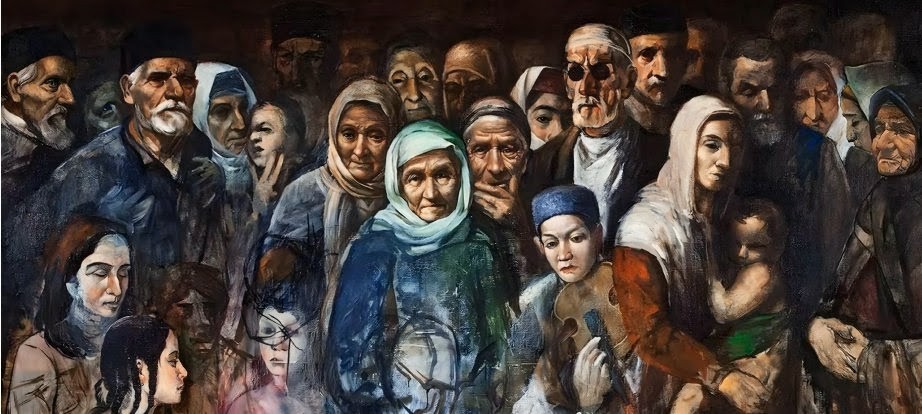
In May 1944, one of the most tragic forced deportations of the twentieth century began when the government of the Soviet Union ordered the mass expulsion of more than 200,000 Crimean Tartars from their homeland in Crimea. The Soviet authorities, led by Joseph Stalin, accused the entire Tartar population of collaborating with the German army during the Second World War. This accusation became the justification for a brutal campaign of collective punishment that caused immense suffering and death. The deportation of the Crimean Tartars remains a powerful example of how fear, war, and authoritarian rule can lead to grave violations of human rights.
The Crimean Tartars are a Turkic Muslim people who had lived in Crimea for centuries. Their culture, language, and traditions were deeply connected to the peninsula on the northern coast of the Black Sea. Crimea had once been the center of the Crimean Khanate before it was conquered by the Russian Empire in the eighteenth century. Even under Russian and later Soviet control, the Tartars preserved their distinct identity and maintained strong ties to their homeland.
During the Second World War, Nazi Germany invaded the Soviet Union in 1941 and occupied Crimea for nearly two years. Under German occupation, conditions were harsh and chaotic. Some individuals from many Soviet nationalities, including a small number of Crimean Tartars, cooperated with the Germans for survival or political reasons. However, many Tartars also fought bravely in the Soviet Red Army against Nazi forces. Despite this mixed reality, Stalin and Soviet officials accused the entire Tartar population of treason and collaboration. Rather than investigating individuals, the Soviet government condemned an entire ethnic group.
On May 18, 1944, Soviet security forces known as the NKVD surrounded Crimean Tartar villages and towns. Families were awakened in the middle of the night and ordered to gather their belongings within minutes. Men, women, children, and the elderly were forced onto overcrowded cattle trains under armed guard. The deportees were transported mainly to remote regions of Central Asia, especially Uzbekistan, as well as to Siberia and the Ural Mountains. The journey lasted for weeks in terrible conditions. Food and water were scarce, disease spread rapidly, and many people died before reaching their destinations.
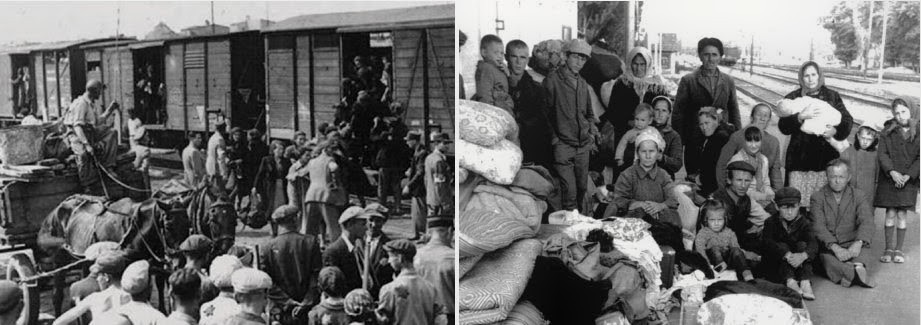
Life in exile was extremely difficult. The Soviet government placed the deported Tartars under special settlement restrictions that limited their movement and freedoms. They were often forced to perform hard labor in agriculture, factories, or construction projects. Housing and medical care were inadequate, and famine and disease were common. Historians estimate that tens of thousands of Crimean Tartars died during the deportation and in the first years of exile. Entire communities were destroyed, and the survivors faced discrimination and poverty for decades.
The Soviet authorities also attempted to erase Tartar identity from Crimea itself. Tartar place names were changed, mosques and cultural sites were destroyed or neglected, and references to the Crimean Tartars were removed from official histories. Their homes and property were taken over by new settlers, mostly ethnic Russians and Ukrainians. In effect, the Soviet regime tried to remove the Crimean Tartars not only physically but also culturally and historically.
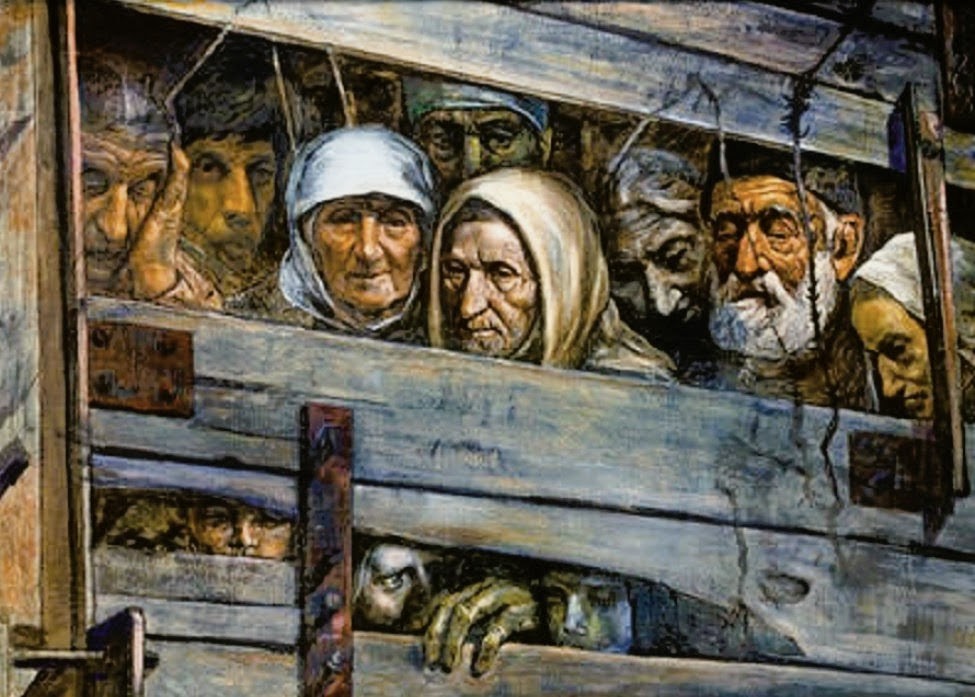
After Stalin’s death in 1953, some deported peoples were officially rehabilitated by the Soviet government and allowed to return to their homelands. However, the Crimean Tartars were denied this right for many years. Beginning in the 1960s, Tartar activists organized a peaceful civil rights movement demanding recognition of the injustice committed against them and the right to return to Crimea. Their efforts eventually gained international attention.
It was not until the late 1980s, during the reforms of Mikhail Gorbachev, that large numbers of Crimean Tartars were finally permitted to return to Crimea. Even then, many encountered difficulties reclaiming land, finding housing, and rebuilding their communities. Despite these obstacles, the Crimean Tartars worked to revive their culture, language, and political institutions.
The expulsion of the Crimean Tartars stands as a tragic example of collective punishment and ethnic persecution. The Soviet Union’s decision to deport an entire people based on accusations against some individuals caused enormous human suffering and long-lasting social damage. Today, the memory of the deportation remains central to Crimean Tartar identity and serves as a reminder of the dangers of authoritarian power, intolerance, and the denial of basic human rights.
Jamala entered the Eurovision Song Contest 2016 with her song 1944, which commemorates the deportation of the Crimean Tatars in the year referenced by the title. Born in exile in Kyrgyzstan to a Crimean Tatar family, Jamala dedicated the song to her great-grandmother, who was among those deported. She became the first Crimean Tatar artist to perform at Eurovision, as well as the first contestant to include lyrics in the Crimean Tatar language. Jamala ultimately won the competition, becoming only the second artist representing Ukraine to claim victory at Eurovision.
sources
https://www.londonukrainianreview.org/posts/the-long-exile
https://gulag.cz/en/projects/gulag-online/article/tatars
https://www.ecoi.net/en/document/2126135.html
https://en.wikipedia.org/wiki/Deportation_of_the_Crimean_Tatars
Donation
Your readership is what makes my site a success, and I am truly passionate about providing you with valuable content. I have been doing this at no cost and will continue to do so. Your voluntary donation of $2 or more, if you are able, would be a significant contribution to the continuation of my work. However, I fully understand if you’re not in a position to do so. Your support, in any form, is greatly appreciated. Thank you. To donate, click on the credit/debit card icon of the card you will use. If you want to donate more than $2, just add a higher number in the box left from the PayPal link. Your generosity is greatly appreciated. Many thanks.
$2.00


Leave a Reply