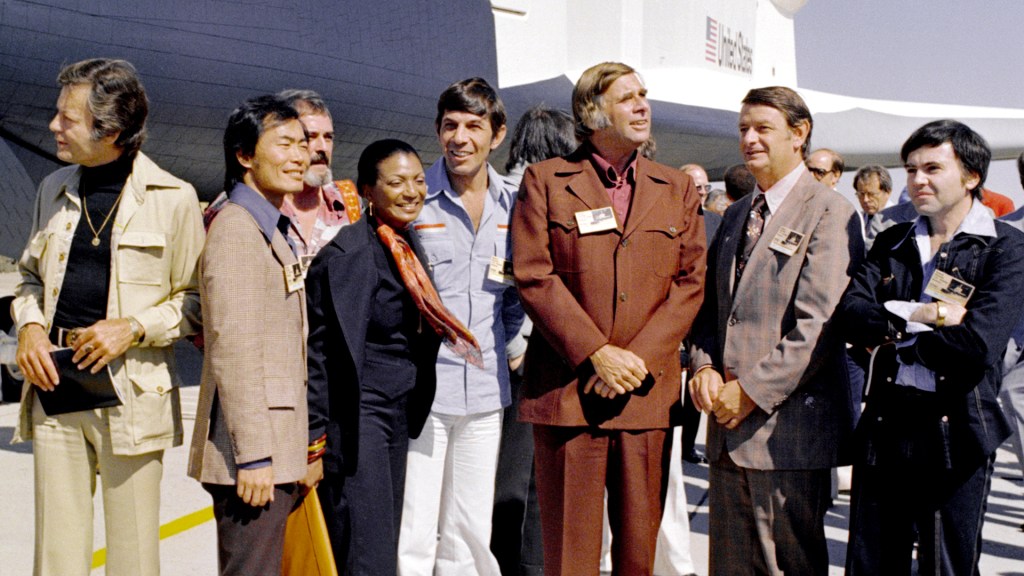
Before he built the final frontier, Gene Roddenberry lived a life that read like an adventure novel. Long before he was a Hollywood showrunner preaching a utopian future of interstellar cooperation, Roddenberry was a decorated combat pilot, an international airline captain, and a street-hardened Los Angeles police officer. These early chapters of his career did not just fill the years before Star Trek—they provided the raw material, the cynical worldview, and the eventual counter-balancing idealism that formed the bedrock of his legendary science fiction universe.
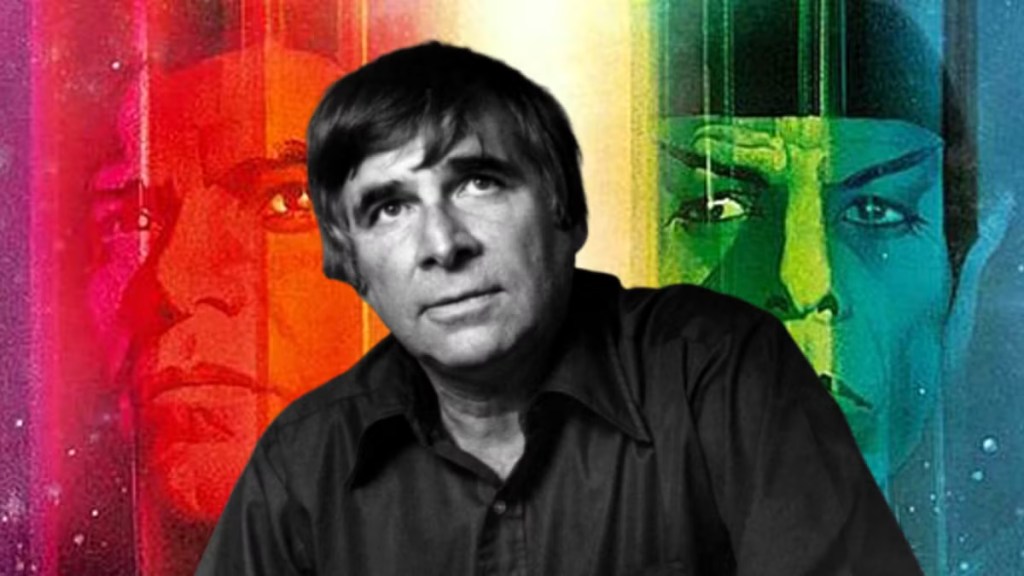
The Wartime Aviator (1941–1945)
Roddenberry’s career effectively began in the skies. In 1941, while studying law enforcement in college, the outbreak of World War II redirected his path. He enlisted in the United States Army Air Corps, qualifying as a pilot and earning his commission as a second lieutenant.
Assigned to the 394th Bomb Squadron of the 11th Bombardment Group, Roddenberry flew B-17 Flying Fortresses out of the South Pacific. Operating from bases like Guadalcanal, he flew approximately 89 combat missions. The war exposed him to the stark realities of human conflict, mechanical failure, and mortality. In 1943, he survived a harrowing crash when his bomber overshot a runway in Espiritu Santo due to a mechanical malfunction, a crash that claimed the lives of two crew members.
By the time he was honorably discharged in 1945, Roddenberry had been awarded the Distinguished Flying Cross and the Air Medal. The military structure, the intense camaraderie among diverse crews, and the sheer terror of aerial warfare deeply informed the operational hierarchy and stakes he would later construct aboard the USS Enterprise.
Flying the Commercial Skies (1945–1948)
Following the war, Roddenberry translated his military piloting experience into a commercial career, joining Pan American World Airways. This era of commercial aviation was far more perilous than today, requiring pilots to navigate extreme weather and mechanical instability with primitive radar and communication tools.
Roddenberry’s time at Pan Am was defined by a second miraculous survival. In June 1947, he was serving as the third officer aboard the Clipper Eclipse when the aircraft suffered catastrophic engine failure and caught fire over the Syrian desert. The plane crashed near Mayadin. Amidst the burning wreckage, Roddenberry pulled injured passengers from the fuselage, administered medical aid, and took charge of the survivors in the desert until help arrived. Fourteen people died in the crash; Roddenberry’s leadership kept the remaining survivors alive.
Though he continued to fly for a time, the psychological toll of the crash, combined with a growing desire to pursue writing, eventually led him to ground himself permanently in 1948.
On the Beat: The LAPD Years (1949–1956)
Seeking stability for his young family, Roddenberry relocated to Los Angeles and followed his father’s footsteps into law enforcement, joining the Los Angeles Police Department.
Roddenberry’s seven years with the LAPD were highly versatile. He began as a traffic cop, spent time as a line officer in the juvenile division, and eventually moved into the narcotics squad. His sharp mind and writing ability caught the attention of Chief William H. Parker, who appointed Roddenberry as his chief speechwriter. In this role, Roddenberry drafted official communications, public addresses, and internal policy documents.
It was during his time on the force that Roddenberry began his serious transition into television. The LAPD served as a liaison for the burgeoning television industry, particularly for shows like Dragnet, which sought realistic police procedural material. Using the pseudonym “Robert Wesley,” Roddenberry began selling freelance scripts to popular anthology shows and crime dramas of the mid-1950s, including Highway Patrol, Mr. District Attorney, and The West Point Story.
The gritty reality of the LAPD provided Roddenberry with a front-row seat to prejudice, poverty, and systemic societal flaws. It gave him a deeply pragmatic understanding of human nature, which he initially channeled into crime writing, but would later subvert by imagining a future where humanity had outgrown these vices. He resigned from the police force on June 7, 1956 to become a full-time writer.
The Freelance Television Writer and The Lieutenant (1956–1964)
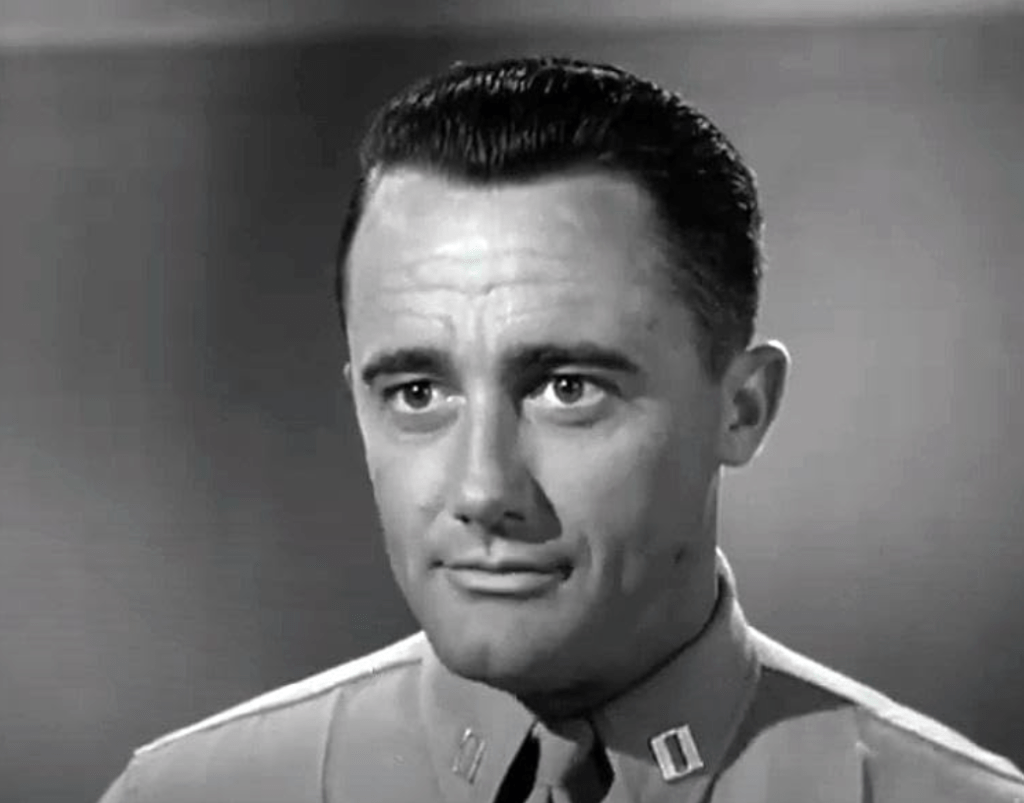
Freed from his police duties, Roddenberry became a prolific television writer. He penned scripts for some of the most prominent westerns and dramas of the golden age of television, including Have Gun – Will Travel, Bat Masterson, and Dr. Kildare. He quickly earned a reputation for writing sharp, character-driven dialogue, eventually becoming the head writer for Have Gun – Will Travel.
In 1963, Roddenberry finally landed the opportunity to create his own television series: The Lieutenant. Aired on NBC, the drama focused on William Rice, a young, idealistic second lieutenant in the U.S. Marine Corps stationed at Camp Pendleton. The show was not a combat series but rather an exploration of the personal and philosophical dilemmas faced by peacetime military officers.
The Lieutenant was crucial to Roddenberry’s development as a creator. It was here that he began pushing boundaries, attempting to use television to comment on contemporary social issues. The most notable example was the episode “To Set It Right,” which tackled racial prejudice within the military and featured a young Nichelle Nichols. The Pentagon refused to cooperate on the episode, and NBC ultimately refused to air it, citing its controversial nature.
Conclusion
The cancellation of The Lieutenant after one season in 1964 left Roddenberry frustrated by the strictures of network censorship and military oversight. He realized that if he wanted to comment on racism, war, nationalism, and ethics without network executives shutting him down, he needed a buffer. He needed a setting so far removed from 1960s America that the metaphors could slip past the censors undetected.
When Roddenberry began pitching a new concept called “Wagon Train to the Stars” later that year, he was not pulling ideas from a vacuum. The captain of the ship would be a blend of his own wartime commanders and Pan Am captains. The strict chain of command would mirror the military and police structures he spent fifteen years navigating. The crew’s absolute adherence to a peaceful “Prime Directive” would be born from his exhaustion with real-world violence. Gene Roddenberry’s career prior to Star Trek wasn’t just a prelude; it was the crucible that forged the visionary.
sources
https://en.wikipedia.org/wiki/Gene_Roddenberry
https://www.onthisday.com/people/gene-roddenberry
https://www.tshaonline.org/handbook/entries/roddenberry-eugene-wesley


Leave a comment