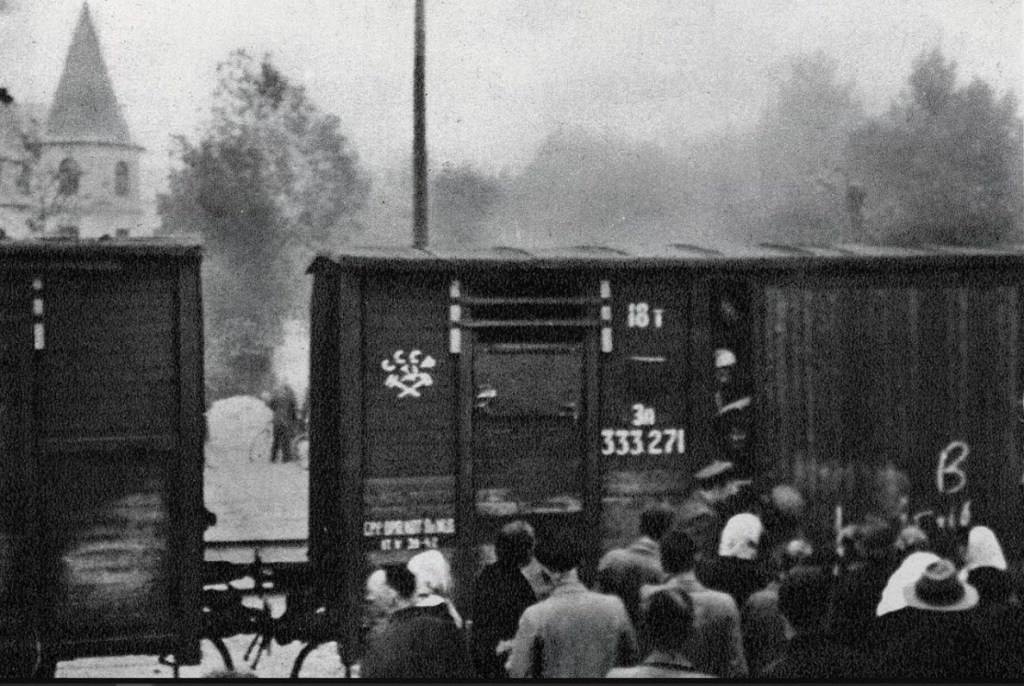
It wasn’t only the Nazis who used the railway for mass deportations.
In the pre-dawn hours of June 14, 1941, a synchronized knock echoed across thousands of doors in Estonia, Latvia, and Lithuania. Families were awoken by officers of the Soviet secret police (NKVD), read a brief decree, and given mere hours to pack a lifetime into a single suitcase.
This was the beginning of the June Deportation (juuniküüditamine in Estonian, jūnija deportācijas in Latvian, birželio trėmimai in Lithuanian)—a meticulously planned, state-sponsored operation that permanently shattered the social fabric of the Baltic region. Over the course of just a few days, tens of thousands of innocent citizens were forcibly removed from their homelands and loaded onto cattle trains bound for the harshest environments of Siberia.
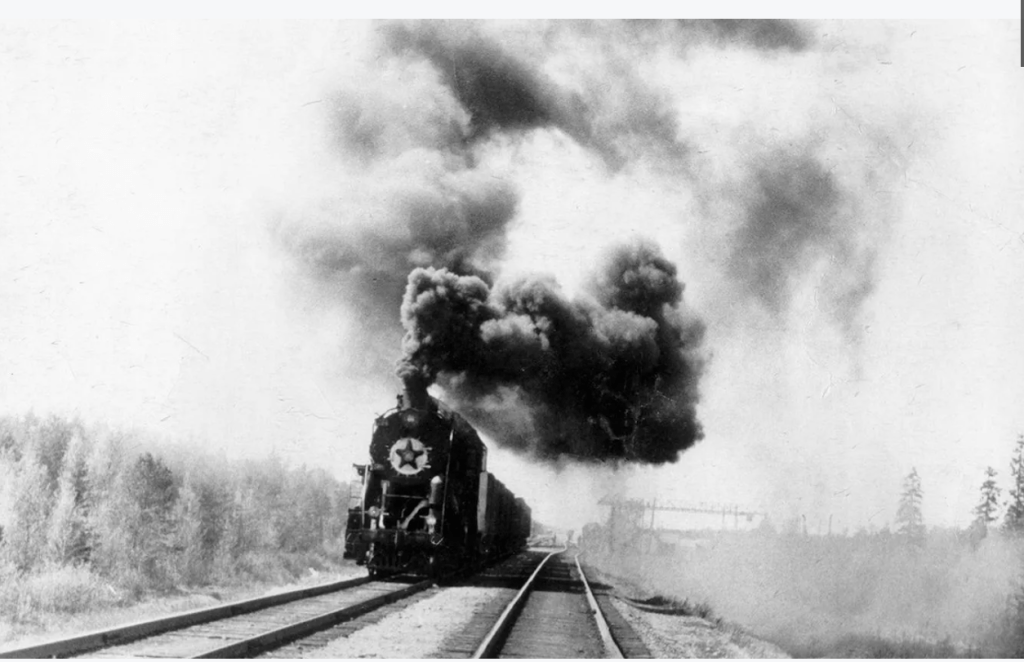
The Blueprint: Erasing an Identity
The deportations were not an arbitrary act of wartime panic. They were a deliberate and calculated component of the Sovietization of the Baltic states. Following the secret Molotov–Ribbentrop Pact of 1939, the Soviet Union occupied and forcibly annexed the independent Baltic nations in the summer of 1940.
To consolidate control, Joseph Stalin and NKVD chief Lavrentiy Beria sought to dismantle the political, economic, and cultural foundations of Estonia, Latvia, and Lithuania. A top-secret directive targeted anyone labeled an “anti-Soviet element.” In practice, this meant the systematic destruction of the nations’ social and intellectual backbone:
- Politicians, diplomats, and civil servants
- Military officers and police personnel
- Intellectuals, academics, and teachers
- Clergy and religious leaders
- Successful farmers (kulaks) and entrepreneurs
The Red Army and NKVD rounded up entire families and forced them into overcrowded, unventilated freight cars bound for remote regions of Siberia, treating civilians as cargo rather than human beings.
The Human Toll: Separation and the Cattle Cars
What made the June Deportations especially horrific was the regime’s complete disregard for human life and its deliberate destruction of families.
At railway stations across the Baltics, men were separated from their wives, children, and elderly parents. The trains were divided into categories: “A” cars for adult men and “B” cars for women and children. For countless families, that chaotic moment on the platform was the last time they would ever see one another alive.
The journey itself became a test of survival. More than fifty people were crammed into a single wooden cattle car with no ventilation. Under the scorching June sun, temperatures inside became unbearable. Water was scarce, food nearly nonexistent, and a crude hole in the floor served as a toilet. Disease spread rapidly, and many children and elderly deportees died before reaching their destinations.
The scale of the operation was staggering:
| Nation | Approximate Number of June 1941 Deportees | Primary Destinations |
|---|---|---|
| Estonia | ~10,000 | Novosibirsk Oblast, Kirov Oblast |
| Latvia | ~15,400 | Krasnoyarsk Krai, Tomsk Oblast |
| Lithuania | ~17,500 | Altai Krai, Komi ASSR |
The men were sent directly into Gulag forced-labor camps, where brutal work in mines and timber operations quickly claimed lives. By the spring of 1942, less than a year later, only a small fraction remained alive. Women and children were placed in isolated “special settlements,” where they were forced to build primitive shelters and labor on collective farms in the freezing Siberian wilderness.
Why We Must Remember: Mourning and Hope
The first wave of deportations ended abruptly on June 22, 1941—not out of mercy, but because Nazi Germany invaded the Soviet Union, transforming the Eastern Front of World War II. Yet when Soviet forces reoccupied the Baltics in 1944, the deportations resumed on an even larger scale throughout the late 1940s.
For decades under Soviet rule, speaking openly about the June Deportations was forbidden. Only during the final years of the Soviet regime in the late 1980s could survivors and their families begin to publicly share the truth.
Today, June 14 is commemorated across the Baltic states as the Day of Mourning and Hope, also known as the Day of Remembrance for the Victims of Communist Genocide. The day is marked by solemn vigils, flowers laid at railway memorials, and the public reading of the names of those who never returned home.
Memorials throughout Estonia, Latvia, and Lithuania stand as enduring reminders of the lives shattered by the deportations of 1941. Remembering the June Deportations is more than a historical obligation. It is a tribute to the resilience of nations that refused to allow their cultures, languages, and identities to be erased.
sources
https://olkm.lt/en/exhibitions/the-first-mass-deportation-of-lithuanian-residents-14-19-june-1941
https://en.wikipedia.org/wiki/June_deportation
https://www.lvarhivs.gov.lv/dep1941/apar1.php


Leave a Reply